AC
alison crowther
The University of Queensland
Brisbane, Australia
1,041
Total views and downloads
Submit your idea
You will be redirected to our submission process.
Manuscript Submission Deadline 30 June 2026 | Manuscript Extension Submission Deadline 30 July 2026
This Research Topic is currently accepting articles.
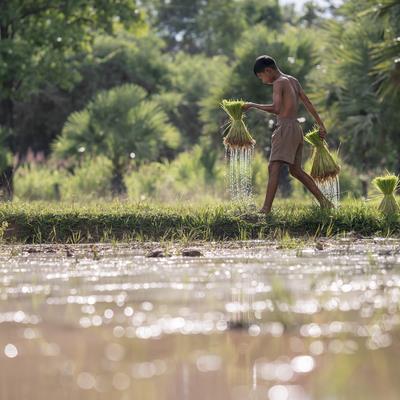
The tropics are home to a rich diversity of plant and animal species that have been managed, cultivated and domesticated by human societies for thousands of years. They are also among the most populated regions on the planet—by 2050, it is expected that more than 50% of the world’s population will live in the tropics. This will place unprecedented pressure on local environments and ecosystems, including threatened biomes such as tropical forests that have otherwise supported human societies for millennia. The tropics are therefore critical to contemporary efforts to develop sustainable agriculture and secure food futures for the world’s growing population, yet the evolution of tropical subsistence systems is still relatively poorly understood.
Conceptually, food production systems in the tropics are difficult to classify and define, being a poor fit with the classic agricultural models developed for agrarian farming systems in temperate Eurasia. Tropical economies often occupy the middle ground between foraging and farming, and involve the exploitation of fruits, underground storage organs, and stems from a wide range of field and tree crops that—whether tended, transplanted, or translocated—often have an unclear domestication status. The remains of these types of plants are often variably preserved in the archaeological record and can be difficult to recover and identify, requiring well developed reference collections and the application of novel methods. Yet the tropics offer high rewards for understanding past human-plant relationships. They provision us with a wealth of insights into the diverse strategies by which humans have adapted to, exploited, and changed their environment over the course of human history. The many challenges of working in the tropics have also catalyzed the development of new archaeobotanical techniques (e.g., starch, phytolith and parenchyma analysis, microCT) alongside integrated, multi-proxy site- and landscape scale approaches.
This collection for Frontiers in Environmental Archaeology focuses on the archaeology of tropical plants and people. It explores the ways in which practices of plant exploitation, management, translocation, cultivation, and agriculture have shaped tropical landscapes and societies. Papers will consider the social, economic, and environmental factors that have influenced the development of tropical subsistence systems, and the ways in which these systems have impacted local communities and ecosystems over time. Interdisciplinary studies that draw on methods in archaeobotany, paleoenvironmental science, genetics, chemistry, ecology, and ethnobotany, as well as traditional ecological knowledge are highly encouraged. Papers can focus on themes including, but not limited to:
• Early agriculture and plant exploitation practices
• Vegetative cultivation and domestication
• Human shaping of tropical environments
• Plant translocations
• Tropical agroforestry
• Food futures and under-utilized foods
• Traditional ecological knowledge
• Methodological approaches to studying tropical human-plant relationships including novel techniques and modern reference collection studies
This Research Topic accepts the following article types, unless otherwise specified in the Research Topic description:
Articles that are accepted for publication by our external editors following rigorous peer review incur a publishing fee charged to Authors, institutions, or funders.
Keywords: Tropics, Plant Domestication, Subsistence, Diet, Vegeculture, Agroforestry, Translocation, Foraging, Food Futures
Important note: All contributions to this Research Topic must be within the scope of the section and journal to which they are submitted, as defined in their mission statements. Frontiers reserves the right to guide an out-of-scope manuscript to a more suitable section or journal at any stage of peer review.
Manuscripts can be submitted to this Research Topic via the main journal or any other participating journal.
Submit your idea
You will be redirected to our submission process.
