MP
maria pyasik
University of Udine
Udine, Italy
3,032
Total downloads
16k
Total views and downloads
Virtual Reality (VR) technology is rapidly evolving, offering novel opportunities for exploration within Sensory Neuroscience. This field is particularly interested in the concept of virtual embodiment, which refers to the sensation of owning and controlling a virtual body as if it were one's own. This phenomenon is crucial for understanding body ownership and the sense of agency, both of which are fundamental to conscious experience.
Despite the growing interest, current research often relies on subjective measures to assess embodiment, leaving a gap in understanding the neural and neurophysiological underpinnings of this experience. Recent studies have begun to explore these aspects, but there remains a significant need for comprehensive investigations that delve deeper into how virtual environments influence sensory and cognitive processes. Addressing these gaps could provide valuable insights into the broader implications of VR on sensory neuroscience.
This research topic aims to explore the neural and neurophysiological indices of embodiment in immersive VR environments. By moving beyond subjective measures, the objective is to understand how these indices change and adapt when individuals interact with virtual bodies. Additionally, the research seeks to investigate the higher-order effects of virtual embodiment on cognitive, sensory, and motor processes. This exploration will contribute to a more nuanced understanding of VR's impact on sensory neuroscience and its potential to transform our perception and cognitive functions.
To gather further insights into the intersection of VR and sensory neuroscience, we welcome articles addressing, but not limited to, the following themes:
- Investigate comprehensive measures of embodiment in immersive VR with a focus on its neural and neurophysiological indices.
- Understand the implications of embodiment of a virtual body on cognitive, sensory, and motor processes.
- Reveal VR's effect on sensory perception and its broader impact on neuroscience.
- Present elaborate case studies delineating the implications of VR on body ownership, agency, sensory, and cognitive processes.
We invite original research papers, comprehensive reviews, method papers, and well-documented case studies. This Research Topic intends to foster dialogue between VR and sensory neuroscience, enabling a broader understanding of how VR can transform our perception and cognitive processes.
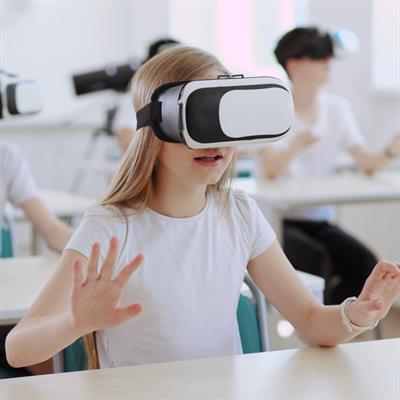
Keywords: Virtual Reality (VR), Immersive VR, Sensory Neuroscience, Cognitive Processes in VR Virtual Embodiment
Important note: All contributions to this Research Topic must be within the scope of the section and journal to which they are submitted, as defined in their mission statements. Frontiers reserves the right to guide an out-of-scope manuscript to a more suitable section or journal at any stage of peer review.
