GC
gustavo chaves
Center of Physiology, Pathophysiology and Biophysics, Paracelsus Medical University
Nuremberg, Germany
1,324
Total downloads
10k
Total views and downloads
Submit your idea
You will be redirected to our submission process.
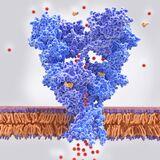
Ion transport through the plasma membrane is crucial for cell function. Several cellular processes, including the modulation of membrane potential, electrochemical homeostasis, pH regulation, triggering of action potentials, volume regulation, and signaling, fundamentally depend on the exchange of ions through the membrane.
Among various ion exchange mechanisms, ion channels are the most efficient, exhibiting output rates of >10 6 · s -1 and high selectivity. Regulated by different factors, these macromolecular pores open and close their gates, allowing ion conduction along the electrochemical gradient without further energy expenses for the cell. Ion channels are ubiquitous in living organisms, from unicellular to more complex life forms such as plants
and animals. They exhibit various characteristics, including distinct families and subfamilies, diverse subunit assemblances, precise conduction mechanisms, specialized gating and inhibition processes.
Recent advances in patch clamp electrophysiology, protein engineering, fluorometry, X-ray crystallography, cryo-EM, and molecular and quantum dynamic simulations, among other techniques, have significantly enhanced our understanding of these crucial proteins since the first experiments of Hodgkin and Huxley in the early 1950s. Understanding the biophysics of these channels is essential for gaining insights into their cellular function, the nature of diseases associated with their malfunction (channelopathies), and the design of targeted drugs.
This Research Topic aims to collect original research papers, reviews, and commentaries focused on the structure-function relationships and other biophysical properties of ion channels. This Research Topic intends to contribute to the scientific community by presenting a series of studies that elucidate the underlying mechanisms regulating the molecular machinery of ion channels, covering topics from basic biophysics to physiological function and applications.
Scope and information for Authors:
In this Research Topic we invite submissions addressing, but not limited to, the following themes:
· Selectivity mechanism and ion permeability.
· Structure-function studies of blockers and inhibitors.
· Voltage- and ligand-dependent gating.
· Structure-function of novel ion channels.
· Pharmacology studies.
· Applications.
· Novel quantification and characterization techniques for ion channels.
· Physiological functions.
Manuscripts can be submitted in the form of: Brief Research Report, Case Report, General Commentary, Hypothesis & Theory, Methods, Mini Review, Opinion, Original Research, Perspective, and Review.
More information on these article types can be found here: text
This Research Topic accepts the following article types, unless otherwise specified in the Research Topic description:
Articles that are accepted for publication by our external editors following rigorous peer review incur a publishing fee charged to Authors, institutions, or funders.
Keywords: ion channels, pharmacology, cellular function, membranes
Important note: All contributions to this Research Topic must be within the scope of the section and journal to which they are submitted, as defined in their mission statements. Frontiers reserves the right to guide an out-of-scope manuscript to a more suitable section or journal at any stage of peer review.
Center of Physiology, Pathophysiology and Biophysics, Paracelsus Medical University
Nuremberg, Germany
University of Costa Rica
San José, Costa Rica
Midwestern University
Glendale AZ, United States
University of Oxford
Oxford, United Kingdom
Manuscripts can be submitted to this Research Topic via the main journal or any other participating journal.
Submit your idea
You will be redirected to our submission process.
