GS
geetanjali sharma
MSIT
New Delhi, India
5,374
Total downloads
36k
Total views and downloads
Submit your idea
Select the journal/section where you want your idea to be submitted:
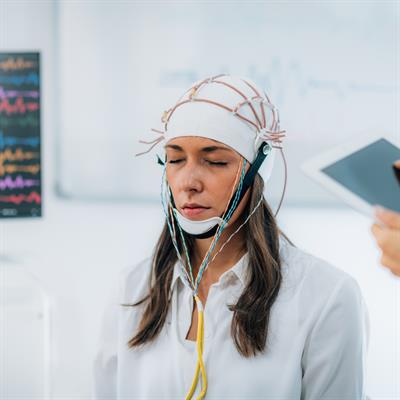
Electroencephalography (EEG) offers real-time insights into brain functionality by measuring the electrical signals generated in the brain, which is crucial for modern cognitive and neurological research. As a non-invasive method with high temporal resolution, EEG facilitates the understanding of complex cognitive and neurological processes. It has been employed to investigate various domains and disorders such as cognitive load, epilepsy, sleep patterns, Alzheimer’s disease, schizophrenia, and the neural correlations of attention and memory.
Recent advancements, including portable devices, IoT integration, and improved signal processing techniques, have significantly evolved EEG technology. Additionally, the integration of EEG with other neuroimaging techniques, such as fMRI and MEG, provides a more comprehensive understanding of brain dynamics.
This Research Topic aims to address the expanding scope of EEG in cognitive and neurological applications, focusing on how EEG is utilized to understand brain activity and its effects on behaviour and health. EEG is pivotal in diagnosing, detecting, and monitoring neurological and cognitive disorders. It is also instrumental in understanding emotional processing, stress response, and the neural basis of mental health conditions. The development of Brain-Computer Interfaces (BCIs) that leverage EEG technology enables direct communication between the brain and external devices, offering potential applications in rehabilitation for individuals with motor impairments. EEG is also used in neurofeedback training, where individuals learn to regulate their brain activity, showing promise in treating conditions such as ADHD and anxiety. This research topic will explore the use of EEG in neurofeedback therapies and rehabilitation programs aimed at improving cognitive and motor functions in patients with brain injuries or disorders.
The scope of this Research Topic includes, but is not limited to:
-Use of EEG in diagnosing, detecting, and monitoring neurological and cognitive disorders.
-Investigation of EEG applications in understanding emotional processing, stress response, and the neural basis of mental health conditions.
-Development and application of Brain-Computer Interfaces (BCIs) using EEG technology.
-Use of EEG in neurofeedback training for conditions such as ADHD and anxiety.
-Experimental designs, methodologies, and results related to EEG in neurological and cognitive studies.
-Comprehensive reviews that synthesize existing literature on EEG applications, highlighting advancements, challenges, and future directions.
-Detailed examination of specific instances where EEG has been applied in clinical or research settings.
-Articles focusing on new techniques, tools, or approaches in EEG data acquisition and analysis.
-Insights or commentary on current trends, ethical considerations, or the future of EEG in neurological and cognitive research.
We seek contributions in the form of original research articles, comprehensive review articles, methodological papers, clinical case studies, and perspectives and commentary pieces.
This Research Topic accepts the following article types, unless otherwise specified in the Research Topic description:
Articles that are accepted for publication by our external editors following rigorous peer review incur a publishing fee charged to Authors, institutions, or funders.
Keywords: EEG Signal Processing, Neuroimaging Techniques, Brain-Computer Interfaces, Cognitive Neuroscience, Neurofeedback Training
Important note: All contributions to this Research Topic must be within the scope of the section and journal to which they are submitted, as defined in their mission statements. Frontiers reserves the right to guide an out-of-scope manuscript to a more suitable section or journal at any stage of peer review.

Manuscripts can be submitted to this Research Topic via the main journal or any other participating journal.
Submit your idea
Select the journal/section where you want your idea to be submitted: