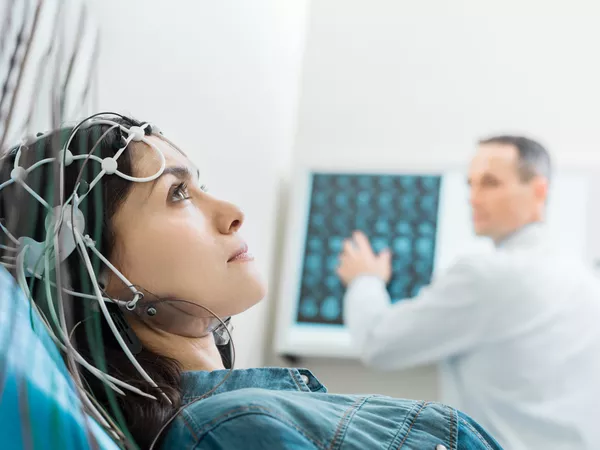
Sleep disturbances encompass a broad range of disorders, such as insomnia, restless legs syndrome, parasomnias, sleep-disordered breathing, daytime sleepiness, and circadian rhythm disorders. Sleep disorders may severely reduce patients’ quality of life and can be associated with depression, anxiety, headache, fatigue, cognitive decline, etc. Taking into account these aspects, sleep and the consequences of impaired sleep need to be investigated in clinical practice. Various methods of assessment can be used, from detailed history taking, further evaluation with validated scales or questionnaires, to wearable sensors and complex laboratory examinations (such as video polisomnography).
In Parkinson’s disease (PD), one of the most common neurodegenerative disorders, sleep disturbances can occur since the premotor stages (e.g. REM sleep behavior disorder or excessive daytime sleepiness) and have the tendency to progress as the severity of PD increases. Cholinergic, noradrenergic, and serotoninergic systems are predominantly impaired in PD, while the clinical subtype Park Sleep is mainly associated with serotonergic deficits – leading to somnolence, sudden onset of sleep, and REM sleep behavior disorder. Neurodegeneration, but also the iatrogenic effects of antiparkinsonian treatments may contribute to the broad spectrum of sleep disturbances that may occur in PD.
Moreover, sleep disturbances (mainly sleep fragmentation, decrease in nocturnal sleep time, diurnal napping, inversion of sleep-wake cycle) are frequently encountered in Alzheimer’s disease (AD) and other types of dementia and can further aggravate the rate of cognitive impairment, being associated with a considerable negative impact on the quality of life of patients and their caregivers.
This Research Topic aims to bring new insights regarding the prevalence, symptomatology, evaluation, and therapeutical options of sleep disturbances in PD, atypical parkinsonism, PD dementia, AD, and other types of dementia. Clinical Original Research (randomized controlled trials, cross-sectional studies, cohort studies, etc.), Systematic Reviews, Reviews, Comments, and Viewpoints are welcomed, pertaining but not limited to the following aspects of sleep disorders in PD and dementia:
- Epidemiology - Pathophysiology, genetics, biomarkers - Description of impaired macro- and microstructure of sleep - Clinical manifestation, main associations, and consequences - Diagnosis, neuroimaging aspects - Management
Article types and fees
This Research Topic accepts the following article types, unless otherwise specified in the Research Topic description:
Brief Research Report
Clinical Trial
Editorial
FAIR² Data
General Commentary
Hypothesis and Theory
Methods
Mini Review
Opinion
Articles that are accepted for publication by our external editors following rigorous peer review incur a publishing fee charged to Authors, institutions, or funders.
Article types
This Research Topic accepts the following article types, unless otherwise specified in the Research Topic description:
Important note: All contributions to this Research Topic must be within the scope of the section and journal to which they are submitted, as defined in their mission statements. Frontiers reserves the right to guide an out-of-scope manuscript to a more suitable section or journal at any stage of peer review.