TJ
trevor james hamilton
MacEwan University
Edmonton, Canada
255
Total downloads
4,903
Total views and downloads
Submit your idea
Select the journal/section where you want your idea to be submitted:
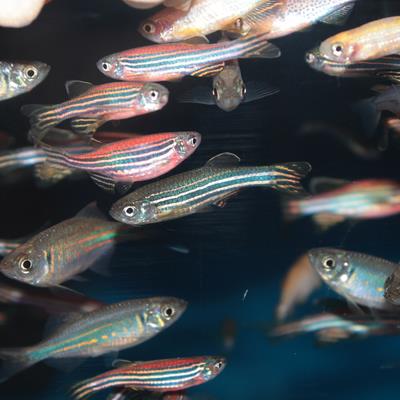
Research on neurobiology and behavior in fish provides key insights into the evolution of the brain, neurological processes, and how animals respond to environmental stimuli. Fish have become an increasingly popular model for studying behavior, cognition, neurobiology, environmental perturbations, and pharmacological responses due to their relatively simple nervous system, ease of manipulation in laboratory settings, and powerful experimental tools. Recent studies have used fish to screen pharmacological compounds and study the effects of pharmacological agents and environmental changes such as water quality, temperature, and hypoxia on neural and hormonal responses. Fish models also provide insight into human conditions like autism spectrum disorder, anxiety disorders, and neurodegenerative conditions including Parkinson’s and Alzheimer’s diseases, and connected forms of dementia.
Despite considerable progress in this area, we are still in the beginning stages of understanding how neural activity translates to observed behavior with electrophysiological, optogenetic, and imaging tools (e.g., GCaMP).
This Research Topic focuses on fish as a model for behavior spanning from basic to complex, from sensory adaptations to cognitive processing. It will further highlight how natural and anthropogenic influences (i.e. pharmacological and toxicological compounds, hypoxia, temperature) can alter neural functioning, neurotransmitter action, and hormonal regulation processes.
These impacts may be examined with acute, repeated, or chronic administration of compounds with a direct or transgenerational impact. Additionally, the potential of new genetic and molecular manipulation techniques alongside innovative behavioral assays will be examined.
To gather further insights into this dynamic field, we welcome articles addressing, but not limited to, the following themes:
- Technical advances in neurobiology, neuroimaging, and electrophysiology methods;
- Investigations of environmental stressors like hypoxia, temperature and elevated CO2, and pharmacological and toxicological effects on neural activity and/or behavior;
- Genetic and molecular manipulations altering neural activity and behavior;
- Modeling of human neurological and behavioral or psychiatric conditions in fish;
- Transgenerational effects of psychoactive compounds/drugs of abuse, toxins, and other environmental stressors;
- Development of innovative behavioral assays designed for fish models
We welcome studies using collaborative projects across disciplines such as ecology, physiology, and neuroscience that use innovative new tools to manipulate genetics, image neural activity, and quantify behavior to unravel the mechanistic relationship between neurons and behavior, and the consequent impact of drugs, toxins, and environmental stressors.
This Research Topic accepts the following article types, unless otherwise specified in the Research Topic description:
Articles that are accepted for publication by our external editors following rigorous peer review incur a publishing fee charged to Authors, institutions, or funders.
Keywords: Fish, animal model, drugs, pharmacology, physiology, sensory adaptations, cognitive processing, transgenerational impact, techniques, electrophysiology, genetic manipulation
Important note: All contributions to this Research Topic must be within the scope of the section and journal to which they are submitted, as defined in their mission statements. Frontiers reserves the right to guide an out-of-scope manuscript to a more suitable section or journal at any stage of peer review.
Manuscripts can be submitted to this Research Topic via the main journal or any other participating journal.
Submit your idea
Select the journal/section where you want your idea to be submitted:
