SA
sawaid abbas
University of the Punjab
Lahore, Pakistan
273
Total downloads
5,451
Total views and downloads
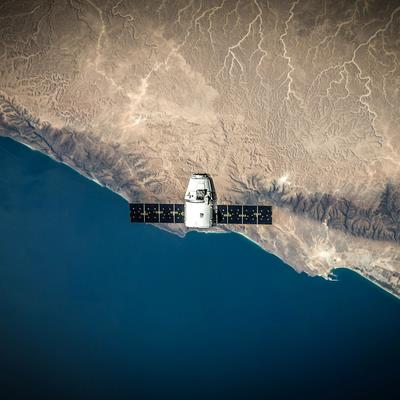
Urbanization is accelerating at an unprecedented pace, transforming landscapes, altering local climates, and increasing vulnerability to extreme weather events. These rapid changes amplify urban heat islands (UHI), disrupt land use and land cover (LULC) patterns, and exacerbate environmental risks such as air pollution and heat stress. Advanced remote sensing technologies, including hyperspectral, multispectral, thermal, LiDAR, and radar sensors, offer powerful capabilities to monitor, model, and mitigate these impacts. The integration of artificial intelligence (AI) and deep learning further enhances our ability to analyze large-scale urban environmental data with greater accuracy and efficiency. Recent advancements in satellite missions (e.g., ECOSTRESS, PRISMA, EnMAP) and drone-based remote sensing provide unprecedented insights into urban climate resilience. This Research Topic explores innovative methodologies that combine multi-source remote sensing and Geo-AI to improve urban climate assessment, promote sustainable city planning, and support evidence-based policymaking.
Urban environments are becoming increasingly complex, requiring innovative approaches to monitor and mitigate the effects of rapid urbanization and climate change. Traditional methods of urban environmental assessment often lack the spatial and temporal resolution necessary for effective decision-making. Advanced remote sensing and AI-driven techniques provide a robust solution by enabling precise and real-time analysis of urban heat dynamics, land transformation, air quality, and extreme climate events. However, challenges remain in integrating multi-sensor datasets, improving AI model reliability, and ensuring the usability of geospatial insights for urban planners and policymakers. This Research Topic aims to address these challenges by fostering interdisciplinary research on cutting-edge remote sensing methodologies and AI applications for urban resilience. By integrating multi-source datasets and advanced analytical frameworks, we can enhance our understanding of urban climate variability, inform adaptive strategies, and develop data-driven solutions for climate-resilient cities. This collection seeks to highlight novel techniques, case studies, and policy-oriented research that contribute to sustainable urban development and climate adaptation.
This Research Topic welcomes contributions that integrate advanced remote sensing and AI-driven analytics to assess urban climate dynamics, land transformation, and environmental sustainability. We seek original research articles, methodological advancements, case studies, and review papers addressing the following themes:
• Remote sensing applications for urban heat islands, extreme climate events, and microclimatic variations;
• AI-driven classification and mapping of urban vegetation, impervious surfaces, and built-up areas;
• Multi-sensor data fusion techniques combining optical, hyperspectral, LiDAR, and thermal remote sensing;
• Emerging satellite and drone-based sensors for urban climate and air quality assessment;
• Deep learning and Geo-AI applications for urban environmental monitoring;
• Multi-temporal and multi-scale remote sensing for tracking urban resilience;
• Policy-relevant applications of remote sensing for urban governance and climate adaptation.
We encourage submissions from researchers, urban planners, and policymakers to contribute innovative methodologies and case studies that drive actionable insights for resilient urban development.
Keywords: urban resilience, multi-source remote sensing, geo ai, urban heat island, extreme climate events, hyperspectral imaging, thermal imaging, lidar, urban land, air quality, urban emissions, smart cities, remote sensing
Important note: All contributions to this Research Topic must be within the scope of the section and journal to which they are submitted, as defined in their mission statements. Frontiers reserves the right to guide an out-of-scope manuscript to a more suitable section or journal at any stage of peer review.
