GV
giustino varrassi
Other
Roma, Italy
3,835
Total downloads
24k
Total views and downloads
Submit your idea
Select the journal/section where you want your idea to be submitted:
Manuscript Submission Deadline 30 June 2026
This Research Topic is currently accepting articles
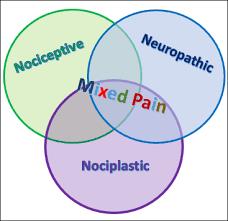
Acute pain functions as a protective signal indicating potential or actual tissue damage, whereas chronic pain, persisting beyond the normal healing period, emerges as a convoluted clinical challenge. With the transition from acute to chronic pain, patients often endure significant functional impairment and emotional distress, resulting from neuroplastic changes in the peripheral and central nervous systems. These alterations heighten pain sensitivity and disrupt typical pain processing, contributing to the confluence of pain perceptions and pathways originating from various etiologies, including musculoskeletal injuries, inflammatory conditions, and nerve damage. During this evolution, frequently patients are affected by mixed pain. Mixed pain is a complex field of study within pain management, whose definition is still discussed. It is characterized by a blend of nociceptive, neuropathic, and sometimes nociplastic mechanisms. A multidisciplinary approach is essential to elucidate pathophysiological mechanisms and identify effective interventional, pharmacological, and rehabilitative strategies for managing mixed pain.
The primary objective of this Research Topic is to deepen our understanding of the complex interplay between nociceptive and neuropathic mechanisms, facilitating the development of personalized diagnostic tools and effective therapeutic strategies. Specifically, this research seeks to delineate the cellular and molecular pathways driving coexistence and mutual modulation of different pain components, including genetic, epigenetic, and neuroimmune factors. By innovating diagnostic and biomarker methods, such as neuroimaging and electrophysiological techniques, we aim to classify mixed pain subtypes, while advancing translational and preclinical research through the establishment of representative models. Furthermore, this Research Topic aspires to evaluate patient-centered multimodal therapies, emphasizing comprehensive clinical trials and prioritizing patient-reported outcomes.
To gather further insights into mixed pain and its multifaceted nature, we welcome articles addressing, but not limited to, the following themes:
• Uncovering cellular, molecular, genetic, or neuroimmune drivers of mixed-pain syndromes
• Validating biomarkers or imaging/electrophysiological signatures to distinguish mixed-pain subtypes
• Presenting robust preclinical models or translational studies of novel targets, such as pharmacological and neuromodulation approaches
• Reporting on clinical trials, observational studies, or case series evaluating combined therapeutic interventions
• Exploring patient-centered outcomes, digital health tools, and health-economic considerations
We invite manuscripts in the form of original articles, reviews, systematic reviews, meta-analysis, opinion articles, and case reports. Manuscripts should adhere to our journal's guidelines, be submitted in English, and observe ethical reporting standards.
Topic Editor Giacomo Farì received grants from Coloplast (SIUD National Congress, Bologna, June 2025), Menarini Group (Springer International Pain Academy 2025 and Roma Pain Days 2025), and Angelini Pharma (“Pain management in the general practitioners outpatient” project). The other Topic Editors declare no conflicts of interest.
This Research Topic accepts the following article types, unless otherwise specified in the Research Topic description:
Articles that are accepted for publication by our external editors following rigorous peer review incur a publishing fee charged to Authors, institutions, or funders.
Keywords: nociceptive pain, neuropathic mechanisms, mixed pain, pain modulation, personalized therapy, neuroplasticity
Important note: All contributions to this Research Topic must be within the scope of the section and journal to which they are submitted, as defined in their mission statements. Frontiers reserves the right to guide an out-of-scope manuscript to a more suitable section or journal at any stage of peer review.
Manuscripts can be submitted to this Research Topic via the main journal or any other participating journal.
Submit your idea
Select the journal/section where you want your idea to be submitted: