DC
dr carolina ramirez-figueroa
Royal College of Art
London, United Kingdom
12k
Total views and downloads
Submit your idea
You will be redirected to our submission process.
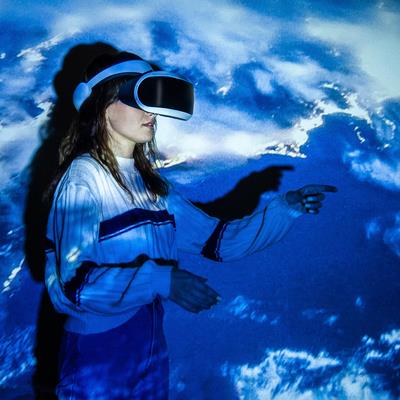
Immersive technologies, from XR to spatial computing, are redefining how stories are told, experienced, and co-created. Beyond entertainment, they provide a space for multi-perspective, multi-sensory storytelling, opening up new forms of engagement for underrepresented communities and alternative narratives. Borrowing from immersive theatre, live-action role-playing (LARP), psychogeography, architecture and tactical media, these technologies challenge traditional modes of authorship, fostering co-creation and distributed knowledge-making.
As immaterial communication spaces, immersive interfaces have the potential to disrupt norms and prototype new modes of collaboration, facilitating exchange across geographies, disciplines, and species. They offer an opportunity to experiment with non-linguistic and cross-linguistic communication, exploring alterity in relation to both human and non-human subjects. At the same time, embracing DIY, low energy, and participatory approaches counters extractive, high-energy models of immersion, advocating for more accessible, sustainable, and community-led practices.
This Research Topic explores how immersive technologies have been leveraged for decentralised storytelling, radical inclusivity, and reimagined creative futures and the impact this has had. It welcomes contributions that critically engage with the politics of immersion, and interrogate how these technologies might be mobilised for collective agency and social transformation. The focus should be on the impact of these technologies upon people and society, in line with the scope of the Digital Impacts section.
We welcome articles addressing, but not limited to, the following themes:
• Decentralised Storytelling, Co-Creation, and Radical Inclusivity: How immersive technologies enable shared authorship, multi-perspective narratives and create space for underrepresented communities and alternative voices.
• Non-Linguistic, Cross-Linguistic, and Cross-Species Communication: Exploring how immersive interfaces have been used as tools for communication beyond language and across species, fostering new modes of expression and understanding.
• Tactical Media, Activism, and Sustainable Immersion: The use of XR, spatial computing, and DIY practices in political resistance, community-led projects, and low-energy, accessible immersive environments.
This Research Topic accepts the following article types, unless otherwise specified in the Research Topic description:
Articles that are accepted for publication by our external editors following rigorous peer review incur a publishing fee charged to Authors, institutions, or funders.
Keywords: Immersive Technologies, Decentralised Storytelling, Radical Inclusivity, Co-Creation, Sustainable Immersion, Multi-Sensory Communication
Important note: All contributions to this Research Topic must be within the scope of the section and journal to which they are submitted, as defined in their mission statements. Frontiers reserves the right to guide an out-of-scope manuscript to a more suitable section or journal at any stage of peer review.
Royal College of Art
London, United Kingdom
Royal College of Art
London, United Kingdom
University of Technology Sydney
Sydney, Australia
Centre for Dance Research, C-DaRE
Coventry, United Kingdom
Dún Laoghaire Institute of Art, Design and Technology (IADT)
Dún Laoghaire, Ireland
Manuscripts can be submitted to this Research Topic via the main journal or any other participating journal.
Submit your idea
You will be redirected to our submission process.
