AS
anna szczegielniak
Medical University of Silesia
Katowice, Poland
1,201
Total views and downloads
Submit your idea
You will be redirected to our submission process.
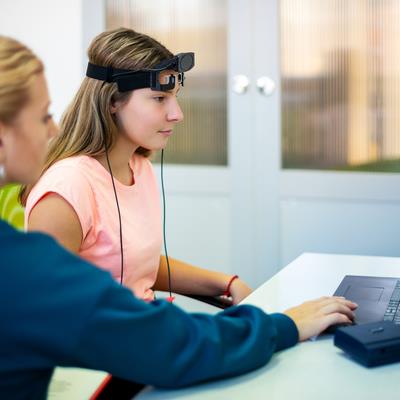
This Research Topic addresses a critical gap between neuroscientific research and its practical implementation in education and mental healthcare. Although neurophysiological tools such as EEG, eye-tracking, and cardio-respiratory monitoring have matured in research contexts, their translation into real-world adaptive systems remains underdeveloped. Integrating these technologies with socially intelligent robotics and human–robot interaction aims to bridge laboratory-based neuroscience insights with real-world applications in therapy, rehabilitation, and adaptive learning. A translational framework connects theoretical advances in affective computing and physiological sensing with ethical and effective implementation strategies. For example, for students with attention difficulties, these systems can use EEG patterns to detect focus loss in real time and provide adaptive support, such as adjusting task difficulty or delivering personalized feedback, which may improve attention and academic performance. In clinical settings, neurophysiology-informed interventions have been shown to reduce ADHD symptoms, anxiety, and hyperactivity, with effects lasting 6–12 months post-treatment.
This collection explores how EEG, eye-tracking, and other physiological signals can be used to model attention, emotional arousal, and engagement in real time. Socially aware robots are designed to deliver neurophysiology-informed feedback and adaptive support in educational and therapeutic settings, with interventions personalized through machine learning. These applications enhance learning by improving focus, motivation, retention, emotional regulation, self-awareness, and social interaction, especially in group or classroom environments. In parallel, they support mental health interventions for anxiety, ADHD, and behavioral addictions. The collection addresses ethical, social, and legal considerations to ensure responsible deployment, including privacy-conscious and bias-aware design for real-time physiological data. Guidelines will emphasize inclusivity, cultural sensitivity, and protection of vulnerable users (e.g., children, neurodivergent individuals, and patients in crisis). By integrating rigorous testing with ethical design, this Topic seeks to advance safe, adaptive neurotechnologies for education and mental healthcare.
This Research Topic explores the convergence of neurophysiological sensing, adaptive robotics, and human-centered AI in real-world educational and clinical settings. It aims to establish a benchmark for personalized, real-time interventions that improve learning and mental healthcare. It bridges the gap between laboratory insights and scalable, ethical applications by aligning emerging neurotechnologies with user needs. It also fosters interdisciplinary collaboration among neuroscientists, educators, clinicians, engineers, and psychologists, especially in clinical, educational, and social contexts. Contributions proposing practical frameworks or policy guidance for responsible deployment are encouraged, particularly those including datasets, documentation, or replicability tools to support open science and wider adoption.
We welcome submissions that include (but are not limited to):
• Adaptive neurorobotic systems using EEG, eye-tracking, or physiological signals for learning, rehabilitation, or assistive support.
• Embodied AI agents delivering real-time, neurophysiology-informed feedback in educational or clinical settings.
• Brain-inspired or multimodal models combining physiological, behavioral, or environmental data to interpret cognitive or emotional states.
• Human–robot interaction studies exploring therapeutic alliance, trust, inclusivity, and user experience, especially in mental health or diverse populations.
• Comparative studies evaluating neurorobotics versus conventional therapy, education, or rehabilitation interventions.
• Open-source platforms or sensor innovations for integrating physiological monitoring with robotic systems.
• Ethical, social, or legal analyses of neurorobotics in sensitive, high-stakes environments, emphasizing privacy and bias-aware design.
This Research Topic accepts the following article types, unless otherwise specified in the Research Topic description:
Articles that are accepted for publication by our external editors following rigorous peer review incur a publishing fee charged to Authors, institutions, or funders.
Keywords: Neuroadaptive Technologies, Human–Robot Interaction, Physiological Computing, Adaptive Learning Systems, Digital Mental Health Interventions
Important note: All contributions to this Research Topic must be within the scope of the section and journal to which they are submitted, as defined in their mission statements. Frontiers reserves the right to guide an out-of-scope manuscript to a more suitable section or journal at any stage of peer review.
Manuscripts can be submitted to this Research Topic via the main journal or any other participating journal.
Submit your idea
You will be redirected to our submission process.
