ED
enrico doria
University of Pavia
Pavia, Italy
863
Total views and downloads
Submit your idea
You will be redirected to our submission process.
Artificial intelligence (AI) and machine learning (ML) are emerging as pivotal, iterative tools in digitising and optimising the complex processes involved in bioactive compound research. Bioactives derived from plants are valued across sectors, from food to plant protection products. In recent years, advances in hardware-assisted AI and rapidly evolving ML methods have enabled the identification of desirable bioactive compounds within chemical spaces such as those found in natural products (NPs). Several ML-based approaches aimed at identifying specific bioactives for different diseases are now beginning to be reported, offering new opportunities for both discovery and application.
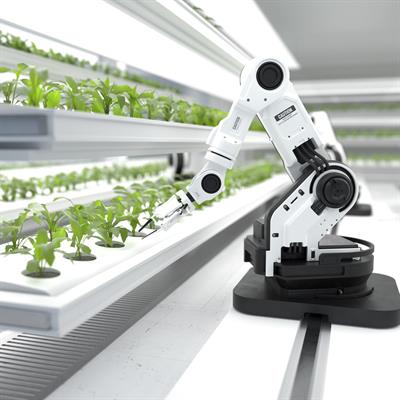
This proposal focuses on integrating state-of-the-art environmental sensing, targeted biochemical assays, and AI models to: (1) predict the dynamics of bioactive concentrations under specific controlled-environment (CE) regimes, and (2) prescribe control trajectories for CE that maximise total recoverable bioactives while balancing crop health and resource constraints. CE factors known to affect secondary metabolism include: lighting; temperature; relative humidity and vapour pressure deficit; CO₂ concentration; nutrient solution properties (electrical conductivity, pH, ion concentrations of N, P, K, micronutrients); root zone temperature, substrate moisture and oxygenation (for hydroponics/aeroponics); and mechanical or abiotic stressors such as mild drought or elicitor treatments.
By modelling these factors, AI can predict and drive the accumulation of specific bioactives—such as anthocyanins, flavonoids, terpenoids, and phenolic compounds—and optimise their recoverability. Each crop’s target bioactives will be quantified using gold-standard assays (HPLC/LC-MS, spectrophotometric techniques). To address the trade-off between yield and concentration, tissue partitioning, total biomass, and basic quality attributes (dry matter, soluble solids) will also be assessed. This integrated approach moves beyond empirical trial-and-error, towards targeted, data-driven cultivation and extraction strategies.
The Research Topic Bioactive Compounds and Artificial Intelligence aims to explore the intersection of AI, ML, and bioactive compound science, with particular emphasis on how CE parameter modelling can inform sustainable, high-yield production systems and improve post-harvest recovery, including from agricultural by-products.
Themes to be addressed:
1. AI and ML in Bioactive Compound Discovery
- ML algorithms for identifying bioactives from plant extracts.
- Predictive models for bioactivity profiling and molecular docking of natural products.
2. Optimisation of Cultivation and Extraction
- AI-based modelling of CE parameters to predict and enhance bioactive accumulation.
- AI-assisted optimisation of extraction techniques to maximise recovery, with emphasis on sustainability and efficiency.
Types of Manuscripts:
- Original Research Articles
- Reviews and Mini-Reviews
- Perspectives or Opinion Papers
- Case Studies
- Methodological Papers
This Research Topic accepts the following article types, unless otherwise specified in the Research Topic description:
Articles that are accepted for publication by our external editors following rigorous peer review incur a publishing fee charged to Authors, institutions, or funders.
Keywords: Aritificial Intelligence, secondary metabolites, sustainability, bioactive compounds, digitalisation, machine learning tools, extraction systems
Important note: All contributions to this Research Topic must be within the scope of the section and journal to which they are submitted, as defined in their mission statements. Frontiers reserves the right to guide an out-of-scope manuscript to a more suitable section or journal at any stage of peer review.
Manuscripts can be submitted to this Research Topic via the main journal or any other participating journal.
Submit your idea
You will be redirected to our submission process.
