NB
nelson barrios
Sappi North America
Westbrook, United States
331
Total views and downloads
Submit your idea
You will be redirected to our submission process.
Manuscript Submission Deadline 28 March 2026
This Research Topic is currently accepting articles.
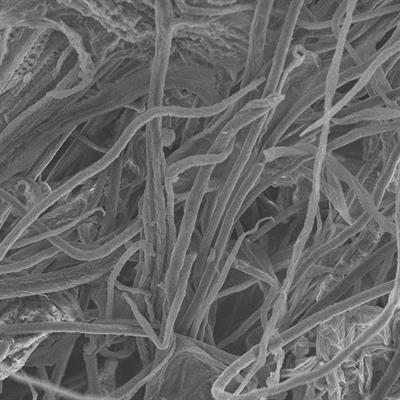
The transition to low-carbon, energy-efficient manufacturing requires disruptive innovations in industrial biotechnology. Among the most promising approaches are enzyme-based strategies that leverage microbial biocatalysts to modify, process, or valorize lignocellulosic materials under mild conditions. This Research Topic explores how engineered or natural enzymes—such as cellulases, hemicellulases, esterases, and auxiliary enzymes—can drive the decarbonization of processes like fiber refining, dewatering, and surface functionalization in the pulp, packaging, textile, and biocomposite sectors. Contributions may also include enzyme design, modular cocktail formulation, molecular modeling of fiber–enzyme–water interactions, and techno-economic or life cycle assessments. Special attention is given to enzyme-microbe synergies, cell-free systems, and integration with existing industrial platforms. This RT invites scientists, engineers, and biotechnologists working at the interface of microbiology, materials science, and green chemistry to share their latest findings.
This Research Topic aims to consolidate recent advances in enzyme-enabled sustainable processing, especially in fiber-based industries such as paper, packaging, and textiles. We seek to bring together studies that improve our understanding of enzyme-substrate specificity, microbial enzyme production, and hybrid biocatalytic systems to support industrial decarbonization goals. We hope to create a comprehensive platform for mechanistic insights, performance benchmarking, and system-level integration of enzymatic treatments across sectors.
• Cellulase and hemicellulase applications in fiber processing
• Microbial or recombinant enzyme production and stabilization
• Mechanistic modeling of enzyme–fiber–water interactions
• Synergistic enzyme cocktails and modular formulations
• Applications in pulp, paper, packaging, textiles, or biomaterials
• Techno-economic assessments and scale-up case studies
We also encourage submissions using advanced computational tools (e.g., molecular dynamics, QM/MM) to elucidate enzyme action and material performance.
This Research Topic accepts the following article types, unless otherwise specified in the Research Topic description:
Articles that are accepted for publication by our external editors following rigorous peer review incur a publishing fee charged to Authors, institutions, or funders.
Keywords: enzymes, fiber biotransformation, sustainable processing, microbial biotechnology, pulp and paper
Important note: All contributions to this Research Topic must be within the scope of the section and journal to which they are submitted, as defined in their mission statements. Frontiers reserves the right to guide an out-of-scope manuscript to a more suitable section or journal at any stage of peer review.
Manuscripts can be submitted to this Research Topic via the main journal or any other participating journal.
Submit your idea
You will be redirected to our submission process.
