LR
longfei ren
Chinese Academy of Sciences (CAS)
Beijing, China
796
Total views and downloads
Submit your idea
Select the journal/section where you want your idea to be submitted:
Manuscript Submission Deadline 26 April 2026
This Research Topic is currently accepting articles
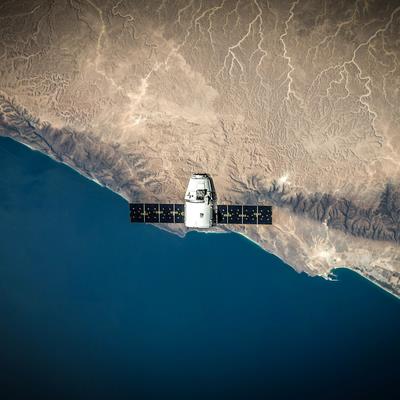
Hyperspectral imaging (HSI) captures rich spectral–spatial cues that enable material identification, target detection, environmental monitoring, and precision agriculture at scale. A new wave of satellite assets—PRISMA, EnMAP, DESIS (ISS), GF-5 AHSI, and HysIS, with ESA CHIME and NASA’s SBG on the horizon—has accelerated data availability and diversity, while pairing naturally with multispectral (Sentinel-2, Landsat-9), LiDAR (e.g., GEDI), thermal (e.g., ECOSTRESS), and SAR (Sentinel-1) for multi-sensor fusion. These advances motivate algorithms that are both efficient and uncertainty-aware, with robust calibration transfer, cross-sensor harmonization, and field/lab validation. Methodologically, progress spans sparse/low-rank models, deep and physics-informed learning, and self-supervised paradigms, enabling strides in anomaly/target detection, change detection, restoration, segmentation, unmixing, classification, and super-resolution. Applications now extend from agriculture and cities to aquatic and cryospheric environments, moving HSI firmly into real-world deployment.
This Research Topic seeks to bring together novel contributions that address the full pipeline of hyperspectral image processing: theoretical advances, computationally efficient algorithms, benchmark dataset development, and translation of research outcomes into actionable applications. Contributions are encouraged from both academia and industry, spanning sensor designers, algorithm developers, and application domain experts.
We welcome Original Research, Methods, and Reviews on (not limited to):
- Algorithmic innovations
- Spectral–spatial feature learning; dimensionality reduction; unmixing with spectral variability
- Anomaly/target and change detection under complex, mixed backgrounds
- Physics-informed, self-/semi-supervised, and uncertainty-aware deep learning
- Transfer learning, domain adaptation, calibration transfer across sensors/missions
- Real-time and energy-efficient inference; scalable distributed pipelines
- Data & benchmarking
- Open datasets (including fusion datasets with MS/LiDAR/thermal/SAR), synthetic data and simulators
- Standardized metrics, uncertainty annotations, cross-sensor harmonization protocols
- Reproducible baselines, open-source code, and experiment checklists
- Applications
- Precision agriculture, forestry, and biodiversity monitoring
- Aquatic/coastal and inland waters (HABs, water quality, bathymetry)
- Cryosphere (snow/ice impurities, albedo, debris-covered glaciers)
- Urban environment, infrastructure, and energy/heat mapping
- Geology, mining, and planetary science
- Disaster assessment, emergency response, and climate services
This Research Topic accepts the following article types, unless otherwise specified in the Research Topic description:
Articles that are accepted for publication by our external editors following rigorous peer review incur a publishing fee charged to Authors, institutions, or funders.
Keywords: remote sensing, satellite missions, sensors, climate studies, data, hyperspectral, low level tasks, high level tasks, machine learning, deep learning
Important note: All contributions to this Research Topic must be within the scope of the section and journal to which they are submitted, as defined in their mission statements. Frontiers reserves the right to guide an out-of-scope manuscript to a more suitable section or journal at any stage of peer review.
Manuscripts can be submitted to this Research Topic via the main journal or any other participating journal.
Submit your idea
Select the journal/section where you want your idea to be submitted:
