LP
li ping chung
Fiona Stanley Hospital
Perth, Australia
587
Total views and downloads
Submit your idea
You will be redirected to our submission process.
Manuscript Summary Submission Deadline 10 February 2026 | Manuscript Submission Deadline 31 May 2026
This Research Topic is currently accepting articles.
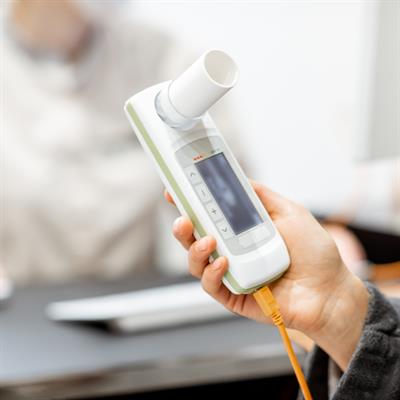
Respiratory medicine has witnessed substantial progress with the introduction of advanced lung function tests, particularly oscillometry, offering sophisticated insights into asthma management. Small airway dysfunction plays a pivotal role in exacerbations and poor asthma control, yet its early detection remains a clinical challenge. Traditional reliance on spirometry often misses subtle changes in the distal airways, prompting the exploration of oscillometry, which employs frequency-dependent measures to identify early pathological alterations. Increasingly, we are also seeing individuals with overlapping diagnosis of asthma with COPD or bronchiectasis.
For these reasons, more research into the utility of oscillometry in assessment and management of other airways diseases such as COPD and bronchiectasis is urgently needed. Emerging evidence shows oscillometry’s heightened sensitivity, particularly in markers like R5, R5–R20, X5 and area under the reactance curve (AX), for detecting dysfunction and aiding risk stratification. However, its adoption in routine clinical practice is hampered by heterogeneity in test parameters, absence of universally accepted cutoffs, and the lack of standardized protocols, limiting both inter-study comparability and clinical translation.
This Research Topic aims to establish robust, standardized oscillometry metrics to heighten the precision and utility of small airway assessment in management of asthma, COPD and/or bronchiectasis. By reconciling diverse methodologies and deriving clinically relevant cutoffs, this initiative seeks to improve predictive accuracy for exacerbations and symptom control status. Integrating oscillometry with gold-standard spirometry, the overarching objective is to facilitate nuanced disease phenotyping, optimal treatment allocation, and a shift towards individualized care pathways, particularly for severe or refractory disease subsets. Key questions include which oscillometric markers are most predictive of adverse outcomes, and how best to harmonize their interpretation across varied patient cohorts.
The scope of this Research Topic encompasses both foundational and applied research, delimited to studies that address the use of oscillometry in asthma diagnostics and management, the development and validation of standardized measurement protocols, and the translation of findings into clinical practice. We welcome submissions that address, but are not limited to, the following themes:
o Standardization and validation of oscillometry parameters and cutoffs
o Integration of oscillometry with spirometry and other diagnostic modalities
o Predictive value of oscillometry in identifying exacerbations of airway disease (asthma, COPD and/or bronchiectasis) and uncontrolled disease
o Clinical application of oscillometry in pediatric or adult asthma cohorts, COPD or bronchiectasis
o Implementation science and barriers to routine oscillometry adoption
o Comparative effectiveness research and outcomes in precision airways management
o Methodological innovations and retrospective or prospective data analyses
We welcome original research, reviews, perspectives, methodological papers, and clinical trial reports.
This Research Topic accepts the following article types, unless otherwise specified in the Research Topic description:
Articles that are accepted for publication by our external editors following rigorous peer review incur a publishing fee charged to Authors, institutions, or funders.
Keywords: Asthma Management, Oscillometry, Airway Disfunction, Small Airway Dysfunction, Airway Disease
Important note: All contributions to this Research Topic must be within the scope of the section and journal to which they are submitted, as defined in their mission statements. Frontiers reserves the right to guide an out-of-scope manuscript to a more suitable section or journal at any stage of peer review.
Manuscripts can be submitted to this Research Topic via the main journal or any other participating journal.
Submit your idea
You will be redirected to our submission process.
