NP
ngoc pham
Wageningen Social & Economic Research
Wageningen, Netherlands
728
Total views and downloads
Submit your idea
You will be redirected to our submission process.
Manuscript Summary Submission Deadline 7 April 2026 | Manuscript Submission Deadline 31 August 2026
This Research Topic is currently accepting articles.
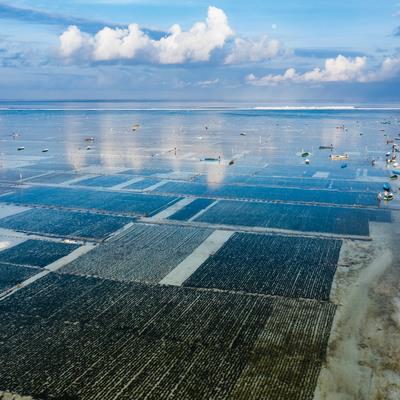
The role of seaweed in driving the blue economy is gaining global recognition, as it is increasingly viewed as a vital resource offering significant climate and ecological benefits. These include carbon sequestration, nutrient bioremediation, and the creation of habitats that support marine biodiversity.
Seaweed is expected to play an expanding role across a wide range of industries, including food, animal feed, textiles, pharmaceuticals, cosmetics, agricultural biostimulants, packaging and plastic alternatives, ecosystem restoration, bioremediation, and emerging innovative applications. Furthermore, integrating seaweed cultivation with low-trophic aquaculture, such as shellfish farming, offers the potential to develop synergistic multi-trophic systems. These systems enhance productivity while minimizing environmental impacts, aligning with sustainability goals.
This Research Topic aims to explore and showcase the latest advancements in the economic, social, environmental, and governance dimensions of seaweed value chains on a global scale.
According to data from the Food and Agriculture Organization, global seaweed production has grown significantly over the past two decades. In 2021, global seaweed production reached approximately 36.3 million tonnes, nearly tripling from 11.8 million tonnes in 2001. However, as the industry expands, an open question is about its economic, social, environmental, and governance sustainability.
With the limited coastal space, policymakers and local governments face important strategic decisions on sustainable coastline development, balancing environmental protection, social acceptance, and economic stability. Valuable lessons can also be drawn from the diverse experiences of countries worldwide.
This Research Topic aims to advance global understanding of seaweed studies by addressing key challenges:
1. Economic challenges: Analyze production and processing costs, innovative applications, business models, and market uncertainties to enhance industry viability.
2. Social challenges: Examine customer acceptance, secure social licenses, and understand community expectations to foster algae market development.
3. Environmental challenges: Investigate how seaweed farms can monetize ecosystem services like carbon sequestration and nutrient bioremediation.
4. Governance challenges: Explore regulations, policy frameworks, and collaboration across the value chain to ensure sustainable industry growth.
Scope and information for authors:
- Economic assessment of seaweed value chains
- Social and cultural perspective on seaweed development
- Ecosystem services and environmental benefits
- Blue carbon financing and policy mechanisms
- Innovations in value chain development
- Business development and market opportunities for seaweed products
Types of manuscript
- Original research papers
- Review articles
- Policy briefs
- Case studies
This Research Topic accepts the following article types, unless otherwise specified in the Research Topic description:
Articles that are accepted for publication by our external editors following rigorous peer review incur a publishing fee charged to Authors, institutions, or funders.
Keywords: Value chain development, blue economy, algae-based products, circular economy, nature-based solutions
Important note: All contributions to this Research Topic must be within the scope of the section and journal to which they are submitted, as defined in their mission statements. Frontiers reserves the right to guide an out-of-scope manuscript to a more suitable section or journal at any stage of peer review.
Manuscripts can be submitted to this Research Topic via the main journal or any other participating journal.
Submit your idea
You will be redirected to our submission process.
