Biogeochemical Cycling and Depositional Processes of Critical Metals in the Deep Sea and Their Constraints on Global Changes

Cover image for Research Topic "Biogeochemical Cycling and Depositional Processes of Critical Metals in the Deep Sea and Their Constraints on Global Changes"
51kviews
Editorial: Biogeochemical cycling and depositional processes of critical metals in the deep sea and their constraints on global changes
Editorial25 September 2025
Editorial: Biogeochemical cycling and depositional processes of critical metals in the deep sea and their constraints on global changes

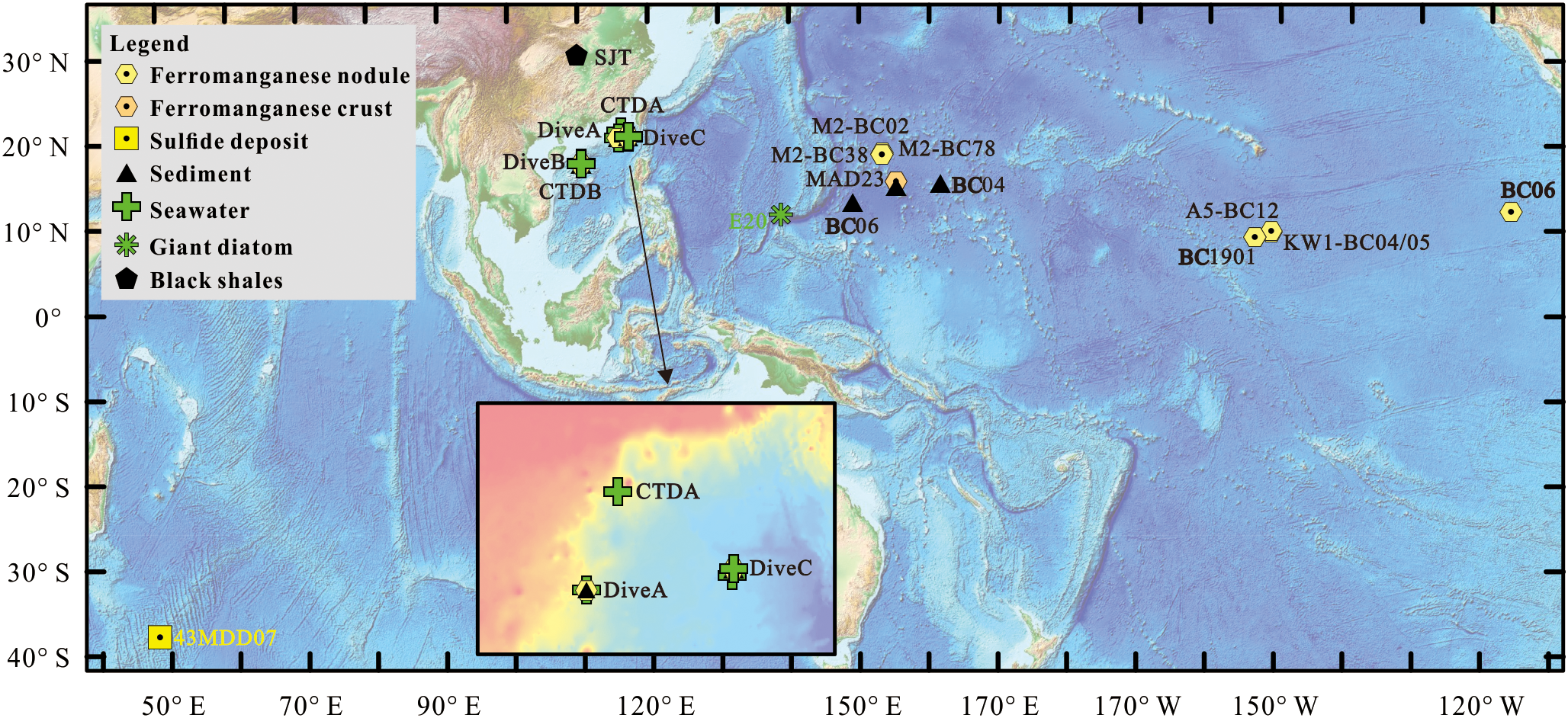
1 Introduction Critical metals—notably cobalt (Co), nickel (Ni), and rare earth elements (REE)—demonstrate pronounced enrichment in deep-sea sedimentary environments, particularly within polymetallic ferromanganese nodules, Co-rich ferromanganese crusts, and hydrothermal polymetallic sulfide deposits. These metalliferous phases represent strategic resources essential for sustainable technologies and decarbonization economies (Jiang et al., 2023; Sakellariadou et al., 2022). The sediment‒water interface functions as a critical biogeochemical reaction front governing metal fluxes between oceanic and sedimentary reservoirs (Ren et al., 2024a; Du et al., 2025). Nevertheless, metal cycling dynamics across this interface are modulated by interconnected environmental forcing: (1) productivity-driven organic matter fluxes, (2) redox oscillations, (3) bottom-current reworking, (4) volcanic-hydrothermal inputs, and (5) climatic-tectonic controls on depositional architectures. A mechanistic understanding of critical metal transport pathways, enrichment processes in mineral phases, and post-depositional preservation states is fundamental for both elucidating deep-sea ore genesis and reconstructing paleoenvironmental proxies. Integrating metal deposition systems within biogeochemical cycling frameworks under global change scenarios involves two imperatives: advancing earth system science and enabling predictive resource exploration models. This special issue (Biogeochemical Cycling and Depositional Processes of Critical Metals: Implications for Global Change) synthesizes 9 pioneering studies examining ferromanganese nodules, sulfide deposits, giant diatom tests, and black shales across Pacific, Indian, and South China Sea basins and the Yangtze platform continental margin (Figure 1). These findings provide novel insights into metal cycling and paleoceanographic evolution. Figure 1. Schematic map of sample locations for the 9 studies in the special issue. Data sources: Ferromanganese nodules (Lai et al., 2024; Li et al., 2024; He et al., 2025), ferromanganese crusts (Ren et al., 2024b), sulfide deposits (Yang et al., 2025), sediments (Lai et al., 2024; Shen et al., 2024; Yang et al., 2024), seawater (Lai et al., 2024), giant diatoms (Lin et al., 2025a), and black shales (Wang et al., 2024). 2 Summary of special issue contributions Ren et al. (2024b) investigated Co enrichment in ferromanganese crusts, identifying key controls such as diffusion flux, seawater Co concentration, and MnO2 dilution. It innovatively integrates these factors into a quantitative model to explain Co variations with water depth, offering a framework for resource assessment. This work highlights the role of biogeochemical processes in deep-sea metal deposition. He et al. (2025) revealed that bacterial communities and biological structures facilitate metal enrichment and mineralization, with regional variations in polymetallic ferromanganese nodule formation linked to redox conditions and productivity. Li et al. (2024) demonstrated spatial variability in nodule composition within the Clarion-Clipperton Zone, attributing differences to hydrogenetic vs. diagenetic processes driven by plate motion and Antarctic bottom water dynamics. These studies explore the biogeochemical cycling and depositional processes of critical metals in deep-sea polymetallic nodules, highlighting microbial roles and environmental controls. Lai et al. (2024) investigated microbial driven polymetallic ferromanganese nodule formation in the South China Sea, revealing how heterogeneous marine environments influence metal deposition. An analysis of microbial communities and geochemical conditions across three regions revealed distinct nodule formation mechanisms: diagenesis in suboxic settings and hydrogenesis in oxygen-rich areas. This work highlights microbial roles in metal cycling and nodule genesis, offering novel insights into deep-sea biogeochemical processes and their global implications. Yang et al. (2025) investigated the biogeochemical cycling and deposition of critical metals in the Duanqiao hydrothermal field on the Southwest Indian Ridge. The analysis of mineral textures, trace elements, and 230Th/U dating reveals multistage mineralization driven by seawater-hydrothermal fluid interactions. This study identifies enrichment mechanisms for Zn, Pb, As, Ag, and Cd in pyrite, chalcopyrite, and sphalerite, advancing the understanding of metal deposition in ultraslow-spreading ridges. Yang et al. (2024) investigated metal regeneration dynamics in polymetallic nodule areas through ex-situ sediment disturbance experiments, revealing synchronized metal behaviors (e.g., Li, V, Co) linked to ferromanganese oxides and sediment texture. Key innovations include quantifying short-term metal release and identifying physicochemical controls, offering critical insights for deep-sea mining ecological risks. Shen et al. (2024) explored the middle Pleistocene ventilation history in the Magellan Seamounts via magnetic coercivity, metal enrichment, and grain size, linking weakened ventilation post-430 ka to reduced Antarctic bottom water formation. This work innovatively integrates multiple proxies to disentangle eolian inputs from circulation-driven redox changes, advancing the understanding of deep-sea biogeochemical cycles and their climate connections. Both studies highlight the interplay between metal mobility, sedimentation, and global change. Lin et al. (2025a) advanced the understanding of biogeochemical cycling and deep-sea deposition by revealing that Ethmodiscus rex diatom blooms (last glacial maximum to early Holocene) were driven by deep-water upwelling and volcanic nutrient fluxes, not solely eolian dust. Key innovations include linking diatom mat formation to intensified deep currents and topographic upwelling, highlighting the role of deep-ocean processes in carbon sequestration and global climate dynamics. Notably, the Figure 7 in the original publication contained an error, which has been addressed in a subsequent Correction notice (Lin et al., 2025b). Wang et al. (2024) investigated the biogeochemical cycling and deposition of critical metals (V, Cr, Ni, U, Sr, Ba) in Cambrian black shales of the Shuijingtuo Formation, highlighting their enrichment mechanisms under anoxic conditions, high productivity, and hydrothermal activity. Key innovations include linking metal enrichment to organic matter affinity, redox-sensitive deposition, and submarine hydrothermal influences, providing insights into paleoenvironmental controls on metal cycling in deep-sea settings.

2,706 views

1 citations

Bacterial contributions to the formation of polymetallic nodules in the Pacific Ocean
ORIGINAL RESEARCH
3 March 2025
Bacterial contributions to the formation of polymetallic nodules in the Pacific Ocean
Xinyi He, 7 more and Huaiming Li
Polymetallic nodules, widely distributed in the deep seafloor of the Pacific Ocean, are characterized by their abundance of diverse metal elements and considerable economic value. Previous studies have suggested a partial biogenic origin of these nodules. This study investigated the role of microorganisms in nodule formation by examining biological-like structures and bacterial communities within nodules and sediments. Scanning electron microscopy revealed bacteria-like microspheres, skeleton-like structures and extracellular polymeric substances-like structures in the nodules. Energy dispersive spectroscopy showed that these biological-like structures facilitated metal enrichment, enabling subsequent mineral precipitation. Shewanella, Colwellia, Leptospirillum, Sulfitobacter, and other bacteria may possess mineralization potential due to their Mn or Fe oxidation capabilities. Differences in internal structures and bacterial community composition between nodules from the western and eastern Pacific Ocean could potentially suggest that growth environment factors may contribute to nodule formation variation. These findings highlight the involvement of microorganisms in nodule formation and contribute to a better understanding of the biogenic mineralization process.

5,646 views

6 citations

ORIGINAL RESEARCH
14 January 2025
Evolution of a seafloor massive sulfide deposit on axial volcanic ridges: a case study of the Duanqiao hydrothermal field, Southwest Indian Ridge
Weifang Yang, 7 more and Lisheng Wang

4,050 views

3 citations

HYPOTHESIS AND THEORY
14 May 2025
Giant diatom blooms driven by deep water upwelling since late MIS3? Evidence from the rim of the Mariana Trench
Junyu Lin, 7 more and Shenghui Cheng

2,760 views

1 citations

CORRECTION
28 August 2025
Correction: Giant diatom blooms driven by deep water upwelling since late MIS3? Evidence from the rim of the Mariana Trench
Junyu Lin, 7 more and Shenghui Cheng

1,419 views

ORIGINAL RESEARCH
19 December 2024
Controls on cobalt concentrations in ferromanganese crusts from the Magellan seamounts, west Pacific
Xiangwen Ren, 3 more and AImei Zhu
Controls on cobalt concentrations in ferromanganese crusts from the Magellan seamounts, west Pacific
To clarify the controls on Co concentration of hydrogenetic nonphosphatized ferromanganese crusts, an equation was deduced based on Fick's First Law: % % • • • • , and eight potential controls were gleaned from this equation, including dilution, diffusivity of Co ions in seawater (D sw ), temperature which controls the D sw , Co ion concentration in seawater (C sw ), the diffusion distance of Co ions near the interface of seawater and Fe-Mn crusts (δ), thickness of one molecular layer (z), growth rate (GR), and specific surface area of Fe-Mn crusts (S sp ). To constrain the value of Co ion diffusion gradients ( / ) and consequently verify the proposed equation, we determined the Co concentrations, growth rates, and specific surface area of the outermost layer of Fe-Mn crusts, and calculated diffusivity of Co 2+ . The / for the Fe-Mn crusts from Caiwei seamount (Magellan seamounts) was determined to be 295-496 pM/mm, which are reasonable for the Co ion concentrations and seawater mixing in the deep ocean. According to the equation established in this study, the trend of decreasing Co concentrations in Fe-Mn crusts with increasing water depth is controlled mainly by dilution and to a lesser extent by seawater Co ion concentration, temperature of seawater, and consequently the diffusivity of Co ions in seawater.

2,002 views

6 citations

ORIGINAL RESEARCH
19 December 2024
In-situ analysis of polymetallic nodules from the clarion-Clipperton zone, Pacific Ocean: implication for controlling on chemical composition variability
Jie Li, 5 more and Xiaohu Li
In-situ analysis of polymetallic nodules from the clarion-Clipperton zone, Pacific Ocean: implication for controlling on chemical composition variability
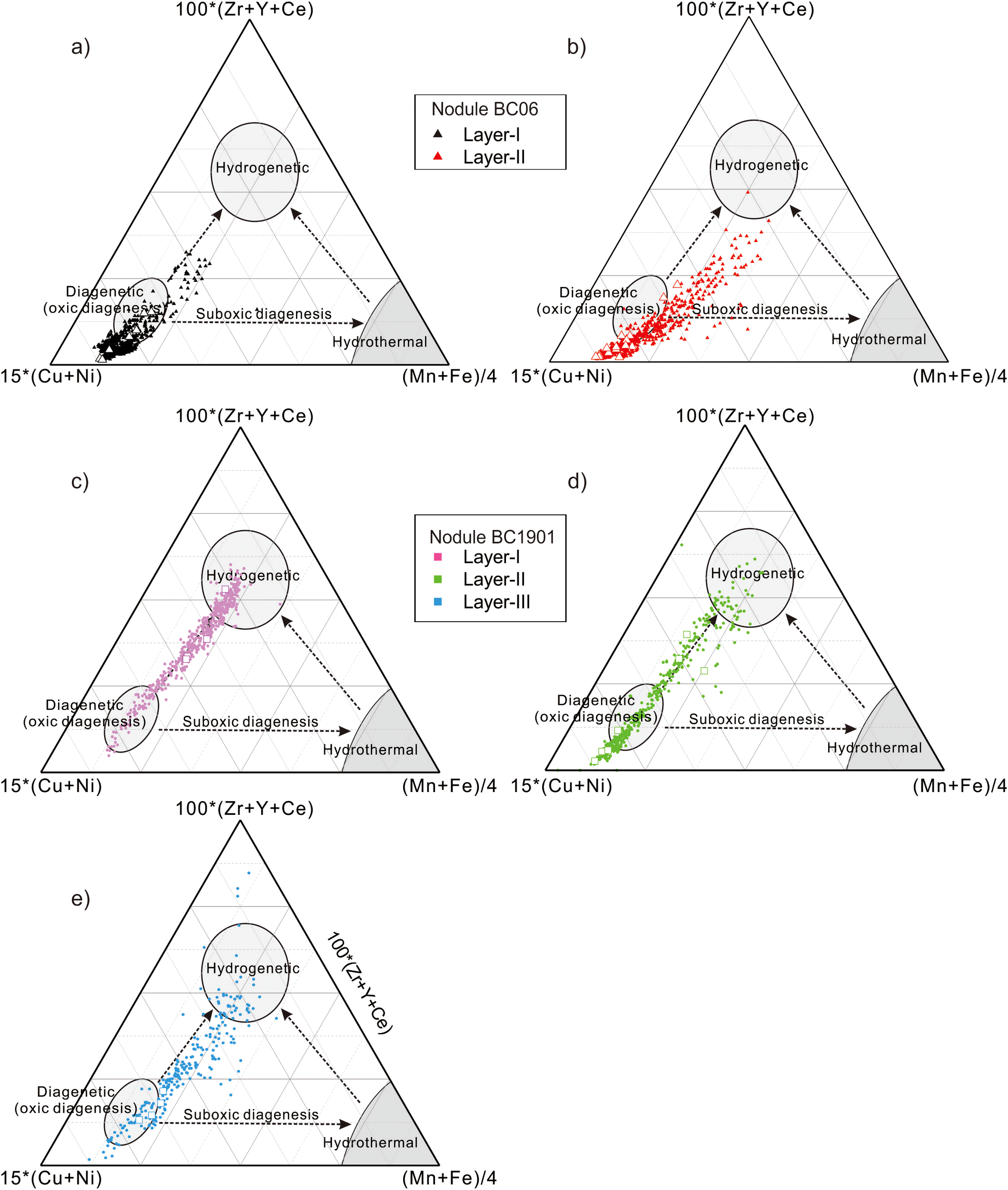
The chemical compositions of polymetallic ferromanganese nodules (PMNs) in the Clarion-Clipperton Zone (CCZ) exhibit spatially variability, which increases the difficulty of exploration and associated costs. The primary factors driving this spatial variability is still uncertain, largely due to the limited understanding of the growth history of these PMNs. In this study, we analyzed PMNs from both the eastern and western CCZ using a comprehensive array of in-situ techniques to investigate their internal structure and element distributions.In Nodule BC06 from the eastern CCZ, the Mn/Fe ratio shows a decreasing trend from the inner part (Layer I) to the outer part (Layer II). In contrast, Nodule BC1901 from the western CCZ is composed of three layers. The Mn/Fe ratio increases from Layer I to Layer II and then decreases from Layer II to Layer III. Discrimination diagrams indicate that both of these PMNs formed via hydrogenetic and diagenetic processes, but the layers of Nodule BC06 exhibit stronger diagenetic influences.Moreover, the diagenetic effects within the samples vary from the core to the rim, suggesting different primary controls on the geochemical changes. In the eastern CCZ, the movement of the PMNs away from the equatorial high-productivity zone primarily drives the compositional changes. In the western CCZ, the variability of the deep-water ventilation and the intensity of the Antarctic Bottom Water are the main factors influencing the nodule composition. The results of this study provide insights into the growth history and spatial element distributions of PMNs in the CCZ, which will be beneficial for resource evaluation.

6,394 views

8 citations

Heterogeneous marine environments diversify microbial-driven polymetallic nodule formation in the South China Sea
ORIGINAL RESEARCH
11 November 2024
Heterogeneous marine environments diversify microbial-driven polymetallic nodule formation in the South China Sea
Mingyan Lai, 8 more and Chun-Sheng Wang
Most studies on the genesis of polymetallic nodules suggested that nodules in the South China Sea (SCS) are hydrogenetic types; however, the complexity and the heterogeneity in hydrology and geochemistry of the SCS might cause different processes of nodule formation, impacting their application and economic values.Microbial-mediated ferromanganese deposition is an important process in nodule formation, but the related microbial potentials are still unclear in the SCS. In this study, we sampled inat three typical regions (A, B and C) of the SCS enriched with polymetallic nodules in the SCS. Firstly, we investigated environmental and microbial characteristics of through the water columns for determining the heterogeneity of upper seawater that directly influencedand its impact on deep-sea bottom environments. Then, microbial compositions and structuress in sediment cores, overlying waters and nodules (inside and outside) collected within the same site region (Dive141, Dive135 and Dive139 in regions A, B and C, respectively) were analyzed for inferring features of nodule environments. M, and microbial interactions betweenamong nodules and surrounding environments were estimated with collinear network analysis. The microbial evidences indicated that geochemical characteristics in deep-sea of the SCS that were key to the polymetallic nodule formation were severely affected by organic matter flux from upper water column. The sediment in at Dive141Region A was sub-oxic due to the large input of terrigenous and phytoplankton-derived organic matter, potentially enhancing the overflow of reduced metals from the porewater. The intense microbial interaction between nodules and surface sediment reinforced the origin of metals for the ferromanganese deposition from the sediment (diagenetic type). Contrarily, the sediments in other two regions B and Csites were relatively rich in oxygen, and metal ions could be majorly suppliedbe majorly from seawater (hydrogenetic type). The large discrepancy in microbial communities between nodule inside and remaining samples suggested that the nodules experienced a long-term formation process, consistent with the feature of hydrogenetic nodules. Overall, in the SCS, distributions and interactions of microbial communities in nodules and surrounding environments significantly contributed to the nodule formation in the SCS by manipulating biogeochemical processes that eventually determined the source and the fate of metal ions.

2,970 views

6 citations

Metal regeneration during an ex-situ disturbance experiment on deep-sea sediments from the polymetallic nodule area of western Pacific
ORIGINAL RESEARCH
24 October 2024
Metal regeneration during an ex-situ disturbance experiment on deep-sea sediments from the polymetallic nodule area of western Pacific
Juan Yang, 7 more and Chengbing Song
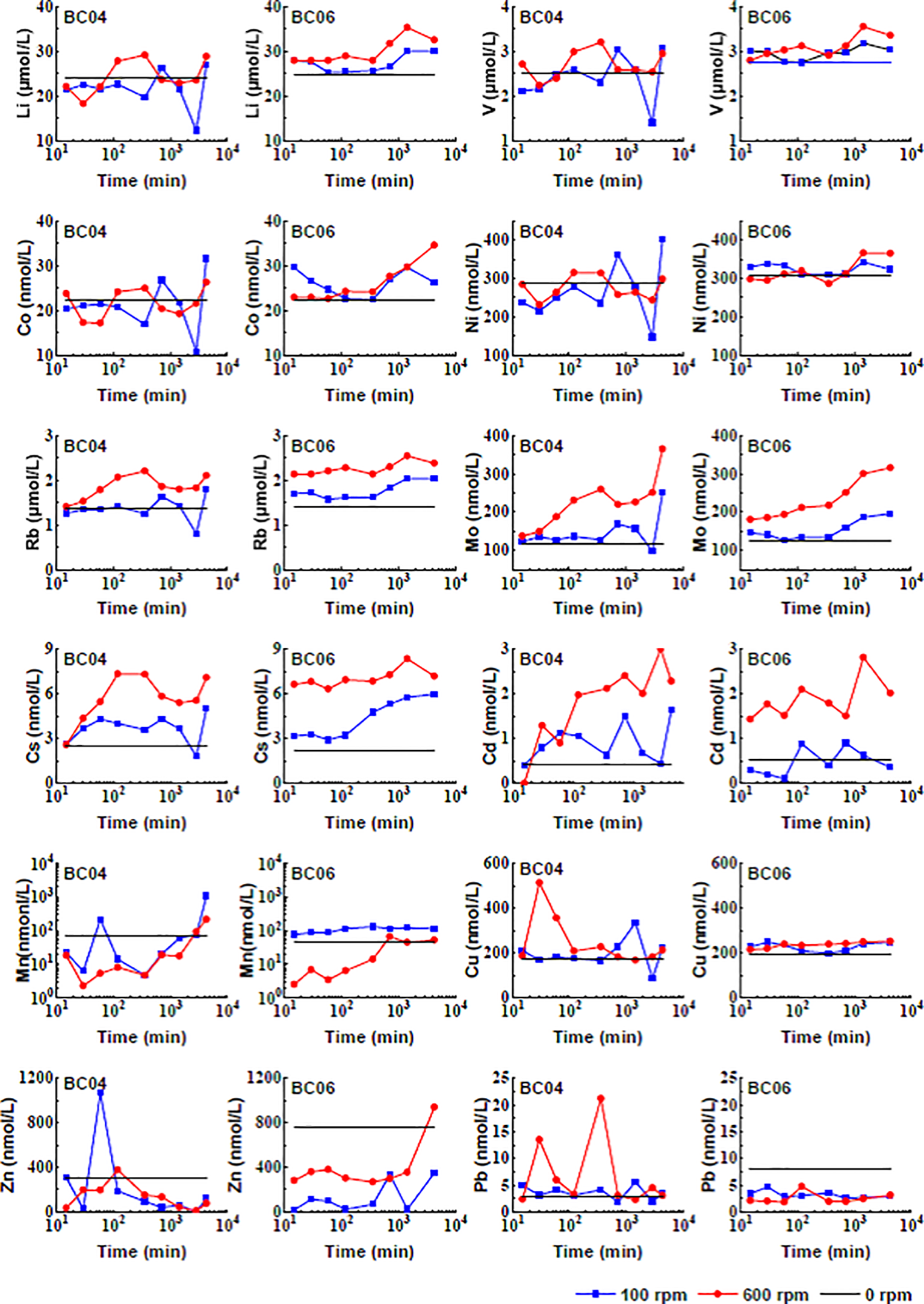
Abstract:The ecological implications of deep-sea mining, particularly the considerable discharge of suspended sediments during operational processes, have attracted substantial concerns. In order to reveal the metal regeneration dynamics in the polymetallic nodule area of the western Pacific Ocean, ex-situ sediment disturbance experiments with regulated stirring intensity were conducted on a research vessel. Over a three-day period, the concentrations of 12 dissolved metals and physiochemical parameters, including Eh and pH, were monitored continuously in the overlying water. Porewater samples were also collected at the starting and ending time of each experiment to detect the change of dissolved metal profiles within the sediments. The findings revealed that the sediment disturbance led to fluctuations in the concentrations of metals in the overlying water, with manganese exhibiting the most pronounced change, at a coefficient of 208%. The temporal patterns of dissolved metal concentrations demonstrated a coherent behavior among certain metals, such as Li, V, Co, Ni, Rb, Mo, and Cs, which displayed an overall increase, ultimately surpassing the initial concentrations in the overlying water. In line with this, the metal concentration profiles in the porewater were also elevated. Spearman correlation analysis confirmed the synchronized behavior of these metals, suggesting that their mobility might be governed by physiochemical factors in the overlying water and sediments. Moreover, the sedimentary features, such as grain size composition and the morphological state of metals in sediments, played pivotal roles in the differential responses of metal groups to sediment disturbance across stations. Conversely, the disturbance intensity was found to have relatively minor impact on the dissolved metal behavior. The findings from the exsitu experiments provided critical insights for predicting metal regeneration related to deep-sea mining, which are expected to be validated through rigorous monitoring protocols during future insitu mining trials.

2,237 views

5 citations

ORIGINAL RESEARCH
11 October 2024
Early diagenesis, sedimentary dynamics and metal enrichment reveal deep-sea ventilation in Magellan Seamounts during the middle Pleistocene
Zhongshan Shen, 4 more and Liang Yi

2,354 views

1 citations

Mineralogy and geochemistry of the Cambrain Shuijingtuo Formation black shales from Western Hubei, China: implications on enrichment of critical metals and paleoenvironment
ORIGINAL RESEARCH
4 October 2024
Mineralogy and geochemistry of the Cambrain Shuijingtuo Formation black shales from Western Hubei, China: implications on enrichment of critical metals and paleoenvironment
Yuan Wang, 7 more and Xiaoyang Zhang
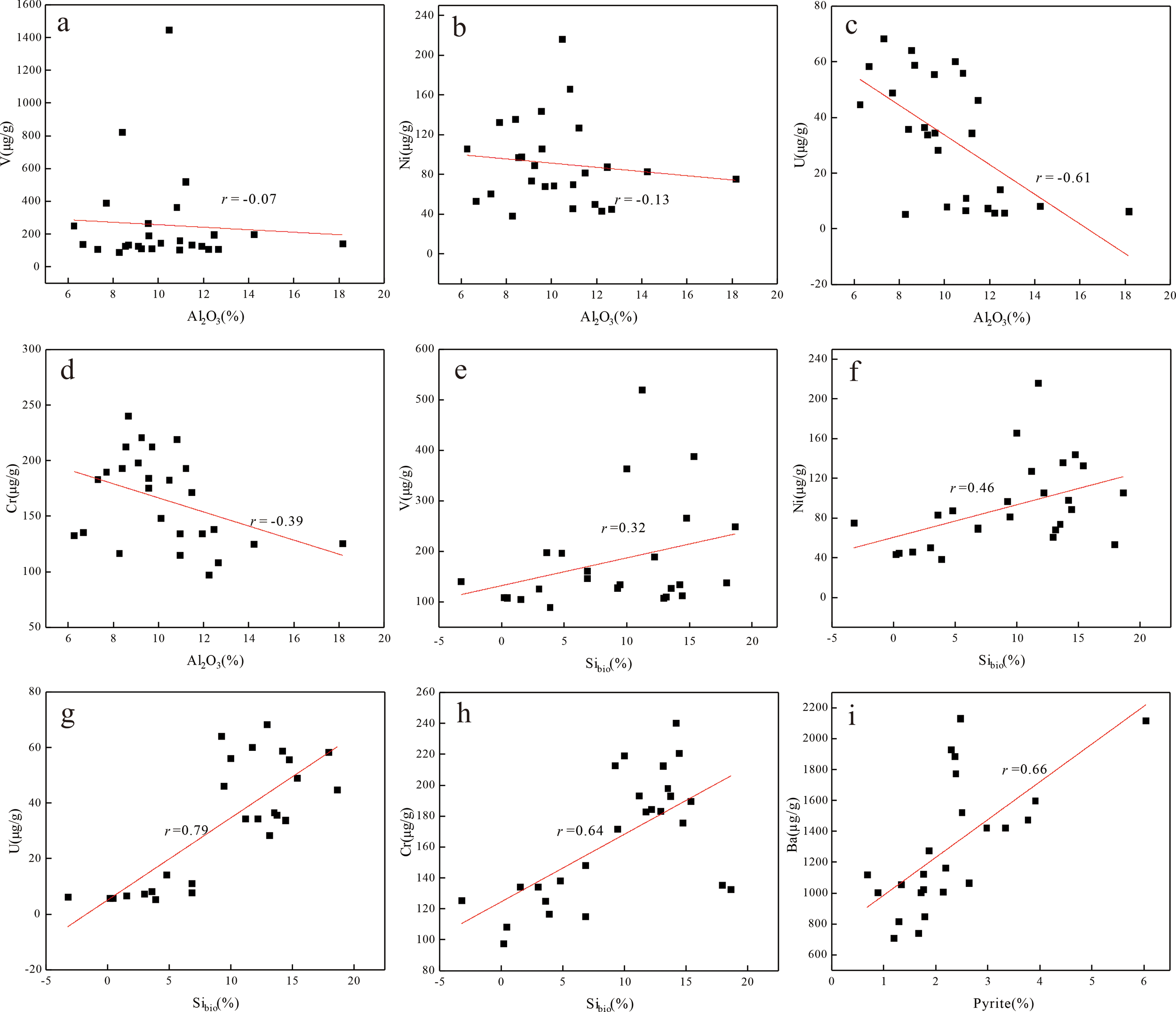
Black shales have attracted the attention of numerous researchers not only due to their high potential as hydrocarbon source rocks and shale gas reservoirs, but also to the enrichment of critical metal elements in black shale series. Black shale of the Cambrian Shuijingtuo Formation is one of the most important black shales in the Yangtze platform. This paper conducts integrated research on the mineralogical and geochemical characteristics of this black shale from the Luojiacun section in Western Hubei Region, aiming at elaborating the enrichment mechanism of elevated critical metal elements in the Shuijingtuo black shale. Minerals in the Shuijingtuo black shale are predominantly composed of quartz (avg. 43.0%) and clay minerals (avg. 32.5%), with small proportions of calcite, albite, clinochlore, and pyrite. The Shuijingtuo black shale is characterized by high total organic carbon (TOC, avg. 3.9%) content and enriched in V-Ni-Cr-U and Sr-Ba critical metal assemblages. The elevated V, Cr, Ni, and U present dominant organic affinities, while Sr and Ba are closely correlated to calcite and pyrite, respectively. The enrichment of V-Cr-Ni-U critical element assemblages in Shuijingtuo black shale are ascribed to the high primary productivity, anoxic depositional conditions, marine biologic production, and low-temperature hydrothermal activities. The enrichment of Sr and Ba is related to the high primary productivity and anoxic depositional conditions, respectively.

3,385 views

4 citations