 Bo Lei
 Chaofan Qin1
- 1Department of Spinal Surgery, The Second Affiliated Hospital of Chongqing Medical University, Chongqing, China
- 2ChongQing Breif Technology Co., Ltd. No. 1, Chongqing, China
A Correction on
A novel posterior endoscopic cervical approach for treating cervical spondylotic radiculopathy: a finite-element analysis(C2-T1)
by Lei B, Qin C, Cheng S, Yu Q, Liu J, Wang X, Hu T, Ma K, Chen Y and Yan Z (2025). Front. Bioeng. Biotechnol. 13:1623250. doi: 10.3389/fbioe.2025.1623250
There was a mistake in Figure 6 as published. In Figure 6, the labeling on the X-axis contains an error. In the beginning, we named it T0-T8 (T refer to tunnel), but now, we call it M0-M8 (M refer to model). The corrected Figure 6 appears below.
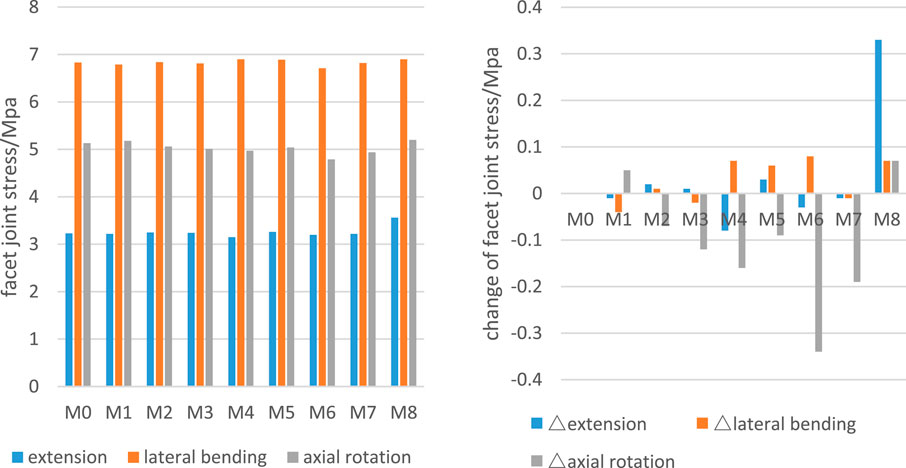
Figure 6. C6 facet joint stress and changes of the number.
There was a mistake in Figure 7 as published. In Figure 7, certain Chinese characters are present, which should be replaced with their English equivalents for clarity and consistency. The corrected Figure 7 appears below.
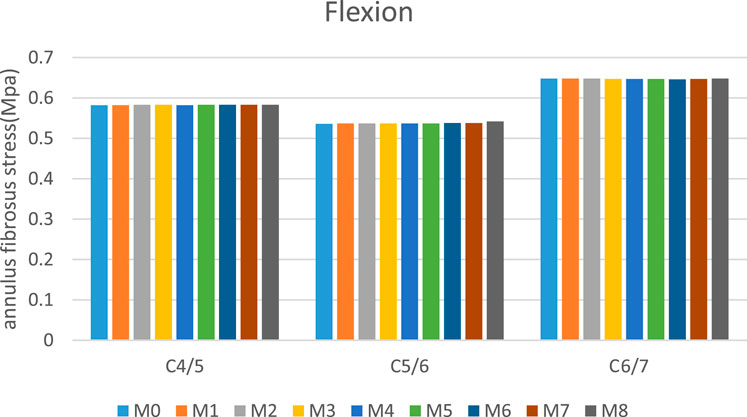
Figure 7. C5/6 nucleus pulposus stress and annulus fibrosus stress.
Generative AI statement
Any alternative text (alt text) provided alongside figures in this article has been generated by Frontiers with the support of artificial intelligence and reasonable efforts have been made to ensure accuracy, including review by the authors wherever possible. If you identify any issues, please contact us.
Publisher’s note
All claims expressed in this article are solely those of the authors and do not necessarily represent those of their affiliated organizations, or those of the publisher, the editors and the reviewers. Any product that may be evaluated in this article, or claim that may be made by its manufacturer, is not guaranteed or endorsed by the publisher.
Keywords: finite-element analysis, biomechanics, posterior endoscopic cervical discectomy, radiculopathy, safety
Citation: Lei B, Qin C, Cheng S, Yu Q, Liu J, Wang X, Hu T, Ma K, Chen Y and Yan Z (2025) Correction: A novel posterior endoscopic cervical approach for treating cervical spondylotic radiculopathy: a finite-element analysis(C2-T1). Front. Bioeng. Biotechnol. 13:1750232. doi: 10.3389/fbioe.2025.1750232
Received: 20 November 2025; Accepted: 27 November 2025;
Published: 09 December 2025.
Approved by:
Frontiers in Bioengineering, Frontiers Media SA, SwitzerlandCopyright © 2025 Lei, Qin, Cheng, Yu, Liu, Wang, Hu, Ma, Chen and Yan. This is an open-access article distributed under the terms of the Creative Commons Attribution License (CC BY). The use, distribution or reproduction in other forums is permitted, provided the original author(s) and the copyright owner(s) are credited and that the original publication in this journal is cited, in accordance with accepted academic practice. No use, distribution or reproduction is permitted which does not comply with these terms.
*Correspondence: Zhengjian Yan, eWFuempAaG9zcGl0YWwuY3FtdS5lZHUuY24=