 Melinda Morgan1*
 Alex Webster2Matt Piccarello3Kelly Jones4Janie Chermak5Laura McCarthy6Jaishri Srinivasan1
- 1Geography & Environmental Studies, University of New Mexico, Albuquerque, NM, United States
- 2Biology, University of New Mexico, Albuquerque, NM, United States
- 3The Nature Conservancy, Arlington, VA, United States
- 4Human Dimensions of Natural Resources, Colorado State University, Fort Collins, CO, United States
- 5Economics, University of New Mexico, Albuquerque, NM, United States
- 6State of New Mexico, Forestry Division, Santa Fe, NM, United States
Global climate models project that New Mexico's Upper Rio Grande watershed is expected to become more arid and experience greater climatic and hydrological extremes in the next 50 years. The resulting transitions will have dramatic implications for downstream water users. The Upper Rio Grande and its tributaries provide water to about half of New Mexico's population, including the downstream communities of Albuquerque and Santa Fe, and surrounding agricultural areas. In the absence of formal climate adaptation strategies, informal governance arrangements are emerging to facilitate watershed climate adaptation strategies, including fuel treatments and stream remediation. One example is the Rio Grande Water Fund (RGWF), a collaborative effort coordinating work to protect storage, delivery, and quality of Rio Grande water through landscape-scale forest restoration treatments in tributary forested watersheds. This article examines the RGWF as one example of an emerging adaptation strategy that is working within—and beyond—existing legal and policy frameworks to accomplish more collaborative efforts across jurisdictional lines and administrative barriers. We identified ten (10) key characteristics of adaptive governance from the relevant literature and then applied them to the RGWF's experience in the watershed to date. Key findings include: (1) the RGWF's approach as a collaborative network created the right level of formality while also keeping flexibility in its design, (2) a scalar fit to the environmental challenge built social capital and investment in its work, (3) leadership from key stakeholders leveraged opportunities in the watershed to create and maintain stability, and (4) use of adaptive management and peer review processes built capacity by creating the feedback loops necessary to inform future work.
Introduction
Global climate models project that average temperatures in New Mexico's Rio Grande Watershed will increase between 1° and 6° F compared to the late 20th century over the next 50 years (Iturbide et al., 2021). This increase will have a transformative impact on New Mexico's water supplies, as temperatures push headwater forests past ecological thresholds, facilitating forest die-off and making them increasingly vulnerable to catastrophic wildfire (Williams et al., 2013; New Mexico Bureau of Geology and Mineral Resources, 2022). The Upper Rio Grande and its tributaries provide water to about half of New Mexico's population, including the downstream communities of Albuquerque and Santa Fe, and surrounding agricultural areas (Benson et al., 2014). The resulting ecological transformation will create increasing societal challenges for these downstream water users who depend upon functioning watersheds not only for water supply but also water storage, natural filtration, and flood control, among other ecosystem services (U.S. Department of the Interior, Bureau of Reclamation, 2013; Benson et al., 2014).
The Rio Grande Water Fund (RGWF) is a promising response to such ecological and societal challenges. It is a collaborative effort involving coordinating work at a watershed scale to protect storage, delivery, and quality of Rio Grande water through landscape-scale forest and watershed restoration treatments in tributary forested watersheds. Created following New Mexico's Las Conchas fire in 2011, the RGWF has a goal of implementing forest restoration on 600,000 acres between 2014 and 2034 (Rio Grande Water Fund, 2014). This article examines the RGWF as an emerging strategy within the adaptive governance framework. The RGFW offers a window into the types of collaborative approaches to climate adaptation—in this case, water funds—that are emerging across jurisdictional lines and administrative barriers to address wildfire mitigation and watershed protection (Brauman et al., 2019). It provides an example of the growing role played by non-governmental actors in leading collaborations (Wang and Ran, 2021).
The RGWF primarily employs biomass removal—usually prescribed fire or mechanical thinning of trees—to reduce the probability of high-intensity wildfire and retain functioning forest and watershed systems. This is both a climate mitigation strategy by way of reducing the impact of wildfire on carbon emissions (Wiedinmyer and Hurteau, 2010) and a climate adaptation strategy by way of reducing the impact of wildfire on source water for downstream communities by minimizing impacts from post-wildfire sedimentation and debris flow (Rio Grande Water Fund, 2014). As of 2022, the RGWF has over 100 partner groups as signatories to its charter and together, they have facilitated ~251,000 acres of forest restoration activities, placing them on target to meet their goal of 600,000 acres by 2034 (Rio Grande Water Fund, 2014). Approximately 6.3 million dollars have flowed through the RGWF, with The Nature Conservancy (TNC) acting as the fiscal agent since 2014, to partners to complete thinning, prescribed fire, stream and wetland restoration, collaboration, and planning projects (Rio Grande Water Fund, 2015, 2016b, 2017, 2018, 2019, 2020, 2021, 2022).
After first providing some overarching context regarding the climate challenge facing the watershed and how the RGWF operates, we identify ten (10) key characteristics of adaptive governance from the relevant literature and then apply them to the RGWF's experience in the watershed to date.
New Mexico's climate challenge
New Mexico's Upper Rio Grande watershed is expected to become more arid and experience greater extremes in the next 50 years (Iturbide et al., 2021). This projection is broadly consistent across four generations of global climate model assemblages and reports published by the Intergovernmental Panel on Climate Change (IPCC), with high confidence that average surface temperatures will increase and lack of consensus on how precipitation will change. The newest available data from the sixth generation of global climate model assemblages suggests 1 to 6° F of warming in the Rio Grande Basin, depending on whether and to what extent emissions of greenhouse gases are curbed (Iturbide et al., 2021). Higher temperatures and similar average annual precipitation will increase demand for water from vegetation, increase evaporation, diminish snowpacks, and lower soil moisture (New Mexico Bureau of Geology and Mineral Resources, 2022). Together, these changes are placing New Mexico on a path toward increasing aridity and more severe droughts.
Increasing aridity and more severe droughts will push many of New Mexico's ecosystems past their resilience thresholds, causing widespread and non-linear reorganization of vegetation cover and ecohydrological feedbacks. Headwater forests are already experiencing larger and more severe wildfires (Mueller et al., 2020; Ball et al., 2021), drought-induced forest diebacks (Allen, 2007), and novel insect outbreak dynamics (Anderegg et al., 2015; Elliott et al., 2021). These new disturbance regimes are expected to push many forests into novel shrub-dominated states, with little possibility of return to forest (Guiterman et al., 2018; Davis et al., 2019, 2020; Coop et al., 2020). The loss of forest for shrublands, which tend to have barer and drier soils and lower transpiration, will amplify regional warming and aridification (Duman et al., 2021).
Wildfire and loss of forests and snowpack in headwater systems will challenge downstream users and ecosystems. Initially, forest loss and accompanying reductions in watershed-scale transpiration may cause increases in streamflow (Wine and Cadol, 2016; Williams et al., 2022). However, the resulting water can easily erode severely burned hillslopes and arrive downstream in the form of sediment, debris flow, and highly contaminated water that is difficult and costly to treat for human use (Bladon et al., 2014; Rhoades et al., 2019). In the longer term, streamflow will be reduced due to rising demand from upland plants and soil, and the loss of water stored in reservoirs to substantially higher rates of open water evaporation (Huntington et al., 2015). Warmer stream temperatures and higher sediment, nutrient, and E. coli loads from eroded watersheds will diminish water quality, further compromising surface water supplies (Bladon et al., 2014; Rhoades et al., 2019). In addition, less snowmelt and higher water demand in the mountains will reduce recharge to regional aquifers, just as reliance on groundwater increases (Markovich et al., 2019). In general, New Mexico's water infrastructure, which is designed to capture and distribute relatively clean spring streamflow from snowmelt, is poorly suited to a climate change-induced future (Benson et al., 2014).
Finally, much of New Mexico's biodiversity is held in riverside and spring-dependent ecosystems that are adapted to snowmelt and shallow groundwater tables. As rivers lose snowmelt-dominated hydrologic regimes and groundwater tables decline, biodiversity will also decline and whole ecosystem types may be lost (Erwin, 2009; Johnson et al., 2016). Loss of wetland-type ecosystems will further damage water quality, accelerate erosion, and compromise the once reliable delivery of water from headwaters (Desta et al., 2012).
The Rio Grande Water Fund
Facing this climate challenge requires an unprecedented level of highly coordinated activity across a number of actors at the watershed scale. The RGWF is a leading effort in the Upper Rio Grande watershed specifically created to respond to this pressing societal need.
Pinpointing the exact start date of collaborative groups is not always straightforward, as relationships that form the backbone of such groups have been built over many years. However, in the case of the RGWF, one date stands out—June 26, 2011. That warm, windy day was when the Las Conchas wildfire started in the Jemez Mountains and subsequently burned more than 150,000 acres within the Rio Grande watershed (U. S. Forest Service, 2011).
The post-fire flooding that followed sent rivers of ash and sediment into the Rio Grande with devastating effect (Dahm et al., 2015). The water quality was so poor that the Albuquerque Bernalillo County Water Utility Authority had to shut down its surface water intake, which provides residents of New Mexico's largest city with 48,200 acre feet of drinking water from the San Juan Chama diversion project (Stebbins and Summerfelt, 2018; Albuquerque Bernalillo County Water Utility Authority, 2019a). Thus, the Las Conchas wildfire was the catalyst and the RGWF was the rallying cry—during this window of opportunity—to increase the pace and scale of forest and watershed restoration in the headwaters of the Rio Grande to better protect the source of surface water that millions rely on.
Initially, a payment for ecosystem services (PES) approach was considered that would draw funding from downstream water users to fund upstream forest restoration. Modeling of this PES approach revealed that the size and jurisdictional complexity of the watershed, specifically the many different upstream watersheds and downstream users, made this unfeasible (McCarthy, 2016; Adhikar et al., 2017). A more indirect approach was needed, one that allowed the downstream users of the watershed to see the value of source protection before being asked to make their own investments (McCarthy, 2016). In 2012, TNC received funding from the Lowe's Charitable and Educational Foundation to explore the feasibility of using a water fund model in the Rio Grande watershed (McCarthy, 2016; Ozment et al., 2016). Water funds are a replicable watershed governance model consisting of three primary components: a funding mechanism that pools resources from different entities, a governing board for joint planning and decision making, and a watershed management group responsible for on the ground activities (Brauman et al., 2019).
After 2 years of collaborative effort led by TNC, the RGWF Comprehensive Plan was released in 2014, written in coordination with a steering committee comprised of a diverse group of stakeholders, outlining the mission and methods of the RGWF (Rio Grande Water Fund, 2014). More than 40 public and private organizations supported the plan and the RGWF mission “to achieve the vision of healthy forests and watersheds that provide a reliable supply of high-quality Rio Grande water and other benefits for New Mexico” and goal “to protect storage, delivery and quality of Rio Grande water through landscape-scale forest restoration treatments in tributary forested watersheds, including the headwaters of the San Juan Chama Project” (Rio Grande Water Fund, 2014). The San Juan Chama Project is a transbasin diversion from the Colorado Basin to the Rio Grande Basin of water owed to New Mexico as part of its allocation under the Colorado River Compact (Albuquerque Bernalillo County Water Utility Authority, 2019b). The water from this project comes from the San Juan River in Southern Colorado via the Chama River, as shown in Figure 1.
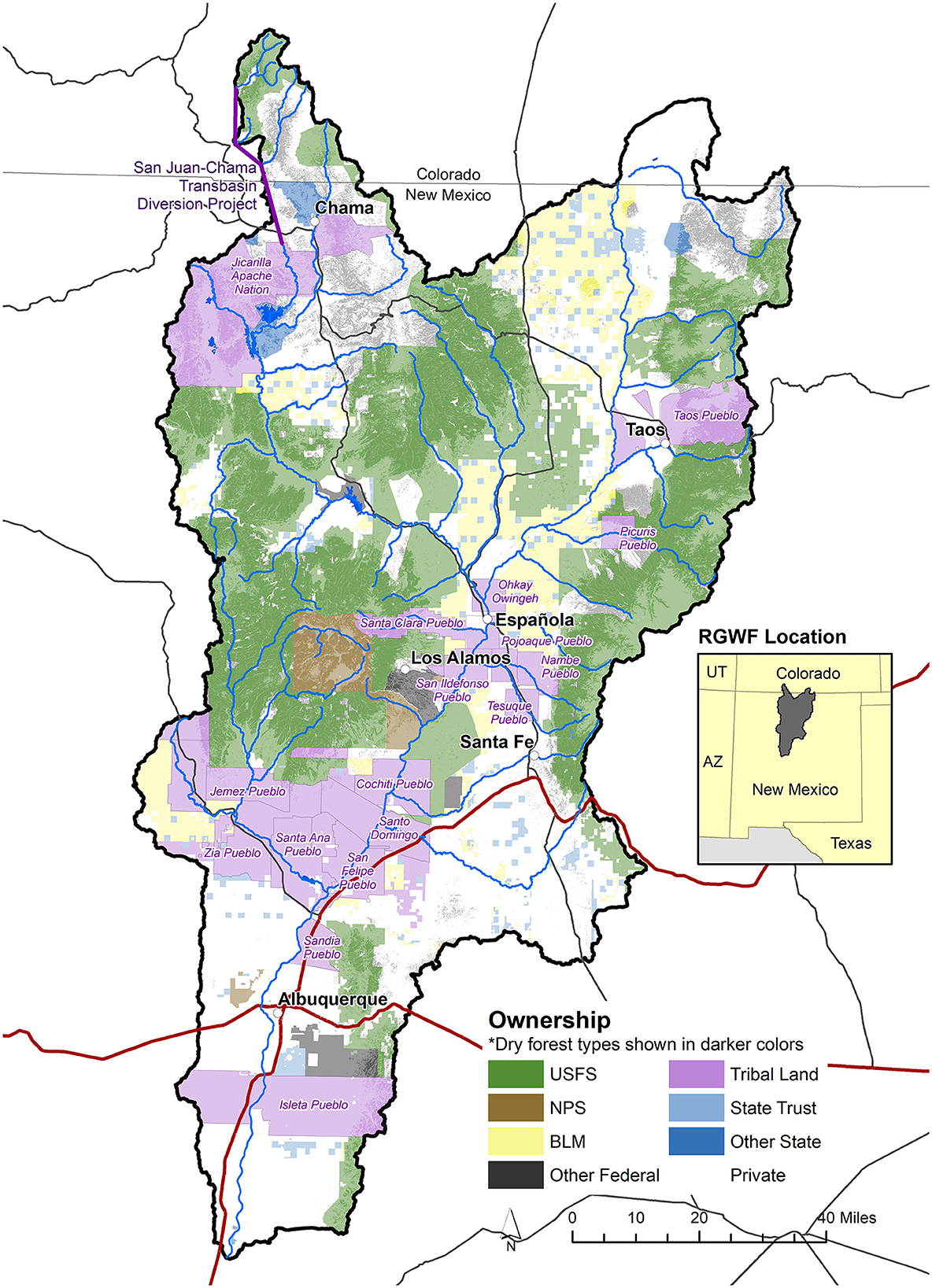
Figure 1. Map of the Rio Grande Water Fund project area. It includes forests, agricultural lands, and cities across federal, state, tribal, and private lands.
In 2014, the first signatories of the RGWF signed a charter, formalizing the creation of the collaborative group and outlining the goals and operating principles for how the RGWF would operate, including the creation of an Executive Committee (EC). Initial funding came from the Lowe's Charitable and Educational Foundation and the U.S. Forest Service and this allowed for the initial work that built the necessary confidence for future funding commitments from the Albuquerque-Bernalillo Water Utility Authority and the Middle Rio Grande Conservancy District, among others, which follow a more traditional PES approach of funding that comes from the users of ecosystem services (McCarthy, 2016).
TNC was and remains the coordinator and fiscal sponsor for the RGWF, which now has over 100 signatories.1 The funding is a coordinated, leveraged, multi-partner effort designed to scale up restoration 10-fold over the 2014 baseline. The RGWF collects private investments from individuals, businesses, corporations, and foundations and then makes funding available for thinning, controlled burns, stream restoration, post-fire watershed restoration, planning, education and outreach, and activities that contribute to the monitoring program. As the fiscal agent, TNC administers the Fund, based on experience from its work with water funds across Latin America [Brauman et al., 2019; TNC (The Nature Conservancy), 2022]. TNC has, to date, avoided the criticism and skepticism in New Mexico that it has received in other contexts (Stephenson and Chaves, 2006). This is perhaps due to the level of local involvement in projects. In the case of the RGWF, TNC spent 2 years working as part of the collaborative grassroots organizing effort to help create the RGWF (Rio Grande Water Fund, 2014).
The RGWF has a goal of treating 600,000 acres between 2014-2034. Doing this will require an investment of $420 million over 20 years–$21 million per year. Requests for proposals are issued by the RGWF in three categories of projects: (1) forest restoration treatments and planning; (2) stream, wetlands, and aquatic restoration projects; and (3) capacity building. Technical committees for each of the categories were established to review proposals and make recommendations to the EC on which projects should receive funding.
While the EC makes the final recommendations as to which projects should be funded, the RGWF's charter states that “the decision to fund or implement a forest, grassland and watershed restoration project is solely that of the individual Signatories.” In other words, the EC has no official authority to authorize funding to any entity, but rather that authority remains with the individual signatories. Instead, the RGWF plays two critical roles: (1) as matchmaker, bringing together the funding required and the projects needed, and (2) coordinating and acting as fiscal agent for the transactions, as needed.
This structure of an advisory board with non-binding decision-making authority and fiscal sponsor to facilitate outreach was based on a similar design created by the U.S. Forest Service's Collaborative Forest Restoration Program (CFRP), which uses a federal advisory committee to make funding recommendations to the Secretary of Agriculture while also avoiding the delegation of duties under the Federal Advisory Committee Act (FACA) (Monroe and Butler, 2016).
The RGWF governance model is summarized in Figure 2. To date, this model has worked successfully for the RGWF, with complete alignment between funding recommendations made by the EC and the work funded through the RGWF, with TNC acting as fiscal agent. Accomplishments through 2021 include 148,905 acres treated, $5.2 million in private dollars invested, $52.8 million in public funding leveraged, and a list of signatories now totaling over 100 (Rio Grande Water Fund, 2021). These accomplishments do not include leveraged treatments that were not funded directly by the RGWF. The pace of treatments stalled in 2019 due to an injunction halting all forestry activities on all national forests in New Mexico as well as the COVID-19 pandemic. The pace of treatments is expected to increase since the passage of the Infrastructure Investment and Jobs Act, which includes significant funding increases for wildfire risk reduction and forest restoration programs (Mohr, 2021; U.S. Forest Service, 2022a).
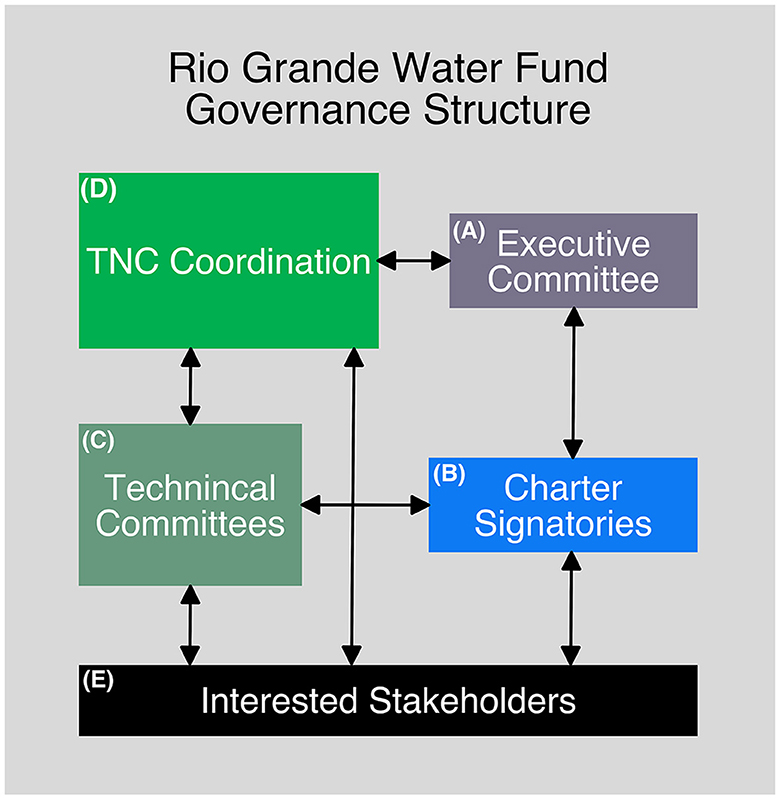
Figure 2. The governance structure of the Rio Grande Water Fund (RGWF), including its components (boxes) and interactions among components (arrows). (A) The Executive Committee (EC) is composed of eight signatory members. The EC meets annually and advises on the annual meeting and funding for projects that have been recommended by the Technical Committees. (B) Charter Signatories sign a charter supporting RGWF goals, vote on EC members, and participate in an annual meeting. This group represents diverse sectors- government, business, tribes, and NGOs. No financial commitment is required, but many use RGWF as a vehicle to leverage funding. Members' logos appear on the RGWF website and annual report. (C) Technical Committees review funding proposals and advise on prioritization, feasibility, and cost effectiveness of projects. Feedback is provided to key projects that require improvement in design to be funded. Committees represent private and public sectors with expertise in forest, stream restoration, and/or community engagement. (D) The Nature Conservancy (TNC) manages the RGWF for the signatories: TNC fundraises, serves as a matchmaker to identify potential funding partners for projects, develops analytical products and conducts monitoring, and manages the committees. (E) Stakeholder interaction can be through proposal submittals as well as through service on the EC or technical committees and participation at in-person meetings.
The RGWF is committed to adaptive management and monitoring. Its Monitoring Working Group developed a Rio Grande Water Fund (2016a) that monitors a number of both direct and indirect indicators of the effectiveness of the RGWF's work. This includes indicators related to forest treatments, forest watershed fuel loads and fire behavior, watershed function and water quality, riparian restoration treatments and water quality, jobs and economic development, networking for greater impact, and fund financing (Rio Grande Water Fund, 2016a). For each of these indicators, the adaptive management plan has identified (1) monitoring questions; (2) management objective(s) and desired condition(s); (3) monitoring indicator(s); (4) the frequency of measurement required; and (5) the data source and scale for reporting needed. Once gathered, this information is then employed to inform the EC's work in the selection of new projects (Rio Grande Water Fund, 2014).
The RGWF also uses spatial modeling in its decision-making to employ the climate adaptation and mitigation strategies for biomass removal to reduce the probability of high intensity wildfire and retain functioning forest systems (Wiedinmyer and Hurteau, 2010; Fernandes, 2015). Prioritizing where treatments occur requires a combination of quantitative and qualitative methods. After determining where the greatest wildfire risk is within the RGWF landscape using spatial modeling, input from charter members is necessary to fully understand what values are at risk and where.
Much has changed since the initial wildfire risk assessment for the RGWF in 2014. Treatments and wildfires have occurred on the landscape, making a periodic update of risk modeling necessary to place treatments where they can have the most impact by filling in gaps on the landscape and tying in new projects with existing treatments and disturbances.
Figure 3 shows the recent modeling efforts the RGWF has engaged in to identify where the current wildfire risk is greatest and will serve as a starting point for conversations with signatories and community members about where to invest RGWF resources.
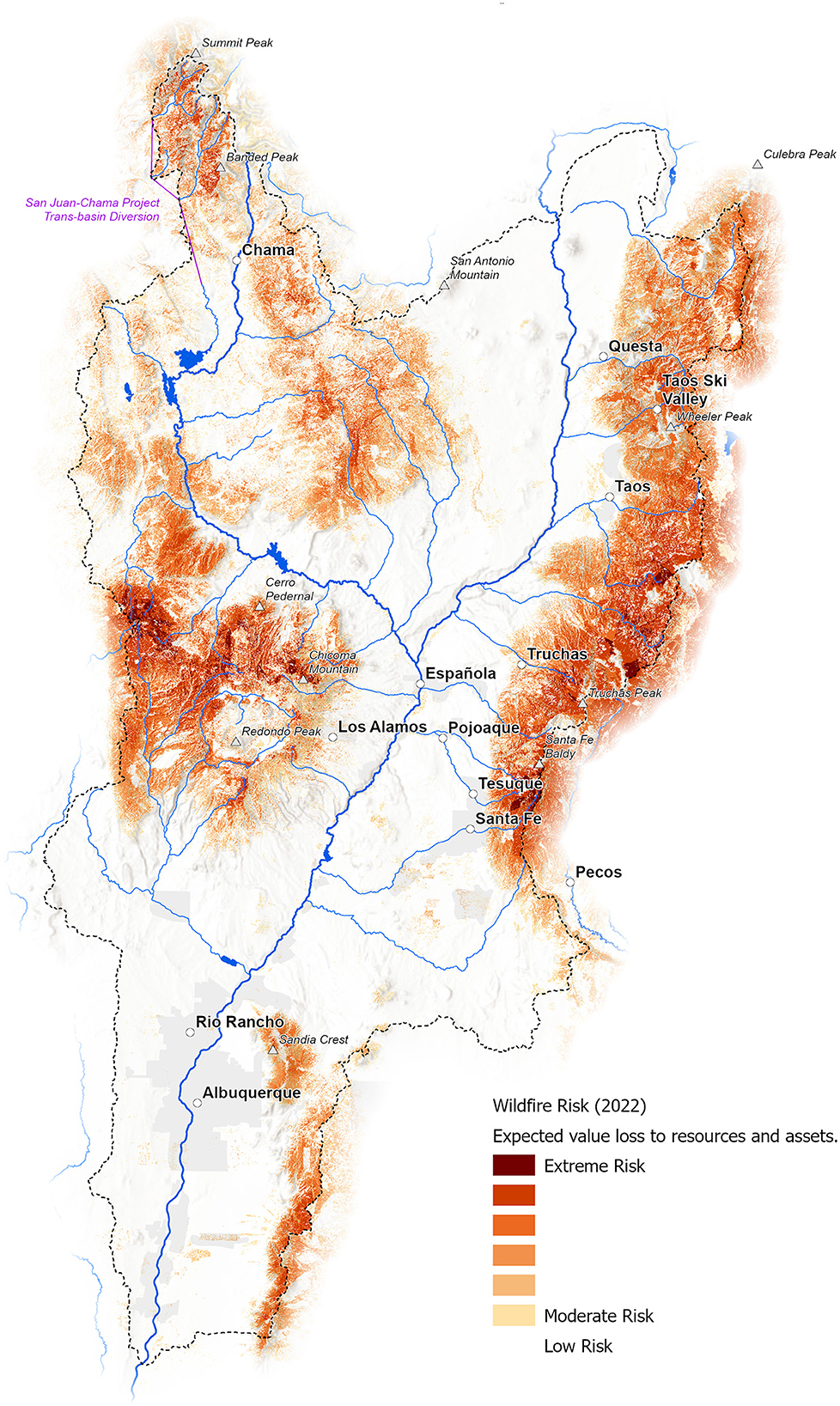
Figure 3. Wildfire risk map of the Rio Grande Water Fund watershed (2022).
The RGWF relies on the open requests for proposals process described above to propose new projects to build capacity and conduct restoration treatments such as forest thinning, prescribed fire, and stream and wetland restoration. The collaborative process is continuously refined to work in partnership with potential applicants to design projects that address the highest-risk areas as mapped while also taking community needs and priorities into consideration.
Discussion: the Rio Grande Water Fund and adaptive governance
The RGWF is a case study in adaptive governance, though few lay people would think of such a collaborative as “governance.” Yet governance can be thought of as a set of regulatory processes, mechanisms, and organizations through which actors influence actions and outcomes (Chaffin et al., 2014; Steelman, 2022). The concept of adaptive governance emerged in the 1990s as a more collaborative and iterative approach to more traditional forms of governance (Folke et al., 2005; Steelman, 2022). Adaptive governance places an emphasis on the need—particularly in contexts involving complex environmental challenges—to implement regimes and structures that have the necessary flexibility, resilience, and responsiveness to change (Ostrom, 1990, 1992; Dietz et al., 2003; Brunner et al., 2005; Folke et al., 2005; Olsson et al., 2006; Brunner, 2010; Chaffin et al., 2014; Cosens et al., 2021).
Sharma-Wallace et al. (2018) conducted a systematic review of empirical engagements with adaptive governance. They identified several key methods or characteristics of adaptive governance: (1) meaningful collaboration across actors and scales; (2) effective coordination between stakeholders and levels; (3) building social capital; (4) community empowerment and engagement; (5) capacity development; (6) linking knowledge and decision-making through data collection and monitoring; (7) promoting leadership capacity; and (8) exploiting or creating governance opportunities. While not definitive, this summary is derived from the first empirically-based assessment of adaptive governance characteristics drawing on 81 case studies from across three branches of the adaptive governance literature (Sharma-Wallace et al., 2018).
Based on our own review of the literature and our experience with the RGFW case study, we concluded two additional characteristics needed to be added to this list of adaptive governance characteristics. The first is legitimacy. Cosens (2013) found that, particularly in contexts requiring high levels of coordination and collaboration across multiple jurisdictions, fostering legitimacy was critical to successful outcomes. Legitimacy in governance has several elements and can take many forms and is a complex and often contentious concept (Shapiro et al., 2012; Camacho and Glicksman, 2014). Key factors include transparency and a commitment to fact-based deliberative processes (Cosens, 2013).
The second additional characteristic is organizational identity. The identity of a given collaborative network must strike a careful balance—it must have a clear mission and vision that will allow it to maintain a clear sense of purpose, boundaries, and identity (van Assche et al., 2022). At the same time, a certain amount of flexibility and adaptation is necessary to allow it to persist (van Assche et al., 2022). This is the definition of resilience—the capacity of a system to absorb disturbance and reorganize while undergoing change so as to still retain essentially the same function, structure, identity, and feedbacks (Walker and Salt, 2006).
By its very nature, adaptive governance is responsive and contextual, and there is no formula or “one size fits all” approach. It is important to emphasize that it is not necessary for all of these characteristics/methods to be present in a given case study in order to have successful outcomes. There is also overlap across many characteristics/methods. As Sharma-Wallace et al. (2018, p. 181) observe: “Perhaps unsurprisingly in light of their overlapping, iterative character, we found a combination of these methods necessary for robust adaptive governance outcomes. Certainly, in cases where surface-level gestures were made toward one method without accounting for at least a few others, adaptive governance efforts usually failed.” Instead, these characteristics provide a summary of what, based on the literature, are the traits that foster adaptive governance.
These key characteristics of adaptive governance are summarized and defined in Table 1. They are defined by way of questions that can be posed in a given case study.
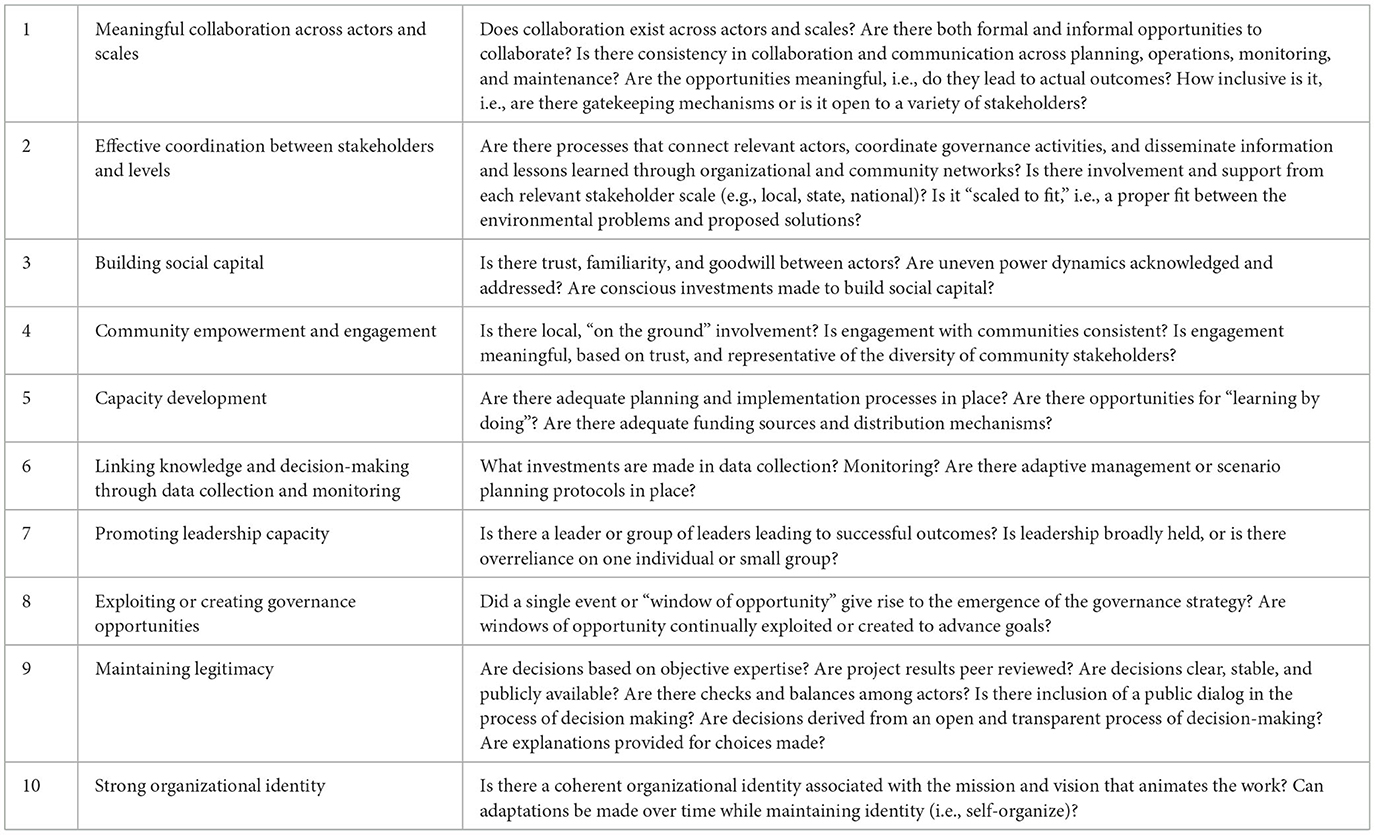
Table 1. Key adaptive governance characteristics (Cosens, 2013; Sharma-Wallace et al., 2018; van Assche et al., 2022).
Viewing the RGWF through the lens of adaptive governance, we see how water funds are generally one example of an emerging adaptive collaborative governance approach to managing watershed services. Water funds have been implemented by cities, development banks, and conservation organizations around the world, with 43 water funds developed in 13 countries through TNC alone as of 2020 [Brauman et al., 2019; TNC (The Nature Conservancy), 2022].
Water funds can include non-governmental organizations (NGOs), civil society, utilities, and private industry (Bennett et al., 2014; Huber-Stearns et al., 2015; Roberts et al., 2020), as well as government actors (Huber-Stearns and Cheng, 2017). Water funds fall under a larger umbrella of innovative water governance and finance strategies known as Investments in Watershed Services (IWS); there were almost 400 IWS programs as of 2015 (Salzman et al., 2018). IWS programs link downstream water users with upstream watershed service providers with an emphasis on nature-based solutions for watershed management (Vogl et al., 2017).
The unique goals and objectives of water funds vary across water funds in terms of the watershed and other ecosystem services of concern, the specific land and water management actions implemented, and the type of incentive mechanisms used (Bremer et al., 2016; Brauman et al., 2019). They are often referred to as “collective-action funding” since stakeholders pool resources and coordinate management decisions.
Examining the RGWF using the adaptive governance characteristics summarized in Table 1, a few observations can be made regarding its approach. We found that, rather than taking each characteristic individually, our assessment was more effective using the characteristics to identify four main themes while still emphasizing individual characteristics. This was in part due to the overlapping nature of the characteristics and details of the RGWF and the space available for this article contribution format.
Scaled to fit—Meaningful and effective interjurisdictional coordination
First, a key strength of the RGWF is that it is precisely scaled to fit the challenges and communities it is aimed at. While named the “Rio Grande” Water Fund, it involves portions of the Colorado River basin (see Figure 1). Inclusion of landscapes relevant to the San Juan-Chama project drew in a broader group of signatories, including the Albuquerque-Bernalillo Water Utility Authority and others who rely heavily on this water, and by extension, is increasing the resilience of the Rio Grande watershed. The reality is that much of the water serving communities in New Mexico now comes from the Colorado Basin via this transbasin diversion, and therefore forest treatments must take place outside the “Rio Grande” basin to meet Rio Grande basin needs.
This element of the RGWF's approach emphasizes the first two characteristics: (1) meaningful collaboration across actors and scales and (2) effective coordination between stakeholders and levels. The RGWF governs as a collaborative network at the watershed scale because it was created to respond to the urgent and specific challenge of wildfire, and the need to engage in biomass removal at an ambitious pace and scale. The sheer size of the Rio Grande watershed, combined with jurisdictional complexities associated with the numerous landowners and water rights holders, led to the RGWF's design and the multitude of actors involved at all scales.
Participation is very inclusive. There are no dues or other requirements to become a member/signatory, and participation is completely voluntary. There are currently over 100 signatories comprised of municipalities, federal, state, tribal and local governments, irrigation districts, tribes, NGOs, industry associations, and others. 2 years of grassroots engagement created the RGWF, with organizers continually asking “who is missing” and reaching out to potential partners. This work was influenced by relevant literature on building effective networks for social impact [see Plastrik et al. (2014)]. As a result, a broad coalition was formed.
How actors collaborate, how often, and at what scales, depends on the initiatives taking place at any given time. One example is the All Hands All Lands Burn Team (AHAL), an RGWF-funded project that is a partnership between the Forest Stewards Guild, TNC, and a host of other government agencies, tribes, and NGOs (Forest Stewards Guild, 2022). At its core, AHAL coordinates the sharing of prescribed fire resources across jurisdictions and agencies and acts almost as an ancillary dispatch center for requests by private landowners and federal agencies alike to bring firefighting resources to support broadcast and pile burn operations. AHAL works to address the cross-scale challenge of prescribed fire implementation by sharing the responsibility to field enough resources needed to safely conduct burn operations. Decision-making and risk are shared at various levels depending upon the type of land ownership a burn is occurring on. This is an example of an adaptive governance structure nested within the RGWF.
The RGWF's success working across complex, interjurisdictional contexts includes its work on tribal lands. Figure 1 highlights the several distinct Pueblo communities and reservation-based tribal nations in the watershed. Several of the RGWF projects—including its first investment of 25 million dollars on the Santa Clara Pueblo following the Las Conchas fire—take place on tribal lands and involve both funding and other forms of support from various signatories, including government agencies and NGOs (Indian Country Today, 2018).
The RGWF's ability to cut across jurisdictional boundaries and scale an approach to fit the challenge without the hindrance of more formal processes that can be hampered by legal and regulatory requirements is a key strength. For example, its work does not have to comply with Federal Advisory Committee Act requirements (Monroe and Butler, 2016). While not subsuming or replacing more formal efforts such as those led by the U.S. Forest Service, the RGWF's coordinating role of various actors in the watershed synergizes capacities across the watershed.
Just formal enough—Legitimacy based on social capital and community engagement
Next, the RGWF's organizational design is streamlined and focused while remaining relatively informal. It is, in essence, a voluntary network of interested parties matching funding opportunities with strategic needs. This design invokes the third and fourth adaptive governance characteristics: (3) social capital and (4) community empowerment and engagement, in addition to (9) legitimacy.
This design works due to the investment in relationships and building of social capital. The 2 years invested in grassroots organizing and creating the Comprehensive Plan for the RGWF, along with continual engagement of signatories through annual reporting and other updates, has resulted in trust, familiarity, and goodwill that have paid dividends. It allows the RGWF to function as a collaborative network with just enough formal processes in place to make decisions, transfer funds, and follow up with the monitoring and evaluation necessary to inform future work. Evidence of this social capital was born out in the two network-wide surveys conducted by the RGWF in 2015 and 2018, wherein signatories reported a high level of satisfaction with the collaborative2, 3.
Because the RGWF is mainly a facilitator, community empowerment and engagement are core to its design. The goal is to network and support new and existing actors in the watershed. One example is The Taos Valley Watershed Coalition. It was formed in 2015 to focus on coordinating and prioritizing forest and watershed restoration on 280,000 acres along the western slope of the Sangre de Cristo Mountains in Taos County (Taos Valley Watershed Coalition, 2015). The RGWF helped support the establishment of the Taos Valley Watershed Coalition and has funded projects identified in their Landscape Restoration Strategy (Taos Valley Watershed Coalition, 2015). Designed to build upon and complement the Taos County Community Wildfire Protection Plan core planning group, the Taos Valley Watershed Coalition has focused on implementation and leveraging partnerships across varying scales of land ownership from fuels reduction work in the wildland-urban interface to large-scale forest restoration projects in partnership with the Carson National Forest. Investing in place-based collaboratives enables the multi-scalar cooperation that cross-boundary implementation requires. The Taos Valley Watershed Coalition is now leading an effort in one of eight focal areas recently identified by the Forest Service as part of their “Confronting the Wildfire Crisis” strategy funded by the Infrastructure Investment and Jobs Act in 2021. The U.S. Forest Service picked 10 priority landscapes to launch the strategy and, because of the capacity of the Taos Valley Watershed Coalition that the RGWF helped build, the Enchanted Circle Priority Landscape in Taos and adjacent Colfax counties, New Mexico was one of the first to be selected (U.S. Forest Service, 2022b).
Legitimacy in the adaptive governance context is reflected in the processes by which decisions are made, including the level of transparency and power sharing occurring at various stages. Once decisions are made, legitimacy is maintained by providing ongoing transparency and subjecting decisions to peer review. In the case of the RGWF, the EC's recommendations—completely informal and non-binding—have to date been followed and implemented. In turn, the EC has followed the recommendation of the Technical Committees.
Once funded, projects are subjected to peer review and inform future decision-making through adaptive management, both with regard to investments and whether overall ecosystem-based objectives are being met. All of this is conveyed to signatories through the annual reporting process and an annual meeting, providing the necessary transparency with signatories and the general public.
In addition, the RFWF tracks its success using three major metrics identified in its adaptive management plan: (1) dollars raised, (2) acres treated, and (3) number of signatories to the charter, i.e., participants in the collaborative. These metrics are reported in the RGWF's annual reports. These reports show that $6,377,650 has flowed through the RGWF with TNC as fiscal agent since 2014 to partners to complete thinning, prescribed fire, stream and wetland restoration, collaboration, and planning projects (Rio Grande Water Fund, 2015, 2016b, 2017, 2018, 2019, 2020, 2021, 2022). This has facilitated 251,000 acres of forest restoration activities since 2022 (Rio Grande Water Fund, 2015, 2016b, 2017, 2018, 2019, 2020, 2021, 2022). This number includes leveraged treatments that were supported by RGWF projects activities such as planning and prescribed and managed wildfires to which RGWF-funded projects contributed (Rio Grande Water Fund, 2015, 2016b, 2017, 2018, 2019, 2020, 2021, 2022). Finally, as of 2022, there are 103 signatories to the RGWF charter (Rio Grande Water Fund, 2015, 2016b, 2017, 2018, 2019, 2020, 2021, 2022).
While progress has generally outpaced initial goals, three major challenges have faced the RGWF to date. First, the Mexican Spotted Owl Injunction slowed the progress of direct treatments around 2018, but a legal settlement in 2020 allowed restoration projects to continue (Montoya, 2020). Second, disruptions from the COVID-19 pandemic slowed both direct treatment numbers and created a backlog in reporting, though projects continued at a slower pace (Rio Grande Water Fund, 2019, 2020, 2021, 2022). Increasingly, continual challenges regarding both the timing and the politics of prescribed burning are impacting the pace and scale of the RGWF's work (Thompson, 2022). Ultimately, the ability to work at the necessary pace and scale on the landscape relative to the next “big fire” is the challenge facing the RGWF.
In addition, the number of signatories has continued to grow and, while overwhelmingly positive, this does create its own challenges. The original bylaws required written approval by all signatories before making any changes to the RGWF charter. This has made the collaborative's growth cumbersome, and the bylaws are now in the process of being revised (Rio Grande Water Fund, 2022).
Leadership at the right time
Third, TNC and other signatories were poised to take advantage of the “window of opportunity” created by the shared sense of urgency following the Las Conchas fire. They created a governance structure that combines strong, centralized administrative support with a collaborative network design. This encompasses three adaptive governance characteristics: (7) promoting leadership capacity, (8) exploiting or creating governance opportunities, and (10) organizational identity.
In collaborative settings, a balance is needed between providing core leadership while also avoiding an overreliance on that one individual or small group. In the case of the RGWF, TNC and its staff have played a key role in the creation and maintenance of the collaborative. This pivotal role in the creation of the RGWF, in addition to TNC providing ongoing project management assistance and its role as fiscal agent, is key to its success. This is balanced by the democratic leadership among the signatories. Members of the EC are elected and come from the organization's signatories. The EC provides leadership and guidance, creating a shared sense of ownership in the RGWF and hedging against the dangers of leaning too heavily on TNC staff. Other key players in the RGWF include the Middle Rio Grande Conservancy, Albuquerque Bernalillo Water Utility Authority, and the U.S. Forest Service. Not only did these actors make investments in the Fund but they also encouraged others to participate early on and provided key leadership, stability, and legitimacy.
With TNC's support, stakeholders in the watershed were able to self-organize after the Las Conchas fire and create the RGWF. Sharma-Wallace et al. (2018) noted that many—if not most—adaptive governance efforts can point to a single event or catalyst that gave rise to the program. Yet not all are able to sustain themselves after that sense of urgency is gone. The Las Conchas fire created a window of opportunity, but stakeholders were only able to take advantage of that opportunity because of the relationships built over time in the watershed among the various actors. The result of these efforts is a collaborative network with a clear organizational identity centered on a clear goal: to generate sustainable funding over 20 years to proactively increase the pace and scale of forest restoration.
Commitment to learning—Capacity development and adaptive management
Finally, planning and implementation processes are key to the RGWF's work and provide a basis for trust among the various actors. This commitment to learning includes two adaptive governance characteristics: (5) capacity building and (6) linking knowledge and decision-making through data collection and monitoring. In addition to its comprehensive plan in 2014, the RGWF adopted a Rio Grande Water Fund Monitoring and Adaptive Management Plan in 2016 to further guide decision-making (Rio Grande Water Fund, 2016b). The adaptive management plan includes specific monitoring protocols and reporting requirements that are then tied to funded projects.
RGWF also routinely subjects the efficacy of its work to peer review by commissioning a number of studies, including return on investment studies (e.g., Huber et al., 2019) and debris flow risk assessments (e.g., Stone et al., 2017), to promote learning. These investments provide key information that informs the EC's consideration of future work.
Tracking the accomplishments of the RGWF and progress toward the goal of 600,000 acres of forest restoration over 20 years across the landscape is a persistent challenge (e.g., Rio Grande Water Fund, 2021, 2022). Treating the landscape at the scale that is needed requires both direct RGWF investments and leveraged investments of its partners (Rio Grande Water Fund, 2014). There is not always a straight line between RGWF investments and treatment on a particular acre, given the highly collaborative and interjurisdictional nature of the investments, yet it is still important to track all accomplishments that occur in the landscape because no action is occurring in a vacuum. Every acre treated affects where the next acre will be treated regardless of who treated it. Adaptive management protocols can become a key strength in this context.
Conclusions and opportunities for further work
At a time when climate change is driving innovation across all sectors, the RGWF offers some key insights into how collaboratives can address societal needs by creating new, adaptive forms of governance. Examining the RGWF through the lens of the adaptive governance literature, we see that the key characteristics necessary for success are present. By examining these characteristics and then using them to identify emerging themes in the context of the RGWF, we can answer larger questions regarding when collaboratives and adaptive governance regimes can work and why, as well as when they face challenges and why. While not all characteristics need be present for adaptive governance to work, they do represent what—both empirically based on case study and theoretically based on literature from experts in adaptive governance—is known to make or break successful collaborations.
In the case of the RGWF, several lessons emerged. First, by creating a watershed-scale initiative specifically intended to address the challenge of wildfire and watershed protection, the RGWF achieved a precise scalar fit that matches a solution to the problem. The RGWF's design allows it to successfully work across a patchwork of land and water rights ownerships within the watershed. The result is a compelling and focused approach that can attract both funding and key constituencies in the watershed necessary to take on projects needed to meet the goal of treating 600,000 acres between 2014 and 2034.
Second, by creating an approach that is just formal enough, the RGWF strikes a balance between creating the formal processes necessary for building legitimacy and creating social capital while also providing the necessary flexibility to remain open to influence and participation from a variety of actors. By keeping the role of the EC advisory and charter participation in the collaborative available to all, the RGWF demonstrates that the strength of collaborative groups lies in the strength of relationships between members. This highlights how collaboration can work to align the priorities of funders and stakeholders but that cooperation can be tenuous without trust and established relationships.
Third, TNC and the other signatories provided leadership at the right time; actors in the watershed were able to leverage concern for the watershed following the Las Conchas fire to create the collaborative network that became the RGWF. Finally, the RGWF's commitment to adaptive management and peer review provides a basis for increased trust and building social capital.
While the RGWF provides a useful case study in climate adaptation, one methodological constraint of this study is that it is based on publicly available information and the knowledge of the authors as both scholars and participants in the RGWF. Further work in this area could include original research in the form of employing the adaptive governance characteristics identified here as part of a survey or interview instrument to engage actors in the RGWF or similar collaborative groups. This type of information has the potential to provide greater insights into the efficacy of various collaboratives and how they might improve. In addition, work specifically focused on tribal lands and collaborative engagements could provide deeper insights regarding what works for tribal communities, including how to better support meaningful engagements that are respectful of tribal sovereignty. Work comparing strategies across other water funds working in various contexts could also advance our understanding of the efficacy of the water fund model. Finally, empirical work designed to assess the relative strengths of different climate adaptive governance models (for example comparing the RGWF to the more federally-driven Four Forest Restoration Initiative in Arizona) could provide guidance for future wildfire and watershed restoration initiatives.
In sum, more effective governance is critical to climate change adaptation. By recognizing collaboratives such as the RGWF as a form of adaptive governance and examining key characteristics, the important role it is playing in the watershed is better recognized. The RGWF is one effort that can serve as a model for more adaptive approaches to the challenges facing communities facing climate change.
Data availability statement
The original contributions presented in the study are included in the article/supplementary material, further inquiries can be directed to the corresponding author.
Author contributions
MM, JC, LM, MP, AW, and KJ contributed to conception and design of the study, and including case study research. MM organized the literature review and wrote the first draft of the manuscript. KJ, MM, and AW wrote sections of the manuscript. MM, AW, JC, LM, MP, KJ, and JS participating in writing the second and third drafts, and including conducting additional research as needed. All authors contributed to manuscript revision, read, and approved the submitted version.
Funding
This work was supported by National Science Foundation Sustainable Regional Systems Research Network Transforming Rural-Urban Systems: Trajectories for Sustainability in the Intermountain West Award Number 2115169.
Conflict of interest
The authors declare that the research was conducted in the absence of any commercial or financial relationships that could be construed as a potential conflict of interest.
Publisher's note
All claims expressed in this article are solely those of the authors and do not necessarily represent those of their affiliated organizations, or those of the publisher, the editors and the reviewers. Any product that may be evaluated in this article, or claim that may be made by its manufacturer, is not guaranteed or endorsed by the publisher.
Footnotes
1. ^See http://riograndewaterfund.org/projects/forest-restoration/engage/signatories/ for a complete list of current signatories. A full account of the RGWF's background and history is beyond the scope of this manuscript, but more information can be found at http://riograndewaterfund.org/wp-content/uploads/2017/01/rgwf_compplan.pdf.
2. ^Rio Grande Water Fund (2015). Network Health Scorecard (unpublished; on file with the authors).
3. ^Rio Grande Water Fund (2018). Network Survey (unpublished; on file with the authors).
References
Adhikar, D., Thacher, J. A., Chermak, J. M., and Berrens, R. P. (2017). Linking Forest to Faucets in a Distant Municipal Area: Public Support for Forest Restoration and Water Security in Albuquerque, New Mexico. Water Econ. Policy 3, 193. doi: 10.1142./S2382624X16500193
Albuquerque Bernalillo County Water Utility Authority (2019a). Comprehensive Annual Financial Report for the fiscal years ended June 30, 2019. and 2018. Available online at: https://www.abcwua.org/wp-content/uploads/Finances_PDF/FY19_ABCWUA_CAFR.pdf (accessed September 19, 2022).
Albuquerque Bernalillo County Water Utility Authority (2019b). Channeling Success: A Decade of the San Juan-Chama Drinking Water Project. Available online at: https://www.abcwua.org/wp-content/uploads/Finances_PDF/WA_2019_PAFR_GFOA-3.pdf (accessed September 19, 2022).
Allen, C. D. (2007). Interactions across spatial scales among forest dieback, fire, and erosion in Northern New Mexico landscapes. Ecosystems 10, 797–808. doi: 10.1007/s10021-007-9057-4
Anderegg, W. R., Hicke, J. A., Fisher, R. A., Allen, C. D., Aukema, J., Bentz, B., et al. (2015). Tree mortality from drought, insects, and their interactions in a changing climate. New Phytol. 208, 674–683. doi: 10.1111/nph.13477
Ball, G., Regier, P., González-Pinzón, R., Reale, J., and Van Horn, D. J. (2021). Wildfires increasingly impact western US fluvial networks. Nat. Commun. 12, 2484. doi: 10.1038/s41467-021-22747-3
Bennett, D. E., Gosnell, H., Lurie, S., and Duncan, S. (2014). Utility engagement with payments for watershed services in the United States. Ecosyst. Serv. 8, 56–64. doi: 10.1016/j.ecoser.2014.02.001
Benson, M. H., Llewellyn, D., Morrison, R., and Stone, M. (2014). Water governance challenges in New Mexico's Rio Grande Valley: a resilience assessment. Ida. Law Rev. 51, 195–228. doi: 10.2139/ssrn.2464387
Bladon, K. D., Emelko, M. B., Silins, U., and Stone, M. (2014). Wildfire and the future of water supply. Environ. Sci. Technol. 48, 8936–8943. doi: 10.1021/es500130g
Brauman, K. A., Benner, R., Benitez, S., Bremer, L., and Vigerstol, K. (2019). “Water Funds,” in Green Growth That Works: Natural Capital Policy and Finance Mechanisms around the World, eds. L. A. Mandle, Z. Ouyang, J. E. Salzman, G. C. Daily (Washington DC: Island Press).
Bremer, L. L., Auerbach, D. A., Goldstein, J. H., Vogl, A. L., Shemie, D., Kroeger, T., et al. (2016). One size does not fit all: natural infrastructure investments within the latin american water funds partnership. Ecosyst. Serv. 17, 217–236. doi: 10.1016/j.ecoser.12006
Brunner, R. D. (2010). Adaptive governance as a reform strategy. Policy Sci. 43, 301–340. doi: 10.1007/s11077-010-9117-z
Brunner, R. D., Steelman, T., Coe-Juell, L., Cromley, C., Tucker, D., Edwards, C., et al. (2005). Adaptive Governance: Integrating Science, Policy, and Decision Making. New York: Columbia University Press.
Camacho, A. E., and Glicksman, R. L. (2014). Functional Government in 3-D, Harvard Journal on Legislation. 51, 19–88. Available online at: https://harvardjol.com/wp-content/uploads/sites/17/2014/03/CamachoGlicksman1.pdf (accessed January 20, 2023).
Chaffin, B. C., Gosnell, H., and Cosens, B. A. (2014). A decade of adaptive governance scholarship: synthesis and future directions. Ecol. Soc. 19, 56. doi: 10.5751/ES-06824-190356
Coop, J. D., Parks, S. A., Stevens-Rumann, C. S., Crausbay, S. D., Higuera, P. E., Hurteau, M. D., et al. (2020). Wildfire-driven forest conversion in Western North American Landscapes. Bioscience 70, 659–673. doi: 10.1093/biosci/biaa061
Cosens, B., Ruhl, J. B., Soininen, N., Gunderson, L., Belinskij, A., Blenckner, T., et al. (2021). Governing complexity: Integrating science, governance, and law to manage accelerating change in the globalized commons. Proc. Nat. Acad. Sci. 118, e2102798118. doi: 10.1073/pnas.2102798118
Cosens, B. A. (2013). Legitimacy, adaptation, and resilience in ecosystem management. Ecol. Soc. 18, 103. doi: 10.5751./ES-05093-180103
Dahm, C. N., Candelaria-Ley, R. I., Reale, C. S., Reale, J. K., and Van Horn, D. J. (2015). Extreme water quality degradation following a catastrophic forest fire. Freshw. Biol. 60, 2584–2599. doi: 10.1111/fwb.12548
Davis, K. T., Dobrowski, S. Z., Higuera, P. E., Holden, Z. A., Veblen, T. T., Rother, M. T., et al. (2019). Wildfires and climate change push low-elevation forests across a critical climate threshold for tree regeneration. Proc. Nat. Acad. Sci. 116, 6193–6198. doi: 10.1073/pnas.1815107116
Davis, K. T., Higuera, P. E., Dobrowski, S. Z., Parks, S. A., Abatzoglou, J. T., Rother, M. T., et al. (2020). Fire-catalyzed vegetation shifts in ponderosa pine and Douglas-fir forests of the western United States. Environ. Res. Lett. 15, 1040b.8. doi: 10.1088/1748-9326/abb9df
Desta, H., Lemma, B., and Fetene, A. (2012). Aspects of climate change and its associated impacts on wetland ecosystem functions: a review. J. Am. Sci. 8, 582–596. doi: 10.7537/marsjas081012.81
Dietz, T., Ostrom, E., and Stern, P. C. (2003). The struggle to govern the commons. Science. 302, 1907–1912. doi: 10.1126/science.1091015
Duman, T., Huang, C. W., and Litvak, M. E. (2021). Recent land cover changes in the Southwestern US lead to an increase in surface temperature. Agricult. Forest Meteorol. 297, 108246. doi: 10.1016/j.agrformet.2020.108246
Elliott, G. P., Bailey, S. N., and Cardinal, S. J. (2021). Hotter drought as a disturbance at upper treeline in the Southern Rocky Mountains. Annals Am. Assoc. Geograph. 111, 756–770. doi: 10.1080/24694452.2020.1805292
Erwin, K. L. (2009). Wetlands and global climate change: the role of wetland restoration in a changing world. Wetlands Ecol. Manag. 17, 71–84. doi: 10.1007/s11273-008-9119-1
Fernandes, P. M. (2015). Empirical support for the use of prescribed burning as a fuel treatment. Curr. Forest. Rep. 1, 118–127. doi: 10.1007/s40725-015-0010-z
Folke, C., Hahn, T., Olsson, P., and Norberg, J. (2005). Adaptive governance of social-ecological systems. Ann. Rev. Environ. Resources 30, 441–473. doi: 10.1146/annurev.energy.30.050504.144511
Forest Stewards Guild (2022). All Hands All Lands Burn Team. Available online at: https://foreststewardsguild.org/all-hands-all-lands/ (accessed September 30, 2022).
Guiterman, C. H., Margolis, E. Q., Allen, C. D., Falk, D. A., and Swetnam, T. W. (2018). Long-term persistence and fire resilience of oak shrubfields in dry conifer forests of Northern New Mexico. Ecosystems 21, 943–959. doi: 10.1007/s10021-017-0192-2
Huber, C., Cullinane Thomas, C., Meldrum, J., Meier, R., and Bassett, S. (2019). Economic Effects of Wildfire Risk Reduction and Source Water Protection Projects in the Rio Grande River Basin in Northern New Mexico and Southern Colorado. Reston, VA: U.S. Geological Survey. doi: 10.3133./ofr20191108
Huber-Stearns, H. R., and Cheng, A. S. (2017). The evolving role of government in the adaptive governance of freshwater social-ecological systems in the western US. Environ. Sci. Policy 77, 40–48. doi: 10.1016/j.envsci.07011
Huber-Stearns, H. R., Goldstein, J. H., Cheng, A. S., and Toombs, T. P. (2015). Institutional analysis of payments for watershed services in the western United States. Ecosyst. Serv. 16, 83–93. doi: 10.1016/j.ecoser.10009
Huntington, J., Gangopadhyay, S., Spears, M., Allen, R., King, D., Morton, C., et al. (2015). West-Wide Climate Risk Assessments: Irrigation Demand and Reservoir Evaporation Projections. Washington, DC: U.S. Bureau of Reclamation. doi: 10.13140./RG.2.1.1209.8647
Indian Country Today (2018). Devastating Floods Still Plague Santa Clara Pueblo Stemming From 2011 Las Conchas Fire. Available online at: https://indiancountrytoday.com/archive/devastating-floods-still-plague-santa-clara-pueblo-stemming-from-2011-las-conchas-fire (accessed September 19, 2022).
Iturbide, M., Fernández, J., Gutiérrez, J. M., Bedia, J., Cimadevilla, E., Díez-Sierra, J., et al. (2021). Repository supporting the implementation of FAIR principles in the IPCC-WG1 Atlas. Available online at: https://github.com/IPCC-WG1/Atlas (accessed September 19, 2022).
Johnson, P. S., Koning, D. J., Timmons, S. S., and Felix, B. (2016). Geology and hydrology of groundwater-fed springs and wetlands at La Cienega, Santa Fe County, New Mexico. Available online at: https://geoinfo.nmt.edu/publications/monographs/bulletins/161/ (accessed September 19, 2022).
Markovich, K. H., Manning, A. H., Condon, L. E., and McIntosh, J. C. (2019). Mountain-block recharge: a review of current understanding. Water Resour. Res. 55, 8278–8304. doi: 10.1029/2019WR025676
McCarthy, M. (2016). “Water Source Protection Funds as a Tool to Address Climate Adaptation and Resiliency in Southwestern Forests,” in Forest Conservation in the Anthropocene: Science, Policy, and Practice, eds. V. A. Sample, R. P. Bixler, and C. Miller (Boulder, CO: University Press of Colorado), 201-220.
Mohr, K. (2021). What Biden's infrastructure bill means for wildfire management. Available online at: https://www.hcn.org/articles/north-wildfire-what-bidens-infrastructure-bill-means-for-wildfire-management (accessed September 28, 2022.).
Monroe, A. S., and Butler, W. H. (2016). Responding to a policy mandate to collaborate: structuring collaboration in the collaborative forest landscape restoration program. J. Environ. Plann. and Manag. 59, 1054–1072. doi: 10.1080/09640568.2015.1053562
Montoya, S. B. (2020). Management agreement settles dispute over Mexican spotted owl. Albuquerque Journal. Available online at: https://www.abqjournal.com/1511607/management-agreement-settles-dispute-over-mexican-spotted-owl.html (accessed January 20, 2023).
Mueller, S. E., Thode, A. E., Margolis, E. Q., Yocom, L. L., Young, J. D., Iniguez, J. M., et al. (2020). Climate relationships with increasing wildfire in the southwestern US from 1984 to 2015. For. Ecol. Manage. 460, 117861. doi: 10.1016/j.foreco.2019.117861
New Mexico Bureau of Geology and Mineral Resources (2022). Climate change in New Mexico over the next 50 years: impacts on water resources. Available online at: https://geoinfo.nmt.edu/ClimatePanel/report/ (accessed August 31, 2022).
Olsson, P., Gunderson, L., Carpenter, S., Ryan, P., Lebel, L., Folke, C., et al. (2006). Shooting the rapids: navigating transitions to adaptive governance of social-ecological systems. Ecol. Soc. 11, 118. doi: 10.5751./ES-01595-110118
Ostrom, E. (1990). Governing the Commons: The Evolution of Institutions for Collective Action. Cambridge: Cambridge University Press.
Ostrom, E. (1992). Crafting Institutions for Self-governing Irrigation Systems. San Francisco: ICS Press.
Ozment, S., Gartner, T., Huber-Stearns, H., DiFrancesco, K., Lichten, N., Tognetti, S., et al. (2016). Protecting Drinking Water at the Source. Available online at: https://www.wri.org/research/protecting-drinking-water-source (accessed September 19, 2022).
Plastrik, P., Taylor, M., and Cleveland, J. (2014). Connecting to Change the World: Harnessing the Power of Networks for Social Impact. Washington, DC: Island Press.
Rhoades, C. C., Nunes, J. P., Silins, U., and Doerr, S. H. (2019). The influence of wildfire on water quality and watershed processes: new insights and remaining challenges. International J. Wildland Fire 28, 721–725. doi: 10.1071/WFv28n10_FO
Rio Grande Water Fund (2014). Comprehensive Plan for Wildfire and Water Source Protection. Available online at: http://riograndewaterfund.org/plans/ (accessed September 22, 2022).
Rio Grande Water Fund (2015). Rio Grande Water Fund: Wildfire and Water Source Protection Annual Report 2015. Available online at: http://riograndewaterfund.org/wp-content/uploads/2018/03/TNC_2015-RGWF-Annual-Report.pdf (accessed January 11, 2023).
Rio Grande Water Fund (2016a). Monitoring and Adaptive Management Plan. Available online at: http://riograndewaterfund.org/wp-content/uploads/2017/01/RGWF-Monitoring-Plan_Final_Nov2016.pdf (accessed September 22, 2022).
Rio Grande Water Fund (2016b). Rio Grande Water Fund: Wildfire and Water Source Protection Annual Report 2016. Available online at http://riograndewaterfund.org/wp-content/uploads/2018/03/TNC_RGWF_2016-Annual-Report.pdf (accessed January 11, 2023).
Rio Grande Water Fund (2017). Rio Grande Water Fund: Wildfire and Water Source Protection Annual Report 2017. Available online at: http://riograndewaterfund.org/wp-content/uploads/2017/11/rgwf-2017-annual-report.pdf (accessed January 11, 2023).
Rio Grande Water Fund (2018). Rio Grande Water Fund: Wildfire and Water Source Protection Annual Report 2018. Available online at: https://www.nature.org/content/dam/tnc/nature/en/documents/tnc_RioGrandWaterFund_2018.pdf (accessed January 11, 2023).
Rio Grande Water Fund (2019). Rio Grande Water Fund: Wildfire and Water Source Protection Annual Report 2019. Available online at: http://riograndewaterfund.org/wp-content/uploads/2019/10/TNC_RioGrandWaterFund_AnnualReport_2019_final-without-fsc-mark.pdf (accessed January 11, 2023).
Rio Grande Water Fund (2020). Rio Grande Water Fund: Wildfire and Water Source Protection Annual Report 2020. Available online at: http://riograndewaterfund.org/wp-content/uploads/2020/10/TNC_RioGrandWaterFund_AnnualReport_2020.pdf (accessed January 11, 2023).
Rio Grande Water Fund (2021). Rio Grande Water Fund: Wildfire and Water Source Protection Annual Report 2021. Available online at: https://riograndewaterfund.org/wp-content/uploads/2021/10/TNC_RioGrandWaterFund_AnnualReport_2021_v4.pdf (accessed September 19, 2022).
Rio Grande Water Fund (2022). Rio Grande Water Fund: Wildfire and Water Source Protection 2022 Annual Report. Available online at: http://riograndewaterfund.org/wp-content/uploads/2022/11/TNC_RioGrandWaterFund_AnnualReport_2022_FINAL.pdf (accessed January 11, 2023).
Roberts, R. M., Jones, K. W., Cottrell, S., and Duke, E. (2020). Examining motivations influencing watershed partnership participation in the Intermountain Western United States. Environ. Sci. Policy 107, 114–122. doi: 10.1016/j.envsci.02021
Salzman, J., Bennett, G., Carroll, N., Goldstein, A., and Jenkins, M. (2018). The global status and trends of payments for ecosystem services. Nat. Sustainability 1, 136–144. doi: 10.1038/s41893-018-0033-0
Shapiro, S., Elizabeth Fisher, E., and Wagner, W. (2012). The enlightenment of administrative law: looking inside the agency for legitimacy. Wake Forest Law Review 47, 463–502. Available online at: http://wakeforestlawreview.com/wp-content/uploads/2014/10/SFW_LawReview_10.12.pdf (accessed January 20, 2023).
Sharma-Wallace, L., Velardea, S. J., and Wreford, A. (2018). Adaptive governance good practice: show me the evidence! J. Environ. Manag. 222, 174–84. doi: 10.1016/j.jenv-man.05067
Stebbins, M., and Summerfelt, P. (2018). Got Water? Thank (and Save) a Forest. Available online at: https://islandpress.org/blog/got-water-thank-and-save-forest (accessed September 19, 2022).
Steelman, T. (2022). “Adaptive governance,” in Handbook on Theories of Governance, eds C. Ansell, J. Torfing. (Cheltenham: Edward Elgar), 558-591.
Stephenson, M., and Chaves, E. (2006). The nature conservancy, the press, and accountability. Nonprofit Volunt. Sect. Quarte. 35, 3. doi: 10.1177./089976400628788
Stone, M., Affrin, Z., and Gregory, A. (2017). An Investigation into the Potential Impacts of Watershed Restoration and Wildfire on Water Yields and Water Supply Resilience in the Rio Grande Water Fund Project Area. Available online at: http://riograndewaterfund.org/wp-content/uploads/2017/01/rgwf_stone_etal_2017.pdf (accessed September 19, 2022).
Taos Valley Watershed Coalition (2015). Landscape Restoration Strategy. Available online at: https://static1.squarespace.com/static/5fb74a26c544385564699e6d/t/621e4f41c78382543cde0051/1646153578943/TVWC_LRS.pdf (accessed September 22, 2022).
Thompson, J. (2022). The funky politics of wildfire right now: After New Mexico's record-breaking fires, the politics of wildfire are morphing into weird configurations. Available online at: https://www.hcn.org/articles/landline-wildfire-the-funky-politics-of-wildfire-right-now (accessed April 7, 2023).
TNC (The Nature Conservancy) (2022). Water Funds Toolbox. Available online at: https://waterfundstoolbox.org/ (accessed September 19, 2022).
U.S. Department of the Interior, Bureau of Reclamation (2013). West-Wide Climate Risk Assessment: Upper Rio Grande Impact Assessment. Available online at: https://digitalrepository.unm.edu/uc_rio_chama/82 (accessed September 22, 2022.).
U.S. Forest Service (2022a). Wildfire Crisis Landscape Investments. Available online at: https://www.fs.usda.gov/sites/default/files/WCS-Initial-Landscape-Investments.pdf (accessed September 30, 2022.).
U.S. Forest Service (2022b). Bipartisan Infrastructure Law. Available online at: https://www.fs.usda.gov/managing-land/infrastructure (accessed September 30, 2022.).
U. S. Forest Service (2011). Burned Area Report. Available online at: https://forest.moscowfsl.wsu.edu/BAERTOOLS/baer-db/2500-8/2500-8_Las%20Conchas_Santa%20Fe.pdf (accessed September 19, 2022).
van Assche, K., Valentinov, V., and Verschraegen, G. (2022). Adaptive governance: learning from what organizations do and managing the role they play. Kybernetes 51, 1738–1758. doi: 10.1108/K-11-2020-0759
Vogl, A. L., Goldstein, J. H., Daily, G. C., Vira, B., Bremer, L., McDonald, R. I., et al. (2017). (2017). Mainstreaming investments in watershed services to enhance water security: Barriers and opportunities. Environ. Sci. Policy 75, 19–27. doi: 10.1016/j.envsci.05007
Walker, B., and Salt, D. (2006). Resilience Thinking: Sustaining Ecosystems and People in a Changing World. Washington DC: Island Press.
Wang, H., and Ran, B. (2021). Network governance and collaborative governance: a thematic analysis on their similarities, differences, and entanglements. Public Manag. Rev. 24, 1–25. doi: 10.1080/14719037.2021.2011389
Wiedinmyer, C., and Hurteau, M. D. (2010). Prescribed fire as a means of reducing forest carbon emissions in the Western United States. Environ. Sci. Technol. 44, 1926–1932. doi: 10.1021/es902455
Williams, P. A., Allen, C. D., Macalady, A. K., Griffin, D., Woodhouse, C. A., Meko, D. M., et al. (2013). Temperature as a potent driver of regional forest drought stress and tree mortality. Nat. Clim. Change 3, 292–297. doi: 10.1038/nclimate1693
Williams, P. A., Livneh, B., McKinnon, K. A., Hansen, W. D., Mankin, J. S., Cook, B. I., et al. (2022). Growing impact of wildfire on western US water supply. Proc. Nat. Acad. Sci. 119, e2114069119. doi: 10.1073/pnas.2114069119
Keywords: adaptive governance, climate change, resilience, Rio Grande watershed, Rio Grande Water Fund
Citation: Morgan M, Webster A, Piccarello M, Jones K, Chermak J, McCarthy L and Srinivasan J (2023) Adaptive governance strategies to address wildfire and watershed resilience in New Mexico's upper Rio Grande watershed. Front. Clim. 5:1062320. doi: 10.3389/fclim.2023.1062320
Received: 05 October 2022; Accepted: 10 May 2023;
Published: 14 June 2023.
Edited by:
J. B. Ruhl, Vanderbilt University, United StatesReviewed by:
Melissa Powers, Lewis & Clark College, United StatesRobin Kundis Craig, University of Southern California, United States
Copyright © 2023 Morgan, Webster, Piccarello, Jones, Chermak, McCarthy and Srinivasan. This is an open-access article distributed under the terms of the Creative Commons Attribution License (CC BY). The use, distribution or reproduction in other forums is permitted, provided the original author(s) and the copyright owner(s) are credited and that the original publication in this journal is cited, in accordance with accepted academic practice. No use, distribution or reproduction is permitted which does not comply with these terms.
*Correspondence: Melinda Morgan, bWhiZW5zb25AdW5tLmVkdQ==