 Jade Radke
 Stella Argentopoulos
 Jiaying Zhao
- 1Department of Psychology, University of British Columbia, Vancouver, BC, Canada
- 2Institute for Resources Environment and Sustainability, University of British Columbia, Vancouver, BC, Canada
Reducing carbon emissions has become largely synonymous with personal sacrifice that can decrease subjective well-being (i.e., happiness, life satisfaction). However, a growing body of research suggests that pro-environmental behavior is positively associated with subjective well-being. To further examine this relationship, this exploratory study examined individual carbon emissions and subjective well-being in Blue Zone Ikaria, Greece, using Athens as a comparison site. Structured interviews and questionnaires with 46 participants (22 in Ikaria, 24 in Athens) revealed that Icarian participants reported higher mental well-being and lower carbon emissions from air travel and clothing consumption than Athenian participants. Icarian participants were also more likely to grow their own food and identify as part of a tight-knit community. These findings suggest that community-focused lifestyles may promote mental well-being while reducing carbon emissions. Future research with larger, more representative samples and objective emissions data is needed to further explore this relationship in Ikaria and other non-WEIRD (Western, Educated, Industrialized, Rich, Democratic) societies.
Introduction
Reducing greenhouse gas emissions has become largely synonymous with making personal sacrifices; for example, spending more money to buy climate-friendly products, using less energy, and eating less meat (Hopwood et al., 2022). Many people also associate more consumption with greater happiness, leading them to believe that reducing carbon emissions would decrease their well-being (Brülde, 2015). For instance, a recent experiment showed that when climate action is framed as doing less bad (e.g., eat less meat), people are less likely to take action and feel less happy about doing so, compared to when the action is framed as doing more good (e.g., eat more plants; Radke et al., 2025). This may partially explain why progress to reduce carbon emissions has so far been inadequate to prevent the negative effects of climate change (Calvin et al., 2023).
In contrast, a growing body of literature including several meta-analyses show that pro-environmental behavior (PEB) is associated with higher levels of subjective well-being (Krumm, 2024; Zawadzki et al., 2020). Subjective well-being (SWB) is described as the level of well-being people experience according to their subjective evaluations of their lives (Diener and Ryan, 2009). SWB is a key component of quality of life, characterized by high life satisfaction, more frequent positive affect (e.g., happiness), and less frequent negative affect (e.g., sadness; Diener et al., 2018; Diener and Ryan, 2009). Previous research has shown higher SWB to predict more success across a variety of life domains, such as social relationships, work performance, and health (Diener et al., 2018; Lyubomirsky et al., 2005).
Recent meta-analyses suggest that subjective well-being and PEB are positively associated because PEB is inherently meaningful (Binder and Blankenberg, 2017; Venhoeven et al., 2020; Zawadzki et al., 2020). For example, pro-environmental behaviors that are social or effortful, such as carpooling, have been found to have stronger positive associations with subjective well-being than other types of PEBs (Prinzing et al., 2024). As a result, more people are advocating for well-being and carbon emissions to be decoupled from economic growth, suggesting that increased subjective well-being can be achieved while decreasing consumption-related emissions (Casau et al., 2024; Fanning and O'Neill, 2019). Given these divergent perspectives, more research is needed to better understand the relationship between carbon emissions and subjective well-being.
Blue Zones present a unique opportunity to explore how low-carbon lifestyles are associated with subjective well-being. Blue Zones are defined as small geographical areas where the population contains a large percentage of people over the age of 100 years old (Poulain et al., 2013). To date, ten Blue Zones have been identified, but only four are heavily studied in the literature, which are Ogliastra in the province of Sardinia, Italy; Okinawa, Japan; Nicoya, Costa Rica; and Ikaria, Greece. These regions are often characterized by geographical isolation, mountainous terrains, warm climates, healthy diets, high levels of physical activity (Candal-Pedreira et al., 2025), and low depressive symptomology (Hitchcott et al., 2018; Legrand et al., 2019). Many of the key cultural characteristics of Blue Zones, such as plant-based diets and active transport, have not only been linked to longevity (Candal-Pedreira et al., 2025), but also to higher levels of subjective well-being (Hess, 2022; Mujcic and Oswald, 2016) and lower levels of carbon emissions (Ivanova et al., 2020). Yet, there is a lack of research that directly examines the individual carbon emissions and subjective well-being of people in Blue Zones.
One of these Blue Zones—Ikaria—is a Greek island in the eastern Aegean Sea (Candal-Pedreira et al., 2025). The island is known for its slow-paced lifestyle, close community ties, and cultural ethos of sufficiency (Kallis et al., 2022). While Greece itself may be considered a WEIRD (Western, Educated, Industrialized, Rich, Democratic) nation, Ikaria's rural, collectivist, and anti-growth culture aligns more closely with typical non-WEIRD societies (Kallis et al., 2022; Masuda et al., 2020). Of the limited studies on the subjective well-being of people in Ikaria, one study showed a low prevalence of depression in elders because of their regular afternoon naps (Panagiotakos et al., 2011). However, no study to date has examined the subjective well-being of the general population in Ikaria. In addition, previous research has not examined household carbon emissions in Ikaria and whether they are higher or lower than other regions in Greece. Thus, a more inclusive investigation of the subjective well-being and carbon emissions of people in Ikaria is needed. While climate change has been shown to impact emotional well-being via multiple pathways (Lawrance et al., 2022), the current paper examines how low-carbon lifestyles relate to subjective well-being.
The current study is exploratory and examines happiness, life satisfaction, mental well-being, and individual carbon emissions in Blue Zone Ikaria, Greece, as an effort to provide further evidence on the relationship between carbon emissions and subjective well-being. As a comparison, we also obtained well-being and emission data from people in Athens, Greece. Athens, as the capital and most demographically representative urban center in Greece, serves as a reasonable proxy for the national population profile. This method of comparison is inspired by previous research on Blue Zones, which have historically been designated through an evaluation of the longevity of an area compared to a broader reference population (Poulain and Herm, 2025). This is the first study to explore subjective well-being and carbon emissions among the general population in Blue Zone Ikaria, Greece.
Methods
Participants
Participants were recruited through recruitment posters (see SI.A for English and SI.B for Greek) and snowball sampling. The inclusion criteria were that the participants had to be at least 18 years old and born and raised in either Athens or Ikaria, Greece. There was no exclusion criterion. A total of 46 participants completed the study, 24 from Athens (age: M = 49.38, SD = 18.11; monthly personal income: M = €7,088, SD = €9,824; sex: 58.33% female, 41.67% male; education: 62.50% have a Master's degree, 12.50% have a Bachelor's degree, 20.83% have a high-school diploma) and 22 from Ikaria (age: M = 49.91, SD = 17.22; monthly personal income: M = €989, SD = €810; sex: 36.56% female, 63.64% male; education: 9.09% have a Master's degree, 18.18% have a Bachelor's degree, 18.18% have a high-school diploma; see SI.C for a detailed breakdown of all participant demographics). All participants provided informed consent and chose a gift of Canadian snacks (e.g., maple stroopwafel, icewine chocolate, and tea) valued between CAD $1.90 to $14.99 as compensation for their time. Gifts were offered instead of a monetary honorarium as direct payment can feel overly transactional to the participants in Greece, with small gifts being seen as a more genuine token of appreciation for their time. The study was approved by the University of British Columbia's Behavioral Research Ethics Board (ID: H24-01427). The data were anonymized and are available here: https://osf.io/zxg4k/files/osfstorage.
Materials and procedures
Data collection occurred from July 19th to August 31st, 2024, in Ikaria and Athens, Greece. Participants were provided with the option to participate in the study in English or in Greek and all participants chose to complete the study in Greek. The co-first author (Argentopolous) conducted a structured interview with each participant, where she asked a series of questions from a questionnaire (see SI.D for English and SI.E for Greek). The questionnaire contained four sections: demographics and lifestyles, individual emissions calculator, subjective well-being and climate belief, and closing remarks, described below. Scales that had been previously translated to Greek and validated were used when possible. Remaining scales and interview questions were translated from English to Greek by the co-first author (Argentopolous), who was born and raised in Greece, is a native speaker in both Greek and English, and holds a bilingual diploma in Greek and English. Translations were also verified using Greek dictionaries, and a pilot version of the study was conducted with another native Greek and English speaker to ensure the validity of the translations.
Demographics and lifestyles
The demographics and lifestyles section included questions on education, gender, income, profession, marital status, religious affiliation, smoking habits, exercise frequency, whether they grow their own food or recycle, and their sense of community.
Individual emissions calculator
This section asked questions on household energy, car and air travel, and food, clothing, and technology consumption, considering their lifestyle in the previous year to allow for a calculation of their annual individual carbon emissions in kg CO2e. For a detailed breakdown of how carbon emissions were calculated, see SI.F. These questions and calculations were adapted from Luo et al. (2025), with some changes made to accurately reflect the Greek culture of the participants.
Subjective well-being and climate belief
To measure subjective well-being, we used three separate validated scales on happiness, life satisfaction, and mental well-being. To measure happiness, we used the Greek translated version of the Subjective Happiness Scale (SHS), which is a four-item scale ranging from 1 to 7 for each item (Lyubomirsky and Lepper, 1999). A single score for happiness is calculated by averaging responses to the four items, with the fourth item being reverse-coded. Higher scores represent higher happiness. Past research has shown the Greek translated version of this scale to be reliable and valid among Greek adults in the general population (Karakasidou et al., 2016; Lyrakos et al., 2013a).
To measure life satisfaction, we used the Greek translated version of the Satisfaction with Life Scale (SWLS), which is a five-item scale that assesses an individual's general sense of satisfaction with their life as a whole (Larsen et al., 1985; Pavot and Diener, 2008). The scale ranges from 1 to 7 for each item, and a single score for life satisfaction is calculated by summing responses to the five items. A previous study has shown that the Greek translated version of the SWLS is reliable and valid among the general population in Greece (Lyrakos et al., 2013b).
To measure mental well-being, we used the Greek translated version of the Warwick-Edinburg Mental Well-Being Scale (WEMWBS), which is a 14-item measure that assesses an individual's mental well-being through positive affect, positive functioning, and interpersonal relationships (Tennant et al., 2007). Participants indicate which point on a five-point Likert scale (1 = none of the time, 5 = all of the time) best describes their experience over the past 2 weeks. A final score is calculated by summing responses to the 14 items. A recent study has shown the Greek version of the scale to be reliable and valid among Greek-speaking mature students (Petrogiannis et al., 2024).
Finally, to measure climate belief, we used the Greek translated version of the climate change belief scale from Fairbrother et al. (2019), which measures people's skepticism of the trend (1 = definitely not changing, 4 = definitely changing), attribution (1 = entirely natural processes, 5 = entirely by human processes), and impact (1 = extremely good, 10 = extremely bad) of climate change. A single climate belief score is determined by calculating the geometric mean of the three responses, with higher values representing a higher level of belief in anthropogenic climate change. This scale has shown to be reliable across European countries but had not been previously translated to Greek.
Closing remarks
This section asked whether participants knew anyone else who might be interested in participating in the study for recruitment purposes.
Results
Table 1 summarizes the descriptive and inferential statistics for all measures analyzed in the surveys in Ikaria and Athens.
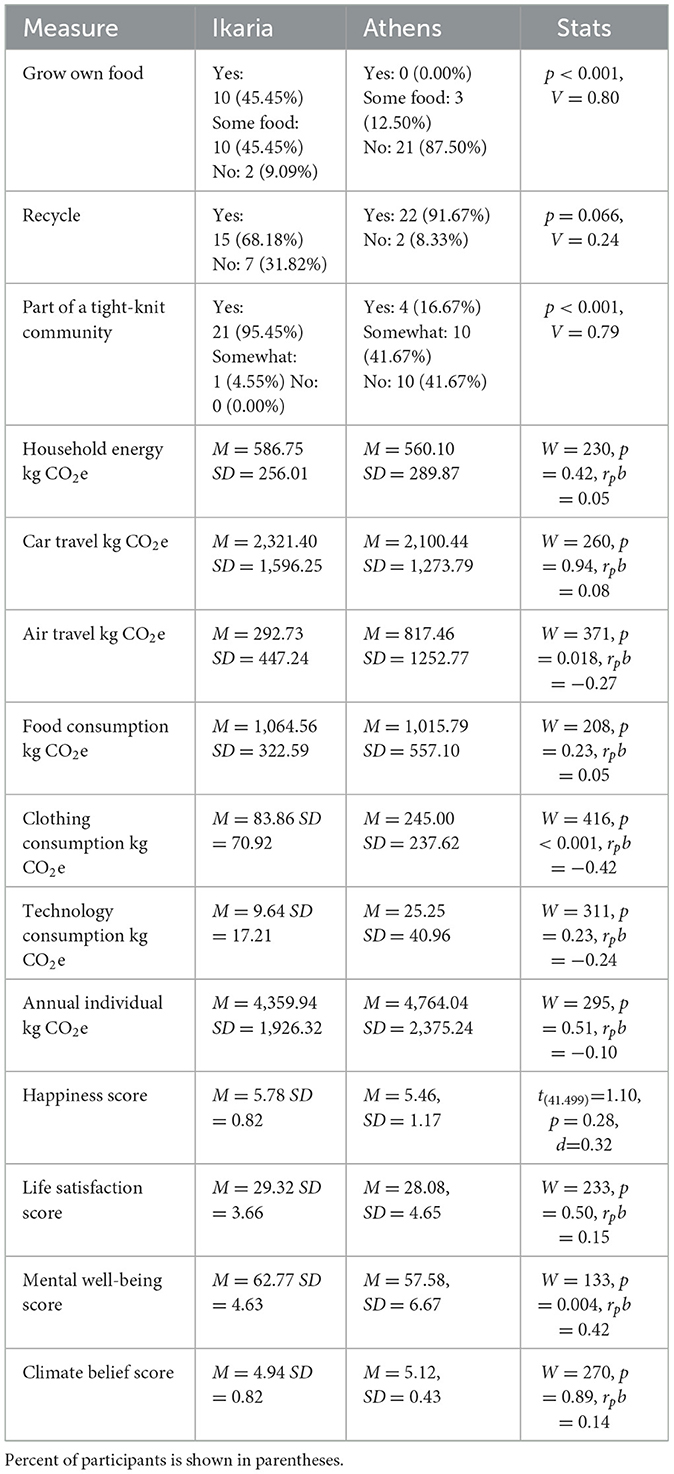
Table 1. Descriptive and inferential statistics for all measures.
Lifestyles
To explore potential differences in lifestyles that could impact individual carbon emissions or subjective well-being between Ikaria and Athens, we used fisher's exact tests to examine whether participants grow their own food, recycle, or consider themselves part of a tight-knit community. This test was chosen instead of a chi-square test as all contingency tables had at least one cell below 5. The test showed that participants in Ikaria were more likely to grow their own food (p < 0.001, V = 0.80), marginally less likely to recycle (p = 0.066, V = 0.24), and more likely to consider themselves part of a tight-knit community (p < 0.001, V = 0.79) than participants in Athens.
Individual carbon emissions
To examine if individual carbon emissions differed between participants in Ikaria and Athens, we conducted separate Wilcoxon rank sum tests for each category. These tests were chosen as carbon emissions in all categories violated assumptions of normality (W's < 0.87, p's < 0.006), except for car travel in Athens (W = 0.94, p = 0.16), food consumption in Ikaria (W = 0.96, p = 0.47), and individual carbon emissions in Ikaria (W = 0.92, p = 0.10). The tests revealed that participants in Ikaria had significantly lower carbon emissions for air travel (p = 0.018, rpb = −0.27) and clothing consumption (p < 0.001, rpb = −0.42) than those in Athens. There were no other significant differences in individual carbon emissions between the two locations (p's > 0.23). Figure 1 visualizes the individual carbon emissions in each category between Ikaria and Athens.

Figure 1. Average annual individual carbon emissions by category for Ikaria and Athens.
Subjective well-being and climate belief
To examine whether happiness differed between participants in Ikaria and Athens, we conducted an independent samples t-test on SHS scores between locations, as both the assumptions of normality (Ikaria: W = 0.94, p = 0.22; Athens: W = 0.94, p = 0.13) and homogeneity of variance [W(1, 44) = 3.46, p = 0.070] were met. The test showed no significant difference between participants in the two locations (p = 0.28, d = 0.32). To examine life satisfaction, we conducted a Wilcoxon rank sum test on SWLS scores due to a violation of normality (Ikaria: W = 0.94, p = 0.22; Athens: W = 0.90, p = 0.017). The test showed no significant difference (p = 0.50, rpb = 0.15). To examine mental well-being, we conducted another Wilcoxon rank sum test on WEMBWBS scores between locations due to a violation of normality (Ikaria: W = 0.86, p = 0.005; Athens: W = 0.93, p = 0.12). The test showed a significantly higher average WEMBWBS score in participants in Ikaria than those in Athens (p = 0.004, rpb = 0.42).
To explore whether there was a difference in climate change belief between participants in Ikaria and Athens, we conducted a Wilcoxon rank sum test on climate belief scores between the two locations due to a violation of normality (Ikaria: W = 0.83, p = 0.001; Athens: W = 0.93, p = 0.11). The test showed no significant difference (p = 0.89, rpb = 0.14). Figure 2 visualizes the results for subjective well-being and climate belief between participants in the two locations.

Figure 2. Subjective well-being and climate belief results for Ikaria and Athens (error bars reflect ±1 SEM; ** p < 0.01).
Thematic analysis
Finally, we conducted an inductive thematic analysis on participant responses to the open-ended question “Do you have anything else you would like to add?” Two research assistants independently familiarized themselves with the responses, coded the data, and grouped the codes into themes. The codes and themes were then compared, and any conflicts were resolved through collaborative discussion with the co-first author (Argentopolous). Three main themes emerged: (1) Environment, (2) Lifestyle, and (3) Systemic Barriers (see Table 2 for the codes within each theme, their descriptions, and the number participants who referenced each code).

Table 2. Thematic analysis themes and codes.
The first theme, environment, was referenced only by participants in Ikaria. They emphasized the negative effects that climate change has had on the island, frequently referencing the droughts or wildfires they experience. For the lifestyle theme, participants in both locations discussed ways that they try to reduce their consumption and waste, often stating that their consumption is minimal. However, participants in Athens were more likely to discuss ways their sustainable behavior could be improved. The third theme, systemic barriers, was referenced mostly by participants in Ikaria and one person in Athens. They discussed a lack of proper waste management and mentioned that this was demotivating for individual behavior. Participants from Ikaria also discussed how tourism negatively impacts the island, such as by increasing waste and litter. Two participants in Ikaria also highlighted historical poverty as a contributing factor to the island's healthy and sustainable lifestyle.
Discussion
The current study explored subjective well-being and individual carbon emissions in Blue Zone Ikaria and Athens, Greece. We found that participants in Ikaria reported lower air travel and clothing consumption carbon emissions and higher mental well-being than participants in Athens. These findings provide initial support for a relationship between subjective well-being and carbon emissions in a non-WEIRD society, where higher subjective well-being is associated with lower carbon emissions.
There are several potential explanations for these findings. First, the unique culture of Ikaria may contribute to the lower carbon emissions in these categories. Ikaria is well-known for its ethos of sufficiency, prioritizing living well and connecting with community over consistent growth (Kallis et al., 2022). Therefore, people in Ikaria may not experience the same desire to purchase new clothing or fly to other places as people in Athens. Second, Mediterranean islands are particularly susceptible to the negative effects of climate change (Vogiatzakis et al., 2016), with several Icarian participants discussing direct experiences with extreme weather events like wildfires. A recent study showed that experiencing an extreme weather event is positively correlated with willingness to engage in pro-environmental behavior in Mexico, a country vulnerable to climate change (López-Feldman and González, 2024), suggesting that Icarian participants may have lower emissions in these categories due to their direct experiences with extreme weather events. Given that we found no difference in the level of climate belief between Ikaria and Athens, this effect may be mediated by increases in environmental beliefs or values other than belief in anthropogenic climate change. Future research can examine the influence of other environmental beliefs and values on this relationship.
Furthermore, income or educational differences could explain the lower air travel and clothing consumption carbon emissions in Ikaria compared to Athens. Previous research has shown a disproportionate amount of carbon emissions are emitted by the top 10% of earners within countries (Chancel, 2022). In the current study, the average monthly income of participants in Athens was 4.81 times higher than the average monthly income in Greece (Statistica, 2025) and 7.12 times higher than the monthly income of participants in Ikaria. Therefore, it's possible that participants in Ikaria had lower individual emissions in these categories because of financial constraints that prevented them from purchasing clothing and flights to the same extent as those in Athens.
Lastly, Icarian participants may have limited opportunities to purchase clothing and flights due to the geographical limitations of the island. Ikaria is isolated from the rest of Greece and has a population of approximately 8,800 people (López Barreiro, 2024). In contrast, Athens is the largest city and capital of Greece and is home to several large shopping centers and department stores (Manioudis and Meramveliotakis, 2023). Moreover, the Ikaria airport handles only two to four domestic flights per day, whereas the Athens airport sees an average of 830 flights per day (Athens International Airport, 2025). Therefore, differences in carbon emissions between the two locations may be because it is more accessible for participants in Athens to purchase clothing and flights than participants in Ikaria. With that said, permanent island residents in Greece have access to state-subsidized transportation, including air travel with the country's national airline [The Metaphorical Equivalent (MI), 2025; Metaphorical Equivalent, 2025]. These subsidies reduce financial constraints and increase the accessibility of the Athens airport. Therefore, a lack of accessibility is unlikely to be the sole cause of lower air travel emissions in Ikaria.
We also found that participants located in Ikaria had higher mental well-being than participants in Athens. This could be due to the strong sense of community on the island. Notably, 95.45% of participants in Ikaria identified as part of a tight-knit community, compared to just 16.67% of Athenian participants. Previous research has shown interactions with social ties to predict higher subjective well-being (Sandstrom and Dunn, 2014), perhaps by increasing positive affect and improving physical health (Kemp et al., 2017). Another explanation may be that the slow-paced lifestyle of Ikaria contributes to lower levels of stress, increasing mental well-being. This slow-paced lifestyle, particularly midday naps, has been previously linked to lower rates of depression among Icarian elders (Panagiotakos et al., 2011). This study extends these findings to the broader concept of mental well-being among the general population of Ikaria.
We found no difference in carbon emissions for household energy, car travel, food consumption, technology consumption, or individual carbon emissions. One explanation for these null results is that some of the assumptions applied in our calculations may not have adequately captured the differences in kg CO2e per capita between the two locations. For instance, due to limited data differentiating household heating types in Greece, the national electricity carbon mix was applied uniformly to all participants. Thus, key variables such as location and housing type were not accounted for in the calculation of household energy carbon emissions. Additionally, the emissions associated with food consumption were assumed to be the same across locations. However, 45.45% of participants in Ikaria indicated that they mostly grow their own food, while zero participants in Athens mostly grow their own food. Previous research has shown that producing your own food can reduce emissions by a median of 360 kg CO2e per capita per year (Ivanova et al., 2020), suggesting that the actual carbon emissions associated with food consumption may be lower in Ikaria than in Athens.
Finally, we found no difference in happiness or life satisfaction between Ikaria and Athens, though Ikaria showed a trend of slightly higher scores on both of these measures. These null results could be due to the small sample size in our study. It could also be that the average score on both the SHS and the SWLS scales were near the maximum of their answer ranges, making it difficult to distinguish between the scores of Icarian and Athenian participants due to a lack of variance (i.e., ceiling effect; Garin, 2023).
Implications
These findings suggest that slower-paced lifestyles with a focus on social connection, such as those often found in Ikaria, may improve mental well-being and reduce carbon emissions. For instance, previous research has shown societal need fulfillment (i.e., feeling as though one has others to count on for help in an emergency) to predict subjective well-being across cultures (Tay and Diener, 2011). Further, having strong social ties may help lower carbon emissions by encouraging the service/sharing economy (e.g., opting for local services and sharing or repairing items instead of buying new; Ivanova et al., 2020). Similarly, slower-paced lifestyles can reduce rates of depression (Panagiotakos et al., 2011) and encourage resourcefulness and decreased consumption (Lamb, 2019). Therefore, prioritizing social connection and slower-paced lifestyles may be an effective way to simultaneously improve mental well-being and lower carbon emissions.
Importantly, we do not suggest that conditions of limited infrastructure, reduced mobility, or economic constraint constitute desirable models for sustainability. Moreover, the low-carbon lifestyles observed in Ikaria are understood as outcomes shaped by cultural, historical, and geographic context. The purpose of this study has therefore been to identify specific practices or structural features (e.g., prioritizing social connection) that can be adopted by other areas to improve subjective well-being and decrease carbon emissions.
Limitations and future directions
This study has several limitations. First, the sample is small, with only 24 participants in Athens and 22 participants in Ikaria, and was largely obtained through snowball sampling. As a result, some true differences between Athens and Ikaria may have been missed due to underpowered statistical tests, and the sample may not be representative of the entire population of Athens or Ikaria. Although the sample size is limited, the sociodemographic patterns observed in this study are broadly consistent with prior research (e.g., Panagiotakos et al., 2011; Monastiriotis, 2007). Nonethless, it's important to treat these results as exploratory and interpret them with caution. Future research should replicate this study with larger and more representative samples. Second, the structured interview format of this study may have resulted in biased reporting from participants in an attempt to appear favorably to the researcher (Grimm, 2010). For instance, our sample reported an average carbon footprint that is approximately 2,000 kg CO2e less than Greece's national per capita carbon emissions (Directorate-General for Climate Action, 2023) and higher happiness and life satisfaction scores than would be expected given Greece's lower global happiness ranking (Helliwell et al., 2024). Future research should supplement interviews and questionnaires with more objective measures of carbon emissions, such as household energy data and kilometers driven. Finally, extending this investigation to the other Blue Zones across the world could provide additional insight into the relationship between subjective well-being and carbon emissions in non-WEIRD societies.
Conclusion
The current study explored subjective well-being and individual carbon emissions in Blue Zone Ikaria and Athens, Greece. We found that Icarian participants reported higher mental well-being and lower clothing and air travel carbon emissions than Athenian participants. These results suggest that cultural factors, such as Ikaria's ethos of sufficiency and strong community ties, may foster both enhanced mental well-being and reduced carbon emissions. By building on these exploratory findings, future studies can examine how community-focused lifestyles like Ikaria's may serve as a blueprint for other communities to balance reduced carbon emissions with enhanced mental well-being.
Data availability statement
The datasets presented in this study can be found in online repositories. The names of the repository/repositories and accession number(s) can be found in the article/Supplementary material.
Ethics statement
The studies involving humans were approved by the University of British Columbia Behavioral Research Ethics Board. The studies were conducted in accordance with the local legislation and institutional requirements. The participants provided their written informed consent to participate in this study.
Author contributions
JR: Conceptualization, Data curation, Formal analysis, Methodology, Validation, Visualization, Writing – original draft, Writing – review & editing. SA: Conceptualization, Data curation, Formal analysis, Investigation, Methodology, Project administration, Writing – original draft, Writing – review & editing. JZ: Conceptualization, Methodology, Project administration, Supervision, Validation, Writing – original draft, Writing – review & editing.
Funding
The author(s) declared that financial support was received for this work and/or its publication. This work was supported by the UBC Indigenous Graduate Fellowship (to JR), the SSHRC Doctoral Fellowship (to JR), and the SSHRC Insight Grant (AWD-024614 to JZ).
Acknowledgments
We would like to thank Natasha Peolidou, Euthymia Soulanticas, Gyanna Manhas and June Nguyen for their help with this project.
Conflict of interest
The author(s) declared that this work was conducted in the absence of any commercial or financial relationships that could be construed as a potential conflict of interest.
Generative AI statement
The author(s) declared that generative AI was not used in the creation of this manuscript.
Any alternative text (alt text) provided alongside figures in this article has been generated by Frontiers with the support of artificial intelligence and reasonable efforts have been made to ensure accuracy, including review by the authors wherever possible. If you identify any issues, please contact us.
Publisher's note
All claims expressed in this article are solely those of the authors and do not necessarily represent those of their affiliated organizations, or those of the publisher, the editors and the reviewers. Any product that may be evaluated in this article, or claim that may be made by its manufacturer, is not guaranteed or endorsed by the publisher.
Supplementary material
The Supplementary Material for this article can be found online at: https://www.frontiersin.org/articles/10.3389/fclim.2025.1669144/full#supplementary-material
References
Athens International Airport (2025). Monthly Traffic Development: June 2025. Spata: Athens International Airport.
Binder, M., and Blankenberg, A.-K. (2017). Green lifestyles and subjective well-being: more about self-image than actual behavior? J. Econ. Behav. Org. 137, 304–323. doi: 10.1016/j.jebo.2017.03.009
Brülde, B. (2015). “Well-being, happiness and sustainability,” in Well-Being in Contemporary Society, eds J. H. Søraker, J.-W. Van der Rijt, J. de Boer, P.-H. Wong, and P. Brey (Cham: Springer International Publishing), 157–176. doi: 10.1007/978-3-319-06459-8_9
Calvin, K., Dasgupta, D., Krinner, G., Mukherji, A., Thorne, P. W., Trisos, C., et al. (2023). “IPCC, 2023: climate change 2023: synthesis report,” in Contribution of Working Groups I, II and III to the Sixth Assessment Report of the Intergovernmental Panel on Climate Change, eds Core Writing Team, H. Lee and J. Romero (IPCC, Geneva: Intergovernmental Panel on Climate Change (IPCC)).
Candal-Pedreira, C., Martín-Gisbert, L., Teijeiro, A., García, G., Ruano-Ravina, A., Pérez-Ríos, M., et al. (2025). Blue zones, an analysis of existing evidence through a scoping review. Aging Dis. doi: 10.14336/AD.2025.0461
Casau, M., Ferreira Dias, M., and Leite Mota, G. (2024). Economics, happiness and climate change: exploring new measures of progress. Environ. Dev. Sustain. doi: 10.1007/s10668-024-05702-2
Chancel, L. (2022). Global carbon inequality over 1990–2019. Nat. Sustain. 5, 931–938. doi: 10.1038/s41893-022-00955-z
Diener, E., Oishi, S., and Tay, L. (2018). Advances in subjective well-being research. Nat. Hum. Behav. 2, 253–260. doi: 10.1038/s41562-018-0307-6
Diener, E., and Ryan, K. (2009). Subjective well-being: a general overview. S. Afr. J. Psychol. 39, 391–406. doi: 10.1177/008124630903900402
Directorate-General for Climate Action (2023). Climate Action Progress Report 2023: Country Profile Greece. Brussels: European Commission.
Fairbrother, M., Sevä, I. J., and Kulin, J. (2019). Political Trust and the Relationship Between Climate Change Beliefs and Support for Fossil Fuel Taxes: Evidence from a Survey of 23 European Countries—ScienceDirect [WWW Document]. Available online at: https://www.sciencedirect.com/science/article/pii/S095937801831238X?casa_token=cdEH-KEo19UAAAAA:s3pZg363Zwe8v_1ENa4nFlhUAd8ZB3mucESTQcoGn8WcX0wSvjBe8mvm4maxMOIGCstb7wck3g (Accessed January 18, 2024).
Fanning, A. L., and O'Neill, D. W. (2019). The wellbeing–consumption paradox: happiness, health, income, and carbon emissions in growing versus non-growing economies. J. Clean. Prod. 212, 810–821. doi: 10.1016/j.jclepro.2018.11.223
Garin, O. (2023). “Ceiling effect,” in Encyclopedia of Quality of Life and Well-Being Research (Cham: Springer), 704–706. doi: 10.1007/978-3-031-17299-1_296
Grimm, P. (2010). “Social desirability bias,” in Wiley International Encyclopedia of Marketing (Hoboken: John Wiley and Sons, Ltd). doi: 10.1002/9781444316568.wiem02057
Helliwell, J. F., Layard, R., Sachs, J. D., De Neve, J.-E., Aknin, L. B., Wang, S. S., et al. (2024). World Happiness Report 2024. Oxford: University of Oxford: Wellbeing Research Centre.
Hess, A-.K. (2022). The relationship between car shedding and subjective well-being. Transp. Res. Interdiscip. Perspect. 15:100663. doi: 10.1016/j.trip.2022.100663
Hitchcott, P. K., Fastame, M. C., and Penna, M. P. (2018). More to Blue Zones than long life: positive psychological characteristics. Health Risk Soc. 20, 163–181. doi: 10.1080/13698575.2018.1496233
Hopwood, C. J., Schwaba, T., Milfont, T. L., Sibley, C. G., and Bleidorn, W. (2022). Personality change and sustainability attitudes and behaviors. Eur. J. Pers. 36, 750–770. doi: 10.1177/08902070211016260
Ivanova, D., Barrett, J., Wiedenhofer, D., Macura, B., Callaghan, M., Creutzig, F., et al. (2020). Quantifying the potential for climate change mitigation of consumption options. Environ. Res. Lett. 15:093001. doi: 10.1088/1748-9326/ab8589
Kallis, G., Varvarousis, A., and Petridis, P. (2022). Southern thought, islandness and real-existing degrowth in the Mediterranean. World Dev. 157:105957. doi: 10.1016/j.worlddev.2022.105957
Karakasidou, E., Pezirkianidis, C., Stalikas, A., and Galanakis, M. (2016). Standardization of the subjective happiness scale (SHS) in a Greek sample. Psychology 7, 1753–1765. doi: 10.4236/psych.2016.714164
Kemp, A. H., Arias, J. A., and Fisher, Z. (2017). “Social ties, health and wellbeing: a literature review and model,” in Neuroscience and Social Science: The Missing Link, eds A. Ibáñez, L. Sedeño, A. M. García (Cham: Springer International Publishing), 397–427. doi: 10.1007/978-3-319-68421-5_17
Krumm, L. (2024). The relationship between pro-environmental behavior, subjective well-being, and environmental impact: a meta-analysis. Environ. Res. Lett. 19:094056. doi: 10.1088/1748-9326/ad6888
Lamb, D. (2019). Taking it day-by-day: an exploratory study of adult perspectives on slow living in an urban setting. Ann. Leis. Res. 22, 463–483. doi: 10.1080/11745398.2019.1609366
Larsen, R. J., Diener, E., and Emmons, R. A. (1985). An evaluation of subjective well-being measures. Soc. Indic. Res. 17, 1–17. doi: 10.1007/BF00354108
Lawrance, E. L., Thompson, R., Newberry Le Vay, J., Page, L., and Jennings, N. (2022). The impact of climate change on mental health and emotional wellbeing: a narrative review of current evidence, and its implications. Int. Rev. Psychiatry 34, 443–498. doi: 10.1080/09540261.2022.2128725
Legrand, R., Manckoundia, P., Nuemi, G., and Poulain, M. (2019). Assessment of the health status of the oldest olds living on the Greek Island of Ikaria: a population based-study in a Blue Zone. Curr. Gerontol. Geriatr. Res. 2019:8194310. doi: 10.1155/2019/8194310
López Barreiro, S. (2024). Societal Metabolism in a Greek Island, Identifying Sustainable Practices. Uppsala: Uppsala University.
López-Feldman, A., and González, E. (2024). Extreme weather events and pro-environmental behavior: evidence from a climate change vulnerable country. Appl. Econ. Lett. 31, 465–469. doi: 10.1080/13504851.2022.2138810
Luo, Y., Hanson-Wright, B., and Dowlatabadi, Zhao, J. (2025). How does personalized feedback on carbon emissions impact intended climate action? Environ. Dev. Sustain. 27, 3593–3607. doi: 10.1007/s10668-023-04031-0
Lyrakos, G. N., Dragioti, H., Batistaki, C., and Spinaris, V. (2013a). 1460—translation and validation study of the subjective happiness scale (shs) in Greek general population, diabetes mellitus and patients with emotional disorders. Eur. Psychiatry 28:28. doi: 10.1016/S0924-9338(13)76488-5
Lyrakos, G. N., Xatziagelaki, E., Papazafiropoulou, A. K., Batistaki, C., Damigos, D., Mathianakis, G., et al. (2013b). 1439—translation and validation study of the satisfaction with life scale (swls) in Greek general population, diabetes mellitus and patients with emotional disorders. Eur. Psychiatry 28:28. doi: 10.1016/S0924-9338(13)76471-X
Lyubomirsky, S., King, L., and Diener, E. (2005). The benefits of frequent positive affect: does happiness lead to success? Psychol. Bull. 131, 803–855. doi: 10.1037/0033-2909.131.6.803
Lyubomirsky, S., and Lepper, H. S. (1999). A measure of subjective happiness: preliminary reliability and construct validation. Soc. Indic. Res. 46, 137–155. doi: 10.1023/A:1006824100041
Manioudis, M., and Meramveliotakis, G. (2023). The historical evolution of the Greek retail trade: a first overview of its organisational-functional and spatial restructuring. J. Innov. Entrep. 12:73. doi: 10.1186/s13731-023-00343-7
Masuda, T., Batdorj, B., and Senzaki, S. (2020). Culture and attention: future directions to expand research beyond the geographical regions of WEIRD cultures. Front. Psychol. 11:1394. doi: 10.3389/fpsyg.2020.01394
Metaphorical Equivalent (2025). Aegean Airlines. Available online at: https://el.about.aegeanair.com/etaireia/metaforiko-isodynamo/ (Accessed November 24, 2025).
Monastiriotis, V. (2007). Patterns of spatial association and their persistence across socio-economic indicators: the case of the Greek regions. SSRN Electr. J. doi: 10.2139/ssrn.1269933
Mujcic, R., and Oswald, A. J. (2016). Evolution of well-being and happiness after increases in consumption of fruit and vegetables. Am. J. Public Health 106, 1504–1510. doi: 10.2105/AJPH.2016.303260
Panagiotakos, D. B., Chrysohoou, C., Siasos, G., Zisimos, K., Skoumas, J., Pitsavos, C., et al. (2011). Sociodemographic and lifestyle statistics of oldest old people (>80 years) living in Ikaria Island: the Ikaria study. Cardiol. Res. Pract. 2011:679187. doi: 10.4061/2011/679187
Pavot, W., and Diener, E. (2008). The satisfaction with life scale and the emerging construct of life satisfaction. J. Posit. Psychol. 3, 137–152. doi: 10.1080/17439760701756946
Petrogiannis, K., Sangeorzan, I., and Andriopoulou, P. (2024). Validation of the Greek Warwick–Edinburgh mental well-being scale (WEMWBS) in a mature student community-based sample. Adv. Res. Sci. 5, 351–368. doi: 10.1007/s42844-024-00134-3
Poulain, M., and Herm, A. (2025). Blue zone, a demographic concept and beyond. Am. J. Lifestyle Med. 2025:15598276251342502. doi: 10.1177/15598276251342502
Poulain, M., Herm, A., and Pes, G. (2013). The Blue Zones: areas of exceptional longevity around the world. Vienna Yearb. Popul. Res. 11, 87–108. doi: 10.1553/populationyearbook2013s87
Prinzing, M., Lades, L. K., Weber, T. O., Fredrickson, B., and Laffan, K. (2024). Pro-environmental behaviors and well-being in everyday life. J. Environ. Psychol. 98:102394. doi: 10.1016/j.jenvp.2024.102394
Radke, J., Guan, S., Dunn, E. W., and Zhao, J. (2025). Eat more plants vs. eat less meat: do-more-good frames increase climate action likelihood and anticipated happiness compared to do-less-bad frames. doi: 10.2139/ssrn.5119808
Sandstrom, G. M., and Dunn, E. W. (2014). Social interactions and well-being: the surprising power of weak ties. Pers. Soc. Psychol. Bull. 40, 910–922. doi: 10.1177/0146167214529799
Statistica (2025). Greece Average Annual Wage 2023 [WWW Document]. Statista. Available online at: https://www.statista.com/statistics/416209/average-annual-wages-greece-y-on-y-in-euros/ (Accessed July 03, 2025).
Tay, L., and Diener, E. (2011). Needs and subjective well-being around the world. J. Pers. Soc. Psychol. 101, 354–365. doi: 10.1037/a0023779
Tennant, R., Hiller, L., Fishwick, R., Platt, S., Joseph, S., Weich, S., et al. (2007). The Warwick–Edinburgh mental well-being scale (WEMWBS): development and UK validation. Health Qual. Life Outcomes 5:63. doi: 10.1186/1477-7525-5-63
The Metaphorical Equivalent (MI) (2025). Metaforiko Isodynamo. Available online at: https://metaforikoisodynamo.gr/ (Accessed November 24, 2025).
Venhoeven, L. A., Bolderdijk, J. W., and Steg, L. (2020). Why going green feels good. J. Environ. Psychol. 71:101492. doi: 10.1016/j.jenvp.2020.101492
Vogiatzakis, I. N., Mannion, A. M., and Sarris, D. (2016). Mediterranean island biodiversity and climate change: the last 10,000 years and the future. Biodivers. Conserv. 25, 2597–2627. doi: 10.1007/s10531-016-1204-9
Keywords: carbon footprint, climate action, greenhouse gas emissions, non-WEIRD culture, well-being
Citation: Radke J, Argentopoulos S and Zhao J (2025) Carbon emissions and subjective well-being in Blue Zone Ikaria and Athens, Greece. Front. Clim. 7:1669144. doi: 10.3389/fclim.2025.1669144
Received: 19 July 2025; Revised: 29 November 2025;
Accepted: 03 December 2025; Published: 19 December 2025.
Edited by:
Maria Josefina Figueroa, Copenhagen Business School, DenmarkReviewed by:
Rekha Guchhait, Joongbu University, Republic of KoreaOrestis Giotakos, Independent Researcher, Athens, Greece
Glenda Garza-Teran, University of Sonora, Mexico
Copyright © 2025 Radke, Argentopoulos and Zhao. This is an open-access article distributed under the terms of the Creative Commons Attribution License (CC BY). The use, distribution or reproduction in other forums is permitted, provided the original author(s) and the copyright owner(s) are credited and that the original publication in this journal is cited, in accordance with accepted academic practice. No use, distribution or reproduction is permitted which does not comply with these terms.
*Correspondence: Jade Radke, amFkZXJhZGtlQHByb3Rvbm1haWwuY29t; Jiaying Zhao, amlheWluZ3pAcHN5Y2gudWJjLmNh
†These authors share first authorship