 Nina Lansbury1*
 Vinnitta Mosby2Sandra J. Creamer1Bradley Moggridge3Geoffrey R. Evans1
 Gretta Pecl4
 Lillian Ireland1
- 1The University of Queensland, Brisbane, QLD, Australia
- 2Central Queensland University Jawun Research Centre, Cairns, QLD, Australia
- 3University of Technology Sydney, Sydney, NSW, Australia
- 4University of Tasmania, Hobart, TAS, Australia
Western climate science largely fails to value, engage with and apply Indigenous Knowledges in a meaningful way. Here, we explore the ways in which the current gap in Indigenous Knowledges and representation in climate research can be addressed. A rapid review of relevant literature and grey materials was conducted to identify how Aboriginal and Torres Strait Islander Peoples, and the essential Knowledges they hold, should and will inform and direct climate change research. This timely review of academic and grey literature to inform a wider public conversation of Indigenous leadership, voices and participation in climate change discussions, in and beyond the Intergovernmental Panel on Climate Change (IPCC) process, both in Australia and with consequences internationally.
1 Introduction
Globally, Indigenous Knowledges and lived experiences of climatic changes over deep time has been passed down from generation to generation through oral traditions (Ogar et al., 2020; Hamacher et al., 2023; Brugnach et al., 2017). Yet climate change research is not capturing all relevant knowledge and data (Mustonen et al., 2022; Hernandez et al., 2022; Ogar et al., 2020; Kassam et al., 2023). This is evident in the almost-unilateral reliance on western science in climate research and discourse that often fails to value, engage with and apply Indigenous Knowledges in a meaningful way (Chakraborty and Sherpa, 2021). This is a pattern observable in international arenas, as well as in domestic and local research in Australia with regard to Aboriginal and Torres Strait Islander Peoples (Ford et al., 2016; Belfer et al., 2019; Foley et al., 2023). This review aims to explore the ways in which the current gap in climate research and knowledge can be filled.
1.1 A note on terminology
In this review, we use the definition of ‘Indigenous’ drawn from the Glossary of the most recent Intergovernmental Panel on Climate Change (IPCC) Assessment Report. This describes Indigenous Peoples as those ‘having a historical continuity with pre-invasion and pre-colonial societies that developed on their territories, consider themselves distinct from other sectors of the societies now prevailing on those territories, or parts of them. They form at present principally non-dominant sectors of society and are often determined to preserve, develop and transmit to future generations their ancestral territories, and their ethnic identity, as the basis of their continued existence as Peoples, in accordance with their own cultural patterns, social institutions and common law system’ (IPCC, 2022b). For ‘Indigenous Knowledges’, we use the definition from IPBES of ‘social and ecological knowledge practices and beliefs pertaining to the relationship of living beings, including people, with one another and with their environments. Such knowledge can provide information, methods, theory and practice for sustainable ecosystem management’ (IPBES, 2025). Our terminology is intentionally plural, to recognise the many Knowledges across Peoples and cultures. In Australia, the Indigenous Peoples refer to each other through a diversity of respectful terms, including by the name of the language group or Country (traditional lands) (Atkinson, 2023). Where known, the specific language or Country name is the preferred terminology. Where Peoples from multiple language groups and/or Countries are collectively referred to, the terms include Aboriginal and Torres Strait Islander Peoples, First Nations Peoples, Traditional Owners and Indigenous Australians, among others. The Indigenous authors of this review (LI, BM, SC, VM) have their personal preferred and differing terminologies. In this review, no single term is privileged; instead, these terms are used interchangeably throughout. We also choose to capitalise words such as ‘Peoples’, ‘Country,’ and ‘Knowledges’ to assert the same respect that western culture and knowledge systems have long been afforded (APSC, 2022).
1.2 Background and review context
In the international context, the omission of Indigenous Knowledges is exemplified in Assessment Reports of the Intergovernmental Panel on Climate Change (IPCC) (Moggridge et al., 2022; Carmona et al., 2022). Established in 1988, the IPCC is a United Nations-established body that seeks to document the “scientific, technical and socio-economic information relevant to understanding the scientific basis of risk of human-induced climate change, its potential impacts and options for adaptation and mitigation” (IPCC, 1998). The IPCC produces Assessment Reports, developed by a global team of experts, every 5–8 years. These reports review published literature to provide a comprehensive assessment of climate change and its impacts, particular vulnerabilities, and potential adaptation and mitigation. The Assessment Reports are regarded as a principal documentation of global understanding of climate change, and are heavily relied on by domestic policy and law makers to inform climate action taken (De Pryck and Hulme, 2023).
However, until the most recent Assessment Report (AR6), there has been minimal inclusion of Indigenous knowledges or data (Carmona et al., 2023; Moggridge et al., 2022; Sherpa, 2025). Further, where Indigenous content is included, it is general in scope, limited in length and potentially reductionist (Carmona et al., 2023; Carmona et al., 2022; Ford et al., 2016; Chakraborty and Sherpa, 2021). This invisibility in western-focused documentation leads to Indigenous exclusion more broadly, as the Reports identify priority areas and populations that, in turn, influence governmental climate policies, funding and monitoring across the globe (Carmona et al., 2023; Moggridge et al., 2022).
The first IPCC report to highlight the value of Indigenous Knowledges was AR4 in 2007 (Carmona et al., 2023). Since then, although reference to Indigenous Knowledges in Assessment Reports has increased, major deficiencies remain (Carmona et al., 2023; De Pryck and Hulme, 2023; Moggridge et al., 2022). This is largely due to the limited engagement with Indigenous Peoples and Knowledges during the Report preparation process. Indigenous datasets are often ignored as they are not widely documented in peer-reviewed academic sources (Carmona et al., 2022). In relation to engagement with Indigenous Peoples, the IPCC has no entrenched rights-based approach nor any procedures or guidelines to ensure ethical and equitable participation during the Report preparation process (Carmona et al., 2023; Ford et al., 2016).
This minimal involvement of Indigenous Peoples and Knowledges within IPCC processes is a two-dimensional flaw. Firstly, the Knowledges held by Indigenous Peoples has great relevance to the IPCC process and climate research in terms of monitoring changes through locally specific indicators, as well as contributing to place-based mitigation and adaptation options. Indigenous environmental management is globally observed to be superior at preserving and restoring biodiversity when meaningfully engaged for their expertise (Special Rapporteur on the Rights of Indigenous Peoples, 2017; Ogar et al., 2020). In Australia the resource management benefits, as well as traditional Country connections, have been positively demonstrated through the Indigenous ranger schemes and Caring for Country land stewardship schemes (Prober et al., 2011; Mohamed, 2022; Weir et al., 2011). Furthermore, as reported by the Intergovernmental Science-Policy Platform on Biodiversity and Ecosystem Services (IPBES), nature managed by Indigenous Peoples is generally in better condition (Brondizio et al., 2019).
Indeed, evidence suggests Indigenous Peoples with secured rights to their homelands correlates with lower rates of deforestation and greater carbon sequestration (Hales et al., 2021). The same is reflected in Australia, where the Indigenous Peoples of Australia—Aboriginal and Torres Strait Islander Peoples—compromise only 3 % of the population but formally care for at least 57 percent of Australia’s landmass and almost half of its Commonwealth parks and reserves, in addition to the ongoing care and environmental management practised over regions where rights are not recognised (DAWE, 2021).
The Indigenous Peoples of Australia are the longest standing civilisation on the planet and have lived on the Australian continent for thousands of generations, throughout climatic changes over at least 65,000 years (DAWE, 2021; Clarkson et al., 2017). Therefore, Knowledge of how to manage Country (used here following the earlier note on terminology) to ensure ecosystem health, food sources and the sustainability of Peoples through these changes have been passed down through traditional methods (DAWE, 2021). Much of these Knowledges provide insight on how to adapt to the changes occurring now and projected into the future under the more rapid and human-induced climate change. Failure to listen to and engage with Indigenous Knowledges in climate change research therefore limits the ability to properly understand environmental changes and respond effectively.
Secondly, under the United Nations Declaration on the Rights of Indigenous Peoples (UNDRIP), Indigenous Peoples have the right to participate in decision making in matters considered to ‘affect’ them. While UNDRIP itself is non-binding, it is generally considered as encapsulating how rights in binding international conventions apply to Indigenous Peoples or otherwise codifies customary law (Hohmann and Weller, 2018). Indigenous Peoples also have participatory rights recognised in the Paris Agreement, and therefore necessitates inclusion and participation in plans set out under the United Nations Framework Convention on Climate Change (UNFCCC) (Carmona et al., 2023). The right to participate is critical in climate decision-making processes especially when the impacts of the changing climate are first and disproportionally borne by Indigenous Peoples (Birkmann et al., 2022).
In Australia, many Indigenous communities living on traditional Country are located in areas that are highly exposed to extreme and changing conditions under climate change, including increasingly frequent and severe cyclones, fires, sea level rise, and extended heatwaves (DAWE, 2021; Matthews et al., 2021). Climate change is having, and will continue to have, significant impacts on the Country, culture, and wellbeing of Aboriginal and Torres Strait Islander Peoples. The unique and detrimental impact of climate change on Indigenous Peoples was recognised by the United Nations Human Rights Committee in the Torres Strait Islander case, where Australia’s inaction on climate change was held to breach the rights of Torres Strait Islander Peoples to enjoy their culture and be free from arbitrary interference (articles 27 and 17 of the International Covenant on Civil and Political Rights) (Views adopted by the Committee under article 5 (4) of the Optional Protocol, concerning communication No. 3624/2019 2022). The specific harm climate change poses to Indigenous Peoples compounds the urgent need to listen to, and honour the rights of, Indigenous Peoples in all climate research, discourse and action.
The causal factors of, and possible solutions to, low Indigenous representation in climate change discourse are interrelated in local, national and international contexts. As such, this review examines the interaction between these contexts by reference to the Indigenous Peoples of Australia. We focus on how Aboriginal and Torres Strait Islander Peoples, and the essential Knowledges they hold, can be listened to and engaged with in climate change research locally, nationally and internationally. Given its global significance, and the learned experience of this review’s authors in AR6, the international context is explored by specific reference to the IPCC. It is anticipated that this review will inform a wider public conversation of Indigenous voices and participation in climate change discussions, in and beyond the current IPCC process AR7 (2023–2028), both in Australia and with consequences internationally.
2 Methods
The purpose of this review was to ensure future climate research and action is founded on and supported by existing recommendations that have already been voiced. A rapid review of relevant literature and grey materials was conducted to extract and collate existing recommendations. This rapid review was conducted by broadly assessing existing recommendations in literature and other information sources (Grant and Booth, 2009).
2.1 Scope
Data on specific recommendations for Indigenous Peoples’ involvement in climate change research and policy, including the IPCC processes and documents, are limited. Therefore, a wide-ranging approach was used to capture as much relevant data as possible.
The scope of material included in the review captured both academic literature and grey literature, such as reports and media articles. The inclusion of sources beyond peer-reviewed articles was an intentional methodology to ensure that this review was not restricted only to westernised concepts of science, data capturing, communication and knowledge sharing. The same methodology was adopted in a scoping review of climate change and Aboriginal and Torres Strait Islander health (Matthews et al., 2021).
Material included in the review were sources that were related to climate change and met one or more of three criteria. Firstly, the source advocated for the inclusion of voices of Indigenous Peoples on government-driven climate change policy and action. This criterion allowed the review to capture any international material relating to the aspirations of Indigenous Peoples in Australia and globally for inclusion in IPCC processes. Given the international focus of the IPCC Assessment Reports, it was important to assess what IPCC-specific recommendations have been made.
Secondly, the source related to the direct impacts of climate change on Aboriginal and Torres Strait Islander Peoples. This criterion captures domestic sources regarding the impact climate change is having directly on Aboriginal and Torres Strait Islander Peoples, particularly on health, culture and Country. Recommendations were extracted from this content as the broader inclusion of Aboriginal and Torres Strait Islander Peoples cannot be achieved without assessing these impacts.
Thirdly, the source incorporated the voices of Aboriginal and Torres Strait Islander Peoples. This criterion reflects an important feature of our review, given this review is aimed to further include Aboriginal and Torres Strait Islander Peoples’ voices and authorship in the upcoming AR7 and climate change discourse more generally. It was critical that the scope of the review ensured that our review similarly relied on content that is told by or includes these voices directly, such as having at least one Aboriginal and Torres Strait Islander author or incorporating interviews of Aboriginal and Torres Strait Islander Peoples.
2.2 Locating information sources
Relevant literature and information were primarily sourced through expert guidance. The review team comprised of published experts in this field with a long track record [see, for example, Moggridge et al. (2022)]. Three of the team were Aboriginal scholars (SC, BM, LI) and one was a Torres Strait Islander scholar (VM). The team thus brought both connections as well as cultural competency to seeking and reviewing literature. Where gaps were identified in reviewing the sources, databases of published literature were hand-sourced to find relevant material. Only material published within the last 10 years at the time of report writing was included (i.e., published after June 2014) to ensure recency and relevance, as policy development and climate science are rapidly evolving.
Information sources located were reviewed for any extractable recommendations relevant to this review, namely recommendations on how research and action regarding climate change mitigation and adaptation can better incorporate Indigenous Peoples and Knowledges. Consistent themes were identified across different sources and recommendations were clustered into these themes accordingly.
3 Discussion
This section outlines the climate policy recommendations reiterated across reviewed sources, though often applied in varying contexts and issues. The recommendations resulting from this rapid review are clustered into four overarching themes that emerged: improving Indigenous engagement and inclusion in IPCC Assessment Reports and processes; how to listen, respect and elevate Indigenous Peoples’ voices; the wholistic incorporation of Indigenous Knowledges; and the value of a rights-based approach. While the first is IPCC-specific, the latter three themes contain recommendations that are applicable in and beyond IPCC processes. As such, the latter three themes are grounded in the Australian context yet interrelate with the international context and are broadly applicable for Indigenous Peoples globally. These four themes and the sub-themes are illustrated in Table 1.
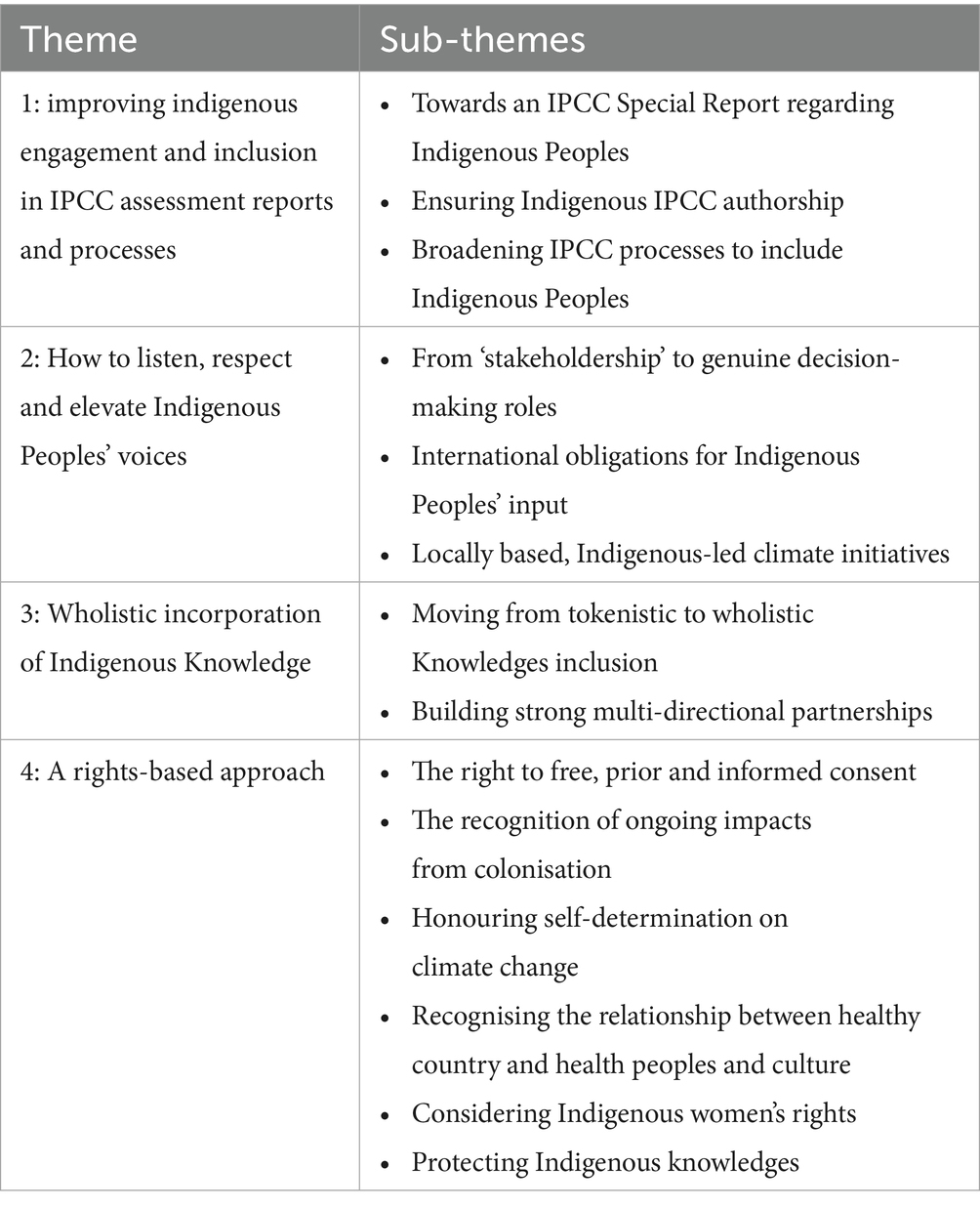
Table 1. Emerging themes and sub-themes to elevate Indigenous Peoples’ contribution in IPCC processes (co-author derived).
3.1 Theme 1: improving indigenous engagement and inclusion in IPCC assessment reports and processes
The improvement of Assessment Reports is contingent on acknowledging the historic and ongoing role of the IPCC process in perpetuating inequalities. Ford et al. (2016) noted that the IPCC Reports do not play a “value-neutral role,” but rather are significantly curated through the IPCC process and the positionality of the reviewers. The IPCC’s processes and conveyance of knowledge in the dominant language and through western scientific qualifying approaches that rely on peer reviewed literature, in effect marginalises knowledge systems which are incompatible with these formats (Carmona et al., 2022; Ford et al., 2016; Brugnach et al., 2017).
3.1.1 Towards an IPCC special report regarding indigenous peoples
To appropriately include Indigenous content in Assessment Reports, the creation of an Indigenous-specific outputs has been proposed. The chapters of Assessment Reports are contained within three overarching Working Groups: WGI, addressing the physical science basis of climate change; WGII, addressing impacts, adaptation and vulnerability; and WGIII, addressing the mitigation of climate change (IPCC, 2020b). Special Reports on specific issues can also be produced as agreed by the IPCC members governments. The 2023 Permanent Forum on Indigenous Issues explicitly recommended that the IPCC prepare a Special Report within the AR7 cycle, led by Indigenous academics, scientists and Traditional Knowledge holders to assess the opportunities for,and threats, against Indigenous Peoples in the areas of adaptation, mitigation, and loss and damage (UN ESC, 2023). This statement echoes calls previously made by others. For example, after critically examining Indigenous content in AR5, Ford et al. (2016) recommended a Special Report on Indigenous peoples and climate change that would combine the focus of Working Groups II and III. In a 2024 review, the Facilitative Working Group of the Local Communities and Indigenous Peoples Platform similarly recommended Special Reports be developed regarding Indigenous Peoples’ values and knowledges (UNFCCC SBSTA, 2024).
These proposals come with a simultaneous warning that Indigenous-specific outputs should not lead to reduced incorporation of Indigenous Peoples in other chapters, but rather references to Indigenous Peoples should become more consistent across Working Groups in addition to a specific Indigenous chapter (Carmona et al., 2023). Such an approach has been adopted by IPBES in their latest Global Assessment, through developing a Task Force dedicated to integrating Indigenous Knowledges throughout the assessments (Brondizio et al., 2019). Despite this, the IPCC announced the topics of the Special Report and other guidance of AR7 in early 2024, none of which were Indigenous focussed. However, IPCC member governments agreed the cycle will use diverse sources, “including drawing on Indigenous Peoples’ Knowledge and Local Communities’ Knowledge” (IPCC, 2024).
3.1.2 Ensuring indigenous IPCC authorship
To adequately incorporate Indigenous Knowledge and perspectives into the Assessment Reports, there must be greater Indigenous representation in the authorship (Carmona et al., 2022; Ford et al., 2016; De Pryck and Hulme, 2023; Raffel, 2016; Moggridge et al., 2022). The expert team for each Report chapter comprises Coordinating Lead Authors, Lead Authors and Review Editors (IPCC, 1998). The content of the authored chapters is the responsibility of the Lead Authors (IPCC, 1998). It has therefore been stated that the selection of Lead Authors is a key step or influence in the IPCC process (Griggs, 2014) Experts are selected for these roles by the IPCC Bureau, following nominations by member governments or other organisations (IPCC, 1998). The IPCC states that the composition of author teams aims to “reflect a range of scientific, technical, and socio-economic views and backgrounds” (IPCC, 1998). However, during AR6, none of the 10 Lead Authors for the Australasian chapter were Indigenous (Moggridge et al., 2022). Indigenous scholars were invited at the specific discretion and effort of the appointed Lead Authors into the IPCC drafting and assessment process as Contributing Authors, but did not have the same level of access to, or authority over, the chapter (Moggridge et al., 2022; Neufeld et al., 2022).
The gap in Indigenous authorship precludes invaluable contributions to the assessments, perpetuates the exclusion and marginalisation of Indigenous Peoples, and signifies that the IPCC is failing in its stipulated goal of author diversity. This remains unaddressed by the IPCC author selection process. Comparatively, gender balance is explicitly an expressed aim in the IPCC report procedures, and action has been taken to achieve this. An IPCC task group was established in 2018 to address gender imbalances, and the ‘Gender Policy and Implementation Plan’ was published in 2020 (IPCC, 1998; IPCC, 2020a). Similar mechanisms should be established to address Indigenous underrepresentation. Indeed, scholars have called for greater Indigenous authorship in Assessment Reports, especially as Lead Authors, as well as the establishment of formal mechanisms for more broader participation of Indigenous Peoples (Ford et al., 2016, Carmona et al., 2022, UNFCCC SBSTA, 2024, Raffel, 2016, Moggridge et al., 2022). Moreover, where authors are Indigenous, Carmona et al. (2023) recommends that Indigeneity should be acknowledged in the report, in addition to the listed details of where authors live and work.
3.1.3 Broadening IPCC processes to include indigenous peoples
Beyond authorship, the need to engage with Indigenous Peoples in broader IPCC procedures has been identified. In a report tabled to the IPCC in 2023, Lessons Learned from the Sixth Assessment Cycle, it was recommended that outreach and engagement in the IPCC process be enhanced, particularly with youth and Indigenous groups (IPCC Secretariat, 2023). To facilitate equitable and ethical engagement with Indigenous Knowledge holders, De Pryck and Hulme (2023) note that the IPCC can build on existing bodies and mechanisms, including the Facilitative Working Group of the Local Communities and Indigenous Peoples Platform and the International Indigenous Peoples Forum on Climate Change under the UNFCCC; the United Nations Permanent Forum on Indigenous Issues; as well as the Arctic Council.
Our review further identified that, where Indigenous content is included in Assessment Reports, it must be appropriate, nuanced and framed from a strengths- and rights-based narrative (Carmona et al., 2023; Ford et al., 2016). Ford et al. (2016) found that reference to Indigenous content is frequently limited to a broad brush “victim-hero” narrative: Indigenous Peoples are described binarily as one of the most vulnerable groups to climate change impacts, while holding valuable solutions for specific localised problems. However, the reasons why this is the case—namely the historical, political, social and economic processes that have garnered both these vulnerabilities and the underlying epistemology which drives climate change—are not critically addressed (Ford et al., 2016). Deficit narratives should not dominate Indigenous engagement in the IPCC reports as it frames Indigenous Peoples as passive, vulnerable victims—ignoring the power of the environmental connection, Knowledges and epistemology Indigenous Peoples hold that are relevant to the aims of the IPCC Reports (Hernandez et al., 2022). A strengths-based approach is both an accurate reflection and necessary to reframe Indigenous Peoples as self-determined solution-holders, rather than Peoples in need of rescuing.
3.2 Theme 2: how to listen, respect and elevate indigenous peoples’ voices
Indigenous Peoples’ voices can be heard and elevated through reconsidering ‘stakeholdership’ to genuine decision-making roles, following international obligations for Indigenous Peoples’ input, and ensuring locally based, Indigenous-led climate initiatives. These are each described below.
3.2.1 From ‘stakeholdership’ to genuine decision-making roles
An important and needed shift away from describing Indigenous Peoples as stakeholders is being documented. By recognising all climate and environmental discourse and action has an unequivocal impact on the rights of Indigenous Peoples and communities, and that effective discourse and action cannot be achieved without Indigenous Knowledges, Indigenous Peoples cannot be deemed only as stakeholders (Foley et al., 2023; Fischer et al., 2022).
Stakeholdership mis-describes Indigenous Peoples’ connection to, obligation for, and rights over their traditional lands. It also ignores the demonstrated success of Indigenous Peoples’ Knowledges and practices in maintaining a resilient, healthy Country (Ogar et al., 2020; Costello et al., 2021). Indeed, the codification of Indigenous Peoples unique rights in international law is founded upon the understanding that Indigenous interests are much deeper than stakeholdership. Fischer et al. (2022) suggests referring to Indigenous Peoples as leaders and co-managers better reflects their roles. The term rights-holders would also be appropriate. In the Australian context, the survival of Aboriginal and Torres Strait Islander Peoples and at least 65,000 years of history is inextricable from Country. It is therefore inappropriate to describe them as merely holding a stake in the future of the land and waters within their traditional territory.
Measures can be adopted in law, policy and administration to support Indigenous leadership and provide avenues for Indigenous Peoples to participate in climate change research, discussion and adaptive and mitigatory actions at all levels—in full recognition of Indigenous rights (Mustonen et al., 2022; Special Rapporteur on the Rights of Indigenous Peoples, 2017; Morgan-Bulled et al., 2021). Supporting Indigenous leadership must be prioritised, since the majority of Indigenous engagement is presently limited to data production as opposed to possessing genuine decision-making capabilities (Fischer et al., 2022; Australian Government, 2023).
3.2.2 International obligations for indigenous peoples’ input
The possible avenues for Indigenous input on the international level are increasing as the wide scale need for Indigenous Knowledges and leadership becomes growingly apparent. For instance, the Facilitative Working Group of the Local Communities and Indigenous Peoples Platform has been developed to enable Indigenous Peoples to come together and have a more active role in the UNFCCC process, including to enhance the integration of Indigenous Peoples’ values and knowledge systems in the IPCC assessment cycles (UNFCCC SBSTA, 2024). At the 2024 COP29, a renewed workplan was agreed to further the work of that Platform (UNFCCC SBSTA, 2024).
Australia has obligations to create avenues for Aboriginal and Torres Strait Islander Peoples input in international discussions, stemming from the UNFCCC, Paris Agreement, Sustainable Development Goals, United Nations Development Program, United Nations Convention on Biological Diversity and the UNDRIP (IPO, 2021). A critique of Indigenous inclusion in the AR6 recommended that these national obligations can be aided by establishing systems to monitor and report on effective Indigenous engagement, including Indigenous representatives in national IPCC delegations, and creating culturally-appropriate mechanisms for direct participation in IPCC processes (Carmona et al., 2023).
At a national level, permanent mechanisms could be established to enable full and equal participation of Aboriginal and Torres Strait Islander Peoples in developing climate change planning, policy, negotiations, monitoring, mitigation and adaptation strategies (Special Rapporteur on the Rights of Indigenous Peoples, 2017; Carmona et al., 2023; AHRC, 2020). The Australia State of the Environment Report 2021 also heavily emphasised that, in order for voices to be heard, there must be reform to remove the barriers faced in exercising the stewardship of Country, through approaches focused on self-determination and Indigenous agency and control over economic, social and cultural matters (DAWE, 2021). This requires full governmental commitment to implement and honour the rights of its Indigenous Peoples, which involves the establishment of a Makarrata Commission to negotiate treaty, as well as reform to cultural heritage, native title, environmental legislation and practices (IPO, 2021). Such rights include the right to consent or reject proposals over their lands, the right to Country, or the right to have significant cultural heritage protected. As demonstrated by ongoing breaches of these rights under various legislative schemes, change is urgently needed to address the deficiencies (UN ESC, 2023). At the 2021 National First Peoples Gathering on Climate Change, there were also calls for a federally funded, Indigenous-led climate action hub (Morgan-Bulled et al., 2021).
3.2.3 Locally-based, indigenous-led climate initiatives
Although climate change is a global issue, the support of Indigenous-led initiatives is a key solution. A common theme throughout the literature sourced was that climate change can only be addressed with the knowledges of the Peoples experiencing its impacts firsthand and who are equipped with the history, experience, knowledge and practice to design and implement solutions (Mustonen et al., 2022; Brugnach et al., 2017; Lowitja Institute, 2023). More locally in Australia, opportunities to elevate and empower Aboriginal and Torres Strait Islander Peoples can be achieved through ensuring Indigenous communities are not only engaged with, but adequately supported to build capacity to lead climate initiatives, such as in abatement and renewable energy projects (IPO, 2021; Carmona et al., 2023; Costello et al., 2021). This can involve creating avenues for Traditional Owners to be partners or otherwise included, having representation in environmental management institutions and creating frameworks for appropriate and collaborative research (Costello et al., 2021).
All climate change initiatives should be culturally appropriate, and, where locally focused, should be decided by the local community and exercised by the community’s organisations (Lansbury et al., 2022). For example, there should be Indigenous engagement in and benefits from emerging opportunities within emerging renewable economies, carbon farming, climate monitoring, or ranger programs (IPO, 2021; Matthews et al., 2021). Support requires building adaptive capacity through genuine power sharing partnerships; respect for both Peoples and their contribution; education; training; and long-term sustainable funding (Brugnach et al., 2017; James et al., 2021; Costello et al., 2021).
Place-based and Indigenous-led initiatives have been found to have benefits for the environment, communities and individual wellbeing and local economy (DAWE, 2021). For instance, the Indigenous Carbon Industry Network supports Indigenous-owned projects involved in the carbon credits scheme in Australia, which has been found to bring co-benefits to the local Indigenous and non-Indigenous populations, environment and economy (Indigenous Carbon Industry Network, 2022). Indigenous Ranger Programs have similarly been found to be highly successful in all measures, and is recommended to be extended to all Aboriginal communities with their control (IPO, 2021). The Aboriginal Carbon Foundation, focused on Indigenous-led fire management in Northern Australia, has resulted in fewer carbon emissions and greater carbon storage, while simultaneously strengthening social, cultural and community wellbeing (Hales et al., 2021). Such opportunities support Peoples on Country and engage in cultural stewardship practices, which heals both Country and its Peoples (Lansbury et al., 2022; Matthews et al., 2021; Costello et al., 2021).
3.3 Theme 3: WHOLISTIC incorporation of indigenous knowledge
Accepting that Indigenous Knowledges are a rich and nuanced system is essential to appropriate application of these Knowledges (Fischer et al., 2022; Ford et al., 2016). Although use of Indigenous Knowledges in mainstream disciplines is increasing, it remains through a western lens where inclusion in research and plans is complementary, and never directly considered side-by-side with western knowledge and understandings (Mustonen et al., 2022; Ford et al., 2016; Moggridge et al., 2022). For example, AR6 recognised the value of Indigenous and local knowledge in WGII, but stated that the “challenge” of assessing and integrating this knowledge into the Report rendered its exclusion from most WGI chapters (Pörtner et al., 2022).
3.3.1 Moving from tokenistic to wholistic knowledges inclusion
Belfer et al. (2019) noted tokenism and a lack of meaningful recognition is a major barrier to meaningful incorporation of Indigenous Knowledges in international climate change governance, and this was echoed in Australia by Foley et al. (2023). The limited ability of the IPCC processes to equitably afford Indigenous Knowledge the same critical engagement, equivalent legitimisation and application as western science sources has resulted in previous IPCC Assessment Reports being criticised for “severe limitations” (Matthews et al., 2021; Ford et al., 2016). Further, recognition is limited to local actions such as adaptive techniques or specific events—the values and worldviews that underpin these are not explored, diminishing the wholistic contribution such Knowledge can have to climate change understandings and solutions generally (Carmona et al., 2023; Mustonen et al., 2022; Ford et al., 2016).
The isolation of Indigenous Knowledges and practices for use only where it can be ‘added’ into the existing framework appropriates and misapplies these Knowledges, and in doing so is exclusively selecting one aspect of an entire, nuanced system. This pattern is not limited to the IPCC process but is present in much climate change and environmental research and management. For example, cultural burning practices in Australia have become a popular inclusion in what is often otherwise non-Indigenous environmental management. As has been reiterated by Indigenous leaders and rangers, cultural burning cannot be separated from the wholistic practice of how to care for Country, and to apply such practices requires acknowledgement of the Indigenous epistemologies as a whole (James et al., 2021).
There is clear guidance on how to prevent tokenistic inclusion (Carmona et al., 2023; Ogar et al., 2020; Brugnach et al., 2017; Fischer et al., 2022; Ford et al., 2016; Belfer et al., 2019). The existing power inequalities that lead to the ‘inferiorisation’ of Indigenous Knowledges must firstly be recognised and addressed; secondly, equivalent respect must be afforded to Indigenous Knowledges, practices and knowledge holders, recognising that these are independently valid without external legitimisation; thirdly, horizontal collaboration is needed between non-Indigenous and Indigenous Knowledge systems to co-produce knowledge and adaptive solutions, ensuring Indigenous perspectives are not peripherally included or subsumed by western perspectives.
3.3.2 Building strong multi-directional partnerships
Although all recommendations collated in this review are interrelated and important, the achievement of such recommendations are dependent on strong partnerships of governments, agencies, organisations and non-Indigenous people with Aboriginal and Torres Strait Islander Peoples and communities. This evidently requires the healing of deep relational wounds inflicted over two centuries of wrongs (Lowitja Institute, 2023). The ongoing process of colonisation can only be healed with truth telling, coupled with genuine power sharing—which is perquisite to partnerships by definition (Brugnach et al., 2017; Fischer et al., 2022). Despite the harms inflicted, Aboriginal and Torres Strait Islander Peoples are willing to forge these partnerships, if done with foundations of fairness, justice and self-determination: “We invite you to walk with us in a movement of the Australian people for a better future” (NCC, 2017). Similarly, the 2021 First Nation Peoples Statement on Climate Change seeks respectful allies in asking the nation to “listen to us, work with us and together we can enact a change that will shape our future for all Australians” (Morgan-Bulled et al., 2021).
Building respectful, trusting partnerships across all levels to weave together Aboriginal and Torres Strait Islander and western knowledge systems is crucial to best innovate mitigation and adaptations to our crises (Matthews et al., 2021; Australian Government, 2023; Special Rapporteur on the Rights of Indigenous Peoples, 2017). Australia’s Commonwealth Scientific and Industrial Research Organisation (CSIRO), working with communities across the continent, has developed best practice guidelines for using Aboriginal and Torres Strait Islander knowledge to look after Country. CSIRO has produced Our Knowledge Our Way, guidelines for best practice in caring for Country, which gives a voice to Indigenous land and sea managers who have found effective ways to strengthen their knowledge and build collaborative partnerships to manage Country (Woodward et al., 2020). Key to this is building strong relationships through trust, respect, mutual learning and open-mindedness; sharing and weaving knowledge; and building networks to share knowledge (Woodward et al., 2020).
3.4 Theme 4: the value of a rights-based approach
A rights-based approach to climate change can address a range of governance aspects that Indigenous Peoples do not currently receive or receive consistently. This includes the right to free, prior and informed consent, the recognition of ongoing impacts from colonisation, honouring self-determination on climate change, recognising the relationship between healthy Country and healthy Peoples, considering Indigenous women’s rights, and protecting Indigenous Knowledges. Each aspect is described below.
3.4.1 Free, prior and informed consent in climate change decisions
Free, prior and informed consent (FPIC)—a right enshrined by articles 27 and 32 of the UNDRIP—when implemented and complied with, can enable Indigenous Peoples to be meaningfully involved in all stages of climate change action and measures which may affect their rights or territory, and when Indigenous Peoples are engaged to contribute expertise (UN ESC, 2023; UN GA, 2017; UNFCCC SBSTA, 2024). This particularly arises in measures that require land or resources, such as green energy or carbon offsetting projects. However, it is noted that the FPIC should be the minimum standard (Special Rapporteur on the Rights of Indigenous Peoples, 2017; UN ESC, 2023).
The WGII of the AR6 seeks to obtain free and prior-informed consent as a necessary (but not sufficient) condition and that supporting self-determination in climate change assessment, response and governance is critical (Mustonen et al., 2022). Carmona et al. (2022) stated, when reviewing AR6, that nations must strengthen the direct participation of Indigenous Peoples in the design and implementation of climate action, consistent with FPIC processes and effective empowerment to aid self-determination. Asserting FPIC as a minimum reflects that Indigenous Peoples are not merely victims of climate change, but have a vital input in sustainable management (Special Rapporteur on the Rights of Indigenous Peoples, 2017; Hernandez et al., 2022).
The implementation of Indigenous rights in Australia—including FPIC—is ad-hoc and insufficient (JSC ATSIA, 2023). FPIC is recommended as best practice in Australia but is not a legal requirement. For example, section 25 of the Native Title Act 1992 (Cth) instead provides the watered down “right to negotiate” (Southalan and Fardin, 2019). However, all climate research and action in Australia impacts Aboriginal and Torres Strait Islander Peoples (Hales et al., 2021). The apparent failure to afford Aboriginal and Torres Strait Islander Peoples the rights contained in the UNDRIP has led to ongoing harm to both Country and Peoples, international criticism and was subject to a federal inquiry (JSC ATSIA, 2023). Subsequently, several experts and organisations have sought for UNDRIP to be enacted into domestic law, coupled with the establishment of a national action plan and monitoring body to support its implementation (IPO, 2021; JSC ATSIA, 2023).
The need to nationally implement FPIC as a minimum in all relevant sectors is increasingly urgent to prevent further violations of Aboriginal and Torres Strait Islander Peoples’ rights. The implementation of a rights-based approach, with FPIC as the starting point, has widespread benefits: it provides a proper relational foundation for the inclusion of Peoples’ voices and Knowledges to inform climate change discourse and action to create more effective solutions and investing in communities has flow on economic, social, cultural and health benefits (DAWE, 2021).
3.4.2 Addressing ongoing impacts of colonisation on indigenous peoples
As stated by the International Work Group for Indigenous Affairs, Indigenous Peoples have been emphatic that the climate crisis will not be solved by the same paradigm from which it was caused (Carmona et al., 2023; Sultana, 2022). Climate change and the vulnerability of Indigenous Peoples to such change can both be linked to colonisation (Lowitja Institute, 2023). Indeed, Aboriginal and Torres Strait Islander Peoples have already likened the effects of climate change to colonial dispossession: for example, the degradation of Country and weather extremes, in circumstances where Traditional Owners have limited power to address these impacts, hinders cultural practices, threatens food and water security and risks forced migration (Sultana, 2022; AHRC, 2020).
Climate action without Indigenous engagement similarly leads to Indigenous dispossession and disempowerment, resulting in “eco-colonisation” or “carbon colonialism” (Foley et al., 2023; Special Rapporteur on the Rights of Indigenous Peoples, 2017; Carmona et al., 2023). Therefore, a climate-resilient future can only be achieved by addressing the interrelated impact of colonisation and climate change on Indigenous Peoples by protecting their rights (Mustonen et al., 2022; PHA, 2023). This was highlighted in the AR6 that sought to supporting Indigenous self-determination, recognising Indigenous Peoples’ rights and supporting Indigenous Knowledge-based adaptation are critical to reducing climate change risks and effective adaptation (Pörtner et al., 2022).
3.4.3 Honouring self-determination on climate change
A transitional, rights-based approach fundamentally rests on the right to self-determination in all levels of climate mitigation, adaptation and environmental management policy development and programs (DAWE, 2021; IPO, 2021). This includes providing equitable opportunities and economic benefit to the relevant Peoples, such as investment and employment opportunities of communities in emerging opportunities in renewables (Fischer et al., 2022; IPO, 2021; Foley et al., 2023).
Self-determination is enshrined in Australia’s commitment to articles 1 of both the International Covenant on Economic, Social and Cultural Rights and the International Covenant on Civil and Political Rights and article 3 of UNDRIP. Supporting Aboriginal and Torres Strait Islander communities to self-determination is achieved through steps at every level. Firstly, laws, policies and practices need reform for national consistency to support self-determination and empowerment (DAWE, 2021; Special Rapporteur on the Rights of Indigenous Peoples, 2017).
3.4.4 Recognition that healthy country supports healthy peoples
In the sources reviewed, a rights-based approach consistently linked climate action and health-protective responses. There is a growing understanding that the “triple planetary crisis” of biodiversity loss, climate change and pollution cannot be solved without an integrated planetary-health governance framework (PHA, 2023). This is based on a realisation that the health of the planet and its peoples are inextricably connected; a concept which has always been embedded in Indigenous cultures (DAWE, 2021; Morgan-Bulled et al., 2021).
Recognition of interconnected health is an important foundation to develop adequate action to address the health impacts of climate change in both respects, of which Indigenous Peoples are the most vulnerable (IPCC, 2022a). The 2023 session of the United Nations Forum for Indigenous Issues, themed “Indigenous Peoples, human health, planetary and territorial health and climate change: A rights-based approach,” emphasised that Indigenous wholistic understanding of health must be central to planetary health governance (UN ESC, 2023). A list of Indigenous determinants of health was developed to attempt to decolonise defining conceptions of health, which also recommended the promotion and protection of “Indigenous global healing traditions…in conjunction with the ecosystems that sustain them” (UN ESC, 2023).
This movement is echoed in Australia, as climate change threatens people-Country health more than ever before. In the Australia State of the Environment Report 2021, which had an unprecedented Indigenous chapter, a key finding was that “the health of Country and people are deeply interconnected” (DAWE, 2021). However, the Report classified the state of Country and this connection as “very poor,” with many signs indicating deteriorating health of Country across the continent and correspondingly that Indigenous Peoples continue to be barred from caring and managing Country (DAWE, 2021). The HEAL Report, which comprehensively examined the impacts of climate change on Aboriginal and Torres Strait Islander Peoples’ health and wellbeing, confirmed what is known: sick Country leads to sick Peoples (Matthews et al., 2021).
The impact of climate change especially threatens Aboriginal and Torres Strait Islander Peoples’ health, compounding pre-existing poor morbidity and mortality rates which stem from historical injustices (Matthews et al., 2021; Australian Government, 2023). These impacts vary, but largely relate to increasing severity of weather and temperature extremes, sea level rise, worsening food and water security, increased infectious diseases and the amplification of poverty, as well as the deep-felt impact of Country degradation (Matthews et al., 2021; Lansbury et al., 2022).
Environmental and Indigenous health can be restored with Indigenous-led and governed caring for Country (DAWE, 2021; Lansbury et al., 2022). The federal National Health and Climate Strategy 2023 recognises Indigenous Knowledges and practices must inform effective planning, policy and programs, and is underpinned by the concept of “One Health”—the recognition of the connection that exists between the health of people, animals and the environment (Australian Government, 2023). This requires transforming the principles and practices that guide decision-making by broadening the underlying definition of health and abolishing the false health-environment dichotomy that dominates western epistemologies and governance (Lowitja Institute, 2023; Redvers et al., 2025).
3.4.5 Considering indigenous women’s rights and climate change
Rights-based approaches also can address the gendered impact of climate change (Special Rapporteur on the Rights of Indigenous Peoples, 2017). The effects of climate change compound existing issues that women disproportionately face, such as domestic violence and water scarcity (Sorensen et al., 2018). However, as has been highlighted as a failure of the AR6 WGII, how these impacts intersect for Indigenous women is frequently omitted from climate research (Carmona et al., 2022; Matthews et al., 2021). This omission precludes any subsequent action taken from properly capturing the perspectives and protecting the rights of Indigenous women.
It is important to recognise the intersectional impact of gender and Indigenous identity, taking particular care to engage with the voices and protect the rights of Aboriginal and Torres Strait Islander women in climate change adaptation and mitigation policies and projects (Special Rapporteur on the Rights of Indigenous Peoples, 2017). An evolving and impactful term “rematriation” was coined to reinvigorate and inspire humanity to fulfil its duty of care for Mother Earth (Gray, 2022). This is pertinent to climate change and this review team, with strong women in leadership.
3.4.6 Protection of indigenous knowledges
As the invaluable contribution of Indigenous Knowledges in a changing climate are increasingly recognised, such Knowledge must be adequately protected, with the rights and recognition at all times resting with the proper Knowledge holders (Mustonen et al., 2022). The centring of Indigenous Knowledge must go “hand-in-hand” with cultural and intellectual property protection through both legal and non-legal measures (Mustonen et al., 2022; DAWE, 2021; Matthews et al., 2021). In Australia, cultural and intellectual property rights to protect Indigenous Knowledges and practices have been identified as inadequate and in urgent need of national reform (DAWE, 2021). As described at the Indigenous Data Sovereignty Summit in 2018, “existing data and data infrastructure does not recognise or privilege our Knowledges and worldviews nor meet our current and future needs” (DAWE, 2021).
The use of Knowledges without protection risks appropriation, harm to Aboriginal and Torres Strait Islander Peoples’ engagement, and misuse when applied. Enshrining these protections aligns with international standards under the Nagoya Protocol on Access to Genetic Resources and the Fair and Equitable Sharing of Benefits Arising from their Utilization to the Convention on Biological Diversity which requires commitment to work with Indigenous Knowledge holders to preserve and maintain Indigenous Knowledge and practices (Woodward et al., 2020). Such protections need to be reflected at all levels, including in the international sector, where Ford et al. (2016) states IPCC Assessment Reports should develop special guidelines for accessing and incorporating Indigenous Knowledge systems.
3.5 Limitations OFTHIS review and future research
Our review was undertaken using IPCC, IPBES and the UNFCCC publications as a central focus. In doing so, we have critiqued western-style climate science approaches and detailed the value of Indigenous Knowledges to be included and respected in these publications- thus limiting our review to an ‘epistemic Eurocentrism’ (Sherpa, 2025). We have also emphasised the value of Indigenous scholars to comment on these representations and perspectives through both citing Indigenous-authored references, and through the leadership of Indigenous scholars in the authorship team of this review. However, we recognise that there are opportunities to move beyond this western-dominant epistemology to an ontological level that considers other knowledge systems to those of western science, notably Indigenous Knowledges (Martuwarra River of Life et al., 2021; Taddei, 2023; Sherpa, 2025). By moving to this ontological level, the valuing, perspectives and influence of Indigenous Knowledges- especially when brought by Indigenous scholars- could be more centrally included (Fonchingong Che, 2023).
4 Conclusion
The exclusion of Indigenous Peoples is widespread in climate change research, decision making and discourse. This Indigenous-led review revealed that the causal factors of this exclusion are linked at local, national and international levels. Similarly, the solutions to greater inclusion and engagement of Indigenous Peoples in climate action are interrelated, distilling down to the need to recognise the rights and value of Indigenous Peoples and the Knowledges they hold in all contexts. Internationally, this review explores this exclusion with reference to IPCC Assessment Reports, with a focus on Australia. There, Aboriginal and Torres Strait Islander Peoples have lived for thousands of generations and through many changes in climate and are now on the front line of intense anthropogenic climatic changes.
Until AR6, the rich and relevant climate Knowledges of Indigenous Peoples globally has historically been minimally included in IPCC Assessment Reports (AR6; IPCC, 2022a,b). The impacts of this invisibility or silencing are multifaceted. Indigenous Peoples and their Knowledges are excluded by the IPCC reviewing process and lack of authorship representation. Subsequently, domestic governments, guided by the authoritative IPCC Reports, have reduced focus on Indigenous Peoples and Knowledges when taking climate action. The global understanding of the drivers, impacts and potential mitigation and adaptive strategies omits vital Knowledge systems—system which have consistently proven to contain the most effective environmental management. The perspectives and rights of Indigenous Peoples are not provided with a platform for engagement, and therefore Indigenous Peoples face colonial barriers from participating in decision-making. This must be addressed at all levels, and this review has discussed the ways in which that can occur from the ground, in local communities, and upwards to Indigenous Peoples’ participation at an international level.
Author contributions
NL: Conceptualization, Funding acquisition, Investigation, Methodology, Project administration, Resources, Supervision, Writing – review & editing. VM: Formal analysis, Investigation, Methodology, Validation, Writing – review & editing. SC: Conceptualization, Formal analysis, Funding acquisition, Supervision, Validation, Writing – review & editing. BM: Conceptualization, Funding acquisition, Investigation, Methodology, Validation, Writing – review & editing. GE: Data curation, Formal analysis, Methodology, Project administration, Writing – review & editing. GP: Conceptualization, Formal analysis, Methodology, Resources, Writing – review & editing. LI: Conceptualization, Data curation, Formal analysis, Investigation, Methodology, Writing – original draft.
Funding
The author(s) declared that financial support was received for this work and/or its publication. This research was funded by the Australian Government as commissioned advice.
Conflict of interest
The author(s) declared that this work was conducted in the absence of any commercial or financial relationships that could be construed as a potential conflict of interest.
Generative AI statement
The author(s) declared that Generative AI was not used in the creation of this manuscript.
Any alternative text (alt text) provided alongside figures in this article has been generated by Frontiers with the support of artificial intelligence and reasonable efforts have been made to ensure accuracy, including review by the authors wherever possible. If you identify any issues, please contact us.
Publisher’s note
All claims expressed in this article are solely those of the authors and do not necessarily represent those of their affiliated organizations, or those of the publisher, the editors and the reviewers. Any product that may be evaluated in this article, or claim that may be made by its manufacturer, is not guaranteed or endorsed by the publisher.
References
AHRC (2020). Wiyi Yani U Thangani- women’s voices: Securing our rights securing our future. Canberra: Australian Human Rights Commission.
APSC (2022). First nations vocabulary – Using culturally appropriate language and terminology. Canberra: Australian Public Service Commission. Available online at: https://www.apsc.gov.au/working-aps/diversity-and-inclusion/diversity-inclusion-news/first-nations-vocabulary-using-culturally-appropriate-language-and-terminology (Accessed July 6, 2024)
Atkinson, A.-R. (2023). Country, Climate, and First Nations Peoples' Health, December 3. Australian Pavillion, Unfccc Conference of Parties (CoP) 28. Dubai.
Australian Government (2023). National health and climate strategy. Canberra: Department of Health and Aged Care, Australian Government. Available online at: https://www.health.gov.au/sites/default/files/2023-12/national-health-and-climate-strategy.pdf (Accessed August 13, 2024)
Belfer, E., Ford, J., Maillet, M., Araos, M., and Flynn, M. (2019). Pursuing an indigenous platform: exploring opportunities and constraints for indigenous participation in the UNFCCC. Glob. Environ. Polit. 19, 12–33. doi: 10.1162/glep_a_00489
Birkmann, J., Liwenga, E., Pandey, R., Boyd, E., Djalante, R., Gemenne, F., et al. (2022). “Poverty, livelihoods and sustainable development” in Climate change 2022: Impacts, adaptation and vulnerability. Contribution of working group II to the sixth assessment report of the intergovernmental panel on climate change. eds. H.-O. Pörtner, D. Roberts, M. Tignor, E. Poloczanska, K. Mintenbeck, and A. Alegría, et al. (Cambridge, UK and New York, NY, USA: Cambridge University Press).
Brondizio, E., Settele, J., Díaz, S., and Ngo, H. (2019). Global assessment report on biodiversity and ecosystem services. Bonn, Germany: Intergovernmental Science-Policy Platform on Biodiversity and Ecosystem Services (IPBES) secretariat.
Brugnach, M., Craps, M., and Dewulf, A. (2017). Including indigenous peoples in climate change mitigation: addressing issues of scale, knowledge and power. Clim. Change 140, 19–32. doi: 10.1007/s10584-014-1280-3
Carmona, R., Macdonald, J., Dorough, D., Rai, T., Sanago, G., and Thorsell, S. 2022. Recognising the contributions of indigenous peoples in global climate action? An analysis of the IPCC report on impacts, adaptation and vulnerability, Copenhagen: International Work Group for Indigenous Affairs. Available online at: https://iwgia.org/doclink/iwgia-ipcc-briefing-march-2022-eng/eyJ0exaiOijkv1QilcjhbGciOijiuzI1NiJ9.eyJzdwiiOiJpd2dpys1pcgnjlwjyawvmaW5nlw1hcmNoltiwMjItzw5nIiwiawf0IjoxNjQ4mdm2NjM1lcjlehaiOjE2ndgxMjMwMzV9.Pj_Jvz_Psy45D941htdf8jGrcrd8fwjvlmqprcotufo (Accessed January 26, 2025)
Carmona, R., Reed, G., Thorsell, S., Dorough, D., Macdonald, J., Rai, T., et al. (2023). Analysing engagement with indigenous peoples in the intergovernmental panel on climate change’s sixth assessment report. NPJ Clim. Action 2:29. doi: 10.1038/s44168-023-00048-3
Chakraborty, R., and Sherpa, P. Y. (2021). From climate adaptation to climate justice: critical reflections on the IPCC and Himalayan climate knowledges. Clim. Change 167. doi: 10.1007/s10584-021-03158-1,
Clarkson, C., Jacobs, Z., Marwick, B., Fullagar, R., Wallis, L., Smith, M., et al. (2017). Human occupation of northern Australia by 65,000 years ago. Nature 547, 306–310. doi: 10.1038/nature22968,
Costello, O., Dilworth, T., Haynes, K., Jansen, T., and Neale, T.. 2021. Cultural land Management in Southeast Australia, Sydney: Bushfire and Natural Hazards Cooperative Research Centre. Available online at: https://www.naturalhazards.com.au/system/files/2022-04/cultural_land_management_in_southeast_australia_black_summer_final_report_0.pdf (Accessed August 23, 2024)
DAWE (2021). Australian state of the environment report 2021. Canberra: Department of Agriculture, Water and the Environment (Dawe), Commonwealth of Australia.
De Pryck, K., and Hulme, M. (2023). A critical assessment of the intergovernmental panel on climate change. Cambridge: Cambridge University Press.
Fischer, M., Maxwell, K., Nuunoq, H., Pedersen, H., Greeno, D., Nang, J., et al. (2022). Empowering her guardians to nurture our ocean’s future. Rev. Fish Biol. Fish. 32, 271–296.
Foley, R., O’neill, L., and Mcmurray, L.. 2023. A stench of tokenism’: how environmental reforms ignore First Nations knowledge. Available online at: http://theconversation.com/a-stench-of-tokenism-how-environmental-reforms-ignore-first-nations-knowledge-198393 (Accessed August 23, 2024).
Fonchingong Che, C. (2023). Reframing social justice through indigenous know-how: implications for social development, policy and practice. Glob. Soc. Policy 24. doi: 10.1177/14680181231170532
Ford, J., Cameron, L., Rubis, J., Maillet, M., Nakashima, D., Willox, A. C., et al. (2016). Including indigenous knowledge and experience in IPCC assessment reports. Nat. Clim. Change 6, 349–353. doi: 10.1038/nclimate2954
Grant, A., and Booth, R. (2009). A typology of reviews: an analysis of 14 review types and associated methodologies. Health Inform. Librar. J. 26, 91–108.
Gray, R. (2022). Rematriation: Ts’msyen law, rights of relationality, and protocols of return. Native Am. Indigenous Stud. 9, 1–27. doi: 10.1353/nai.2022.0010
Griggs, D. (2014). Climate policy: streamline IPCC reports. Nature 508, 171–173. doi: 10.1038/508171a,
Hales, R., Foley, R., Cadman, T., and Hay, T.. 2021. Land, Culture, Livelihood: What Indigenous People Stand to Lose from Climate ‘Solutions'. The Conversation, Available online at: http://theconversation.com/land-culture-livelihood-what-indigenous-people-stand-to-lose-from-climate-solutions-170083 (Accessed January 26, 2025).
Hamacher, D., Nunn, P., Gantevoort, M., Taylor, R., Lehman, G., Law, K., et al. (2023). The archaeology of orality: dating Tasmanian aboriginal oral traditions to the late Pleistocene. J. Archaeol. Sci. 159. doi: 10.1016/j.jas.2023.105819
Hernandez, J., Meisner, J., and Jacobs, L. (2022). Re-centering indigenous knowledge in climate change discourse. PLoS Clim. 1. doi: 10.1371/journal.pclm.0000032
Hohmann, J., and Weller, M. (2018). The UN Declaration on the rights of indigenous peoples: a commentary. Oxford: Oxford University Press
Indigenous Carbon Industry Network (2022). Indigenous Carbon Projects Guide, Darwin: Indigenous Carbon Industry Network. Available online at: https://assets.nationbuilder.com/icin/pages/186/attachments/original/1664416438/Indigenous_Carbon_Project_Guide_Full.pdf?1664416438 (Accessed January 26, 2025)
IPBES (2025). Indigenous and local knowledge system webpage, Bonn: Intergovernmental Science-Policy Platform on Biodiversity and Ecosystem Services (IPBES). Available online at: https://www.ipbes.net/glossary-tag/indigenous-and-local-knowledge-system (Accessed April 15, 2025)
IPCC (1998). Principles governing IPCC work. Bonn: Intergovernmental Panel on Climate Change (IPCC). Available online at: https://www.ipcc.ch/site/assets/uploads/2018/09/ipcc-principles-appendix-a-final.pdf (Accessed January 26, 2025).
IPCC (2020a). IPCC gender policy and implementation plan (Ipcc-lii/doc. 9, rev.1. Ipcc), Bonn: Task Group on Gender, Intergovernmental Panel on Climate Change (IPCC). Available online at: https://www.ipcc.ch/site/assets/uploads/2020/05/Ipcc_Gender_Policy_and_Implementation_Plan.pdf (Accessed January 30, 2025).
IPCC (2020b). Sixth assessment report fact sheet. Bonn: Intergovernmental Panel on Climate Change (IPCC) Technical Support Unit. Available online at: https://www.ipcc.ch/site/assets/uploads/2021/06/Fact_sheet_Ar6.pdf (Accessed December 3, 2024)
IPCC (2022a). Climate change 2022: impacts, adaptation and vulnerability- summary for policymakers. Geneva: Intergovernmental Panel on Climate Change.
IPCC (2022b). Glossary, working group ii, assessment report 6, Geneva: Intergovernmental Panle on Climate Change (IPCC). Available online at: https://www.ipcc.ch/report/ar6/wg2/downloads/report/Ipcc_Ar6_Wgii_Annex-Ii.pdf (Accessed November 6, 2025).
IPCC (2024). Decisions adopted by the panel, Bonn: Intergovernmental Panel on Climate Change (IPCC). Available online at: https://www.ipcc.ch/site/assets/uploads/2024/02/Ipcc-60_decisions_adopted_by_the_Panel.pdf (Accessed January 26, 2025)
IPCC Secretariat (2023). Lessons learned from the sixth assessment cycle, in Ipcc-lx/Inf. 9, Bonn: Intergovernmental Panel on Climate Change (IPCC). Available online at: https://apps.ipcc.ch/eventmanager/documents/83/301220231149-Inf.%209%20-%20Lessons%20learned%20from%20ar6.pdf (Accessed January 26, 2025)
IPO (2021). Heal country, Heal climate - priorities for climate and environment, developed to inform the 26th United Nations climate change conference of the parties (COP26) and environmental policies impacting aboriginal and Torres Strait islander peoples, Glasgow: Indigenous Peoples Organisation (IPO), Australia. Available online at: https://www.ohchr.org/sites/default/files/2022-03/indigenous-peoples-organization2.pdf (Accessed August 23, 2024)
James, G., Burton, D., Campion, O., Hunter, B., Morrison, J., Gondarra, T., et al. 2021. Indigenous fire and land management - impact and sustainability, Melbourne: Bushfire and Natural Hazards Cooperative Research Centre. Available online at: https://www.naturalhazards.com.au/system/files/2022-04/indigenous_fire_and_land_management_black_summer_final_report.pdf (Accessed January 26, 2025)
JSC ATSIA (2023). Inquiry into the application of the United Nations declaration on the rights of indigenous peoples in Australia. Canberra: Joint Standing Committee on Aboriginal and Torres Strait Islander Affairs (JSCATSIA) Commonwealth of Australia.
Kassam, K., Charles, M., and Mana Oakamai Johnson, S. (2023). Significance of different ways of knowing in responding to the climate crisis: the necessity for indigenous knowledge. PLoS Clim. 2.
Lansbury, N., Matthews, V., Atkinson, A.-R., and Mohamed, J.Colleagues. 2022. COP27: On Country, health and Indigenous knowledges. Available online at: https://www.croakey.org/cop27-on-country-health-and-indigenous-knowledges/ (Accessed January 26, 2025).
Lowitja Institute (2023). Lowitja Institute Ceo calls for an international commitment to climate action through decolonisation, April 20, Melbourne: Lowitja Institute. Available online at: https://nacchocommunique.com/wp-content/uploads/2023/04/Media-Release-Lowitja-Institute-call-to-Un-for-climate-action-20.4.23.pdf (Accessed January 26, 2025)
Martuwarra River of LifeTaylor, K., and Poelina, A. (2021). Living waters, law first: Nyikina and Mangala water governance in the Kimberley, Western Australia. Australas. J. Water Res. 25, 40–56. doi: 10.1080/13241583.2021.1880538
Matthews, V., Atkinson, A.-R., Lee, G., Vine, K., and Longman, J. (2021). Climate change and aboriginal and Torres Strait islander health: Discussion paper. Melbourne: The Lowitja Institute, Melbourne.
Moggridge, B., Pecl, G., Lansbury, N., Creamer, S., and Mosby, V. 2022. IPCC reports still exclude Indigenous voices. Come join us at our sacred fires to find answers to climate change, March 4. Available online at: https://theconversation.com/ipcc-reports-still-exclude-indigenous-voices-come-join-us-at-our-sacred-fires-to-find-answers-to-climate-change-178045 (Accessed April 18, 2025)
Mohamed, J. (2022). Always caring for country. Health conversations webinar series. Online : Lowitja Institute and Climate and Health Alliance.
Morgan-Bulled, D., Mcneair, B., Delaney, D., Deshong, S., Gilbert, J., Mosby, H., et al. 2021 National First Peoples Gathering on climate change: workshop report, earth systems and climate change hub report no. 29, Canberra Earth Systems Climate Change Hub. Available online at: https://nespclimate.com.au/wp-content/uploads/2021/10/National-First-Peoples-Gathering-on-Climate-Change-Report_final.pdf
Mustonen, T., Harper, S., Pecl, G., Castan Broto, V., Lansbury, N., et al. (2022). “The role of indigenous knowledge and local knowledge in understanding and adapting to climate change” in IPCC climate change 2022: impacts, adaptation and vulnerability. Contribution of working group ii to the sixth assessment report of the intergovernmental panel on climate change. eds. H.-O. Pörtner, D. Roberts, M. Tignor, E. Poloczanska, K. Mintenbeck, and A. Alegría, et al. (Cambridge, UK and New York, NY, USA: Cambridge University Press).
NCC (2017). Uluru statement from the heart, Yulara, NT: National Constitutional Convention (Ncc). Available online at: https://ulurustatement.org/the-statement/view-the-statement/ (Accessed January 26, 2025).
Neufeld, H., Nilsson, L., and Griffith Jones, R. (2022). “Indigenous peoples' health and well-being in a changing climate” in Climate change 2022: Impacts, adaptation and vulnerability: Contribution of working group ii to the sixth assessment report of the intergovernmental panel on climate change (IPCC). eds. H.-O. Pörtner, D. Roberts, and M. Tignor (Cambridge: Cambridge University Press).
Ogar, E., Pecl, G., and Mustonen, T. (2020). Science must embrace traditional and indigenous knowledge to solve our biodiversity crisis. One Earth 3, 162–165. doi: 10.1016/j.oneear.2020.07.006
PHA 2023. Policy note: Rights and knowledge of indigenous peoples and planetary health, Washington DC: Planetary Health Alliance (PHA). Available online at: https://planetaryhealthalliance.org/unpfii2023 (Accessed January 26, 2025)
Pörtner, H.-O., Roberts, D., Tignor, M., Poloczanska, E., Mintenbeck, K., Alegría, A., et al. (2022). “Climate change 2022: impacts, adaptation, and vulnerability. Contribution of working group II” in Sixth assessment report of the intergovernmental panel on climate change (IPCC). eds. H.-O. Pörtner, D. Roberts, M. Tignor, E. Poloczanska, K. Mintenbeck, and A. Alegría, et al. (Cambridge, UK and New York, NY, USA: Cambridge University Press).
Prober, S. M., O'connor, M. H., and Walsh, F. J. (2011). Australian aboriginal peoples' seasonal knowledge: a potential basis for shared understanding in environmental management. Ecol. Soc. 16. doi: 10.5751/ES-04023-160212
Raffel, S. Climate communication and the exclusion of indigenous knowledge. 2016 IEEE international professional communication conference, 2016 Austin, Texas.
Redvers, N., Carroll, D., Menzel, K., and Hillier, S. (2025). One health and indigenous peoples at a crossroads. Nat. Sustain.
Sherpa, P. Y. (2025). Relevance of the sixth IPCC assessment report to indigenous lived realities. AlterNative 21, 463–471.
Sorensen, C., Murray, V., Lemery, J., and Balbus, J. (2018). Climate change and women's health: impacts and policy directions. PLoS Med. 15:e1002603. doi: 10.1371/journal.pmed.1002603,
Southalan, J., and Fardin, J. (2019). Free, prior and informed consent: how and from whom? An Australian analogue. J. Energy Nat. Resour. Law 37, 365–388. doi: 10.1080/02646811.2018.1524436
Special Rapporteur on the Rights of Indigenous Peoples. (2017). Impacts of climate change and climate finance on indigenous peoples’ rights (a/Hrc/36/46), September 15. New York: United Nations Human Rights Council. Available online at: https://www.refworld.org/pdfid/59c2720c4.pdf (Accessed August 23 2024)
Sultana, F. (2022). The unbearable heaviness of climate coloniality. Polit. Geogr. 99:102638. doi: 10.1016/j.polgeo.2022.102638
Taddei, R. (2023). “Kopenawa and the environmental sciences in the Amazon” in Philosophy on fieldwork: Case studies in anthropological analysis. eds. N. Bubandt and T. Wentzer (London: Routledge).
UN ESC 2023. Permanent forum on indigenous issues report on the twenty-second session (17–28 April 2023), New York: Economic and Social Council (ESC), United Nations (UN). Available online at: https://documents.un.org/doc/undoc/gen/n23/127/22/pdf/n2312722.pdf (Accessed January 26, 2025)
UN GA (2017). Report of the special rapporteur on the rights of indigenous peoples on her visit to Australia, thirty-sixth session, 11–29 September, agenda item 3. New York: United Nations General Assembly Human Rights Council.
UNFCCC SBSTA (2024). Report of the facilitative working Group of the Local Communities and Indigenous Peoples Platform (FCCC/SBSTA/2024/1), Bonn: Subsidiary Body for Scientific and Technological Advice (SBSTA) of the United Nations Framework Convention on Climate Change (UNFCCC). Available online at: https://unfccc.int/documents/637480 (Accessed January 26, 2025)
Weir, J., Stacey, C., and Youngetob, K. (2011). The benefits associated with caring for country: a literature review : Australian Institue of Aboriginal and Torres Straight Islander Studies.
Woodward, E., Hill, R., Harkness, P., and Archer, R. 2020. Our knowledge our way in caring for country: indigenous-led approaches to strengthening and sharing our knowledge for land and sea management, Canberra: Nailsma and Csiro. Available online at: https://repository.oceanbestpractices.org/handle/11329/1633 (Accessed January 26, 2025)
Keywords: Aboriginal and Torres Strait Islander Peoples, Australia, climate change, health and wellbeing, Indigenous Knowledges, Intergovernmental Panel on Climate Change (IPCC)
Citation: Lansbury N, Mosby V, Creamer SJ, Moggridge B, Evans GR, Pecl G and Ireland L (2025) Indigenous peoples’ voices and engagement on climate change: towards improved health and wellbeing. Front. Clim. 7:1693544. doi: 10.3389/fclim.2025.1693544
Edited by:
Hannah Neufeld, University of Waterloo, CanadaReviewed by:
Renzo Taddei, Federal University of São Paulo, BrazilJeevani Dahanayake, University of Colombo, Sri Lanka
Copyright © 2025 Lansbury, Mosby, Creamer, Moggridge, Evans, Pecl and Ireland. This is an open-access article distributed under the terms of the Creative Commons Attribution License (CC BY). The use, distribution or reproduction in other forums is permitted, provided the original author(s) and the copyright owner(s) are credited and that the original publication in this journal is cited, in accordance with accepted academic practice. No use, distribution or reproduction is permitted which does not comply with these terms.
*Correspondence: Nina Lansbury, bi5sYW5zYnVyeUB1cS5lZHUuYXU=