 Yasemin Guler1,2
 Prashant Kumar1,3*
- 1Global Centre for Clean Air Research (GCARE), School of Sustainability, Civil and Environmental Engineering, Faculty of Engineering and Physical Sciences, University of Surrey, Guildford, United Kingdom
- 2Kocaeli Provincial Directorate of Ministry of Environment, Urbanization and Climate Change, Kocaeli, Turkey
- 3Institute for Sustainability, University of Surrey, Guildford, United Kingdom
Highlights
• CCPI ranking for Turkiye indicates the need to improve its climate change action plans.
• Turkiye has to develop implementation of climate change regulations and action plans to reach her Paris Agreement goals.
• The main source of climate change emissions in Turkiye is the energy sector.
• The development of environmental and climate change policies accelerated with the EU membership process of Turkiye.
Introduction
The industrial revolution brought in a new era of rapid economic growth among countries, as well as the well-known global warming and climate change phenomena that we observe nowadays (Kasman and Duman, 2015; Kumar, 2021). Many countries are experiencing more severe and frequent heat waves, unusual amounts of flooding, and rainfall disruption as a result of climate change (Kuylenstierna et al., 2020; Kumar et al., 2021).
Observed increases in greenhouse gas (GHG) concentrations since around 1,750 are strictly caused by human activities. According to the Intergovernmental Panel on Climate Change (IPCC)'s Sixth Assessment Report, atmospheric CO2 concentrations were greater in 2019 than they have been in at least 2 million years. It is evident that human activity has warmed the climate at a rate that is unprecedented in at least 2,000 years (IPCC, 2021).
Climate change is the most significant threat to life on Earth and it is resulted from both natural and anthropogenic GHGs, causing large-scale effects on the climate (Kumar, 2021). The main anthropogenic GHGs that are released into the atmosphere are carbon dioxide (CO2), methane (CH4), nitrous oxide (N2O), ozone (O3), and fluorinated gases (Liu and Greaver, 2009; Kahraman and Senol, 2019). In addition, the chlorofluorocarbons (CFCs), hydro chlorofluorocarbons (HCFCs), perfluorocarbons (PFCs), and sulfur hexafluoride (SF6) are considered as the high global warming potential gasses (Durkee, 2006; Vallero, 2019). These human-induced GHG emissions are considered the leading source of global warming (Wang et al., 2022).
The Paris Agreement is a significant step forward in terms of global climate governance. It lays out a worldwide action plan to put the world on track to prevent climate change by keeping global warming far below 2°C and pushing efforts to keep it below 1.5°C. In 2015, in the Paris Agreement, Turkiye aimed to reduce her national GHG emissions by 21% by 2030 (Kat et al., 2018). In climate change, tracking the progress of governments in adapting to climate change is as important as making policy. In this way, the spread of adaptation to climate change and competition between nations are encouraged (Berrang-Ford et al., 2019). The majority of studies have focused on climate change mitigation and adaptation process, but limited research focuses on climate change monitoring of countries' performance to fight against climate change.
This article provides an overview to contribute to scientific knowledge for Turkiye's climate change goals and improve the performance of Turkiye related to the Paris Agreement at the international level. Also, the evaluation of Turkiye's rank in the 2022 Report on CCPI, which is an independent monitoring tool for tracking climate change protection performance, suggests a need for a better climate change strategy for Turkiye.
Existing climate change policy in Turkiye
According to the UN Framework Convention on Climate Change (UNFCCC) 2018 Report, in addition to GHG emissions reduction, sustainable energies, good governance, and climate policy are identified as one of the major building blocks for the improvement of global performance (Epule et al., 2021). Environmental regulations are essential to allow economies to achieve economic growth without increasing emissions. It is vital not only to develop policies to help protect the environment, but also to make this environmental protection equitable for all parties (Neves et al., 2020).
Turkiye is located in the Eastern Mediterranean Basin, which will be particularly affected by climate change. For this reason, Turkiye is considered as one of the countries that are likely to be adversely affected by climate change. Climate research, climate change monitoring, and adaptation against the harmful consequences of climate change are all necessary within climate change framework (Yildirim and Gurkan, 2016). Therefore, Turkiye is aware that climate change is a multifaceted and complex subject with the potential to have significant negative consequences on the environment, the socioeconomic system, and even national security. In order to reduce emissions and combat against climate change, which endangers future generations; Turkiye is also cognisant of the importance of international cooperation (Republic of Turkiye Ministry of Environment, 2022c).
Turkiye has long refrained from signing the UNFCCC due to responsibilities relating to emission reductions and financial assistance to underdeveloped nations. Although the signing phase took a while, Turkiye became a party to the UNFCCC following the decision numbered 26/CP.7 on 24 May 2004 (Kat et al., 2018). However, institutional structuring was carried out in 2001 in Turkiye before becoming a party to the UNFCCC. The Climate Change Coordination Board was established to follow the policies, measures and carry out the studies in the field of climate change. Climate Change Coordination Board was restructured in 2013 and renamed as Climate Change and Air Management Coordination Board (CCAMB; Republic of Turkiye Ministry of Environment, 2022a).
The Paris Agreement, which constitutes the framework of the post-2020 climate change regime and a legally binding international agreement on climate change, was adopted at the UNFCCC's 21st Conference of the Parties held in Paris in 2015. The long-term goal of the Paris Agreement is to keep the global temperature rise below 2°C as much as possible compared with the pre-industrial era (Republic of Turkiye Ministry of Foreign Affairs, 2022a). The Paris Agreement replaces the Kyoto Protocol and regulates the period after 2020. It constitutes a milestone for the climate regime because it is the first-ever legally binding global climate change agreement. Paris Agreement lays out a global action plan by limiting global warming to well below 2°C and continuing efforts to keep it below the agreement's other official temperature target of 1.5°C (Christensen and Olhoff, 2019). Also, the Parties of the Agreement set their emission targets and implement the Nationally Determined Contributions (NDCs) for tackling climate change (Fujimori et al., 2016).
Turkiye signed the Paris Agreement with the representatives of 175 countries at the High-Level Signing Ceremony held in New York on 22 April 2016. It was emphasized that Turkiye signed the Agreement while stating herself as a developing country in her National Declaration. According to the Paris Agreement classification, Turkiye is considered as a developed country. In this case, Turkiye was reluctant to ratify the agreement as it could not benefit from technical and capacity-building support and financial assistance to be given to developing countries. After the US withdrew from the Agreement in mid-2017, Turkiye suspended the ratification process until 2021 (Kose, 2018). Eventually, The Paris Agreement was approved by Presidential Decision on 07 October 2021, and the domestic law approval process was completed. The instrument of ratification was deposited with the UN Secretariat on 11 October 2021. In addition, Turkiye's net-zero emission target for 2053 has been declared by the President of Turkiye (Republic of Turkiye Ministry of Foreign Affairs, 2022a,b). By 2021, Paris Agreement has been adopted by 196 Parties, including Turkiye (UNFCC, 2022). Subsequently, the name of the Ministry of Environment and Urbanization was changed to the Ministry of Environment, Urbanization and Climate Change on October 29, 2021. The Ministry organization has been restructured to combat against the effects of climate change (Republic of Turkiye Ministry of Environment, 2022a). The CCAMB, within the framework of the responsibilities arising from the UNFCCC, the UN Economic Commission, and domestic legislation, is responsible for coordinating the work of determining the appropriate domestic and foreign policies. While fulfilling its responsibilities, the CCAMB considers Turkiye's conditions for combating climate change and preventing air pollution. In addition, the CCAMB is chaired by the Republic of Turkiye Ministry of Environment (2013).
Turkiye's national vision on climate change is to be a country that has integrated climate change policies with development policies. Additionally, it aims to expand energy efficiency, and increase the use of clean and renewable energy resources. Turkiye actively participates in the fight against climate change within the framework of her special conditions and aims to offer high quality of life and welfare to all its citizens with low carbon intensity (Republic of Turkiye Ministry of Environment, 2022c).
Within the context of Turkiye's climate change mitigation policies, different regulations and declarations are issued by the government (Republic of Turkiye Ministry of Environment, 2022a). The Regulation on the Monitoring of GHG Emission regulates procedures and principles regarding the monitoring and verification of GHG emissions arising from the factories which are listed in the regulation (Official Journal of Turkiye, 2014). Turkiye is a party to Montreal Protocol and therefore has responsibilities. The regulation on substances that deplete the ozone layer has been issued for determining the procedures and principles regarding the use and termination of substances controlled by the Montreal ProtocolTurkiye. The other important regulation is The Regulation Regarding Fluored GHGs, which are harmful GHGs in the atmosphere. The implementation of this regulation aims to control emissions from fluorinated GHGs which are listed in the Kyoto Protocol, to which Turkiye is also a party. The Regulation adjusts the procedures and principles regarding the use of fluorinated GHGs and products or equipment containing fluorinated GHGs., which are listed in the Kyoto Protocol (Republic of Turkiye Ministry of Environment, 2022b).
Besides, effort to mitigate the impact of climate change is needed at the local, national and international levels. Climate action plans are put into place to reduce the climate change effects by the local governments and adapting to the consequences of the climate change. The means of climate action plans is to promote the creation of a road map for the development of Turkiye's climate change mitigation strategy. GHG inventories are prepared to reduce GHGs in the fight against climate change in cities and to monitor GHG sources. Some local governments in Turkiye already carry out their climate action plans and inventories within the scope of combating climate change. These plans are mostly concentrated in areas such as buildings, waste management, transportation and renewable energy use. In addition, some local governments have prepared Local Climate Change Action Plans in recent years to realize a low-carbon, sustainable and climate change-resistant development in cities (Tugac, 2021).
There are 81 provinces in Turkiye and 30 of them are defined as metropolitan municipalities. Nine of the 30 metropolitan municipalities have prepared GHG inventory, six of them (Izmir, Kocaeli, Denizli, Bursa, Antalya, and Gaziantep) also have GHG reduction targets and Climate Change Action Plans (Sengun and Kalagan, 2022). Numerous projects are co-financed by the EU and Turkiye. The beneficiary institution Ministry of Environment, Urbanization and Climate Change in Turkiye provide financial and technical support to local organizations involving various stakeholders such as municipalities, universities, and non-governmental organizations. The goal of these project are usually to foster joint efforts in mitigating climate change in Turkiye by means of increasing public understanding and enhancing stakeholder capacity. Moreover, these projects objective gradually aligning climate policy and legislation with the EU (IklimIN, 2022a). For instance, Kocaeli Metropolitan Municipality GHG Inventory and Climate Change Action Plan has been supported by the EU Instrument for Pre-Accession Assistance (IPA; IklimIN, 2022b).
Moreover, local governments are supported by some other organizations such as Global Convenant of Mayors in combating climate change. By signing contracts with the Global Covenant of Mayors, some municipalities create GHG reduction and climate adaptation targets following the EU strategies within the scope of combating climate change (Covenant of Mayors for Climate Energy, 2022). For instance, Izmir Sustainable Energy and Climate Action Plan was financed by the EU through the IPA. Also, the action plan was prepared following the methodology of the Global Covenant of Mayors with the support of the European Bank for Reconstruction and Development (Izmir SECAP, 2022).
Evaluation of Turkiye's climate change policy in the EU harmonization process
In the process of harmonization with the EU, Turkiye has taken steps in the field of environment and climate change and still continues to align its regulations with the EU. Turkiye has made some progress in this area, but it still faces significant environmental and climate concerns, both in terms of mitigation and adaptation. Even though some progress has been made with the ratification of the Paris Agreement by Turkish Parliament, Turkiye must follow up with a higher NDCs under the Paris Agreement. The EU Commission adopts its “Expansion Package,” a series of documents that explains the EU's enlargement policy every year. The last Enlargement Package was adopted in October 2021 and the Package provides a detailed assessment of the progress of Turkiye toward EU membership.
Turkiye has made some progress on climate change areas during the period of the 2021 report. By 2053, Turkiye plans to achieve net-zero emissions. These steps must be followed up with the swift adoption of an enhanced NDC and a long-term strategy under the Paris Agreement, which is consistent with the EU climate framework and factors in the goal of net-zero emissions by 2053. However, the current national strategy and action plan of Turkiye only partially and in a short-term perspective address climate change mitigation concern up to 2023 (UN Environment Programme, 2022). Also, climate action's integration into other sectors' policies has remained restricted for Turkiye's climate change action (Turkiye Report, 2021, 2022).
In accordance with the EU 2021 Turkiye Report, climate change law has not been aligned with the EU's economy wide GHG monitoring framework or the Emission Trading Directive yet. The Fuel Quality Directive has yet to be fully implemented in Turkiye. On the other hand, a deal on new car emissions regulations are still pending. Moreover, The Carbon Capture and Storage Directive requires the establishment of an alignment plan.
The EU is combating against climate change by enacting ambitious domestic policies and collaborating closely with foreign partners (European Green Deal, 2022). Moreover, the EU positions itself as a leading advocate of progressive climate action and is referred to as the climate pioneer or “green normative force” (von Lucke, 2021). In 2019, the European Commission put forward the European Green Deal a new growth strategy of the EU on climate and the environment (Arsova et al., 2021). As illustrated in Table 1, there are significant differences between the climate change policies of Turkiye and the EU. Although Turkiye's climate change mitigation targets are currently lagging behind the EU's, the main target is to reach zero emissions.
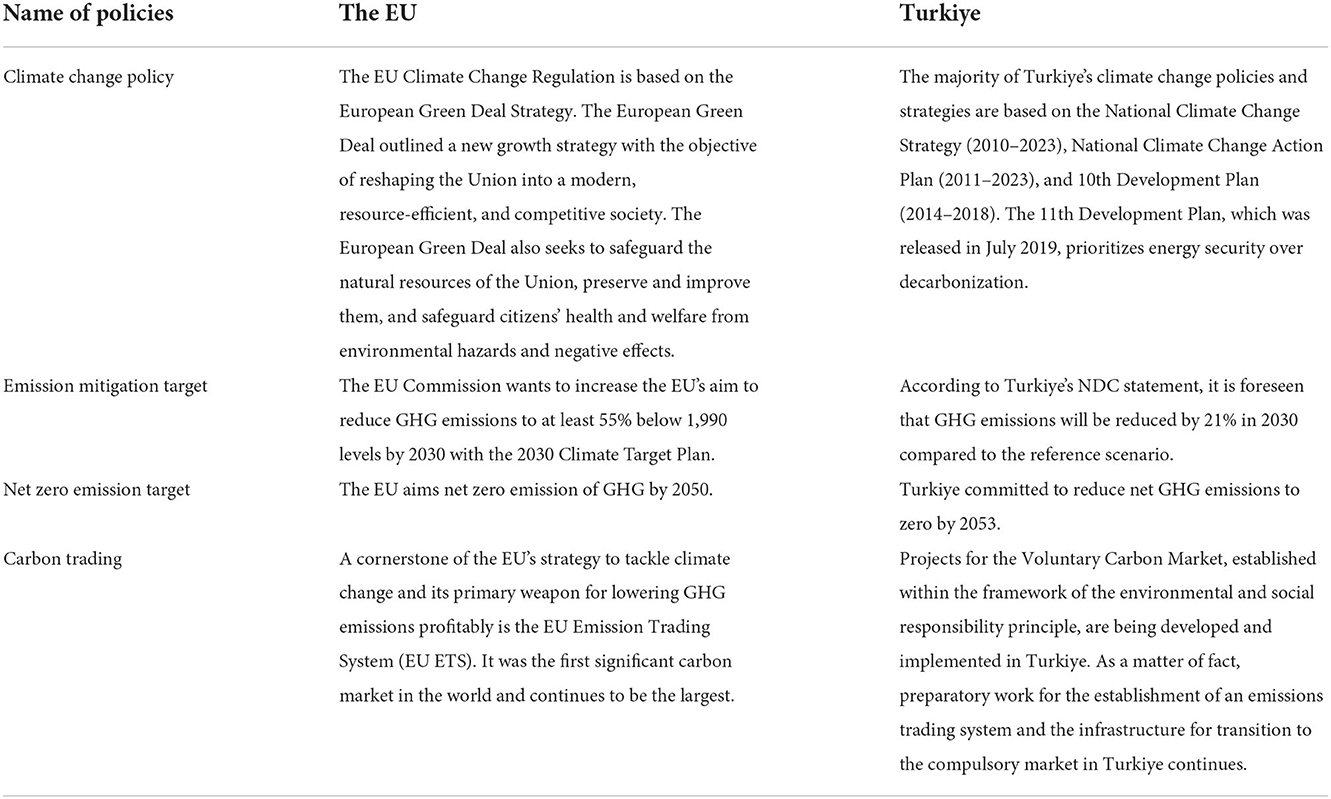
Table 1. Comparison of key climate change mitigation actions of Turkiye and EU.
Turkiye's climate change performance index
The CCPI is an independent monitoring tool for tracking the climate change protection performance of 60 countries and the EU. These countries together account for more than 90% of GHGs. The CCPI is evaluated according to standardized different criteria and results that are obtained from collected data and the countries receive a rating between “very high” and “very low.” The CCPI evaluates the countries' progress related to their climate change mitigation targets, which are based on their NDCs, and are communicated to the UNFCC. Also, it helps to demonstrate to the countries their climate policy, recent development, current emission levels, renewable energy, and energy use (Burck et al., 2022a). The CCPI is produced by non-governmental organizations which are Germanwatch, the New Climate Institute and the Climate Action Network since 2005 annually (Puertas and Marti, 2021). Germanwatch created the CCPI to untangle the labyrinth of differentiated obligations, as well as kept and broken commitments, and to urge moves toward an effective international climate policy. The CCPI is assessing all “GHG Emissions” from all sectors using the PRIMAP data-base. However, the PRIMAP data set does not include Land Use, Land Use Change, and Forestry (LULUCF) emissions. These data are derived from Food and Agriculture Organization (FAO), national inventory submissions for 2021, and biennial country reports. The index continues to use data from the International Energy Agency (IEA) for all energy-related data in the categories “Renewable Energy” and “Energy Use,” largely adhering to the IEA's criteria. Nevertheless, the CCPI assessment excludes non-energy use from all data related to total primary energy supply (TPES) as well as traditional biomass from all inputs provided by the IEA for both, TPES data and the assessment of renewable energy. A complete research study is conducted annually to examine the data for the category “Climate Policy.” This category depends on the performance assessment given by climate and energy policy experts from non-governmental organizations, universities, and think tanks in the countries being evaluated (Burck et al., 2022b).
According to the CCPI 2022 Report, there is an urgent ambitious climate action needed to limit global warming to a maximum of 1.5°C. However, the countries' commitments are still insufficient under the Paris Agreement. Although there are several developments to decrease climate change effects, the world energy supply still depends on coal, oil, and gas instead of renewable energy (Burck et al., 2022a).
Figure 1 illustrates Turkiye's performance ranking among the other countries. While rankings are determined for each category in the CCPI reports, the countries are ranked from the best performing to the lesser ones. In CCPI 2022 Report, Turkiye is ranked 41st related to its performance which is evaluated in four categories: GHG Emissions, Renewable Energy, Energy Use, and Climate Policy. Turkiye follows an increasing course in overall rating over the last 5 years, and it is rated as a low-performing country (Burck et al., 2022a). The experts of CCPI consider the ratification of the Paris Agreement by the Turkish Parliament as a major improvement in Turkiye's overall Climate Policy Turkiye (Burck et al., 2022a). Turkiye attaches importance to determine strategies and actions at the national and international level within the scope of combating and adapting to climate change. Nevertheless, Turkiye's policy remains weak in terms of climate mitigation actions in a general overview.
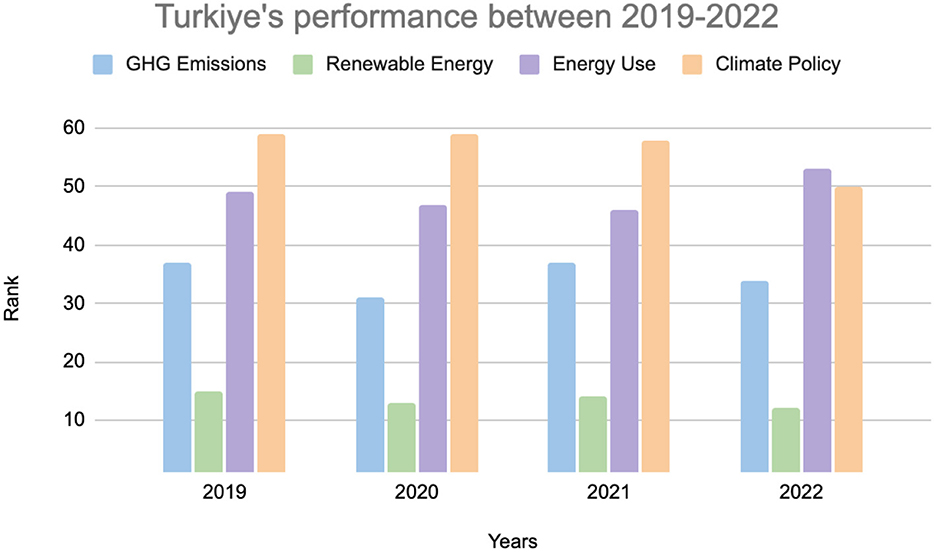
Figure 1. Ranking of Turkiye according to all categories in CCPI reports between 2019 and 2022 [Source: Burck et al. (2019, 2020, 2021, 2022a)].
Turkiye has a high rate in the renewable energy category than other countries. The share of renewable energy in energy production continues to increase with regulations such as the Renewable Energy Law and the National Energy Policy (Akdogan and Kovancilar, 2022). Since 2019, renewable energy has provided ~48% of total electricity production in Turkiye. The majority of this is made up of hydraulic energy. According to a report published by the Ministry of Energy and Natural Resources since the end of September 2019, 31.4% of electricity production is from hydraulic energy, 28.6% from natural gas, 22.4% from coal, 8.1% from wind, 6.2% from solar, 1.6% from geothermal, and 1.7% from other resources (Onder, 2021).
Summary, conclusion, and future outlook
One of the biggest threats to life on earth is climate change and global warming. The governments are responsible for maintaining the security and quality of life of their populations cannot ignore its impacts, which are becoming more and more prominent. We used the recent values that belong to 2022 CCPI data and focused on discovering performance trends in Turkiye. The results might offer useful data and point of view to authorities responsible for establishing climate change policies and investments. The monitoring and evaluation of climate change performance are of great importance for understanding whether climate change policies are implemented correctly. In addition, it is crucial to know how much the globe as a whole and particular nations can cut their GHG emissions and pursue their decreased rates. Although the CCPI is a useful tool to monitor the climate change actions of 60 countries and the EU at this point, it is insufficient. It can be suggested that countries have a climate change tracking system where they can make detailed reports with more reliable data. However, it would also be important to consider the principle of transparency.
We can suggest that the countries that adopt higher GHG emissions reduction policies and invest on mitigation and adaptation of climate change are more likely to have better CCPI. Turkiye has a low CCPI, even though she has a climate change policy. Clearly, Turkiye has to improve her policy related to the current needs of climate in an attempt to reach Paris Agreement goal.
Also, the EU membership process has an essential place in Turkiye's environmental and climate change policies. In this process, Turkiye has made and continues to make multitudinous investments to align its environmental policies with the EU. The EU has been the primary factor for developing Turkiye's energy strategy, especially renewable energy policy thus far. Therefore, it is believed that Turkiye's energy strategy would be greatly influenced by the EU's emphasis on renewable energy technology (Sirin and Ege, 2012). As a developing country, Turkiye's electricity consumption is increasing rapidly. Producing the needed electricity from low-carbon energy types is of great importance for environmental sustainability and reducing climate change. Another important policy recommendation is Turkiye should focus on enhancing renewable energy investments. Determining energy policies by evaluating energy and environmental factors together is one of the important factors for the success of climate change policies in Turkiye (Alper and Alper, 2017).
Environmental investments and expenditures are largely made by the public. This is thought to be another reason why Turkiye has not been able to conclude policies successfully including climate change she has determined in the field of environment. Since Turkiye is a developing country, she has to increase her industrial production and do it at the lowest cost. Therefore, renewable energy sources are not sufficient for Turkiye (Kose, 2018). Turkiye needs to develop policies in line with her own internal dynamics within the framework of the EU's general policies. Holistic policies should be added to priorities, including private sector investments and expenditures that will not hinder sustainable development (Emeksiz and Findik, 2021). Otherwise, it does not seem possible for Turkiye to be successful in the environment and climate change in the short term (OECD, 2016; Erdem and Yenilmez, 2017).
Author contributions
All authors listed have made a substantial, direct, and intellectual contribution to the work and approved it for publication.
Acknowledgments
This work is carried out under the framework of Jean Monnet Scholarship, and the author gratefully acknowledges the Jean Monnet Scholarship for the financial support of this work. Also, special thanks are due to the University of Surrey's Global Center for Clean Air Research (GCARE) for its support. PK acknowledges the support from the OPERANDUM (OPEn-air laboRAtories for Nature baseD solUtions to Manage hydro-meteo risks) project, which is funded by the European Union's Horizon 2020 research and innovation programme under the Grant Agreement No: 776848 and the UKRI funded RECLAIM Network Plus (EP/W034034/1) project. PK was invited to write this Grand Challenge article in the capacity of founding Specialty Chief Editor for the Climate Change and Cities section of the journal.
Conflict of interest
The authors declare that the research was conducted in the absence of any commercial or financial relationships that could be construed as a potential conflict of interest.
Publisher's note
All claims expressed in this article are solely those of the authors and do not necessarily represent those of their affiliated organizations, or those of the publisher, the editors and the reviewers. Any product that may be evaluated in this article, or claim that may be made by its manufacturer, is not guaranteed or endorsed by the publisher.
References
Akdogan, I., and Kovancilar, B. (2022). Avrupa Birligi ve Turkiye'de Cevre Dostu Yenilenebilir Enerji Politikalarinin Tesvik Turleri Acisindan Degerlendirilmesi. Yonetim ve Ekonomi 29, 69–91. doi: 10.18657/yonveek.1004872
Alper, F., and Alper, A. (2017). Karbondioksit Emisyonu, Ekonomik Buyume, Enerji Tuketimi Iliskisi: Turkiye Icin Bir ARDL Sinir Testi Yaklasimi. Sosyoekonomi 25, 145–145. doi: 10.17233/sosyoekonomi.292114
Arsova, S., Corpakis, D., Genovese, A., and Ketikidis, P. H. (2021). The EU green deal: Spreading or concentrating prosperity?. Resour. Conserv. Recycl. 171, 105637. doi: 10.1016/j.resconrec.2021.105637
Berrang-Ford, L., Biesbroek, R., Ford, J., Lesnikowski, A., Tanabe, A., Wang, F., et al. (2019). Tracking global climate change adaptation among governments. Nat. Climate Change 9, 440–449. doi: 10.1038/s41558-019-0490-0
Burck, J., Uhlich, T., Bals, C., Höhne, N., Nascimento, L., and Wong, J. (2019). Climate Change Performance Index. Available online at: https://ccpi.org/download/the-climate-change-performance-index-2019/ (accessed April 6, 2022).
Burck, J., Uhlich, T., Bals, C., Höhne, N., Nascimento, L., and Wong, J. (2020). Climate Change Performance Index. Available online at: https://ccpi.org/download/the-climate-change-performance-index-2020/ (accessed April 6, 2022).
Burck, J., Uhlich, T., Bals, C., Höhne, N., Nascimento, L., and Wong, J. (2021). Climate Change Performance Index. Available online at: https://ccpi.org/download/the-climate-change-performance-index-2021/ (accessed April 6, 2022).
Burck, J., Uhlich, T., Bals, C., Höhne, N., Nascimento, L., and Wong, J. (2022a). Climate Change Performance Index. Available online at: https://ccpi.org/download/climate-change-performance-index-2022-2/ (accessed April 6, 2022).
Burck, J., Uhlich, T., Bals, C., Höhne, N., Nascimento, L., and Wong, J. (2022b). Background and Methodology. Available online at: https://ccpi.org/download/climate-change-performance-index-2022-2/ (accessed October 30, 2022).
Christensen, J., and Olhoff, A. (2019). Lessons From a Decade of Emissions Gap Assessments. Nairobi: United Nations Environment Programme. Available online at: https://www.unenvironment.org/resources/emissions-gap-report-10-year-summary (accessed January 28, 2022).
Covenant of Mayors for Climate Energy (2022). Covenant Community. Available online at: https://www.covenantofmayors.eu/about/covenant-community/signatories.html (accessed October 27, 2022).
Durkee, J. (2006). Chapter 2: US and global environmental regulations. Manag. Indus. Clean. Technol. Process. 8, 43–98. doi: 10.1016/B978-008044888-6/50016-8
Emeksiz, C., and Findik, M. (2021). Surdurulebilir Kalkinma Icin Yenilenebilir Enerji Kaynaklarinin Turkiye Olceginde Degerlendirilmesi. Eur. J. Sci. Technol. 26, 155–164. doi: 10.31590/ejosat.948729
Epule, T., Chehbouni, A., Dhiba, D., Moto, M., and Peng, C. (2021). African climate change policy performance index. Environ. Sustain. Indicat. 12, 100163. doi: 10.1016/j.indic.2021.100163
Erdem, M. S., and Yenilmez, F. (2017). Turkiye'nin Avrupa Birligi Cevre Politikalarina Uyum Surecinin Degerlendirilmesi. Optimum Ekonomi ve Cevre Politikalarina Uyum Surecinin Degerlendirilmesi 4, 91–119. doi: 10.17541/optimum.292768
European Green Deal (2022). Climate Action. Available online at: https://climate.ec.europa.eu/eu-action/european-green-deal_en (accessed May 4, 2022).
Fujimori, S., Kubota, I., Dai, H., Takahashi, K., Hasegawa, T., Liu, J., et al. (2016). Will international emissions trading help achieve the objectives of the Paris Agreement? Environ. Res. Lett. 11, 104001. doi: 10.1088/1748-9326/11/10/104001
IklimIN (2022a). Enhancing Required Joint Efforts on Climate Action Project. Available online at: https://www.iklimin.org/en/proje-hakkinda/ (accessed October 27, 2022).
IklimIN (2022b). Kocaeli Green House Gas Inventory and Climate Change Initiative Project. Available online at: https://www.iklimin.org/en/hibe%20projeleri/kocaeli-sera-gazi-envanteri-ve-iklim-degisikligi-inisiyatifi-projesi/ (accessed October 27, 2022).
IPCC (2021). “Summary for policymakers,” in Climate Change 2021: The Physical Science Basis, eds V. Masson-Delmotte, P. Zhai, A. Pirani, S. L. Connors, C. Péan, S. Berger, et al. (Cambridge: Cambridge University Press), 3–32.
Izmir SECAP (2022). Izmir Surdurulebilir Enerji ve Iklim Eylem Plani. Available online at: https://www.izmir.bel.tr/tr/Projeler/yesil-sehir-ile-surdurulebilir-enerji-ve-iklim-eylem-planlarimiz-hazir/2619/4 (accessed October 27, 2022).
Kahraman, S., and Senol, P. (2019). Iklim Degisikligi: Kuresel, Bolgesel ve Kentsel Etkileri. Academia J. Soc. Sci. 1, 353–370.
Kasman, A., and Duman, Y. (2015). CO2 emissions, economic growth, energy consumption, trade and urbanization in new EU member and candidate countries: a panel data analysis. Econ. Model. 44, 97–103. doi: 10.1016/j.econmod.2014.10.022
Kat, B., Paltsev, S., and Yuan, M. (2018). Turkish energy sector development and the Paris Agreement goals: a CGE model assessment. Energy Policy 122, 84–96. doi: 10.1016/j.enpol.2018.07.030
Kose, I. (2018). Iklim Degisikligi Muzakereleri: Turkiye'nin Paris Anlasmasi'ni Imza Sureci. Ege Stratejik Arastirmalar Dergisi 9. 55–81. doi: 10.18354/esam.329348
Kumar, P. (2021). Climate change and cities: challenges ahead. Front. Sustain. Cit. 3, 645613. doi: 10.3389/frsc.2021.645613
Kumar, P., Debele, S. E., Sahani, J., Rawat, N., Marti-Cardona, B., Alfieri, S. M., et al. (2021). Nature-based solutions efficiency evaluation against natural hazards: modelling methods, advantages and limitations. Sci. Tot. Environ. 784, 147058. doi: 10.1016/j.scitotenv.2021.147058
Kuylenstierna, J., Heaps, C., Ahmed, T., Vallack, H., Hicks, W., Ashmore, M., et al. (2020). Development of the Low Emissions Analysis Platform - Integrated Benefits Calculator (LEAP-IBC) tool to assess air quality and climate co-benefits: application for Bangladesh. Environ. Int. 145, 106155. doi: 10.1016/j.envint.2020.106155
Liu, L., and Greaver, T. (2009). A review of nitrogen enrichment effects on three biogenic GHGs: the CO2 sink may be largely offset by stimulated N2O and CH4 emission. Ecol. Lett. 12, 1103–1117. doi: 10.1111/j.1461-0248.2009.01351.x
Neves, S., Marques, A., and Patrício, M. (2020). Determinants of CO2 emissions in European Union countries: does environmental regulation reduce environmental pollution? Econ. Anal. Pol. 68, 114–125. doi: 10.1016/j.eap.2020.09.005
OECD (2016). Energy Policies of IEA Countries: Turkiye 2016. Available online at: https://www.oecd-ilibrary.org/energy/energy-policies-of-iea-countries-Turkiye-2016_9789264266698-en (accessed March 8, 2022).
Official Journal of Turkiye (2014). Sera Gazi Emisyonlarinin Takibi Hakkinda Yonetmelik. Available online at: https://www.resmigazete.gov.tr/eskiler/2014/05/20140517-3.htm (accessed May 4, 2022).
Onder, G. H. (2021). Renewable energy consumption policy in Turkiye: an energy extended input-output analysis. Renew. Energy 175, 783–796. doi: 10.1016/j.renene.2021.05.025
Puertas, R., and Marti, L. (2021). International ranking of climate change action: an analysis using the indicators from the Climate Change Performance Index. Renew. Sustain. Energy Rev. 148, 111316. doi: 10.1016/j.rser.2021.111316
Republic of Turkiye Ministry of Environment Urbanization Climate Change. (2013). Iklim Degisikligi ve Hava Yonetimi Koordinasyon Kurulu Calisma Usul Ve Esaslari Hakkinda Yonerge. Available online at: https://webdosya.csb.gov.tr/db/iklim/webmenu/webmenu12631.pdf (accessed Marc 9, 2022).
Republic of Turkiye Ministry of Environment Urbanization Climate Change. (2022a). Iklim Degisikligi. Available online at: https://iklim.csb.gov.tr/ (accessed April 26, 2022).
Republic of Turkiye Ministry of Environment Urbanization Climate Change. (2022b). Mevzuat. Available online at: https://iklim.csb.gov.tr/mevzuat-i-103 (accessed May 5, 2022).
Republic of Turkiye Ministry of Environment Urbanization Climate Change. (2022c). Climate Change Strategy 2010-2023. Available online at: https://iklim.csb.gov.tr/strateji-belgeleri-i-305 (accessed April 11, 2022).
Republic of Turkiye Ministry of Foreign Affairs (2022a). Paris Agreement. Available online at: https://www.mfa.gov.tr/paris-anlasmasi.tr.mfa (accessed March 7, 2022).
Republic of Turkiye Ministry of Foreign Affairs (2022b). United Nations Framework Convention on Climate Change (UNFCCC) and the Kyoto Protocol. Available online at: https://www.mfa.gov.tr/united-nations-framework-convention-on-climate-change-_unfccc_-and-the-kyoto-protocol.en.mfa (accessed March 7, 2022).
Sengun, E., and Kalagan, G. (2022). Yerel Yonetimlerin Iklim Degisikligi Mucadele Surecinde Karbon Ayak Izinin Dusurulmesi: Denizli Buyuksehir Belediyesi Ornegi. Uluslararasi Yonetim Akademisi 1, 129–149. doi: 10.33712/mana.1065718
Sirin, S. M., and Ege, A. (2012). Overcoming problems in Turkey's renewable energy policy: How can EU contribute?. Renew. Sustain. Ener. Rev. 16, 4917-4926. doi: 10.1016/j.rser.2012.03.067
Tugac, C. (2021). Kentsel Surdurulebilirlik, direnclilik ve iklim degisikligiyle mucadele baglaminda yerel yonetimler uzerine bir degerlendirme. Cagdas Yerel Yonetimler Dergisi. 30, 21–69.
Turkiye Report (2021). European Neighbourhood Policy and Enlargement Negotiations. Available online at: https://neighbourhood-enlargement.ec.europa.eu/turkiye-report-2021_en (accessed June 4, 2022).
Turkiye Report (2022). European Neighbourhood Policy and Enlargement Negotiations. Available online at: https://neighbourhood-enlargement.ec.europa.eu/turkiye-report-2022_en (accessed October 12, 2022).
UN Environment Programme (2022). Emissions Gap Report 2021. Available online at: https://www.unep.org/resources/emissions-gap-report-2021 (accessed January 28, 2022). doi: 10.18356/9789210022262
UNFCC (2022). What is the Paris Agreement? Available online at: https://unfccc.int/process-and-meetings/the-paris-agreement/the-paris-agreement (accessed March 12, 2022).
Vallero, D. (2019). “Air pollution biogeochemistry,” in Air Pollution Calculations, 1st Edn, eds L. S. Kelleher (Amsterdam: Elsevier), 175–206. doi: 10.1016/B978-0-12-814934-8.00008-9
von Lucke, F. (2021). Principled pragmatism in climate policy? The EU and changing practices of climate justice. Polit. Geogr. 86, 102355. doi: 10.1016/j.polgeo.2021.102355
Wang, J., Hussain, S., Sun, X., Chen, X., Ma, Z., Zhang, Q., et al. (2022). Nitrogen application at a lower rate reduce net field global warming potential and greenhouse gas intensity in winter wheat grown in semi-arid region of the Loess Plateau. Field Crops Res. 280, 108475. doi: 10.1016/j.fcr.2022.108475
Keywords: greenhouse gases, climate change, EU and Turkiye, climate change performance index, climate mitigation and adaptation
Citation: Guler Y and Kumar P (2022) Climate change policy and performance of Turkiye in the EU harmonization process. Front. Sustain. Cities 4:1070154. doi: 10.3389/frsc.2022.1070154
Received: 14 October 2022; Accepted: 25 November 2022;
Published: 15 December 2022.
Edited and reviewed by: James Evans, The University of Manchester, United Kingdom
Copyright © 2022 Guler and Kumar. This is an open-access article distributed under the terms of the Creative Commons Attribution License (CC BY). The use, distribution or reproduction in other forums is permitted, provided the original author(s) and the copyright owner(s) are credited and that the original publication in this journal is cited, in accordance with accepted academic practice. No use, distribution or reproduction is permitted which does not comply with these terms.
*Correspondence: Prashant Kumar, cC5rdW1hckBzdXJyZXkuYWMudWs=; cHJhc2hhbnQua3VtYXJAY2FudGFiLm5ldA==