 Muhammad Farhan Bashir
 Wided Ragmoun
 Alfalih Abdulaziz3
 Madiha Bashir
- 1College of Management Sciences, Chengdu University of Technology, Chengdu, Sichuan, China
- 2Postdoctoral Research Station of Management Sciences and Engineering, Chengdu University of Technology, Chengdu, Sichuan, China
- 3Department of Business Administration, College of Business and Economics, Qassim University, Buraydah, Saudi Arabia
- 4Department of Education, Government of the Punjab, Punjab, Pakistan
‘Smart cities’ is an ever-evolving concept focusing on technological integration in urban policymaking to resolve contemporary urban issues. Despite repeated claims that ‘smart initiatives’ produce sustainability, a detailed research analysis is required to detail the extent to which the desired outcomes have been achieved. Within these academic, research, and policy parameters, the current study discusses the relevance of concepts of ‘smart’ and ‘sustainable cities’ through a systematic literature review to answer the inter-dependence of these concepts within modern urban reforms. Our findings highlight that cities cannot be ‘truly smart’ without becoming sustainable first, and technocentricity, complex policy practices, and ad-hoc conceptualization are the major hurdles in urban sustainability. Furthermore, urgent policy shifts remain key in long-term progressive sustainability goals. As urban policymaking has a wider socio-economic impact, smart and sustainable urban policymaking carries crucial implications for urban compliance and practices within the Sustainable Development Goals.
1 Introduction and literature review
In recent times, there has been a push to achieve environmental sustainability and overcome climate change from environmental stakeholders, the general public, and policymakers. Due to unprecedented urban growth and subsequent environmental impact within such discussion, cities have become cornerstones of sustainability efforts (Al-Raeei, 2025). Indifferently, global economies have been confronted with various socioeconomic and environmental crises, i.e., economic disparities, ecosystem destruction, biodiversity loss, climate change, and digital divide (Xie et al., 2025). Additionally, administrators have been confronted with urban management quagmires (Zhou, 2024) related to energy and resource consumption, rapid population migration, agricultural intensification, industrialization, and mobilization among key challenges (Aziz et al., 2025; Dan et al., 2025).
The emergence of the Anthropocene era has allowed human activities to dominate the ecology, climate, and environment (Beckers and Mora, 2025). However, it has also induced environmental and urban challenges for urban administrators as the technological advancements have been presented as a potential solution (Oikonomaki et al., 2024), as administrators hope to integrate ICTs within urban policies to overcome socioeconomic and environmental challenges, lower GHG emissions, improve energy efficiency, and achieve climate targets (Wu et al., 2024). The use of technological potential as policy solutions during urban developments has made the concept of smart cities an attractive notion for urban planners (Dong et al., 2022) to manage urban environmental challenges (Samasti et al., 2025). Although the concept of smart cities depends on several factors, effective policymaking should allow it to help formulate high-quality and regenerative models to have a net positive environmental impact. However, technology alone cannot overcome all ills, and cities must also focus on social, human, and environmental capital to ensure sustainable urban developments (Corrente et al., 2023; Huang et al., 2022).
Smart cities, in recent years, have gained traction as a solution for resource efficiency and green public transport, and provide data to ensure accurate resource allocation (Huang et al., 2022). Consequently, there has been a significant shift in smart city disclosure, especially in the USA, Australia, and South Korea, as well as city-level policy initiatives, especially in Vienna, South, San Francisco, and Amsterdam (Leminen et al., 2021). Currently, smart urban initiatives across the globe are being implemented, where significant resources have been allocated and are affecting large populations (Puppim de Oliveira et al., 2022). However, there is little evidence that cities claiming to be smart cities are solely focused on sustainability targets (Shang et al., 2022).
The current study extends contemporary sustainability debate by defining smart city as “an urban locality functioning as a healthy system of systems with sustainable and knowledge-based development activities to generate desired outcomes for all humans and non-humans.” The rationale for the current study offers detailed conceptualization and includes analytical and practical elements to foresee the smart city concept from the perspective of knowledge and sustainable-based viewpoints (Al-Raeei, 2025). The current study strategically interconnects various factors (opportunities or processes for the formation of smart cities), assets (resources required for development), and results (possible impact of transforming urban areas into smart cities). As distinctive pairing of green interventions and high-tech environmental strategies is critical in smart urbanization, Cervantes Puma et al. (2024) suggested that adopting a circular economy model is essential in achieving sustainable cities. In light of resolving research gaps within contemporary literature, the current study articulates that a ‘true smart city’ goes beyond just focusing on ‘technological innovations’ and identifying key policy factors in SSC transformation must be smart in every aspect, rather than just using technology through an integrated economic sustainability, environmental agenda, and social within urban development paradigm.
Advocates for smart cities offer sustainable urbanization and use technological solutions to overcome urban issues; however, their critics suggest that smart cities use urban entrepreneurialism to ‘constrain’ economic agendas. Consequently, some scholars have merged these views to focus on ‘smart sustainable cities’ to help urban planners and administrators understand essential components required during the transition to urban sustainability (Barbieri et al., 2025). Against this backdrop, we aim to review the available literature to identify critical factors influencing ‘smart sustainable cities’ to evaluate their role in urban sustainability. Our extensive approach will allow us to extend the academic discussion in several ways. First, the understanding of ‘smart sustainable cities’ and their character from a systematic review process has been neglected by the available literature. We provide an extensive review of factors related to ‘smart sustainable cities’ and suggest novel policy solutions. Secondly, we construct a series of research questions to comprehensively analyze changing dynamics in urbanization (Wang, 2023). Thirdly, we provide an in-depth account of research directions by recognizing sub-topics within research clusters to better understand smart urbanization and its relevance within environmental sustainability. Lastly, our extensive literature review approach allows us to propose policy suggestions related to ‘smart sustainable cities’ to increase the effectiveness of urban and environmental standards.
2 Data and methodology section
Modern cities and metropolitan areas are designed to fulfill the most dramatic human manifestations (Aljohani, 2024), which can impact nutrient cycling, energy flows, and disrupt hydrological systems and environmental quality. Consequently, sustainable development practices are critical in designing interlinked policy solutions to establish a dynamic socioeconomic system that does not endanger the natural environment. Despite efforts, there is no single template to define ‘smart city’ mainly because current literature comes from various (inter)national research streams investigating smart cities focused on domain, conceptualization, practice, and disciplinary domains. The current study uses a systematic literature review process to research “Can cities become smart without actually being sustainable?” We distinguish from Ingwersen and Serrano-López (2018), who did not establish a post-anthropocentric urban sustainability assessment. Our study relies on a three-stage procedure where stage 1 involves planning research objectives, protocols, defining procedures and sources to conduct a systematic review, stage 2 details structural and descriptive analysis, and stage 3 synthesizes results and reports key findings according to the research objectives.
During stage 1, we developed a comprehensive research plan by considering the key research question, keywords, and exclusion criteria. Our research aim was to identify the association between urban sustainability and smart cities to allow us to research whether cities can achieve smartness without becoming sustainable. For this, we selected ‘urban sustainability’, ‘urban smartness’, ‘sustainable cities’, and ‘smart cities’ as the main keywords. For article selection, we aimed to use our search query from the Wiley Online Library, Directory of Open Access Journals, Web of Science, and Science Direct.
In Stage 2, we proceeded to the review stage to sample relevant articles published. We used main keywords for article selection: ‘urban’, ‘cities’, ‘city’, ‘sustainability’, ‘sustainable’, ‘smartness’, and ‘smart’. Our final query string for article search consisted of ((“smartness” OR “smart”) AND (“sustainability” OR “sustainable”) AND (“city” OR “urban” OR “cities”)). We directed these keywords and search queries toward abstracts and titles of searched articles. In the preliminary process, we read the abstracts to judge the relevance of articles; in case of relevance, we proceeded to a full-text review to decide whether or not articles could be selected for the final review pool. Our initial query provided us with initial search results of 2,501 research articles. In order to refine these findings and only include journal articles, the research team employed an extensive screening process, where 705 research articles were excluded on the basis of non-English datasets and conference papers. We further screened the research articles on the basis of title to exclude 896 papers, whereas a detailed abstract review allowed the study to further refine the dataset by 281 articles. During the final stage, the study read full-text articles to further exclude 210 research papers so that the final sample size of 409 research papers matches the keywords search and research outline within the given project (Figure 1).
We used VOS viewer bibliometric software to conduct a systematic literature review, which uses the co-occurrence of key terms from abstracts and titles during analysis, where circles represent each search term. Additionally, the distance in graphical representation ensures the degree of association between key terms and total occurrence determines the circle dimension (Bashir, 2022a, 2022b). Lastly, we considered titles and abstracts to overcome the unnecessary recurrence of terms during the analytical process. We also used co-citation, bibliographic coupling, citation analysis, and co-authorship to capture research trends in the sampled dataset (Ma et al., 2023a).
During the main research process, we used bibliographic coupling to classify research clusters through VOS Viewer (Ma et al., 2023b) to aggregate the dataset and identify similarities in sampled studies through shared references. Our research process allowed us to identify the degree of overlap in references in the final dataset. Bibliographic coupling is also useful as, compared to other bibliometric analyses, it provides a more accurate analysis of academic citations over an extended period. VOS Viewer relies on co-occurrence matrices to provide graphical visualization by emanating from the frequency and proximity of similar cited references (Ma et al., 2023b). Moreover, VOS Viewer constructs a two-dimensional map where the degree of cited references is used to separate research articles. Moreover, it also uses a cluster density view by allocating specific colors to each cluster, where the weight of color determines the density of each cluster (Bashir, 2022a). To be exact, the distance between research items indicates the degree of similarity in cited references. Also, the identification of shared references determines whether or not articles belong to the same cluster. Our detailed review process has allowed us to identify four research clusters within the sampled dataset.
Finally, in our last step, we conducted a comprehensive examination of each cluster so that, from a qualitative and theoretical perspective, we could analyze research topics originating from the research branch of literature. We followed (Bashir, 2022a, 2022b) and prepared an Excel datasheet to document quantitative and qualitative information to recognize the development of research trends. Our detailed analytical approach helped us identify relevant texts and assign keywords to represent research content. For this, the research team implemented dynamic tagging so that new tags can be used to ensure flexibility in content categorization and lower possible bias from the pre-set rigid system.
3 Results and discussion for bibliometric outcomes
In section 3, we use a bibliometric analytical approach to present a graphical illustration focusing on pointing out research contributions of the most productive journals, countries, and authors (Lei et al., 2022).
3.1 Research journals
We begin analysis of academic research to reveal that Sustainability (IF = 3.3), Sustainable Cities and Society (IF = 12), and Journal of Cleaner Production (IF = 10) have published more publications than other journals. From a research perspective, articles published in sustainability have attempted to resolve academic challenges related to the role of contemporary technology, smart and resilient infrastructure, and AI predictive modeling within sustainable development goals. Whereas the research published in Sustainable Cities and Society and Journal of Cleaner Production has documented SSC literature by documenting strategic sustainability framework, urban digital innovation, multi-criteria decision-making, smart city classification, and smart mobility metrics. Moreover, including research journals such as Cities, Energies, Journal of urban technology, Land, and Sustainable energy technologies and assessment reveal that academic researchers have explored the concept from contemporary sustainability frameworks, citizen-centric smart cities, reporting practices, and provided policy solutions (Figure 2).
Table 1 provides further details, where we have used citations within ‘smart cities’ literature as the base criteria; moreover, we have also used cluster classification, link strength, link value, and total publications to provide supplementary information. VOS Viewer uses individual publication details to use it as inclusion criteria within a specific cluster. According to Table 1, we observe four dominant clusters where 2 journals belong to clusters 1, 2, 3, and 4, while 1 journal belongs to clusters eight and ten. Similar scenarios are common in bibliographic studies, as they help identify the association of published research from a citation perspective, as these journals belong to the same clusters (Bashir, 2022a, 2022b). Identifying total links is another criterion to identify the one-on-one association between source journals and main indicators, and helps identify the association between total citations and scientific research. Lastly, link strength illustrates the degree of common citations within the sampled dataset. The link strength for ‘Sustainable cities and society’ is significantly higher than other journals, indicating that articles published in this journal receive more citations within ‘smart cities’ literature.

Table 1. Leading research journals.
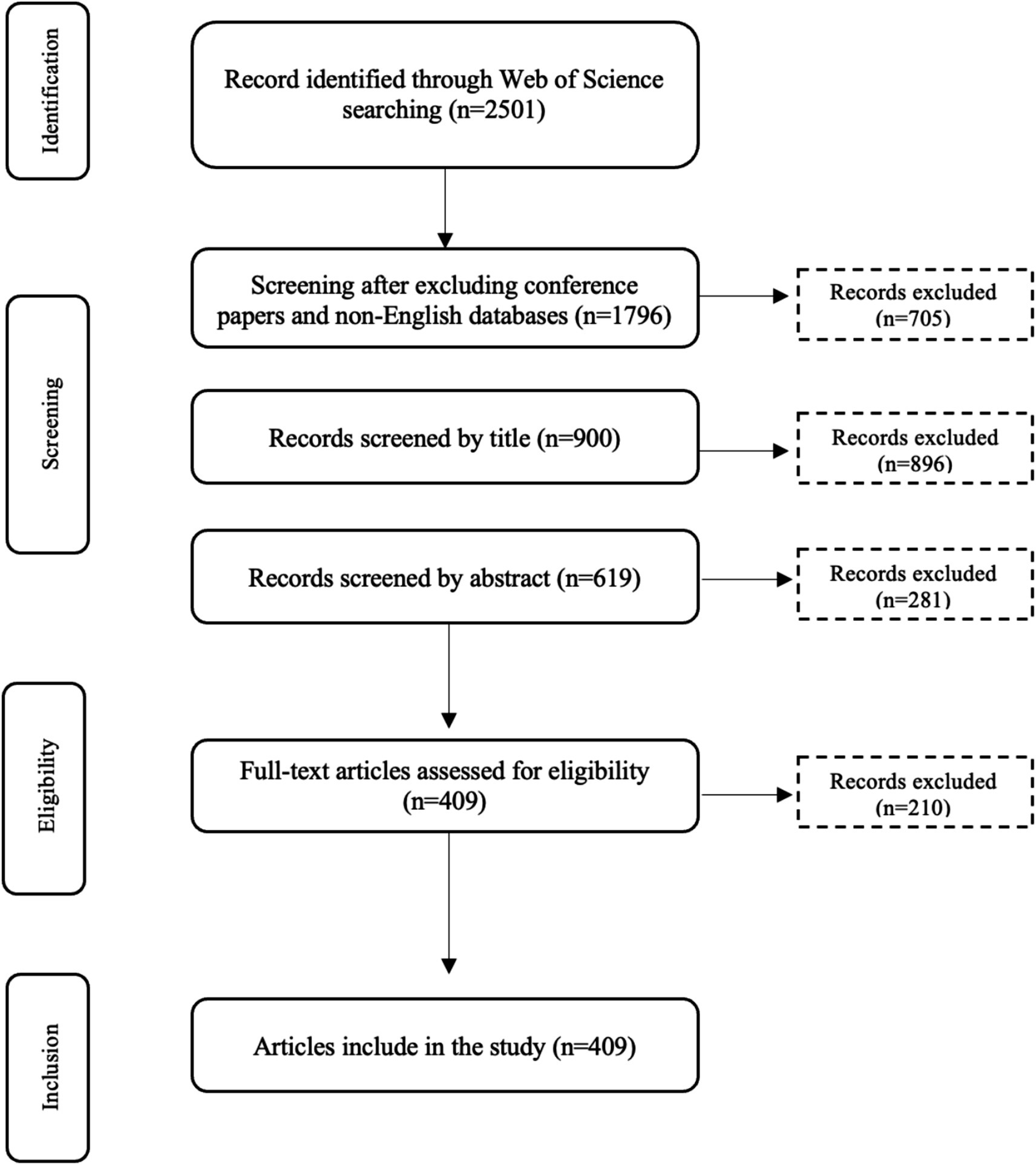
Figure 1. PRISMA framework.
3.2 Citation analysis of research journals
Next, we use Figure 3 to highlight the inter-journal citation trend to examine the degree to which one journal cites other journals’ publications. According to Figure 3, sustainable cities and society and sustainability have cited each other’s work more than other journals. The core focus on citation trends between these journals emphasized resolving differences within smart city evolution, technological resilience, innovative urban infrastructure, socio-techno competency approach, and digital integration within smart city developments. Another significant trend is observable between the Journal of Cleaner Production and Sustainability, where researchers have emphasized exploring smart city evolution, synergetic policy dynamics, and global smart city classifications. Lastly, another inter-journal citation trend is visible between the journals of cities and sustainability, which has mainly advanced theoretical discussion related to citizen-centric benchmarks, innovative cultivation systems, and sustainable urbanism to document SSC developments within the Global South.
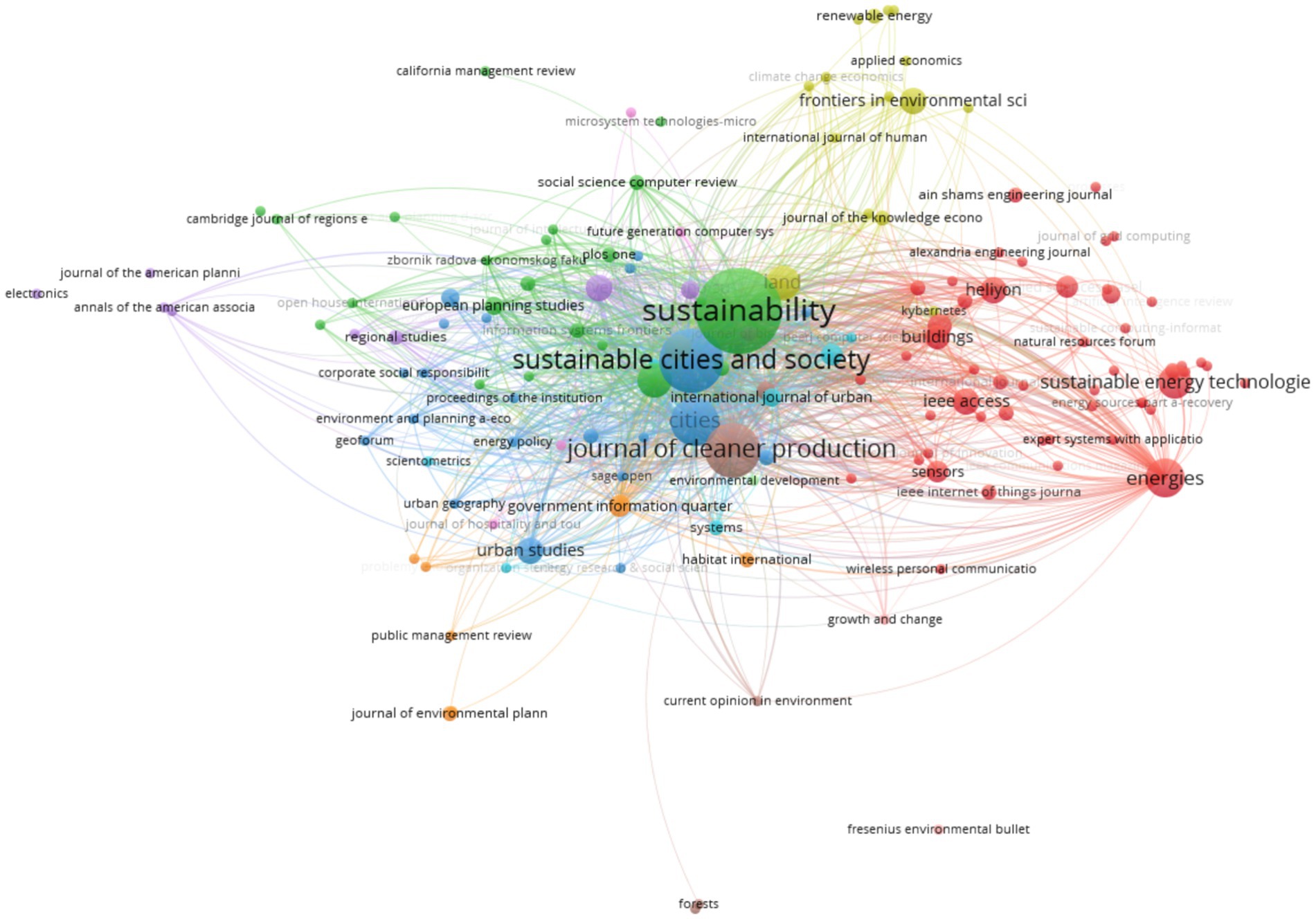
Figure 2. Bibliographic coupling for research journals.
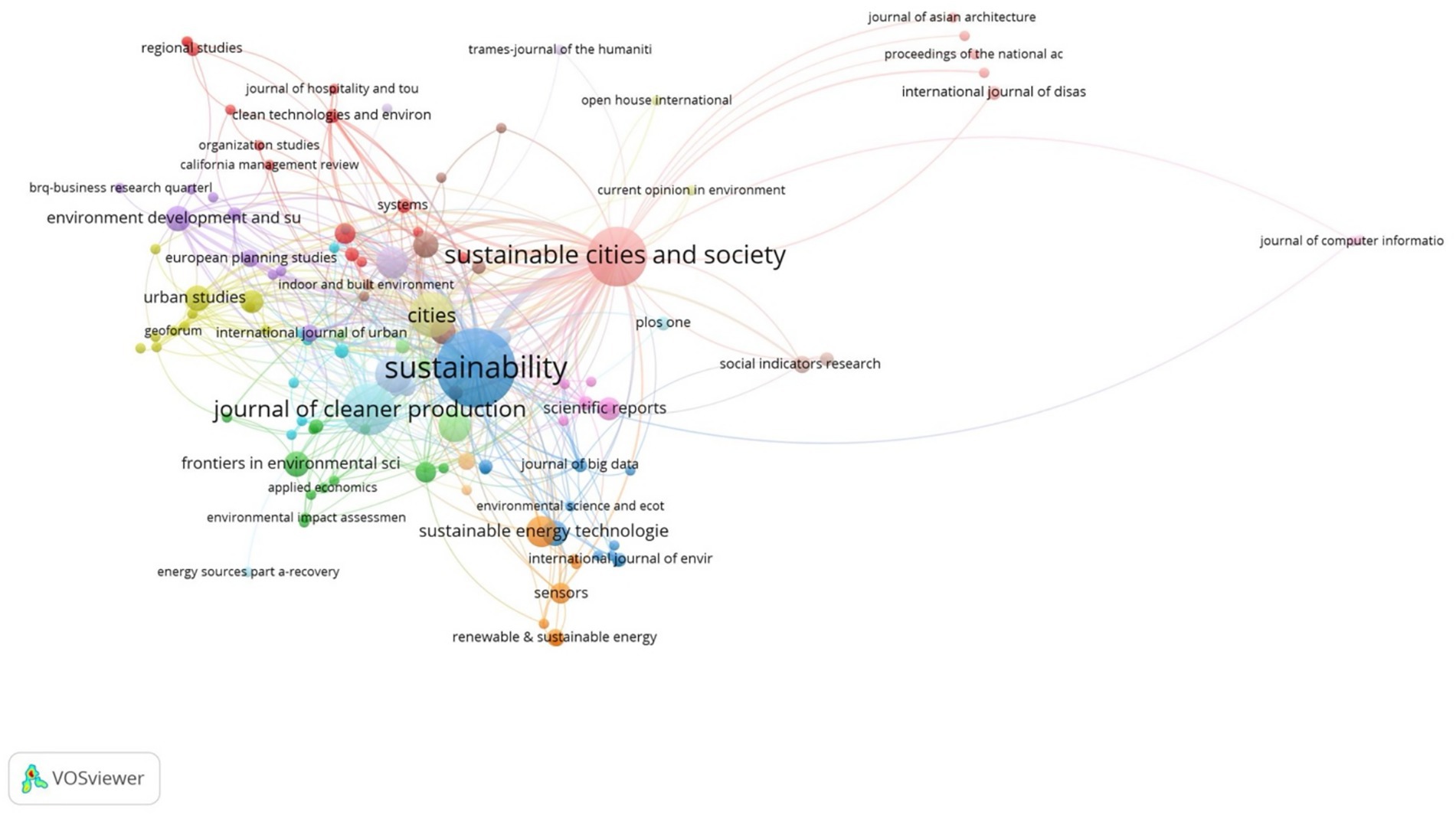
Figure 3. Journal citation network visualization.
3.3 Keywords
Next, we discuss most author keywords (Figure 4) and set the minimum frequency at 1 to include every keyword used. Cluster 1 (orange color) is the most dominant, with a research focus on sustainable development, big data analytics, data-driven smart sustainable urbanism, environmental sustainability, and performance measurement. Next, cluster 2 (green color) has received significant attention, with authors focused on analyzing the digital economy, carbon emission efficiency, green technology innovation, and smart city technology. Cluster 3 (dark blue color) shows a cluster of keywords mainly aimed at researching the roles of social sustainability, big data analytics, data practices, and big data applications within contemporary smart and sustainable literature. Fourth cluster (yellow color) has attempted to document the impact of citizen engagement, climate change mitigation, circular economy, environmental protection, and urban recycling as policymakers aim to integrate environmental and policy indicators within urban sustainability policymaking. Lastly, cluster 5 (red color) has discussed the impact of renewable energy, policy optimization, social network analysis, and urban resilience to improve environmental and urban policymaking cohesively.
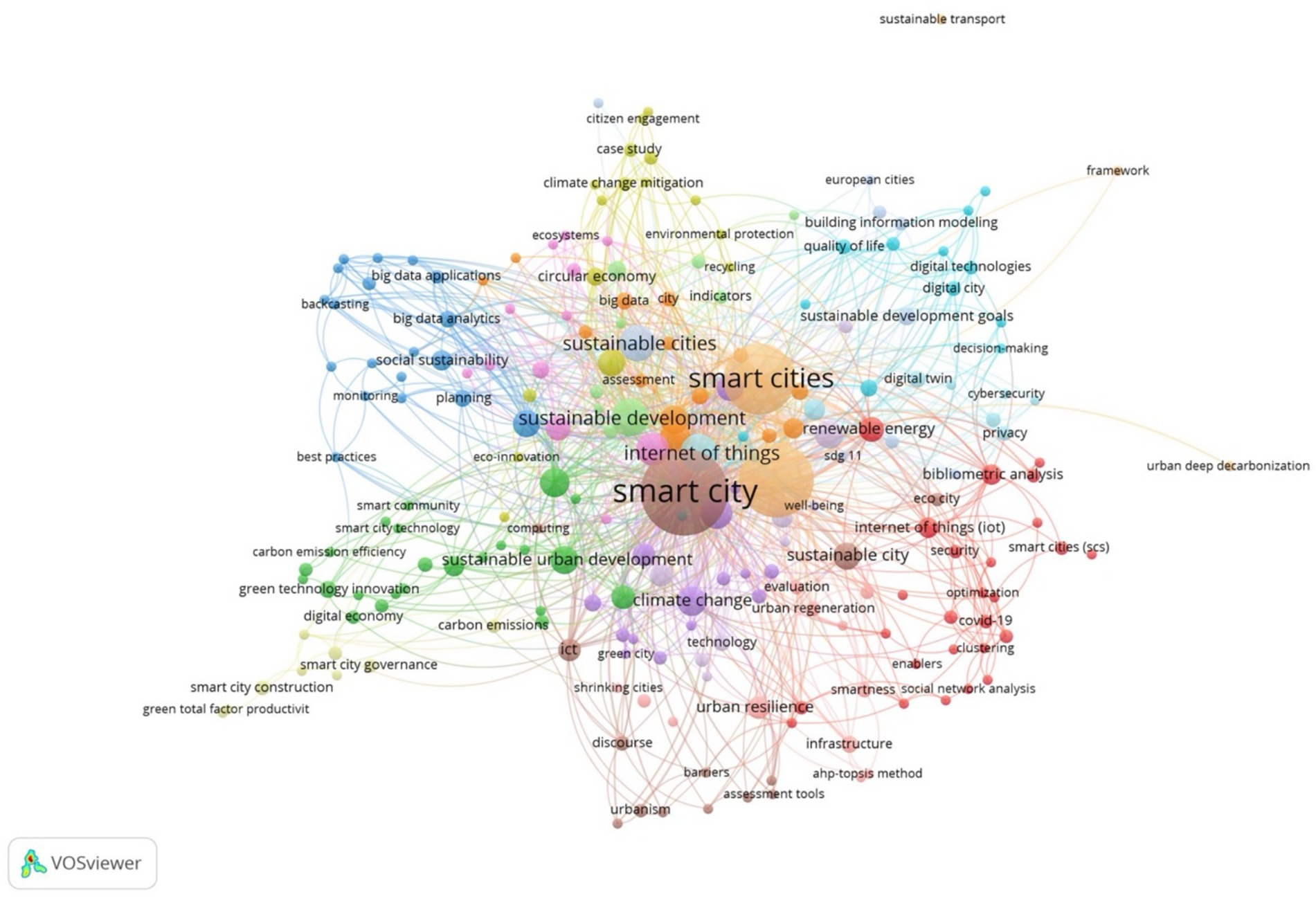
Figure 4. Network visualization of keywords.
Table 2 provides detailed statistics for the most frequently used keywords in ‘smart cities’ literature. We follow Ma et al. (2023a) to suggest that researchers, while analyzing emerging research areas such as ‘smart cities,’ must use specific terms to increase their relevance in the policy implications. After extensive analysis and using the frequency of keywords used, we suggest that most of the keywords are associated with urban and smart sustainability. Among these, smart city, sustainability, smart cities, sustainable development, Internet of Things, and Artificial intelligence have been widely discussed to establish how technological and infrastructure developments strengthen shifts within modern urban sustainability through smart and sustainable cities.
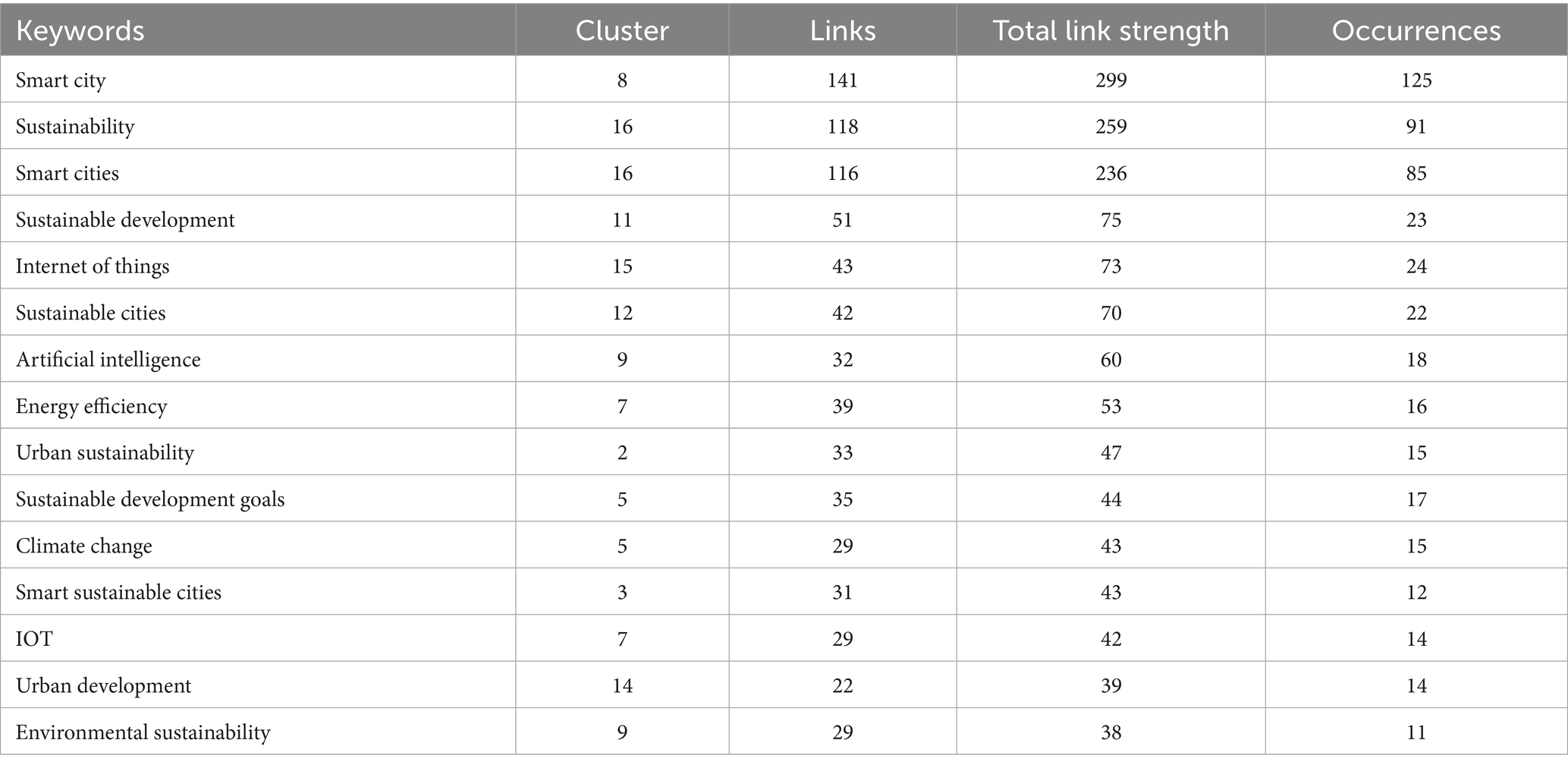
Table 2. Author keywords.
3.4 Countries
Accurate analysis of the degree to which research output is the most critical factor in improving research standards and knowledge transfer, especially in emerging research directions such as ‘smart cities’. We rely on Figure 5 to confirm country-wise co-authorship related to ‘smart cities’ to state that current publications can be divided into 9 main clusters, where China (103), England (40), USA (35), Italy (29), and Saudi Arabia (29) have provided the most scientific contribution. From an academic research perspective, the research in China and Saudi Arabia has aimed to filter policy challenges within smart and sustainable cities by analyzing differences within urban eco-policy, forecasting smart city sustainability, ESG performance, integrated IoT, and smart governance mechanisms within global south urban policy frameworks. On the other hand, academic research within developed economies has attempted to report whether or not citizen-centric strategies, AI infrastructure, strategic digitalization, urban climate change resilience, and circular supply chain influence modern urbanization policy formulation.
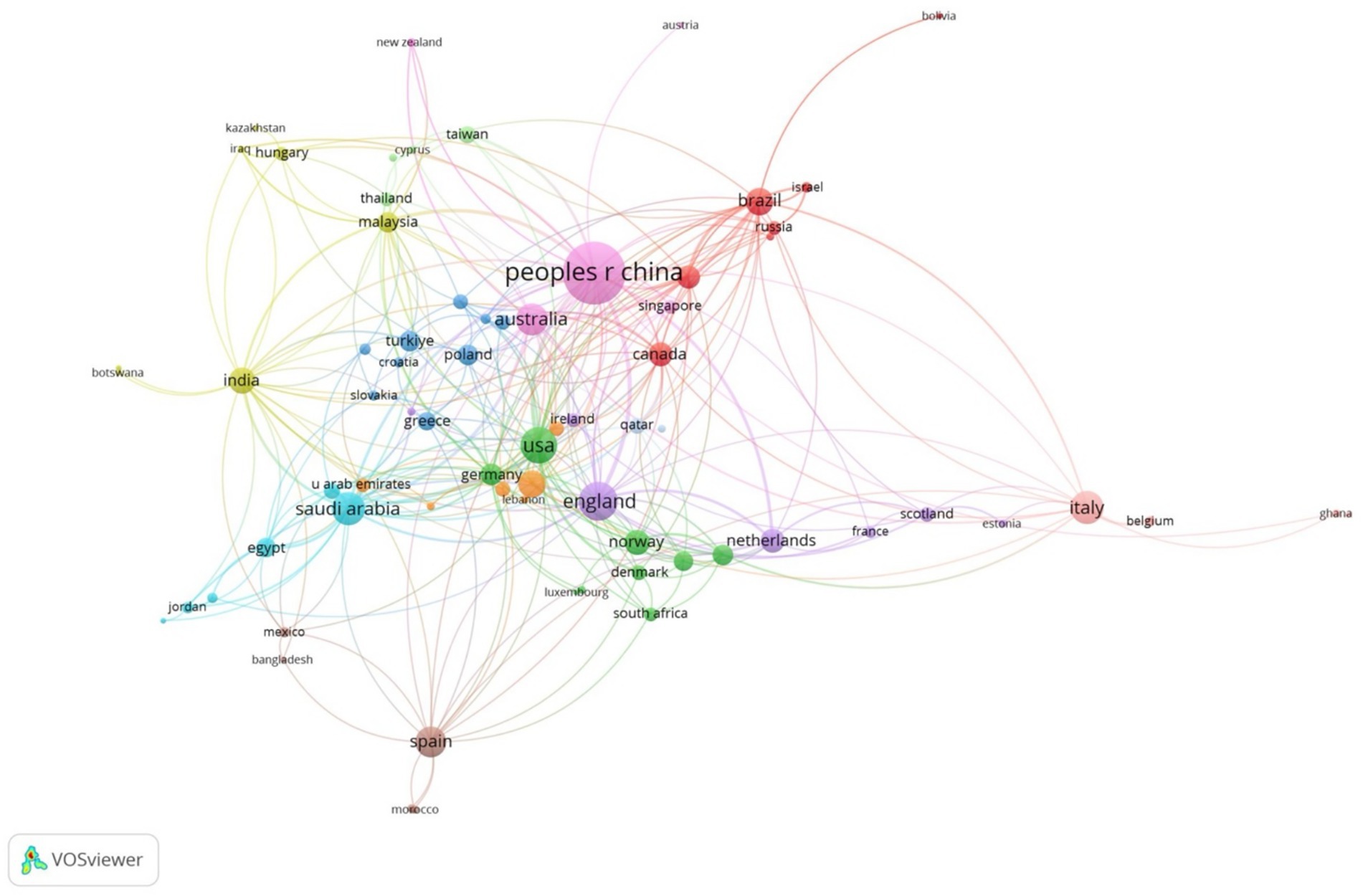
Figure 5. Co-authorship Network visualization.
We further provide country-wise research contributions in descending order (Table 3). This also helps identify how country-wise research output may impact individual research collaborations (Liu and Chen, 2012). We also disclose that the scientific research contribution for China, England, Norway, and Spain in recent years significantly differs from countries such as Italy, Australia, and the USA. Our through investigation within co-author visualization allows us to determine that academic research within developing economies such as China, Saudi Arabia, Brazil, India and Malaysia has mainly analyzed policy formulation and their relevance within global south whereas research within England, USA, Australia, Germany and Canada has attempted to explain how urban policy benchmarks help strengthen shifts from contemporary urbanization to smart and sustainable transition.
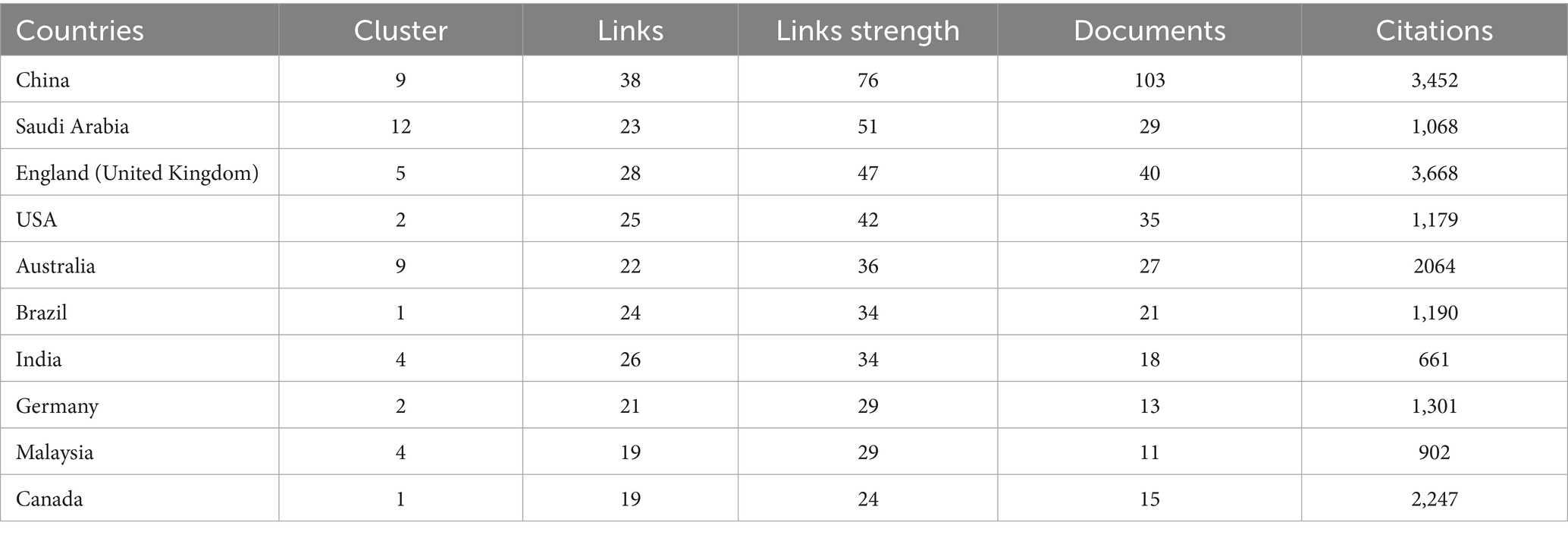
Table 3. Co-authorship visualization (Countries).
3.5 Authors/co-citations
In the current section, we examine individual research contributions, co-authorship, most productive authors, and co-citation analysis. Figure 6 analyzes individual research output related to ‘smart cities’, while Table 4 details further research indicators. The current study conducts a close inspection of the information below to articulate that Bibri and Yigitcanlar have played the most significant role in the academic literature than most researchers by resolving differences within smart city governance, AI within urban sustainability, sustainable energy within smart cities, and policy components within data-driven smart sustainable cities. While Kamruzzaman, Krogstie, and Marsal-llacuna have allowed academic advancements by focusing on ‘smart cities’ policy vision, sustainable urban initiatives, socio-technological dimensions, and addressing policy limitations within the scope of developing economies. We attribute the role of the above-mentioned researchers to the highest average publication years, which is reflected by their scientific and academic contributions in recent years.
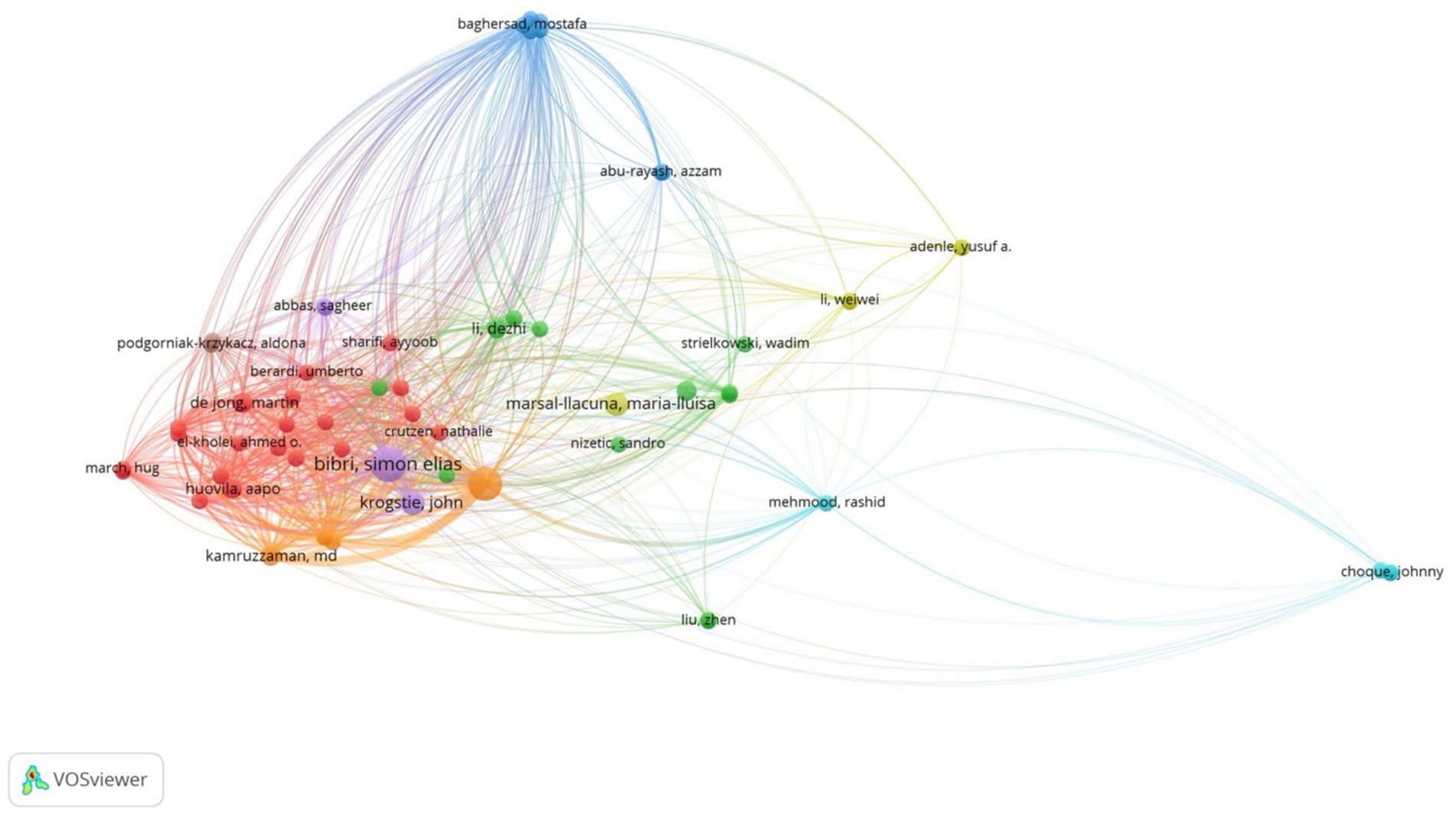
Figure 6. Network visualization of the most productive authors.
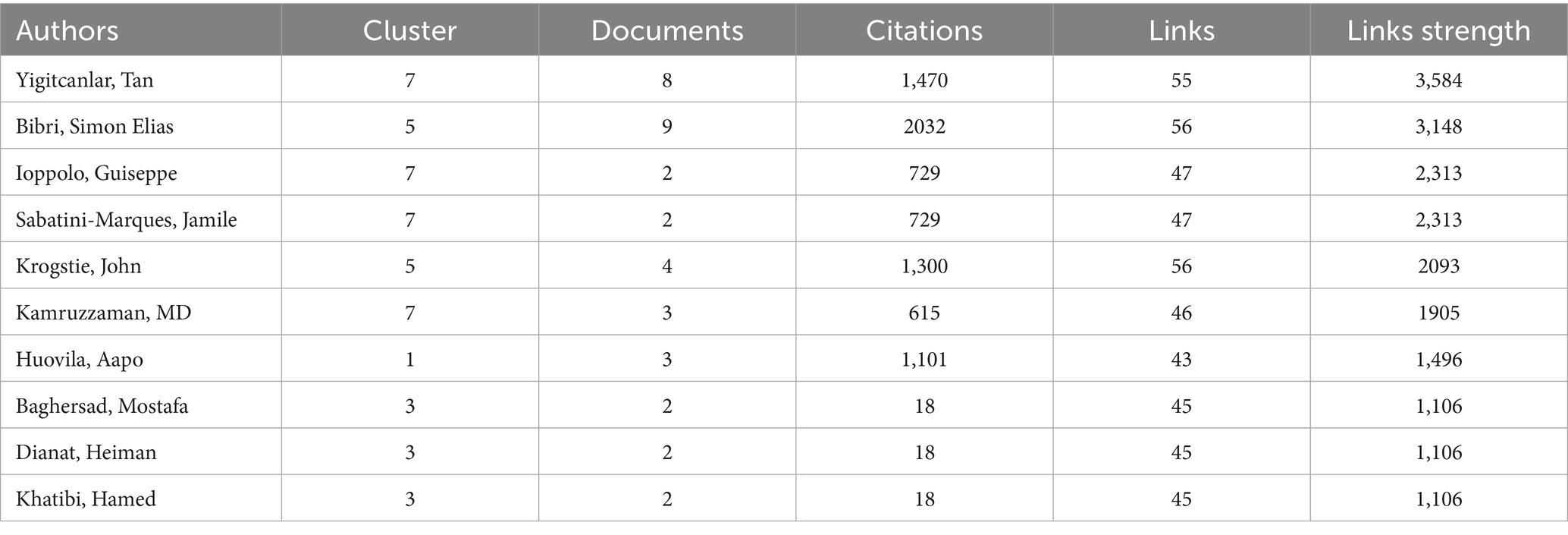
Table 4. Most productive researchers.
3.6 Co-authorship analysis
The current section allows us to provide a detailed assessment of individual co-authorship; for this, we use total co-authored documents as the main evaluation criterion. Figure 7 illustrates coauthor analysis, which can be divided into six main clusters. Bibri has published most research papers within the sampled dataset, while Yigitcanlar coauthored eight research articles. Whereas Kamruzzaman, Marsal-Llacuna, and Krogstie have further helped foster policy discussion within smart and sustainable cities within the dynamics of modern policy initiatives. Within the academic discussion, we provide citation assessment trends for individual authors. Bibri and Yigitcanlar have received the most citations within academic literature to extend theoretical and analytical research arguments with research publications in Sustainable Cities and Society, Cities, Journal of Cleaner Production, and Technological Forecasting and Social Change. Most of their research has attempted to analyze Sustainable development, Smart sustainable cities, Sustainable cities, Urban sustainability, the Internet of Things, and sustainable development goals within the context of analyzing urban environmental reforms and improving policy implications.
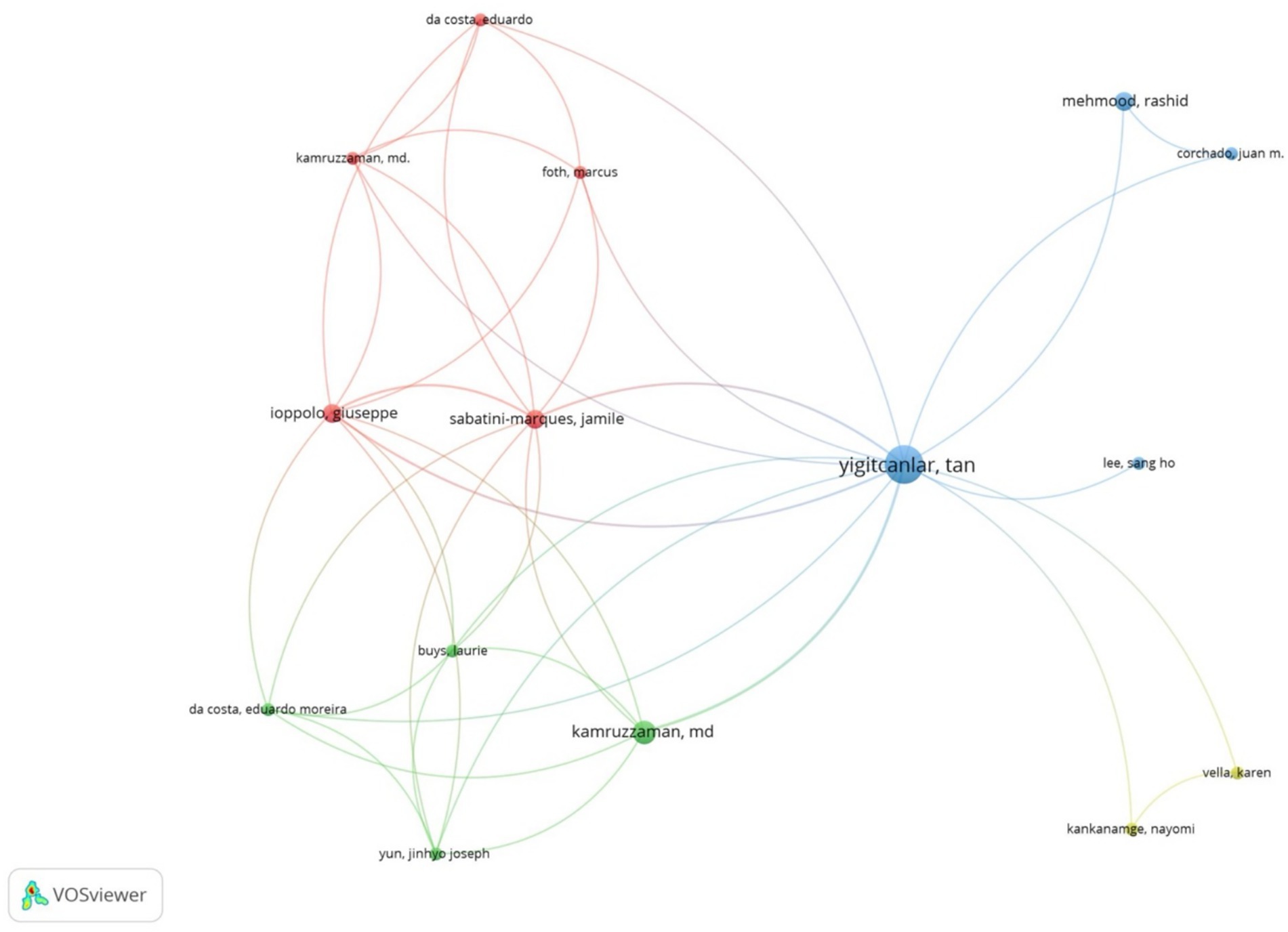
Figure 7. Network visualization of co-authorship.
3.7 Co-citation
Next, we analyze the co-citation trend to analyze the relatedness of academic research as a based criterion of studies cited in the same context. Figure 8 reveals that Bibri, Yigticanlar, Angelidou, and Krogsite are the most cited authors. From a citation evaluation perspective, the studies provided by these researchers have been crucial in extending how urban environmental management, reimagining how AI drives urban SDG compliance, IoT-based development process, ESG integration, and SSC vision against contemporary environmental reforms. While Marsal-llacuna, Huovila, Ahvenniemi, Airaksinen, and Barthel provide context within urban sustainable monitoring, low-carbon pilot cities, urban sustainable design, navigating policy pathways, and optimal indicator-based smart city development. Such theoretical developments have allowed researchers to identify the published studies from a multidisciplinary angle to analyze how ‘smart cities’ research can benefit from researchers working in distinct but similar research areas.
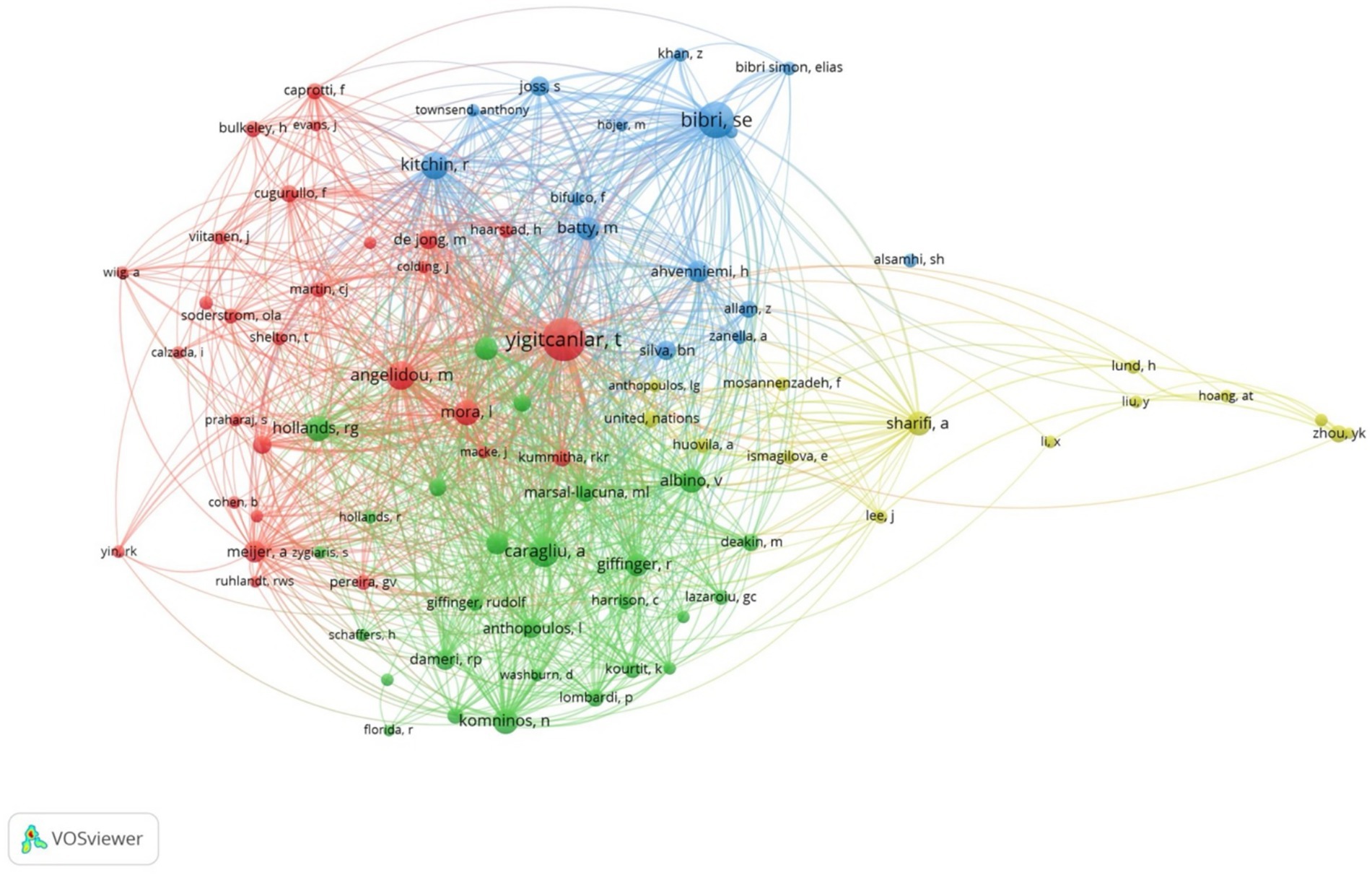
Figure 8. Network visualization of co-citation (authors).
3.8 Discussion of clusters
In this section, we use the VOS viewer software to classify the research publications into different clusters (Figure 9) and help report dominant research streams within each cluster. First, the current methodology used VIS viewer software to identify dominant research clusters with the aim to report key research directions. Subsequently, in order to provide an accurate theoretical debate, the current study further performed manual review to filter out conceptual viewpoints within each cluster, provide strong theoretical foundations and extend smart and sustainable urbanization debate. The current study has reported five key research cluster and provide details about cluster in a meaningful way where we further outline how each cluster and relevant research evolved within academic literature.
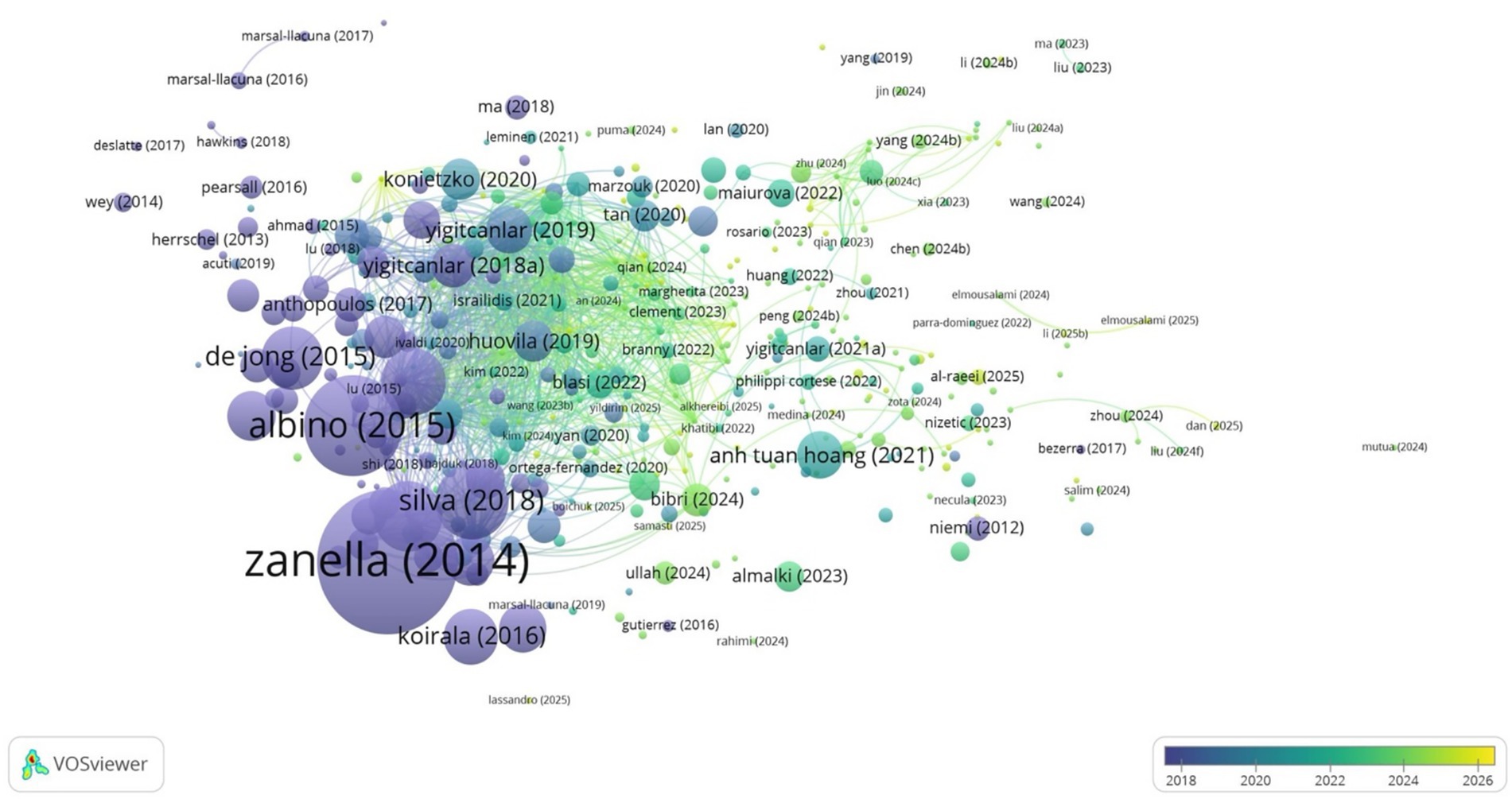
Figure 9. Visualization analysis of smart city publications.
3.8.1 The smartness of urban ecosystems, knowledge-based approaches, and nurturing urban sustainability
For the current sample size, the most dominant cluster reports on the smartness of urban ecosystems, knowledge-based approaches, and analyzing policy measures to nurture urban sustainability. The first section has focused on cultivating policy pathways to preserve urban ecosystems, as lasting smart urban ecosystems remain a key policy challenge for environmental policymakers. Within this theme of investigation, a section of contemporary literature has suggested that modern urban strategies must mandate a balanced approach involving bottom-up and top-down policy directives (Anthony, 2021). To ensure a synergetic impact, Allan et al. (2024) researched urban regeneration from an SDG 11 perspective to argue that the top-down intervention approach allows urban policymakers to design a multidisciplinary approach that affects participation behavior and resolves macro-level issues to avoid hindering urban operational capacity. Moreover, it also allows urban roadmap strategies to report participant interdependencies to foster information availability (Ali, 2024). In addition to integrating and supporting environmental, social, and economic decision-making evaluations (Beck et al., 2023), the top-down intervention approach, due to its multifaceted ability, can also be utilized to stimulate policy reaction from the urban ecosystem under smart city directives (Song et al., 2021). On the other hand, the bottom-up approach helps contextualize citizen needs within a smart urban ecosystem (Israilidis et al., 2021) by stressing how individuals’ contribution influences urban sustainability and growth (Ivaldi et al., 2020) as contemporary urban ecosystem requires collective governance consciousness in ensuring smart urbanization (Przeybilovicz and Cunha, 2024).
The second dominant section researched knowledge-based urban ecosystem and provided insights to articulate on delivering the conceptualization of ‘smart city’ into reality (Bittencourt et al., 2025). As Gupta et al. (2023) suggested that a complex knowledge-based ‘urban ecosystem’ involves concurrent involvement in value creation and network management practices; hence, a multi-level governance mechanism must encompass all stakeholders during knowledge sharing and decision-making to strengthen ‘urban smartness’. In extension, Wang et al. (2025) considered critical reflections within smart urbanization to stress that managing smart cities as an interconnected epicenter fosters information sharing within sustainable environment parameters. Likewise, Lee et al. (2025) suggested that a smart urban ecosystem aiming at integrating available resources and assets can foster collective smartness. On the other hand, Ibrahim et al. (2018) argued that an adaptive approach must be implemented to encourage participation to achieve positive outcomes, where ‘smart resources’ mobilization is key in progressing through systematic reforms (Branny et al., 2022; Zhang et al., 2022).
Lastly, another section of studies has reported on a key research theme that active urban resident participation within decision-making spurs urban smartness (Krúpová et al., 2025). Actually, citizen engagement is the most significant factor in the outcome of smart cities (Nukpezah et al., 2025) and is essential in establishing a modern urban ecosystem. This allowed Kuru and Ansell (2020) to determine that citizen engagement enables the wisdom of the crowd to create value cocreation and service co-creation. In fact, improper citizen participation bears negative consequences on the inclusiveness of smart urbanization as it triggers co-destruction in policymaking. Wataya and Shaw (2019) analyzed ‘smart urban dynamics’ within a modern development perspective to suggest that adopting a policy framework to introduce specificities within the development of smart cities through citizen participation can tackle economic and societal challenges (Michelotto and Joia, 2023). Such engagement can be direct, where it contributes to designing and executing sustainable urban practices (Raza and Reeves, 2024), or it can be passive, where individual behavior is accommodated to promote urban smartness (Wu and Chen, 2021). Yan et al. (2020) suggested that ‘smart’ urban development requires blockchain and the Internet of Things-based infrastructure to foster co-value processes and recontextualize value co-creation in the cyber-physical environment; however, such a situation can also be detrimental by increasing the gulf between advantaged and disadvantaged groups of society.
3.8.2 Data-driven urban smartness and governing sustainability practices
The second dominant cluster within SSC literature has focused on data-driven urban smartness, governing sustainability practices, and how it influences contemporary urbanization. Within this cluster, the most dominant research stream documented how data-driven ecosystems impact smart city developments. Conti et al. (2022) attempted to conceptualize the role of technological empowerment in reshaping smart urban dynamism to report that context-aware big data analytics can amalgamate functional, operational, spatiotemporal, spatial, infrastructural, and physical forms of smart urban systems. Furthermore, Boichuk et al. (2025) studied modern smart urbanization dynamics to report that datafication prioritization allows modern technology to consistently handle smart urban systems functions through mutual information exchanges (Gazzola et al., 2019). Another sub-section has documented the overall transformation of smart cities. Ma (2024) argued that providing access to computing and communication resources must be given priority as it will help consolidate policy formulation and data-driven governance mechanisms. Sharma and Kanwal (2023) stressed that higher interoperability and integrated innovative technologies can be used to bridge gaps within urban management and governance spheres (Kumar, 2024) as data-driven smart urbanism requires robust technological structures (Wu et al., 2021).
Another prominent topic examined governing urban sustainability processes to document that, from the organizational point of view, a configurational approach remains integral in designing smart urban structures (Vukovic and Nekhorosheva, 2022). Within this context, Yang et al. (2025) proposed two stages: first, design and provide an outline of smart urban systems, and then focus on how individuals within the society can impact the functioning of smart urbanism. The first stage, termed high-level, involves urban policies to identify core elements impacting smart urbanization (Hoang and Nguyen, 2021). Researchers (Blasi et al., 2022) have argued that identifying boundaries of smart urban strategies ensures that smart urbanism is non-equilibrium and ‘smart’ development is affected by self-similar mechanisms. Instead of delimiting smart urban contours, a high-level analysis must be prioritized to highlight distinguishable attributes (Raspotnik et al., 2020). The second stage within sustainability governance is the bottom-level stage, which is used to design co-governance models as a complex socio-technological system (Godnov et al., 2025). As the co-governance approach is non-static; hence, during the initiation stage, the focus is limited to cooperation strategies and strengthening urban actors via a transformational approach. Next, during the growth stage, the focus shifts toward goal setting to create cohesion within urban strategies and allows co-governance to document requirements within the smart urban functioning (Kinelski, 2022). During strategic policymaking, co-governance must be encouraged to help regulators foster resource and infrastructure sharing among sub-units of smart urban systems, as it is critical in steering collective and individual policy actions (Mendez et al., 2025).
3.8.3 Embedded greenness, politics of smart cities, and smart urbanization policies
The third cluster within SSC literature entails academic research about embedded greenness, smart city politics, and smart urbanization policies. Within these, a plethora of studies have identified greenness and sustainability as the two cornerstones of smart urbanization; however, embedding green solutions in smart urbanization can be challenging (Aleksandrov and Dybtsyna, 2024). Lu et al. (2018) studied policy barriers inhibiting the inclusion of ecological and environmental concerns in urban strategic plans that influence collaboration between different stakeholders, resource scarcity, and ambiguous policy goals for greenness in sustainable cities. Consequently, Weith et al. (2022) contended that ‘greening’ of smart urbanization is more of a myth than a reality by suggesting that embracing an individualistic approach hinders green solutions as it does not consider alternatives in addressing broader economic and social dynamics. This allowed Hsu et al. (2024) to indicate that excessive focus on economic, social, and environmental outcomes deters policy interventions to cope with complex economic-social-eco relationships within smart urban systems (Hsu et al., 2024). To resolve these differences, Javidroozi et al. (2023) proposed using meta-organization within collective knowledge, nourishing individuals, aggregating information, and connecting various stakeholders to strengthen the feasibility of green practices.
Another group of studies examined the politics of sustainable and smart urban atmospheres and their influences on modern urbanization. Choi and Song (2022) have suggested that urban smartness must be used to reinvent green urban growth, as in comparison to contemporary policy ideas, smart cities use efficient social services and high-level industries to create a more prosperous future. However, smart urbanism requires unprecedented policy challenges (Alizadeh and Sharifi, 2023) and may cause contradictions and ambiguities in contemporary policy approaches (Snow et al., 2016). Such policy differences allowed Sanada (2023) to debate whether or not smart cities must be re-politicized by reimagining the multifacetedness of smart urban policies. To solve this dilemma, Dzramado et al. (2024) suggested that the conjoint use of incrementalism and stakeholder engagement is critical in advancing smart urbanism. Likewise, D’Auria et al. (2018) supported tailored policy interventions to encourage stakeholder participation and establish long-term smart city policy discourse. Kim and Feng (2024), within the same research dynamics, stated that active exchanges and collaboration among different stakeholders help establish smart urban strategies as local interest groups foster compliance with smart urban strategies. On the other hand, Eichelberger et al. (2020) support policy measures to help avoid marginalizing and underrepresenting local interest groups as their active participation supplements successful smart city discourse (Eichelberger et al., 2020).
3.8.4 Smart urban ecosystems and citizen-centered approaches
The next group of studies has provided policy context in relation to managing smart urban ecosystems and how citizen-centered approaches lead to smart and sustainable urban growth. Among these studies, Addas (2023) monitored smart urban dynamism to suggest that smart urbanization requires nine horizontal layers in using an integration planning approach for management systems, tailored funding schemes, establishing communication protocols, knowledge sharing, and citizen-centeredness. Likewise, Colding et al. (2020) posited that a conventional bureaucratic approach can trigger poor convergence and institutional compartmentalization to have detrimental consequences for the ‘smart urban’ system. Alshuwaikhat et al. (2023) elaborated urban ecosystem to debate that integrated planning helps avoid policy struggles and encourages shareholder participation and knowledge sharing to identify distinguishable smart urban attributes. On the other hand, Shulajkovska et al. (2024) argued for managing a ‘smart city’ through a robust yet ever-evolving system, which allows the ‘smart urban system’ to maintain social and intellectual capital. Sareen (2021) opined that ‘smart urban’ knowledge sharing depends on pervasive big-data architecture so that ‘smart city’ systems can maintain information management, and communication standards can influence mutual policy exchanges and connections.
Haksevenler et al. (2025) furthered the discussion for urban ecosystems and citizen-centered approaches to stress that tailored urban policies facilitate policy exchanges underpinning policy competitiveness by aligning ‘urban actors’ with sustainable practices. Sameer et al. (2024) analyzed a citizen-centric approach to reported that such a shift requires institutional and financial tools to ensure operational feasibility and lay the foundations for autonomous revenue streams. Lastly, Büttner and Kress (2025) further debated ‘smart urban’ adaptation to mention that the ‘smart urban’ approach must emphasize on ‘smart urbanization process’ to ensure successful outcomes. A key section of studies reported on smart urban policymaking and its integration with ‘social sustainability’, environmental protection, and economic growth to boost ‘urban smartness’ (Ziosi et al., 2024). Considering this allowed contemporary research (Bruneckienė et al., 2023) to note that smart citizenship delimits constitutive practices through citizen participation, as modern urbanization is centered around the following steps. First, standardization of rights and duties safeguards equal citizen participation within the urban ecosystem (Tomor et al., 2021). Next, individual urban identity is eliminated to foster ‘sense of participation’ and promotion of ‘urban smartness’ (Balashova et al., 2025). Lastly, dormant assets activation can be used to establish a self-nourishing cycle to achieve smart urbanization (Parks and Rohracher, 2019).
3.8.5 Self-fulfilling communities, co-creation, and co-production
The last section of available research has investigated the relevance of self-fulfilling communities to stress that although co-creation and co-production are two basic components of ‘smart cities’. However, these aspects tend to put excessive weight on how individual elements interact in the ‘smart urbanization’ transition. Thus, scholars such as Clement et al. (2023) suggested that these concepts fail to grasp the contribution of cohesive urban communities within ‘smart urban ecosystems’, which are critical to modern urban sustainability. This allowed Tan and Taeihagh (2020) to articulate that sustainable smartness requires community willingness to harness self-sustainable economic initiatives using crowdfunding to complement human capital. This process of co-generating and self-fulfilling communities involves: (a) introducing non-binding rules to formalize expected behavior and curb discretionary bureaucratic power; (b) promoting urban vision to create a sense of territorial identity and engage community members in urban development; (c) fostering collective innovation spirit through community empowerment; (d) improve available platforms to establish ‘smart urban’ ecosystem and ensure community participation; (e) forecasting behavior patterns to improve integration and collaboration and (f) allow further improvement through community assessment and participation in ‘smart cities’ (Mosannenzadeh et al., 2017; Silva et al., 2018; Tascikaraoglu, 2018).
4 Conclusion and policy suggestions
The current study reviews academic literature to study the development of smart and sustainable cities. As part of our investigation, this study articulates findings from 409 published studies to further illustrate the concept of ‘smart and sustainable city’, what is required to succeed, and the sustainable development implications. In order to provide novel insights, this current study adopts an integrated review process to indicate that ‘smart cities’ pose a policy dilemma as they require adopting a holistic approach by integrating ad-hoc technologies as a policy solution. The critique of available literature on ‘smart cities’ through our systematic review provides useful references for practitioners and scholars, and related material to planners, policymakers, and urban administrators to overcome major hurdles related to sustainable and smart cities. These issues, but not limited to, slow down policy formulation and implementation: (1) to refrain from the obsession of technocentrism from the continuous obsession of technological solutions, (2) overcome long-term issues, including sustainability challenges within urban management, development, and planning practices (3) achieve desired policy outcomes to overcome conceptualization flaws that bring together approaches, domains, concepts and theories as essential elements that uncover the big picture.
In order to resolve contemporary SSC challenges, modern urbanization should adopt key policy reforms so that modern ‘smart cities’ achieve a post-anthropocentric stage to supplement urban sustainability. While there is an emphasis on citizen engagement and participation to increase the involvement of marginalized citizens, the current study proposes aligning human-centric principles with urban technological infrastructure to foster inclusivity through citizen engagement. Furthermore, participatory governance and open-data platform models are essential in active citizen participation and establish intelligent urban environments that also address evolving urban communal needs. Such diverse policy action will empower residents in defining the contemporary technological landscape. Additionally, the current study encourages broader entanglements between humans and ecological components to push smart cities toward a circular economic model where post-anthropocentric focus within SSC will encourage urban policymakers to comply with policies like Utrecht (Netherlands) and Banff (Canada) to ensure wildlife diversity; China’s “Sponge City” initiative mimics ecosystem functions in using green urban infrastructure in solving water infiltration issues and adopt urban carnivore management regulations like Mumbai and Chicago.
In addition to the aforementioned discussion, the current study also shares some research questions and potential opportunities to overcome key research limitations. First, it is important that while addressing technocentricity, policymakers can adopt a multifaceted pathway by collaboratively developing cohesive smart technological infrastructure to reflect community needs. In addition, proactive stakeholder and strategic management collaboration serve as socio-technical platforms to resolve contemporary urban issues inclusively. Second, regarding practice complexity, the urban policy must engage offerings from complexity science in the decision-making process. This will also allow policymakers to address “whether future smart cities will be able to solve current manageable complexities.” Third, regarding ad-hoc conceptualization, policymakers need to concentrate on: how will urban designers and planners convince the general public of a post-anthropocentric urban scenario? If so, how will communities, academia, and the general public embrace a more-than-human future? In theory, developing sustainable and smart cities provides an opportunity to ensure sustainable development progress where envirocentric and technocentric views strengthen the post-anthropocentric urbanism scenario. Nonetheless, urban transformation based on ecological human settlement theory and the theory of change can pave the way toward smart and sustainable cities.
In addition to addressing questions raised by the current study, we propose that prospective studies continue to focus on two major policy fronts. First, there is a need to systematically explore conceptualization and empirical investigations into sustainable and smart cities within the scope of the modern Anthropocene. Second, researchers need to reimagine 21st-century urbanization to understand key attributes and the nature of post-anthropocene urbanism, which will help create more than human or truly sustainable and smart cities. Overcoming these deficiencies will provide novel solutions to issues related to modern urbanization. Lastly, future research can acknowledge inherent subjectivity and literature accessibility by resolving strategic validation and source expansion across diverse contexts to diverse SSC disclosure.
Data availability statement
The raw data supporting the conclusions of this article will be made available by the authors, without undue reservation.
Author contributions
MuB: Writing – review & editing, Methodology, Formal analysis, Writing – original draft, Investigation, Resources, Conceptualization, Validation, Visualization, Project administration. WR: Data curation, Writing – original draft, Writing – review & editing, Visualization, Funding acquisition, Validation. AA: Resources, Funding acquisition, Writing – review & editing, Project administration, Writing – original draft. MaB: Writing – review & editing, Methodology, Formal analysis, Writing – original draft, Conceptualization.
Funding
The author(s) declare that financial support was received for the research and/or publication of this article. The Researchers would like to thank the Deanship of Graduate Studies and Scientific Research at Qassim University for financial support (QU-APC-2025).
Conflict of interest
The authors declare that the research was conducted in the absence of any commercial or financial relationships that could be construed as a potential conflict of interest.
Generative AI statement
The authors declare that no Gen AI was used in the creation of this manuscript.
Any alternative text (alt text) provided alongside figures in this article has been generated by Frontiers with the support of artificial intelligence and reasonable efforts have been made to ensure accuracy, including review by the authors wherever possible. If you identify any issues, please contact us.
Publisher’s note
All claims expressed in this article are solely those of the authors and do not necessarily represent those of their affiliated organizations, or those of the publisher, the editors and the reviewers. Any product that may be evaluated in this article, or claim that may be made by its manufacturer, is not guaranteed or endorsed by the publisher.
References
Addas, A. (2023). The concept of smart cities: a sustainability aspect for future urban development based on different cities. Front. Environ. Sci. 11. doi: 10.3389/fenvs.2023.1241593
Aleksandrov, E., and Dybtsyna, E. (2024). Smart cities for a sustainable Arctic? Introducing critical debate. Polar Geogr. 47, 106–126. doi: 10.1080/1088937X.2024.2351496
Ali, J. (2024). Integration of smart cities technologies for future urban development planning. Nat. Res. Forum 49, 3637–3653. doi: 10.1111/1477-8947.12541
Alizadeh, H., and Sharifi, A. (2023). Societal smart city: definition and principles for post-pandemic urban policy and practice. Cities 134:104207. doi: 10.1016/j.cities.2023.104207
Aljohani, A. (2024). Deep learning-based optimization of energy utilization in IoT-enabled smart cities: a pathway to sustainable development. Energy Rep. 12, 2946–2957. doi: 10.1016/j.egyr.2024.08.075
Allan, M., Rajabifard, A., and Foliente, G. (2024). Climate resilient urban regeneration and SDG 11 – stakeholders’ view on pathways and digital infrastructures. Int. J. Digit. Earth 17:2385076. doi: 10.1080/17538947.2024.2385076
Al-Raeei, M. (2025). The smart future for sustainable development: artificial intelligence solutions for sustainable urbanization. Sustain. Dev. 33, 508–517. doi: 10.1002/sd.3131
Alshuwaikhat, H. M., Adenle, Y. A., and Alotaishan, T. N. (2023). The development of a grey relational analysis-based composite index for environmental sustainability assessment: Towards a net-zero emissions strategy in Saudi Arabia. Heliyon 9:e18192. doi: 10.1016/j.heliyon.2023.e18192
Anthony, B. (2021). A case-based reasoning recommender system for sustainable smart city development. AI Soc. 36, 159–183. doi: 10.1007/s00146-020-00984-2
Aziz, K. M. A., Daoud, A. O., Singh, A. K., and Alhusban, M. (2025). Integrating digital mapping technologies in urban development: advancing sustainable and resilient infrastructure for SDG 9 achievement – a systematic review. Alex. Eng. J. 116, 512–524. doi: 10.1016/j.aej.2024.12.078
Balashova, S. A., Reshetnikova, M. S., Kadrov, V. M., Vasilieva, G. A., and Rogozhina, N. A. (2025). A sustainable path to Modernization: Transforming African cities. Unconv. Resour. 7:100194. doi: 10.1016/j.uncres.2025.100194
Barbieri, R., Coluccia, B., and Natale, F. (2025). How are smart city policies progressing in Italy? Insights from SDG indicators. Land Use Policy 148:107386. doi: 10.1016/j.landusepol.2024.107386
Bashir, M. F. (2022a). Oil price shocks, stock market returns, and volatility spillovers: a bibliometric analysis and its implications. Environ. Sci. Pollut. Res. 29, 22809–22828. doi: 10.1007/s11356-021-18314-4
Bashir, M. F. (2022b). Discovering the evolution of pollution haven hypothesis: a literature review and future research agenda. Environ. Sci. Pollut. Res. 29, 48210–48232. doi: 10.1007/s11356-022-20782-1
Beck, D., Ferasso, M., Storopoli, J., and Vigoda-Gadot, E. (2023). Achieving the sustainable development goals through stakeholder value creation: building up smart sustainable cities and communities. J. Clean. Prod. 399:136501. doi: 10.1016/j.jclepro.2023.136501
Beckers, D., and Mora, L. (2025). Overcoming the smart city governance challenge: an innovation management perspective. J. Urban Technol. 32, 85–106. doi: 10.1080/10630732.2025.2461983
Bittencourt, J. C. N., Costa, D. G., Portugal, P., Peixoto, M. L. M., and Vasques, F. (2025). On the spatiotemporal knowledge-driven vulnerability assessment of urban areas: a clustering-based approach. Int. J. Disaster Risk Reduct. 127:105681. doi: 10.1016/j.ijdrr.2025.105681
Blasi, S., Ganzaroli, A., and De Noni, I. (2022). Smartening sustainable development in cities: strengthening the theoretical linkage between smart cities and SDGs. Sustain. Cities Soc. 80:103793. doi: 10.1016/j.scs.2022.103793
Boichuk, N., Pisz, I., Bruska, A., Kauf, S., and Wyrwich-Płotka, S. (2025). Exploring the role of industry 4.0 technologies in smart city evolution: a literature-based study. Sustainability 17:7024. doi: 10.3390/su17157024
Branny, A., Møller, M. S., Korpilo, S., McPhearson, T., Gulsrud, N., Olafsson, A. S., et al. (2022). Smarter greener cities through a social-ecological-technological systems approach. Curr. Opin. Environ. Sustain. 55:101168. doi: 10.1016/j.cosust.2022.101168
Bruneckienė, J., Rapsikevičius, J., Lukauskas, M., Zykienė, I., and Jucevičius, R. (2023). Smart economic development patterns in Europe: interaction with competitiveness. Compet. Rev: Int. Bus. J. 33, 302–331. doi: 10.1108/CR-02-2021-0026
Büttner, L., and Kress, N. (2025). R(e)defining the smart city at national level? Coexisting narratives of urban sustainability governance in Germany. Urban Stud. 62, 1584–1600. doi: 10.1177/00420980241295935
Cervantes Puma, G. C., Salles, A., and Bragança, L. (2024). Nexus between urban circular economies and sustainable development goals: a systematic literature review. Sustainability 16:2500. doi: 10.3390/su16062500
Choi, H.-S., and Song, S.-K. (2022). Direction for a transition toward smart sustainable cities based on the diagnosis of smart city plans. Smart Cities 6, 156–178. doi: 10.3390/smartcities6010009
Clement, J., Ruysschaert, B., and Crutzen, N. (2023). Smart city strategies – a driver for the localization of the sustainable development goals? Ecol. Econ. 213:107941. doi: 10.1016/j.ecolecon.2023.107941
Colding, J., Colding, M., and Barthel, S. (2020). The smart city model: a new panacea for urban sustainability or unmanageable complexity? Environ. Plann. B Urban Anal. City Sci. 47, 179–187. doi: 10.1177/2399808318763164
Conti, D. d. M., Camata, S. D. d. S., Sartori, S. V., and Bettini, M. M. (2022). Innovation and sustainable development of smart cities. J Innovation Sustainability RISUS 13, 32–44. doi: 10.23925/2179-3565.2022v13i4p32-44
Corrente, S., Ingrao, C., Punzo, A., and Matarazzo, A. (2023). Evaluating citizens’ satisfaction on the urban environmental management through a multi-criteria approach: an application experience in Sicily. Environ. Impact Assess. Rev. 99:107029. doi: 10.1016/j.eiar.2022.107029
D’Auria, A., Tregua, M., and Vallejo-Martos, M. C. (2018). Modern conceptions of cities as smart and sustainable and their commonalities. Sustainability 10:2642. doi: 10.3390/su10082642
Dan, Z., Zhou, B., and Zhou, Y. (2025). Optimal infrastructures and integrative energy networks for sustainable and energy-resilient city renaissance. Appl. Energy 387:125612. doi: 10.1016/j.apenergy.2025.125612
Dong, Z., Shen, H., Zhang, W., Wu, R., and Wang, S. (2022). How does resource dependence relate cities’ technology diversification? The role of density and complexity. Cities 130:103883. doi: 10.1016/j.cities.2022.103883
Dzramado, E. D., Asiedu, R. O., Owusu-Manu, D.-G., Edwards, D. J., Adesi, M., and Acheampong, A. (2024). Exploring the socioeconomic factors affecting green cities development. Smart Sustain. Built Environ. doi: 10.1108/SASBE-01-2024-0018
Eichelberger, S., Peters, M., Pikkemaat, B., and Chan, C.-S. (2020). Entrepreneurial ecosystems in smart cities for tourism development: from stakeholder perceptions to regional tourism policy implications. J. Hosp. Tour. Manag. 45, 319–329. doi: 10.1016/j.jhtm.2020.06.011
Gazzola, P., Del Campo, A. G., and Onyango, V. (2019). Going green vs going smart for sustainable development: quo vadis? J. Clean. Prod. 214, 881–892. doi: 10.1016/j.jclepro.2018.12.234
Godnov, U., Hojnik, J., and Kustec, S. (2025). Mapping the evolution of social innovation in scientific publications: a topic modelling and text mining approach. Organ 58, 267–282. doi: 10.2478/orga-2025-0016
Gupta, A., Panagiotopoulos, P., and Bowen, F. (2023). Developing capabilities in smart city ecosystems: a multi-level approach. Organ. Stud. 44, 1703–1724. doi: 10.1177/01708406231164114
Haksevenler, B. H. G., Senk, B., Segul, Z., and Sorhun, E. (2025). Developing a framework for a sustainable city index: A comprehensive approach to urban sustainability. Sustain Cities Soc. 130, 106669. doi: 10.1016/j.scs.2025.106669
Hoang, A. T., and Nguyen, X. P. (2021). Integrating renewable sources into energy system for smart city as a sagacious strategy towards clean and sustainable process. J. Clean. Prod. 305:127161. doi: 10.1016/j.jclepro.2021.127161
Hsu, A., Lili, L., Schletz, M., and Yu, Z. (2024). Chinese cities as digital environmental governance innovators: evidence from subnational low-carbon plans. Environ. Plann. B Urban Anal. City Sci. 51, 572–589. doi: 10.1177/23998083231186622
Huang, G., Li, D., Yu, L., Yang, D., and Wang, Y. (2022). Factors affecting sustainability of smart city services in China: from the perspective of citizens’ sense of gain. Habitat Int. 128:102645. doi: 10.1016/j.habitatint.2022.102645
Ibrahim, M., El-Zaart, A., and Adams, C. (2018). Smart sustainable cities roadmap: readiness for transformation towards urban sustainability. Sustain. Cities Soc. 37, 530–540. doi: 10.1016/j.scs.2017.10.008
Ingwersen, P., and Serrano-López, A. E. (2018). Smart city research 1990–2016. Scientometrics 117, 1205–1236. doi: 10.1007/s11192-018-2901-9
Israilidis, J., Odusanya, K., and Mazhar, M. U. (2021). Exploring knowledge management perspectives in smart city research: a review and future research agenda. Int. J. Inf. Manag. 56:101989. doi: 10.1016/j.ijinfomgt.2019.07.015
Ivaldi, E., Penco, L., Isola, G., and Musso, E. (2020). Smart sustainable cities and the urban knowledge-based economy: a NUTS3 level analysis. Soc. Indic. Res. 150, 45–72. doi: 10.1007/s11205-020-02292-0
Javidroozi, V., Carter, C., Grace, M., and Shah, H. (2023). Smart, sustainable, green cities: a state-of-the-art review. Sustainability 15:5353. doi: 10.3390/su15065353
Kim, J. S., and Feng, Y. (2024). Understanding complex viewpoints in smart sustainable cities: the experience of Suzhou, China. Cities 147:104832. doi: 10.1016/j.cities.2024.104832
Kinelski, G. (2022). Smart-city trends in the environment of sustainability as support for decarbonization processes. Polit. Energ. - Energy Policy J. 25, 109–136. doi: 10.33223/epj/149739
Krúpová, S., Koman, G., Soviar, J., and Holubčík, M. (2025). The role of business models in smart-city waste management: a framework for sustainable decision-making. Systems 13:556. doi: 10.3390/systems13070556
Kumar, A. (2024). A novel framework for waste management in smart city transformation with industry 4.0 technologies. Res. Glob. 9:100234. doi: 10.1016/j.resglo.2024.100234
Kuru, K., and Ansell, D. (2020). TCitySmartF: a comprehensive systematic framework for transforming cities into smart cities. IEEE Access 8, 18615–18644. doi: 10.1109/ACCESS.2020.2967777
Lee, Y., Han, S., and Cho, Y. (2025). Navigating the path to smart and sustainable cities: insights from South Korea’s National Strategic Smart City Program. Land 14:928. doi: 10.3390/land14050928
Lei, J., Lin, S., Khan, M. R., Xie, S., Sadiq, M., Ali, R., et al. (2022). Research trends of board characteristics and firms’ environmental performance: research directions and agenda. Sustainability 14:14296. doi: 10.3390/su142114296
Leminen, S., Rajahonka, M., Westerlund, M., and Hossain, M. (2021). Collaborative innovation for sustainability in Nordic cities. J. Clean. Prod. 328:129549. doi: 10.1016/j.jclepro.2021.129549
Liu, S., and Chen, C. (2012). The proximity of co-citation. Scientometrics 91, 495–511. doi: 10.1007/s11192-011-0575-7
Lu, H., de Jong, M., and ten Heuvelhof, E. (2018). Explaining the variety in smart eco city development in China-what policy network theory can teach us about overcoming barriers in implementation? J. Clean. Prod. 196, 135–149. doi: 10.1016/j.jclepro.2018.05.266
Ma, B., Farhan Bashir, M., Peng, X., Strielkowski, W., and Kirikkaleli, D. (2023a). Analyzing research trends of universities’ carbon footprint: an integrated review. Gondwana Res. 121, 259–275. doi: 10.1016/j.gr.2023.05.008
Ma, B., Lin, S., Bashir, M. F., Sun, H., and Zafar, M. (2023b). Revisiting the role of firm-level carbon disclosure in sustainable development goals: research agenda and policy implications. Gondwana Res. 117, 230–242. doi: 10.1016/j.gr.2023.02.002
Ma, M. (2024). Smart urban progress as a tool to assess urban and environmental sustainability: a case study of Zhenjiang, China. Int. J. Low-Carbon Technol. 19, 1850–1863. doi: 10.1093/ijlct/ctae121
Mendez, A. V., Santos, J. L., and Vargas, J. F. J. (2025). Strategic socio-technical innovation in urban living labs: a framework for smart city evolution. Smart Cities 8:131. doi: 10.3390/smartcities8040131
Michelotto, F., and Joia, L. A. (2023). Unveiling the smart city concept: perspectives from an emerging market via the social representation theory. Sustainability 15:8155. doi: 10.3390/su15108155
Mosannenzadeh, F., Bisello, A., Diamantini, C., Stellin, G., and Vettorato, D. (2017). A case-based learning methodology to predict barriers to implementation of smart and sustainable urban energy projects. Cities 60, 28–36. doi: 10.1016/j.cities.2016.07.007
Nukpezah, J. A., Apalowo, J. T., and Abutabenjeh, S. (2025). Why do cities go smart? Investigating the determinants of local engagement with smart cities technologies. Cities 163:106036. doi: 10.1016/j.cities.2025.106036
Oikonomaki, E., Papadaki, I., and Kakderi, C. (2024). Promoting green transformations through smart engagement: an assessment of 100 citizen-led urban greening projects. Land 13:556. doi: 10.3390/land13040556
Parks, D., and Rohracher, H. (2019). From sustainable to smart: re-branding or re-assembling urban energy infrastructure? Geoforum 100, 51–59. doi: 10.1016/j.geoforum.2019.02.012
Przeybilovicz, E., and Cunha, M. A. (2024). Governing in the digital age: the emergence of dynamic smart urban governance modes. Gov. Inf. Q. 41:101907. doi: 10.1016/j.giq.2023.101907
Puppim de Oliveira, J. A., Bellezoni, R. A., Shih, W., and Bayulken, B. (2022). Innovations in urban green and blue infrastructure: tackling local and global challenges in cities. J. Clean. Prod. 362:132355. doi: 10.1016/j.jclepro.2022.132355
Raspotnik, A., Grønning, R., and Herrmann, V. S. (2020). A tale of three cities: the concept of smart sustainable cities for the Arctic. Polar Geogr. 43, 64–87. doi: 10.1080/1088937X.2020.1713546
Raza, S. S., and Reeves, E. (2024). Starting from scratch: the articulated development of a smart city in Limerick, Ireland. Sustainability 16:11157. doi: 10.3390/su162411157
Samasti, M., Cakmak, E., and Ozpinar, A. (2025). Strategic classification of smart city strategies in developing countries. Eng. Sci. Technol. Int. J. 61:101936. doi: 10.1016/j.jestch.2024.101936
Sameer, N., Alalouch, C., Al-Saadi, S., and Saleh, M. S. (2024). Toward smart sustainable cities: assessment of stakeholders’ readiness for digital participatory planning. Archnet-IJAR Int. J. Archit. Res. 18, 914–936. doi: 10.1108/ARCH-06-2023-0159
Sanada, K. (2023). Smart cities in Japan and the EU: in search of structural focal points in respective policy development. Trames J. Humanit. Soc. Sci. 27, 291–310. doi: 10.3176/tr.2023.3.06
Sareen, S. (2021). Digitalisation and social inclusion in multi-scalar smart energy transitions. Energy. Res. Soc. Sci. 81, 102251. doi: 10.1016/j.erss.2021.102251
Shang, H., Jiang, L., Pan, X., and Pan, X. (2022). Green technology innovation spillover effect and urban eco-efficiency convergence: evidence from Chinese cities. Energy Econ. 114:106307. doi: 10.1016/j.eneco.2022.106307
Sharma, H., and Kanwal, N. (2023). Smart cities: a worldwide journey into intelligent urbanism and state-of-the-art technologies. Sci. Tech. Inf. Process. 50, 328–355. doi: 10.3103/S0147688223040081
Shulajkovska, M., Smerkol, M., Noveski, G., and Gams, M. (2024). Enhancing Urban Sustainability: Developing an Open-Source AI Framework for Smart Cities. Smart Cities 7, 2670–2701. doi: 10.3390/smartcities7050104
Silva, B. N., Khan, M., and Han, K. (2018). Towards sustainable smart cities: a review of trends, architectures, components, and open challenges in smart cities. Sustain. Cities Soc. 38, 697–713. doi: 10.1016/j.scs.2018.01.053
Snow, C. C., Håkonsson, D. D., and Obel, B. (2016). A smart city is a collaborative community: lessons from smart Aarhus. Calif. Manag. Rev. 59, 92–108. doi: 10.1177/0008125616683954
Song, T., Cai, J., Chahine, T., and Li, L. (2021). Towards smart cities by internet of things (IoT)—a silent revolution in China. J. Knowl. Econ. 12, 1–17. doi: 10.1007/s13132-017-0493-x
Tan, S., and Taeihagh, A. (2020). Smart city governance in developing countries: a systematic literature review. Sustainability 12:899. doi: 10.3390/su12030899
Tascikaraoglu, A. (2018). Evaluation of spatio-temporal forecasting methods in various smart city applications. Renew. Sust. Energ. Rev. 82, 424–435. doi: 10.1016/j.rser.2017.09.078
Tomor, Z., Przeybilovicz, E., and Leleux, C. (2021). Smart governance in institutional context: An in-depth analysis of Glasgow, Utrecht, and Curitiba. Cities 114, 103195. doi: 10.1016/j.cities.2021.103195
Vukovic, N. A., and Nekhorosheva, D. E. (2022). Renewable energy in smart cities: challenges and opportunities by the case study of Russia. Smart Cities 5, 1208–1228. doi: 10.3390/smartcities5040061
Wang, H.-J. (2023). Smart city branding vision: multiple stakeholder perspectives. Innovation, 1–25. doi: 10.1080/13511610.2023.2296384
Wang, L., Li, J., Cen, W., and Feng, W. (2025). Governing sustainable smart cities supported by city information modelling: a bibliometric analysis and systematic review. J. Asian Archit. Build. Eng. 24, 4433–4451. doi: 10.1080/13467581.2024.2399680
Wataya, E., and Shaw, R. (2019). Measuring the value and the role of soft assets in smart city development. Cities 94, 106–115. doi: 10.1016/j.cities.2019.04.019
Weith, T., Prossek, A., Weddige, U., Gütte, A., and Zscheischler, J. (2022). Mehr als smarte Technik: ein konzeptioneller Rahmen zu “Smart Countryside”. Raumforschung und Raumordnung 80, 296–313. doi: 10.14512/rur.127
Wu, M., Guo, M., and Xu, J. (2024). The influence of smart city policy on urban green energy efficiency -- a quasi-natural experiment based on 196 cities. J. Clean. Prod. 449:141818. doi: 10.1016/j.jclepro.2024.141818
Wu, Y. J., and Chen, J.-C. (2021). A structured method for smart city project selection. Int. J. Inf. Manag. 56:101981. doi: 10.1016/j.ijinfomgt.2019.07.007
Wu, Z., Jiang, M., Li, H., and Zhang, X. (2021). Mapping the knowledge domain of smart city development to urban sustainability: a scientometric study. J. Urban Technol. 28, 29–53. doi: 10.1080/10630732.2020.1777045
Xie, S., Bashir, M. F., Malik, M. N., and Makhmudov, S. (2025). Global value chains, renewable energy investments and mineral resources trade: implications for sustainable development goals in emerging economies. J. Environ. Manag. 394:127659. doi: 10.1016/j.jenvman.2025.127659
Yang, J., Zhu, Z., Kee, T., Xuan, Z., and Qin, S. (2025). Coupled evaluation and forecasting of smart city sustainability with Kolmogorov-Arnold networks. Environ. Sustain. Indic. 27:100783. doi: 10.1016/j.indic.2025.100783
Yan, J., Liu, J., and Tseng, F.-M. (2020). An evaluation system based on the self-organizing system framework of smart cities: a case study of smart transportation systems in China. Technol. Forecast. Soc. Change 153:119371. doi: 10.1016/j.techfore.2018.07.009
Zhang, D., Pee, L. G., Pan, S. L., and Cui, L. (2022). Big data analytics, resource orchestration, and digital sustainability: a case study of smart city development. Gov. Inf. Q. 39:101626. doi: 10.1016/j.giq.2021.101626
Zhou, Y. (2024). Low-carbon urban–rural modern energy systems with energy resilience under climate change and extreme events in China—a state-of-the-art review. Energ. Buildings 321:114661. doi: 10.1016/j.enbuild.2024.114661
Keywords: sustainable city, smart city, urbanization, sustainable development goals, post-anthropocentric city
Citation: Bashir MF, Ragmoun W, Abdulaziz A and Bashir M (2025) Analyzing sustainable urban development through smart and sustainable cities: an integrated review. Front. Sustain. Cities. 7:1685716. doi: 10.3389/frsc.2025.1685716
Edited by:
Leye Wang, Peking University, ChinaReviewed by:
Fay Alkhalifa, University of Bahrain, BahrainJiangjiang Shao, Korea University, Republic of Korea
Copyright © 2025 Bashir, Ragmoun, Abdulaziz and Bashir. This is an open-access article distributed under the terms of the Creative Commons Attribution License (CC BY). The use, distribution or reproduction in other forums is permitted, provided the original author(s) and the copyright owner(s) are credited and that the original publication in this journal is cited, in accordance with accepted academic practice. No use, distribution or reproduction is permitted which does not comply with these terms.
*Correspondence: Muhammad Farhan Bashir, ZmFyaGFuLnBha3M4OUBnbWFpbC5jb20=
†ORCID: Muhammad Farhan Bashir, orcid.org/0000-0001-5103-4639
Wided Ragmoun, orcid.org/0000-0002-8782-6782