 Veronika Jánová
 Marcus Herntrei
 Dana Fialová1
- 1Department of Social Geography and Regional Development, Faculty of Science, Charles University, Prague, Czechia
- 2European Campus Rottal-Inn, Deggendorf Institute of Technology, Pfarrkirchen, Germany
Amid increasing democratic vulnerabilities and eroding trust in public institutions, citizen participation has become a matter of paramount societal importance. This study presents the view that citizen participation is a foundational element of future-oriented destination governance, yet remains marginalized compared with its central positioning in the theory of regional governance. This disparity is traced to the disciplinary origins of destination governance, rooted primarily in the economic discourse with a short-term emphasis on competitiveness and market efficiency over long-term societal interests. The study examines the rationale for integrating citizen participation into destination governance through a narrative review and assesses the extent to which participatory processes enable meaningful citizen engagement through a systematic review of 59 studies, using Arnstein's Ladder of Citizen Participation as an underlying framework. Two complementary rationales are identified, corresponding to a socio-spatial perspective, which views destinations as dynamic living spaces shaped by interactions among local communities, visitors, and other stakeholders; and an economic perspective, which positions citizens as co-creators of tourism value and emphasizes the long-term potential of participation to enhance the effectiveness and efficiency of destination governance. Findings of the systematic review reveal that citizen participation remains largely tokenistic, without genuine redistribution of decision-making power. Participatory processes vary considerably in duration and design, spanning from one-time initiatives to institutionalized mechanisms embedded within governance structures. While the study provides an integrated understanding of citizen participation in destination governance, its scope is bounded by the nature of a systematic review. Advancing citizen participation in destination governance requires replacing rhetorical commitment with targeted power-sharing and transparent information flows, underpinned by political goodwill that enables local communities to responsibly co-determine the future development of destinations that simultaneously serve as their living spaces.
1 Introduction
The rising complexity of social systems, coupled with tendencies toward privatization and regionalization, has prompted the decentralization of authority from central governments to networks of public and private actors (Walters, 2004). The shift from “government to governance”—from hierarchical-bureaucratic control to cooperative arrangements involving private and civil society actors—reflects political responses to new demands on governing (Torfing and Sørensen, 2014), as hierarchy has increasingly been associated with inefficiency, information bottlenecks, and inflexibility (Howlett and Ramesh, 2014). Concurrently, declining public trust in representative institutions and growing democratic fragility, particularly in the United States and Europe (Citrin and Stoker, 2018), have elevated the relevance of citizen participation. As a social phenomenon, tourism mirrors these broader societal developments. Therefore, both the concept of governance and the role of citizen participation have become integral to scholarly discussions in tourism.
Citizen participation in tourism planning and decision-making has been emphasized in the literature (Haywood, 1988; Murphy, 1983) since the 1980s. However, it has not assumed a central position within destination governance. While regional governance has traditionally incorporated participatory approaches grounded in socio-political theory, destination governance has evolved within a market-oriented economic and managerial paradigm (Bieger and Beritelli, 2013; Pechlaner et al., 2015). Consequently, research on destination governance has consistently focused on private-sector networks and political-administrative actors (d'Angella et al., 2010), while local community wellbeing has been regarded as an efficiency disadvantage (Cracolici et al., 2006). In parallel, the growth-focused orientation of tourism policymakers and service providers has shaped the practice of destination governance, with success of the tourism industry measured primarily by visitor numbers (Dodds and Butler, 2019). Since widespread tourism-related public resistance emerged in 2017/2018, citizen participation has been increasingly recognized as a vital component of destination development in both governance research (Bichler, 2021) and policy discourse (Romão et al., 2023).
While existing research features case studies that assess citizen involvement in tourism planning and decision-making (Li et al., 2020; Mak et al., 2017; Pham et al., 2025), there has been limited thorough analysis and deeper synthesis of how participatory practices unfold across destination governance (Moscardo, 2018). To address this gap, a systematic review was conducted, guided by PRISMA 2020 and anchored in Arnstein's Ladder of Citizen Participation. This was preceded by a narrative review that explores the rationales for integrating citizen participation into destination governance.
Accordingly, the following research questions informed the study:
1) For what reasons should citizen participation be integrated into destination governance?
2) How are participatory processes implemented within destination governance and to what extent do they enable meaningful citizen engagement?
Two mutually reinforcing rationales for integrating citizen participation into destination governance are identified, reflecting a shift in how tourism destinations are conceptualized: a socio-spatial rationale and an economic rationale. The systematic review reveals the prevalence of tokenistic participatory practices, with limited redistribution of decision-making power.
The study is structured as follows: Chapter 2 establishes the theoretical foundation through a narrative review of governance and citizen participation, focusing on the divergent trajectories of regional and destination governance. Chapter 3 presents the systematic review, examining participatory processes in destination governance in practice. Chapter 4 offers concluding reflections and outlines directions for future research.
2 Integrating citizen participation into destination governance: conceptualization, rationales, and benefits
This chapter conceptualizes citizen participation in destination governance, with particular attention to the reasons for its integration and the associated benefits. It develops the theoretical foundation for the study through a narrative review of governance and participation literature, synthesizing conceptual traditions from regional and destination governance to explain why citizen participation should be integrated into destination governance.
2.1 On the concept of governance
Governance is a broad concept that encompasses the various forms and mechanisms through which collective and interdependent actions of actors and organizations are coordinated (Benz and Kilper, 2018). Despite strong theoretical underpinnings, the term remains notably imprecise. Empirical research on governance often relies on case studies that lack a unified conceptual framework, resulting in considerable variation in how governance is defined and understood (Ruhanen et al., 2010). As Rhodes (1996) aptly notes, governance is characterized by such an overabundance of meanings that it risks becoming analytically redundant.
Each academic discipline has adapted governance to align with its specific research focus, giving rise to subfields such as corporate, political, regional, and destination governance (Kötter, 2002). In corporate governance, the seminal Cadbury Report refers to governance as the system by which companies are managed and regulated (Cadbury, 1992). In political science, one of the most frequently cited definitions is provided by Rhodes (1996), who describes governance as self-organizing, inter-organizational networks. These networks consist of organizations reliant on resource exchanges—involving financial, informational, and expertise-related resources—to achieve their objectives, maximize influence, and retain autonomy.
Given the multiplicity of actors, effective governance requires establishing and maintaining spaces for dialogue, communication, and knowledge exchange (referred to as governance processes), as well as creating formal administrative bodies for policy development and regulatory implementation (referred to as governance structures). These processes and structures are inherently dynamic and context-specific—succinctly likened by Dredge (2015) to a “moving target.”
The diversity of actors manifests in varying constellations across governance contexts (Figure 1). Möltgen-Sicking and Winter (2024) distinguish between two broad groups: the state and society. In this dichotomy, the state encompasses both public administration and the political sphere, collectively referring to the entire politico-administrative system. The societal sphere includes economic actors, such as businesses, and civil society actors, such as citizen initiatives and individual persons. The authors associate each of these actor groups with a dominant logic of action:
• Public administration: Guided by legal frameworks and regulations, prioritizing legality and legitimacy.
• Political actors: Influenced by competition, particularly for public recognition and voter support.
• Economic actors: Driven by market forces and competitive pressures, with participation in governance processes largely determined by the prospect of economic advantage.
• Civil society actors: Motivated by principles of trust, community, and solidarity.

Figure 1. Governance actors and dominant logics of action (based on Pollermann, 2021, p. 20; Möltgen-Sicking and Winter, 2024, p. 13; own design).
Pollermann (2021) classifies governance actors into the state, the economy, and civil society, and assigns hierarchy as the dominant logic of action to the state. However, the author emphasizes that the boundaries between actor groups and their associated logics are often blurred. For instance, hierarchical structures are not exclusive to the state but may also be observed within civil society organizations, such as leadership roles in associations.
Figure 1 illustrates distinct conflicts of interest among central governance actors: whereas political and economic spheres tend to prioritize short-term objectives shaped by electoral cycles and market imperatives, civil society typically advocates for long-term collective wellbeing. Building on these conflicting interests, a central question emerges: which group of actors dominates, and thus, which mode of societal steering prevails? This shifts the analytical lens from structural description to temporal evolution, with a view to exploring how societal coordination has changed over time and how dominant actor logics have informed planning and policy.
In the 1960s, societal steering in Western democracies was marked by the coupling of welfare provision and hierarchical planning, in which ministerial bureaucracies exercised directive control over specific policy areas, framed as the strategic manipulation of key control variables (Schimank, 2009). In the 1980s, this model gave way to market-oriented coordination, as economically liberal approaches prioritized competition, effectiveness, and efficiency—exemplified by the rise of New Public Management, which reflected the “less government” ideology promoted by the Thatcher administration and the Reagan presidency (Skelcher, 2000). This shift unfolded amid the global ascendancy of capitalism after the dissolution of the Eastern Bloc (Lane, 2013), which diminished ideological pressure to uphold social welfare as a counterbalance to socialism, thereby reinforcing short-term economic logics at the expense of long-term societal interests. In parallel, attention turned to the governability of increasingly complex societies, challenging state-centric control and recognizing the diversity of actors and institutional interactions. By the mid-1990s, governance had entered policy discourse as a new mode of steering, characterized by deliberation among multiple actors, with the state redefined as framework-setter and fallback authority (Krüger, 2007).
Importantly, these modes of societal steering do not simply replace one another but tend to build cumulatively over time. This co-evolution is visualized in Figure 2, which presents the progression of societal-theoretical discourses and planning-policy approaches.

Figure 2. Evolving modes of societal steering (based on Krüger, 2007, p. 127; own design).
As conceptions of coordination shifted from government to governance, corresponding planning and policy paradigms transitioned from hierarchical control toward more discursive forms of decision-making, underscoring the increasing societal relevance of citizen participation. Recent developments—comprising tendencies in the United States to weaken democratic institutions, reduce bureaucratic capacity, and scale back welfare structures (Freeman and Jacobs, 2025; Levine, 2025)—further reinforce its heightened contemporary significance.
Since governance theory emphasizes the engagement of those affected as active participants in decision-making, it closely intersects with participation research (Fürst, 2007). Therefore, the concept of citizen participation is addressed in the following section.
2.2 On the concept of citizen participation
Citizen participation in planning and policymaking emerged as a major social movement from the 1950s through the early 1970s, particularly in North America (Burton, 1979). Rooted in participatory democracy, citizen participation promotes engagement through deliberative mechanisms to address democratic deficits. Rather than limiting citizens' roles to that of voters, it emphasizes their active involvement in shaping critical policy matters (Fischer, 2010). This approach does not reject representative democracy; rather, it seeks to enhance democratic quality, improve social wellbeing, and strengthen state functioning (Wampler and McNulty, 2011).
One of the most comprehensive definitions is provided by Behringer (2002), who considers participation as any form of involvement by individuals in decisions that affect them, including voting and engagement in illegal forms of protest. Stange (2007) distinguishes between participatory and decision-making rights. Participatory rights include the right to be informed (right to information), to be heard by the decision-making body (right to hearing), and to place an issue on the agenda (right of initiative). However, in all cases, it remains uncertain whether these inputs will be considered by decision-makers. Decision-making rights, by contrast, entail participants' direct role in shaping decisions—for instance, through committees or referendums.
The view prevails that participation requires two-way communication or co-determination. Accordingly, it does not encompass unilateral expressions of intent, such as voting or petitions, nor one-sided informational acts, such as administrative announcements or improved access to information (Keppler, 2010). Fürst et al. (2001) refer to participation as the involvement of individuals who perceive themselves as affected by a political, social, or planning decision. Consequently, they define participation as the act of taking part in such planning and decision-making processes. For Arnstein (1969), involvement in decision-making power also constitutes the fundamental criterion for participation. In its absence, participation is classified as either nonparticipation or tokenism.
Nonparticipation, tokenism, and citizen power represent three categories of citizen involvement in decision-making distinguished by Arnstein (1969) in her Ladder of Citizen Participation (Figure 3), one of the most influential frameworks in participation research despite its early origin (Kantsperger et al., 2019). The Ladder of Citizen Participation comprises eight rungs, reflecting varying degrees of citizen influence over planning. Manipulation and therapy fall under nonparticipation, as their objective is not to empower citizens but to “educate” and “cure” them while persuading them to support a predetermined plan. This form of participation is therefore illusory, using participants as a mere public relations tool. Although informing citizens about their rights and responsibilities is the first step toward legitimate participation, the information flow is often one-directional—from authorities to citizens—leaving no space for feedback or negotiation. Consultation, unless paired with real influence, remains symbolic. Arnstein (1969) critiques this as a statistical exercise measured by attendance, brochure distribution, or questionnaire responses. Placation grants limited influence by allowing citizens to propose alternatives. However, decision-making authority remains with powerholders, making this an advanced form of tokenism. The final three rungs—partnership, delegated power, and citizen control—constitute genuine citizen power. Partnership involves redistributing power through negotiation between citizens and authorities, typically via joint policy boards and planning committees. With delegated power, citizens hold significant decision-making authority, requiring officials to negotiate and ensure program accountability to the community. Citizen control reflects citizens' demands for full managerial and policy-making authority.

Figure 3. Ladder of Citizen Participation (Arnstein, 1969, p. 217; own design).
In tourism, Haywood (1988) defines citizen participation as the process of involving all relevant parties—including government representatives, residents, architects, developers, business owners, and planners—in a manner that ensures shared decision-making. According to Timothy (1999), citizen participation in tourism can be understood from two perspectives: participation in decision-making and in the benefits of tourism (see also Vargas-Sanchez, 2022). From the first perspective, participation entails empowering and consulting citizens to define their development objectives while expressing their concerns regarding tourism development. From the second perspective, the most common ways citizens benefit from tourism include employment and increased incomes.
In this study, citizen participation is understood as equitable collaboration between policymakers, service providers, and citizens, taking place within planning and decision-making processes based on existing legal frameworks.
Participatory governance represents an important conceptual bridge between the notion of citizen participation and its institutionalization within governance systems. While citizen participation focuses primarily on the agency of individuals and communities, participatory governance addresses the structural and procedural conditions through which participation can tangibly influence policy and practice (Wampler and McNulty, 2011). As such, it links the normative aspirations of participatory democracy with the operational logic of governance. Within this framework, participation is not merely an external corrective, but an inherent component of governance—anchored in transparency, accountability, and collaborative decision-making. In tourism, the growing relevance of participatory governance has been underscored by recent studies (Esteves et al., 2025; Horgan and Koens, 2024; Thees et al., 2020). Building upon these theoretical foundations, the next section explores how participatory principles have been reflected within regional and destination governance.
2.3 Citizen participation in regional governance and destination governance: from cornerstone to marginalized subject?
Given the spatial dimension of tourism destinations, destination governance is inherently embedded within regional governance (Raich, 2006). Accordingly, regional governance provides a useful conceptual foundation for outlining the differing emphasis placed on citizen participation within these two governance domains.
2.3.1 Citizen participation in regional governance
The origins of regional governance can be traced back to the 1980s and early 1990s, primarily within political science and public administration, while also incorporating insights from spatial planning, human geography, and business studies (Kötter, 2002). Unlike the broader governance concept, which is not tied to a particular spatial scale, regional governance explicitly refers to territorially defined coordination, encompassing a wide array of spatial modes such as urban, rural, cross-border, and landscape governance (Willi et al., 2018).
Regional governance denotes network-based forms of self-regulation that engage actors from politics, administration, business, and civil society to promote regional development (Fürst, 2007). Accordingly, citizen participation is regarded as integral to regional governance. As regional governance structures operate through informal cooperation and are not legitimized via democratic elections, they carry the risk of legitimacy deficits and the emergence of unaccountable regional elites (Keppler, 2010). Transparent citizen participation is therefore essential to enhancing legitimacy and balancing stakeholder interests. From a complementary perspective, social sustainability is closely linked to participatory opportunities (Edwards and Woods, 2017), and a region's endogenous potential can only be mobilized when local actors are actively involved and share responsibility for planning and implementation.
This centrality is further underscored in Willi et al.'s (2018) identification of five key dimensions of regional governance, which place citizen participation at the forefront and highlight its programmatic and institutionalized role in German and Swiss contexts, where it is grounded in federal structures and long-standing public policy traditions. Consequently, citizen participation is treated as a cornerstone of regional governance theory—particularly in German-speaking discourse—in that it intentionally integrates the population into planning networks where public representatives collaborate with economic and political actors to shape regional development (Fürst, 2007).
2.3.2 Citizen participation in destination governance
Given the multi-actor nature of destination networks, in which public and private stakeholders interact and share resources, a governance perspective provides a valuable framework for understanding the dynamics of tourism destinations (Svensson et al., 2005). Destination governance, which applies the governance concept to tourism, has gained increasing relevance in both academic and practical discourse since the mid-2000s (Beritelli, 2011). However, in contrast to regional governance, citizen participation has not been assigned a similarly central role (Ruhanen et al., 2010).
This divergence can be traced to the distinct disciplinary origins of destination governance, which evolved primarily from destination management and business-oriented research traditions (Beritelli et al., 2007) rather than from the socio-political and spatial planning approaches that underpin regional governance. Consequently, the notion of participation within destination governance has been framed mainly in terms of stakeholder collaboration and organizational efficiency rather than social inclusion and democratic legitimacy.
The following section elaborates on these disciplinary foundations in more detail, illustrating how the economic paradigm of destination management has shaped the conceptualization of destinations as competitive units and, in turn, contributed to the marginalization of citizen participation.
2.4 Destinations in tourism research: under the lens of economic and socio-spatial perspectives
The concept of a tourism destination is inherently multifaceted, shaped by the perspectives of tourists, tourism service providers, and residents. This study posits that these varying viewpoints influence whether a destination is primarily perceived as a competitive economic unit or as a living social space.
2.4.1 Economic perspective: tourism destinations as competitive units
First introduced at the corporate level by Porter in the 1970s, the concept of competitiveness was later extended to spatial contexts, including tourism destinations. Since the early 1990s, this discussion has gained prominence in tourism research (Ritchie and Crouch, 1993). The dominant understanding of tourism destinations has traditionally been shaped by a market-oriented perspective, viewing destinations as products—spatial entities managed to establish unique selling propositions and secure competitive advantages (Hall, 2008). Destinations have been conceptualized as target areas for tourism demand (Bieger and Beritelli, 2013) and as regional production networks akin to industrial districts (Hjalager, 2000). Destination management, operating within this market-oriented economic paradigm, has focused primarily on the collective development, marketing, and strategic positioning of service bundles (Buhalis, 2000) to ensure overall destination success. Accordingly, Destination Management Organizations (DMOs) have assumed a central leadership role, often prioritizing efficiency and favoring top-down coordination over self-organization and cooperative balance (Pechlaner et al., 2015).
Cracolici et al. (2006) exemplify the efficiency-driven logic by defining a tourism destination as a “commercial company” that should utilize its “inputs” efficiently (p. 2). Efficiency is assessed through short-term profit maximization, while local demands—particularly those related to quality of life, tourism regulation, and environmental protection—are perceived as obstacles to both efficiency and competitiveness. This emphasis on efficiency is further evident in Ritchie and Crouch's (2003) Calgary Model of Competitiveness. Building on Porter's concept of competitive advantage and integrating it with the theory of comparative advantage, the model identifies efficiency as a key source of destination competitiveness. However, it retains a distinct marketing and management focus and outlines a hierarchical form of control that excludes the local population from destination and product development. As a result, the local population is regarded primarily as a resource, understood in terms of comparative advantage.
This traditional destination management approach, grounded in functional (planning, organization, leadership, control) and institutional (decision-making authority) perspectives, encountered practical limitations. Cooperative arrangements frequently lacked the organizational prerequisites to respond swiftly to dynamic market or product demands (Pechlaner, 2019). Moreover, the growing need for flexibility—arising from political, economic, and societal changes—further exposed the shortcomings of hierarchical management structures, particularly within community-based destinations. These destinations, characteristic of the European context, are composed of multiple legally and economically independent service providers. Unlike their American counterparts, European community destinations are rooted in historically established local or regional communities, giving rise to the community model (Flagestad and Hope, 2001). This structural complexity has spurred the emergence of destination governance as a more adaptable framework, favoring stakeholder self-regulation over top-down control.
The core objectives of destination governance are twofold: to identify existing cooperative structures and to actively shape them—particularly through the work of DMOs. As key intermediaries, DMOs are tasked with balancing diverse interests and play a significant role in configuring network structures within destinations (Pechlaner et al., 2012). Accordingly, research on destination governance has consistently positioned DMOs as central actors, focusing predominantly on private-sector networks alongside political-administrative actors (d'Angella et al., 2010; Nordin and Svensson, 2007). As summarized by Jamal and Camargo (2018), a persistent and concerning theme in destination governance research is its apparent subordination to an intensified form of neoliberal, capitalistic interests operating across macro-, meso-, and local levels.
To conclude, from the economic perspective, tourism destinations are conceptualized as competitive units—industrial districts and economic spaces defined primarily by tourism service providers and market dynamics. However, this interpretation largely overlooks a fundamental component of the tourism destination system: the local population.
2.4.2 Social and spatial science perspectives: tourism destinations as living spaces
In contrast, social and spatial science perspectives view tourism destinations not merely as competitive entities but as dynamic, living spaces (Herntrei, 2014). The geographical concept of a region offers a useful lens for understanding destinations as socially constructed “localities” where global processes manifest in place-specific ways (Saarinen, 2004). Drawing on Paasi (1991), this perspective situates the tourism destination within spatial realities shaped by historically contingent social practices. Destinations are thus conceived as dynamic socio-spatial structures, deeply embedded in local communities and socio-cultural environments (Saarinen, 2004). This embeddedness may give rise to tensions, particularly when tourism development conflicts with local interests. Since the mid-2010s, such tensions have been witnessed in many sought-after, primarily European destinations—a phenomenon widely referred to as overtourism (Back et al., 2025). Therefore, destination development should be rooted in collaborative processes that involve local communities, businesses, and policymakers in shaping their shared future.
Tourism largely unfolds within public spaces—the everyday living spaces of local communities (Goodwin, 2021). As such, it inevitably affects these communities, making their involvement in destination governance necessary and justified. Early contributions to the field argued that, as local communities must live with the consequences of tourism planning decisions, they should be involved in their formulation (Rosenow and Pulsipher, 1979). This principle remains widely recognized in contemporary research, emphasizing the importance of giving affected communities a meaningful voice in decision-making (Bichler, 2021; Jamal and Camargo, 2018). These arguments reflect a broader normative concern for spatial justice and democratic legitimacy, both of which are central to the socio-spatial perspective.
Additionally, this perspective recognizes the foundational role of local communities in shaping the cultural and economic dimensions of tourism destinations. The long-term success of a destination depends on the wellbeing of its local community. Accordingly, a thriving destination requires not only satisfied visitors but also content local communities who feel comfortable with tourism development (Krause et al., 2022). Foundational contributions framed tourism as a “community industry” (Murphy, 1985) and emphasized that “healthy, thriving communities are the touchstone for a successful tourism industry” (Haywood, 1988, p. 105), asserting that citizen participation is inevitable due to tourism's deep intertwining with community life. These standpoints—including the recognition of local culture and hospitality as integral components of the tourism product (Murphy, 1983; Simmons, 1994)—remain influential and are reaffirmed in more recent studies (Herntrei and Jánová, 2024; Kantsperger et al., 2019). Rather than passive hosts, local communities act as co-creators of visitor experiences and serve as powerful ambassadors of the destination's brand (Wassler et al., 2021). Therefore, even from an economic standpoint—where local communities are viewed as co-producers of tourism value—there are compelling arguments for perceiving tourism destinations not solely as economic units but primarily as regions and living spaces.
In summary, the social and spatial science perspectives have brought greater attention to the role of citizen participation in destination governance. However, these perspectives have long been overshadowed by the dominant economic paradigm in tourism research, prioritizing short-term economic logics over long-term societal interests (see Sections 2.1 and 2.4.1). As a result, this suggests that destination governance—rooted primarily in this paradigm—has not embraced citizen participation to the same extent as regional governance. Despite this marginalization, citizen participation offers meaningful benefits for destination governance, outlined in the following section.
2.5 Benefits of citizen participation in destination governance
Citizen participation in destination governance enhances transparency, accountability, and legitimacy in decision-making, while also increasing a sense of responsibility for the future development of the destination (Pforr and Brueckner, 2016). Early involvement in planning and decision-making allows citizens to articulate their legitimate needs and interests, granting them a degree of control over tourism development. This, in turn, can improve acceptance of tourism, enhance a destination's welcoming culture, and enrich the overall visitor experience (Krause et al., 2022).
Pinel (1999) argues that participatory tourism planning contributes to a less depleting tourism industry by aligning tourism development with the needs and capacities of the local population. This emphasis on adapting to local conditions through a bottom-up approach is also underscored in a study of community participation in a tourism development project across three communities on the Swedish West Coast by Lindström and Larson (2016).
Jamal and Getz (1995) distinguish between individual and mutual benefits. Individual benefits include improved representation of diverse groups and increased citizen satisfaction. Mutual benefits encompass strengthened destination competitiveness and the promotion of environmental and socio-cultural sustainability. Osmani (2008) contends that participation cultivates essential civic skills—such as active listening, constructive discussion, and the inclusion of marginalized voices—and can be regarded as an investment in local democracy. Supporting this, Jordan et al. (2013) document how a participant-led governance structure in tourism planning in Sitka, Alaska, enabled the community to develop civic skills and inspired some participants to pursue roles in local public office.
Further reinforcing these insights, Herntrei (2018) investigates the benefits of citizen participation in the context of local and regional destination development. Based on a qualitative study conducted in four locations, the author demonstrates that participatory processes positively influence knowledge generation, innovation, social cohesion, quality of life, and economic success. These findings support his conclusion that systematic participatory processes can exert lasting positive impacts on both the social and economic dimensions of destination development.
Although not reflecting their own positions, scholars acknowledge that citizen participation in destination governance faces recurring critiques. Common concerns are that participation slows down decision-making and increases transaction costs (Pissourios, 2014; Sentanu et al., 2023). These critiques are used to justify hierarchical, expert-driven approaches, perceived as faster and more technically efficient (Haywood, 1988; Purcell, 2009), thereby sustaining the notion that participation is inherently inefficient. However, given the fundamental interest misalignment among central governance actors (see Section 2.1), the assumption that hierarchical structures ensure greater efficiency appears questionable. While citizen participation may require more time than top-down approaches, it produces outcomes that are broadly supported, more likely to be maintained and utilized over time, and less prone to inefficient resource allocation (Jamal and Getz, 1995). Given tourism's deep entwinement with community life, it may be argued that decisions imposed without community support risk lacking social legitimacy, thus undermining not only acceptance but also the long-term viability of destination development. These considerations inform the synthesis of key rationales and anticipated outcomes presented in the following section.
2.6 Interim findings: from competitive units to living spaces—citizen participation in destination governance as the way forward?
Chapter 2 set out to conceptualize citizen participation in destination governance, with a particular focus on the reasons underpinning its integration. The conceptual synthesis developed through the narrative review of this chapter reveals a dual rationale: on the one hand, a social and normative imperative grounded in spatial justice and democratic legitimacy; on the other, an economic rationale, whereby citizen participation contributes to more effective and efficient governance outcomes in the long term.
These rationales reflect broader disciplinary tensions in how tourism destinations are understood. The fields of economics, management, and marketing frame destinations as competitive units, strategically positioned through business-oriented tools. In contrast, the social and spatial sciences conceptualize destinations as regions and living spaces, shaped by the lived experiences of their communities. The societal dominance of a short-term economic paradigm—mirrored in tourism research and shaping the context within which destination governance was primarily established—can be seen as having contributed to the limited recognition of participatory discourse.
Building on the dual rationale and the broader disciplinary context outlined above, the central reasons for integrating citizen participation into destination governance can be summarized as follows:
Socio-spatial and economic rationales for integration
• The prevalence of market-driven, growth-oriented logic in destination governance, prioritizing private-sector networks and top-down efficiency over community inclusion.
• The structural complexity and social embeddedness of community-based destinations, which render hierarchical approaches unresponsive to local needs.
• The central role of local communities and their well-being in ensuring viable destination development.
• Increasing public resistance to tourism development, signaling local communities' growing demand for a more participatory role in destination governance.
• The long-term potential of citizen participation to generate broadly supported, actively utilized, and socially legitimate governance outcomes, less prone to resource misallocation.
Anticipated outcomes and benefits
• Greater transparency and accountability in decision-making.
• Strengthened citizens' responsibility in shaping destination development.
• Better alignment of destination development with local needs and capacities.
• Enhanced visitor experiences through community-supported destination development.
• Reinforcement of local democracy through the cultivation of civic skills.
• Promotion of innovation, social cohesion, quality of life, and regional economic performance.
In this way, citizen participation in destination governance emerges not merely as socially desirable but as essential for achieving policy effectiveness and implementation efficiency. Ultimately, without social legitimacy, economic efficiency in tourism destinations cannot be realized (Walch, 1999; Wang et al., 2025).
3 From nonparticipation through tokenism toward citizen power? Citizen participation in destination governance in practice
Chapter 3 examines citizen participation in destination governance in practice, addressing the second research question: How are participatory processes implemented and to what extent do they enable meaningful citizen engagement? The analysis is based on a systematic review conducted in accordance with the PRISMA 2020 framework. The chapter first outlines the applied methodology, followed by a presentation and discussion of the findings, which constitute its analytical core.
3.1 Methodology
To address the research question outlined above, a systematic review was conducted. As a transparent and replicable method for synthesizing existing research (Gurevitch et al., 2018), systematic reviews play a vital role in academic inquiry by generating insights relevant to both researchers and policymakers. To ensure rigor and transparency, the methodology adhered to the PRISMA 2020 Statement (Preferred Reporting Items for Systematic Reviews and Meta-Analyses), a set of updated guidelines developed by Page et al. (2021). The databases Web of Science and Scopus were selected for their complementary strengths: Scopus offers broader coverage of scholarly publications, while Web of Science is recognized for its selectivity. Using both databases enhances the comprehensiveness of the review by balancing breadth and quality, thereby reducing the risk of omitting relevant studies. The search included studies published between January 2005 and April 2025. This timeframe was chosen, as destination governance has gained prominence in academic and practical discourse since the mid-2000s (see Section 2.3), and April 2025 corresponds to the conclusion of the research period.
Developing an effective search strategy required careful attention to the diverse and often interchangeable terminology within the field (Pforr and Brueckner, 2016). Conceptual and terminological complexity surrounds the core components of this review—citizen, participation, and destination governance—as each is represented in the literature through a range of related or overlapping terms. For instance, citizen may be substituted with public, resident, community, or stakeholder; participation may appear as involvement or engagement; and destination governance is sometimes framed through adjacent concepts such as planning and management (Moscardo, 2018). To address this complexity, the following search string was developed (Figure 4).
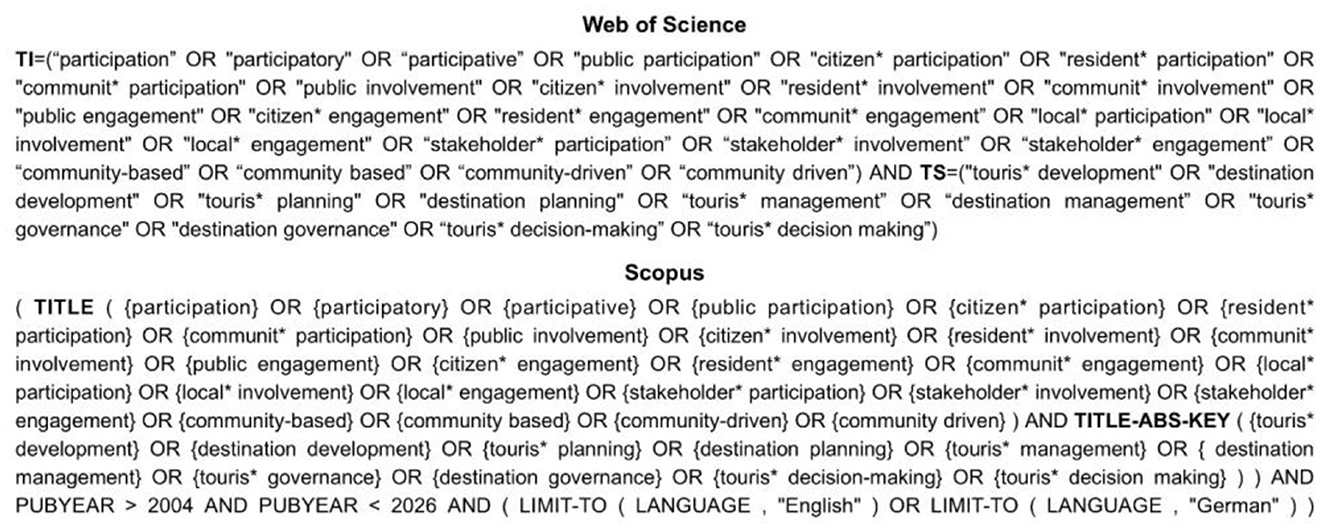
Figure 4. Search strings used for the systematic review (own design).
Searches were conducted using a combination of title (TI) and topic (TS) fields (including title, abstract, and keywords), which proved most effective for identifying studies relevant to the research question. The selection process followed the three-stage PRISMA flow: identification, screening, and inclusion. At the search stage, inclusion criteria were limited to publication date (2005–2025) and language (English or German). No restrictions were placed on publication type to ensure broad initial coverage.
As shown in Figure 51, 514 records were retrieved from both databases. After removing 30 duplicates, 484 studies remained for title and abstract screening. Studies were excluded at this stage if citizen participation in destination governance was not a central theme or if no practical participatory process was evident. This reduced the set to 120 studies. After removing 7 studies that could not be retrieved, 113 full-text articles were assessed for eligibility. Following full-text review, 71 studies were excluded for one or more of the following reasons:
1) No documented participation—lacked a practical participatory process (e.g., top-down approach or conceptual focus).
2) Project-based or researcher-led only—participation initiated by researchers for academic or project purposes, not by local authorities.
3) Tourism support/benefits, not governance—community engaged in tourism activities or received benefits but not in governance.
4) No community stakeholders—participation initiated by local authorities but involved only non-community actors (e.g., tourism business operators).
5) Pre-2005 process—conducted before the defined timeframe.
6) Not tourism-related—focused on sectors other than tourism.

Figure 5. PRISMA 2020 Flow Diagram of the study (adapted from Page et al., 2021).
After exclusions, 42 studies were included from the database search−41 peer-reviewed journal articles and one conference proceedings contribution. In addition to the database searches, studies were identified through other methods, in accordance with the PRISMA 2020 Statement. This approach was warranted, as citizen participation in destination governance is also documented in reports and on websites not indexed in academic databases. In total, 23 additional records were identified: 12 from websites, 8 from organizational sources, and 3 through citation searching. These were located through targeted web searches using relevant key terms (such as citizen participation and destination governance), primarily resulting in sources from DMOs and tourism boards. Of the 23, 22 reports were retrievable and screened. Based on the previously stated criteria, 5 records were excluded: 2 not tourism-related, 2 focused only on tourism support/benefits, and 1 project-based/researcher-led only. Ultimately, 17 non-database studies were included, bringing the total sample to 59 studies.
The analysis followed a descriptive synthesis approach (Evans, 2002). From each included study, key information was systematically extracted, including the specific initiative, geographical location, and year of implementation. This was accompanied by a description of the participatory purpose and the method(s) employed. Subsequently, the level of citizen engagement was assessed using Arnstein's Ladder of Citizen Participation (see Section 2.2), and a rationale was provided for each classification. The findings are presented in three tables aligned with Arnstein's three overarching categories: nonparticipation, tokenism, and citizen power (Sections 3.2.1–3.2.3).
3.2 Overview and discussion of findings: prevalence of tokenism in destination governance
Before presenting the findings of the systematic review in detail, this section offers an overview of the distribution of citizen engagement levels within the studied sample to establish a broader contextual foundation. As Figure 62 shows, participatory practices in destination governance are evident across all three categories of Arnstein's Ladder of Citizen Participation. However, while both nonparticipation and citizen power are included in the sample, most cases fall within tokenism. Specifically, 3.5% of the cases correspond to manipulation, the lowest rung of the ladder. The most common form of engagement is consultation, representing 39.7% of the sample. This is followed by placation (27.5%) and informing (15.5%). These three levels, all situated within tokenism, collectively comprise 82.7% of the sample. Within the category of citizen power, partnership accounts for 12.1% of cases, while delegated power is observed in only 1.7%.

Figure 6. Distribution of citizen engagement levels in destination governance (own design).
Despite the presence of partnership and delegated power within the sample, the findings indicate that citizen participation in destination governance predominantly takes forms that lack genuine redistribution of decision-making power. This defining characteristic of tokenism is reflected in Ruhanen's (2009) and Joppe's (2018) observation that token gestures of participation are often strategically employed by decision-makers to preserve existing power structures, while appearing responsive to public demands—offering a compelling explanation for the prevalence of tokenism observed in the sample.
The findings suggest that the levels of manipulation and therapy at one end, and delegated power and citizen control at the other, merely delineate the conceptual boundaries of Arnstein's typology, with citizen participation most commonly occurring at the mid-range levels—namely, informing, consultation, and placation.
3.2.1 Nonparticipation: evidence of manipulative practices
The nonparticipation category is represented in the sample by cases classified under the level of manipulation (Table 1). An illustrative example is Dazhai Village in China. As tourism in the area gained popularity, a cableway company proposed connecting the scenic village to the top of the terraced landscape. Although the local community opposed the construction, fearing the loss of income from carrying tourists' luggage, authorities perceived the project as an opportunity for economic development. A pre-determined plan was presented during informational meetings and villagers who initially resisted were persuaded individually to support the proposal (Zhu et al., 2021). Similarly, in her study of tourism planning practices in selected destinations in Queensland, Australia, Ruhanen (2009) identified instances that may also be classified as manipulative. In these cases, authorities typically made planning decisions in advance and subsequently sought public validation.

Table 1. Findings of the systematic review: nonparticipation (own design).
Moreover, some cases of the sample formally classified under higher levels of engagement still exhibited manipulative characteristics. For instance, the participatory process surrounding the development of the Visitor Centre at the Cliffs of Moher in Ireland (Table 2) served primarily to retrospectively legitimize controversial planning decisions through public consultation and an oral hearing (Healy et al., 2012). Although formal procedures were followed, public input had no influence on planning outcomes, making the process largely symbolic.

Table 2. Findings of the systematic review: tokenism (own design).
While cases classified under manipulation represent a minor portion of the sample (3.5%)—and no instances corresponding to the therapy level were identified3—their presence across diverse governance contexts, including democratic systems, raises concerns about how seemingly participatory processes may also be implemented in destination governance.
3.2.2 Tokenism: participation without empowerment
Tokenism emerges as the most prevalent category in the analyzed sample (see Section 3.2), encompassing a range of practices across its three levels: informing, consultation, and placation.
As shown in Table 2, the Nata Bird Sanctuary project in Botswana, a community-based conservation initiative, exemplifies the level of informing. Decisions were made prior to community involvement and kgotla meetings served solely to disseminate information, effectively excluding the community from both planning and implementation (Stone and Rogerson, 2011). A similar pattern is evident in Ireland's Wild Atlantic Way, where community engagement was limited to information evenings organized by the national tourism authority. These sessions provided updates on the drive tourism product but allowed no opportunity for feedback or influence (Hanrahan et al., 2017).
The consultation level displays greater variation. For instance, the previously mentioned Cliffs of Moher Visitor Centre project (Healy et al., 2012) featured consultation with manipulative elements—input opportunities existed but were framed within pre-determined decisions. By contrast, the Tai O tourism development project in Hong Kong (Mak et al., 2017) represents a conventional case of consultation. Public forums enabled residents to express their views but the absence of formal commitment to incorporate these views into decision-making rendered the process non-influential. A more dynamic example is the Tourism Development Master Plan for the Son Tra Peninsula in Vietnam (Dong and Nguyen, 2023; Nguyen and Hoang, 2023). Initially, the public was excluded, triggering widespread opposition due to environmental and social concerns. Advocacy efforts, including petitions and protests by the “Love Son Tra” group, compelled the government to organize workshops with citizens and experts. While this shift opened the process to public involvement, it occurred only as a reactive measure driven by civic pressure rather than institutionalized participatory intent.
Placation, the highest level within tokenism, is exemplified by the Jiaochangwei Bed and Breakfast planning process in Shenzhen, China (Lin and Simmons, 2017). In this case, the tourism development plan was formulated through a workshop where residents and business operators proposed alternatives that were integrated into the final plan. However, the process lacked mechanisms for power-sharing and remained under the control of planners.
Furthermore, several cases were classified as high-end placation, bordering on partnership. These include two institutionalized participatory bodies: the City and Tourism Council in Barcelona and the Citizens' Advisory Council in Berlin. Barcelona's Council, established in 2016, provides strategic advice on tourism policy (Romão et al., 2023). Although it offers a structured platform for resident input, its role remains advisory, with final authority retained by municipal bodies. Its working groups allow for sustained, meaningful input, yet fall short of power redistribution. Similarly, Berlin's Council, founded in 2022, serves as an interface between political, administrative, and civil society actors (Berlin Tourismus and Kongress, 2025). While citizens are involved in identifying problems and proposing solutions through structured working groups and quarterly meetings, the Council lacks decision-making power. Both councils stand out as relatively rare examples of institutionalized participatory mechanisms in destination governance—Barcelona as a permanent body, Berlin as a time-limited initiative. Given the challenge of overtourism in both cities, their formation may be interpreted as a policy response to this social phenomenon.
In summary, the spectrum of tokenistic participation is notably broad, encompassing processes pursued with varying degrees of seriousness. Yet across this diversity, a defining characteristic persists—decision-making power remains concentrated in the hands of authorities.
3.2.3 Citizen power: instances of partnership, isolated delegation, and the absence of citizen control
The level of partnership is exemplified by the UNESCO Altaisky Biosphere Reserve in Russia, where local communities participate in governance through community councils and a self-governing body (Mammadova et al., 2022). These structures enable collaborative engagement with reserve authorities on conservation and tourism-related matters, based on shared responsibilities. Similarly, the municipality of Naturns in South Tyrol demonstrates a well-established participatory approach. As part of Vision Naturns 2030+, residents co-developed a long-term vision for the municipality, comprising its tourism strategy (Eurac Research, 2019). Participation occurred across all phases of the process via structured formats such as councils, cafés, workshops, surveys, and working groups. These groups initiated and began implementing projects that were later incorporated by the municipal council into strategic planning. Although ultimate decision-making remained with elected officials, the process reflected meaningful collaboration and partial power-sharing. Another partnership-based governance example is Kampoeng Boenga Grangsil (Grangsil Flower Village) in Indonesia. Aimed at developing a sustainable tourism village through grassroots initiative and multi-stakeholder collaboration, the community-led tourism development process—facilitated by the Tourism Awareness Group and civil society organizations—fostered meaningful participation in planning, implementation, and evaluation. This process was further supported by the Desa Mitra (Partner Villages) Development Program, which provided mentoring during the village's development (Wikantiyoso et al., 2021). Although Indonesia's planning discourse has adopted participatory rhetoric since the 1980s, this remained largely symbolic. Only in the post-Suharto era have more genuine participatory mechanisms begun to emerge, enabled by decentralization reforms that provide greater local autonomy (Widianingsih, 2006)—as observed in the case of the Grangsil Flower Village.
As shown in Table 3, further cases classified under partnership include those from established democracies such as the United States, Austria, Germany, and France. However, cases from Russia and Indonesia underscore a noteworthy paradox—much like nonparticipation can occur in democratic systems such as Australia and Ireland (see Section 3.2.1), forms of citizen power may also arise within contexts with heavily centralized authority. These nuances invite a cautious interpretation of what potentially constitutes citizen power in such settings, where participatory forms may represent context-specific exceptions that coexist with enduring structural constraints and authoritarian legacies.

Table 3. Findings of the systematic review: citizen power (own design).
The level of delegated power is represented by a single case: the thematic villages project in Poland (Idziak et al., (2018). Aimed at revitalizing rural areas facing economic and social decline, the project was initiated, led, and implemented by the local community with external support. Community members developed and managed action plans independently, exercising a high degree of decision-making autonomy—indicative of delegated power.
In the studied sample, no cases met the criteria for the level of citizen control. However, this absence is not entirely unexpected, as the concept of citizen control may be seen as challenging the foundational principles of representative democracy (Stange, 2007).
3.2.4 Implementation patterns of participatory processes in destination governance
The findings reveal a diverse implementation of participatory processes in destination governance, reflected in varying purposes, methods, and levels of citizen engagement. As illustrated in Tables 1–3, the intended purpose of participation is frequently aligned with the chosen method, both of which typically correspond to the level of citizen involvement.
For instance, using villagers' meetings to present a pre-decided plan and persuade villagers to support it implies a manipulative form of engagement, as observed in the context of tourism and landscape management in Dazhai Village, China (Zhu et al., 2021). Providing information through announcements and briefings equates to minimal informing, as in the case of tourism development in South Kynouria, Greece (Zarokosta and Koutsouris, 2014). Soliciting community input on cultural and ecological tourism via public consultations indicates a consultative approach, exemplified by the case of Heyang, China (Chen, 2017). Co-creating a vision and development strategy through a survey, dialogue sessions, and a workshop suggests placation, as seen in Nordeney, Germany (Staatsbad Norderney, 2020). Fostering sustainable tourism development through shared governance structures such as local community councils reflects a partnership model, as demonstrated in the Altaisky Biosphere Reserve, Russia (Mammadova et al., 2022).
Participatory processes in destination governance vary widely in temporal scope and structural design, ranging from one-time initiatives to institutionalized governance structures. At the shorter end of the spectrum are single events, such as a nominal group technique workshop conducted to gather citizen input on tourism development in the Lake Traverse Reservation, North and South Dakota (Spencer, 2010). Other processes are project-specific and may extend over several months or years, as in the Sitka tourism planning process in Alaska (Jordan et al., 2013). More sustained efforts include recurrent initiatives, exemplified by resident sentiment surveys in Copenhagen, Denmark (TCI Research, 2020). At the most institutionalized level, participatory processes are embedded within permanent governance structures, such as the City and Tourism Council in Barcelona, Spain (Romão et al., 2023). However, the findings indicate that institutionalization does not necessarily correlate with higher levels of citizen engagement. Recurrent initiatives and formalized mechanisms may still operate at lower levels of participation, while project-specific processes can, in some cases, facilitate meaningful power-sharing (see Table 3).
Figure 7 illustrates four types of participatory processes identified in the analyzed sample, differentiated by their temporal scope and institutional embedding.

Figure 7. Typology of participatory processes by temporal scope and institutional embedding (own design).
The concluding chapter reflects on the findings of Chapters 2 and 3 and outlines their implications for future research and practice in destination governance.
4 Concluding reflections and future directions
In an era marked by democratic vulnerabilities and diminishing institutional trust, citizen participation has assumed critical societal importance. This study has put forward the view that citizen participation is not merely a normative ideal but a foundational element of future-oriented destination governance. The rationale for integrating participatory approaches arises from a dual shift in the conceptual understanding of tourism destinations: increasingly, destinations are viewed not only as tourism systems or competitive units (Cracolici et al., 2006), but as complex living spaces where residents, visitors, and other stakeholders interact (Herntrei, 2014). This socio-spatial perspective underscores the need for destination governance that reflects the lived realities of local communities, who hold a distinct and legitimate claim to participate in shaping the development of the places they inhabit.
Yet the justification for participation does not rest solely on normative or social grounds. From an economic perspective, meaningful citizen involvement can enhance the long-term effectiveness and efficiency of destination governance by broadening public acceptance, increasing legitimacy, and preventing resource misallocations (Bichler, 2021; Jamal and Getz, 1995). Conversely, hierarchically imposed decisions without social legitimacy undermine the economic performance of destination development over time (Walch, 1999; Wang et al., 2025). Therefore, the core arguments for integrating citizen participation into destination governance emerge not only from a socio-spatial understanding of destinations as lived-in spaces, but—perhaps paradoxically—from economic reasoning as well.
Arising from the standpoints discussed in this study, Figure 8 conceptually aligns the broader modes of societal coordination with the respective planning and policy approaches and the overarching participatory categories of Arnstein's Ladder of Citizen Participation. This integrative framework offers a conceptual contribution by illustrating how these modes and approaches relate to varying degrees of citizen involvement. Accordingly, only the upper tier—governance, characterized by discursive and deliberative planning and policy and corresponding to the category of citizen power—can be considered to constitute genuine participation, particularly through the levels of partnership and delegated power, which most closely reflect democratic principles of planning and policy.

Figure 8. Conceptual alignment of societal coordination modes, planning and policy approaches, and participatory categories (own design).
However, the findings of the systematic review indicate that citizen participation in destination governance continues to be characterized predominantly by tokenistic practices, in which decision-making power is not meaningfully redistributed.
This study identifies disciplinary origins as a key explanatory factor for the persistent marginalization of citizen participation in destination governance, in contrast to its central positioning within regional governance theory (see Section 2.3). While destination governance has been shaped primarily by economic discourse, with a short-term focus on competitiveness and market efficiency (Pechlaner et al., 2015), regional governance emerged from traditions in political science, public administration, spatial planning, and human geography (Kötter, 2002)—fields traditionally concerned with participatory governance and democratic legitimacy. Consequently, these disciplinary foundations have influenced the extent to which citizen participation has been conceptually integrated into each governance domain—an influence evident in its limited practical application within destination governance.
Advancing citizen participation in destination governance requires more than rhetorical commitment. A fundamental prerequisite for effective and sustained citizen participation is political goodwill, as a culture of participation can only develop when it is supported by the highest levels of politics and administration (Blair, 2008; Herntrei, 2018). Accordingly, overcoming tokenism in destination governance presupposes a deliberate willingness on the part of policy- and decision-makers to redistribute power within governance processes, thereby engaging citizens in responsible co-determination supported by transparent and reciprocal information flows. Meeting these requirements—together with recognizing the value of citizen participation particularly from a long-term perspective—poses a profound challenge for an industry traditionally oriented toward short-term objectives. In the absence of political goodwill and broader societal learning processes that encourage transparency, knowledge exchange, and participatory openness, tokenistic practices are likely to persist within destination governance structures.
While this study has examined the rationale for integrating citizen participation into destination governance as well as its implementation in practice, future research would benefit from investigating how citizen participation reshapes governance processes and structures per se—the core components of governance (Dredge, 2015)—thus identifying the distinct effects it has within these core governance components in tourism destinations.
The present research is subject to certain limitations. Given the nature of a systematic review, the findings cannot be assumed to represent destination governance practices in their entirety. Nevertheless, the consistency of these findings with existing literature (Jamal and Camargo, 2018; Ruhanen, 2009) lends support to their broader relevance.
In conclusion, this study reaffirms that integrating meaningful citizen participation into destination governance is increasingly a strategic imperative that warrants continued scholarly attention and practical commitment. Participation should not be framed as a trade-off between social legitimacy and economic performance but as a pathway toward destination governance that strengthens both.
Data availability statement
The original contributions presented in the study are included in the article/supplementary material, further inquiries can be directed to the corresponding author.
Author contributions
VJ: Conceptualization, Investigation, Methodology, Writing – original draft, Writing – review & editing. MH: Conceptualization, Supervision, Writing – review & editing. DF: Writing – review & editing.
Funding
The authors declare that no financial support was received for the research and/or publication of this article.
Conflict of interest
The authors declare that the research was conducted in the absence of any commercial or financial relationships that could be construed as a potential conflict of interest.
Generative AI statement
The author(s) declare that no Gen AI was used in the creation of this manuscript.
Any alternative text (alt text) provided alongside figures in this article has been generated by Frontiers with the support of artificial intelligence and reasonable efforts have been made to ensure accuracy, including review by the authors wherever possible. If you identify any issues, please contact us.
Publisher's note
All claims expressed in this article are solely those of the authors and do not necessarily represent those of their affiliated organizations, or those of the publisher, the editors and the reviewers. Any product that may be evaluated in this article, or claim that may be made by its manufacturer, is not guaranteed or endorsed by the publisher.
Footnotes
1. ^While Web of Science is considered more selective than Scopus, the search retrieved more records from Web of Science. This may reflect database-specific indexing practices, particularly the more comprehensive coverage of tourism and related social science journals where destination governance is commonly addressed.
2. ^As shown in Figure 6, 58 cases were derived from 59 included studies. One article (Mammadova et al., 2022) reported two distinct participatory processes, while two sets of articles—Dong and Nguyen (2023) and Nguyen and Hoang (2023)); Marzuki et al. (2012) and Marzuki and Hay (2013)—described the same processes and were counted as single cases to avoid duplication. This adjustment ensured accurate representation of the number of participatory processes analyzed.
3. ^The absence of cases classified as therapy may reflect the marginal nature of this form of nonparticipation, which frames citizens as emotionally or behaviorally deficient rather than in need of empowerment. While explicit applications of therapy are rarely documented, further research would benefit from examining whether this rarity reflects genuine absence in destination governance or limitations in reporting and classification.
References
Arnstein, S. R. (1969). A ladder of citizen participation. J. Am. Inst. Plann. 35, 216–224. doi: 10.1080/01944366908977225
Atout France (2021). Responsible Tourism in France. Available online at: https://www.atout-france.fr/actualites/tourisme-responsable-en-france (Accessed February 17, 2025).
Back, A., Lundmark, L., and Zachrisson, A. (2025). Bridging (over)tourism geographies: proposing a systems approach in overtourism research. Tour. Geograph. 27, 293–312. doi: 10.1080/14616688.2025.2502507
Behringer, J. (2002). Legitimität durch Verfahren?: Bedingungen semi-konventioneller Partizipation: eine qualitativ-empirische Studie am Beispiel von Fokusgruppen zum Thema “Lokaler Klimaschutz” [Legitimacy through procedures?: Conditions of semi-conventional participation: a qualitative-empirical study using the example of focus groups on the topic of “local climate protection”]. Technische Universität Berlin.
Belfast Stories (2022). Belfast Stories: Public Consultation. Available online at: https://yoursay.belfastcity.gov.uk/belfast-stories-public-consultation-2022 (Accessed March 15, 2025).
Bello, F. G. (2021). Community participation in tourism planning at Majete Wildlife Reserve, Malawi. Quaestiones Geographicae. 40, 85–100. doi: 10.2478/quageo-2021-0035
Benz, A., and Kilper, H. (2018). “Governance,” in ARL – Akademie für Raumforschung und Landesplanung: Handwörterbuch der Stadt- und Raumentwicklung (Hannover: ARL), 857–865.
Beritelli, P. (2011). Tourist destination governance through local elites: looking beyond the stakeholder level. [Cumulative postdoctoral thesis]. University of St. Gallen.
Beritelli, P., Bieger, T., and Laesser, C. (2007). Destination governance: using corporate governance theories as a foundation for effective destination management. J. Travel Res. 46, 96–107. doi: 10.1177/0047287507302385
Berlin Tourismus and Kongress (2025). Bürger:innenbeirat Berlin-Tourismus [Berlin Tourism Citizens' Advisory Council]. Available online at: https://about.visitberlin.de/buergerinnenbeirat-berlin-tourismus (Accessed March 12, 2025).
Bichler, B. F. (2021). Designing tourism governance: the role of local residents. J. Dest. Market. Manag. 19:100389. doi: 10.1016/j.jdmm.2019.100389
Bieger, T., and Beritelli, P. (2013). Management von Destinationen [Destination management]. Munich: De Gruyter Oldenbourg. doi: 10.1524/9783486721188
Blair, H. (2008). “Innovations in participatory local governance,” in Participatory Governance and the Millennium Development Goals (MDGs), United Nations (New York: United Nations), 77–120.
Bordeaux Tourism and Congress (2024). The Bordeaux Métropole Tourism Roadmap 2022–2026. Available online at: https://www.calameo.com/bordeaux-tourisme-congres/read/005365752988738931087 (Accessed February 17, 2025).
Buckley, K., Cooke, S., and Fayad, S. (2015). “Using the historic urban landscape to re-imagine Ballarat: the local context,” in Urban Heritage, Development and Sustainability: International Frameworks, National and Local Governance, eds. S. Labadi and W. Logan (London: Routledge), 93–113.
Buhalis, D. (2000). Marketing the competitive destination of the future. Tour. Manag. 21, 97–116. doi: 10.1016/S0261-5177(99)00095-3
Burton, T. L. (1979). A review and analysis of Canadian case studies in public participation. Plan Canada. 19, 13–22.
Cadbury, A. (1992). Report of the Committee on the financial aspects of corporate governance. London: Gee and Co. doi: 10.1093/oso/9780198258599.003.0003
Chen, S. (2017). Power, apathy, and failure of participation: how local voices on environmental issues are muted in a Chinese rural context. SAGE Open 7. doi: 10.1177/2158244017700462
Citrin, J., and Stoker, L. (2018). Political trust in a cynical age. Ann. Rev. Polit. Sci. 21, 49–70. doi: 10.1146/annurev-polisci-050316-092550
Clausen, H. B., and Gyimóthy, S. (2016). Seizing community participation in sustainable development: Pueblos Mágicos of Mexico. J. Clean. Prod. 111, 318–326. doi: 10.1016/j.jclepro.2015.01.084
Cracolici, M. F., Nijkamp, P., and Rietveld, P. (2006). Assessment of tourism competitiveness by analysing destination efficiency. Tour. Econ. 14, 325–342. doi: 10.5367/000000008784460427
d'Angella, F., De Carlo, M., and Sainaghi, R. (2010). Archetypes of destination governance: a comparison of international destinations. Tour. Rev. 65, 61–73. doi: 10.1108/16605371011093872
Dodds, R., and Butler, R. W. (Eds.). (2019). Overtourism: issues, realities and solutions. Berlin: De Gruyter. doi: 10.1515/9783110607369
Dolezal, C., and Novelli, M. (2022). Power in community-based tourism: empowerment and partnership in Bali. J. Sustain. Tour. 30, 2352–2370. doi: 10.1080/09669582.2020.1838527
Dong, X. D., and Nguyen, T. Q. T. (2023). Power, community involvement, and sustainability of tourism destinations. Tour. Stud. 23, 62–79. doi: 10.1177/14687976221144335
Dredge, D. (2015). “Tourism and governance,” in Education for Sustainability in Tourism: A Handbook of Processes, Resources, and Strategies, eds. G. Moscardo and P. Benckendorff (Berlin, Heidelberg: Springer), 75–90. doi: 10.1007/978-3-662-47470-9_5
Đukanovic, Z., Živkovic, J., Radosavljevic, U., Lalovic, K., and Jovanovic, P. (2021). Participatory urban design for touristic presentation of cultural heritage sites: the case of Negotinske pivnice (wine cellars) in Serbia. Sustainability 13:10039. doi: 10.3390/su131810039
Edwards, B., and Woods, M. (2017). “Mobilizing the local: community, participation and governance,” in Geographies of Rural Cultures and Societies, eds. M. Kneafsey and L. Holloway (London: Routledge), 173–196. doi: 10.4324/9781315254487-9
Esteves, P., Gomes, D., Lavaredas, A., and Almeida, P. (2025). Participatory governance: providing tools for local communities to engage in tourism management. Proceed. 8th Int. Conf. Tour. Res. 8, 99–108. doi: 10.34190/ictr.8.1.3493
Eurac Research (2019). Vision Naturns 2030+. Available online at: https://webassets.eurac.edu/31538/1688993492-naturns-2030-sonderausgabe.pdf (Accessed March 17, 2025).
Evans, D. (2002). Systematic reviews of interpretive research: interpretive data synthesis of processed data. Austr. J. Adv. Nurs. 20, 22–26. doi: 10.37464/2003.202.2044
Farrelly, T. A. (2011). Indigenous and democratic decision-making: issues from community-based ecotourism in the Bouma National Heritage Park, Fiji. J. Sustain. Tour. 19, 817–835. doi: 10.1080/09669582.2011.553390
Flagestad, A., and Hope, C. A. (2001). Strategic success in winter sports destinations: a sustainable value creation perspective. Tour. Manag. 22, 445–461. doi: 10.1016/S0261-5177(01)00010-3
Fletcher Bowlsby, S. (2018). Black Forest National Park Public Consultation Process. Baden-Württemberg. Available online at: https://participedia.net/case/4860#:~:text=Public%20consultations%20were%20held%20during,diversity%20of%20opinions%20and%20suggestions (Accessed April 03, 2025).
Freeman, J., and Jacobs, S. (2025). “President Trump's campaign of 'structural deregulation,”' The Lawfare Institute, 12 February. Available online at: https://www.lawfaremedia.org/article/president-trump-s-campaign-of–structural-deregulation [Accessed July 25, 2025].
Fürst, D. (2007). “Regional governance,” in Handbuch Governance. Theoretische Grundlagen und empirische Anwendungsfelder, eds. A. Benz, S. Lütz, U. Schimank and G. Simonis (Wiesbaden: VS Verlag), 353–365.
Fürst, D., Scholles, F., and Sinning, H. (2001). “Partizipative Planung” [Participatory planning] in Handbuch Theorien und Methoden der Raum- und Umweltplanung, eds. D. Fürst and F. Scholles (Dortmund: Dortmunder Vertrieb für Bau- und Planungsliteratur), 356–372.
Goodwin, H. (2021). City destinations, overtourism and governance. Int. J. Tour. Cities 7, 916–921. doi: 10.1108/IJTC-02-2021-0024
Gurevitch, J., Koricheva, J., Nakagawa, S., and Stewart, G. (2018). Meta-analysis and the science of research synthesis. Nature 555, 175–182. doi: 10.1038/nature25753
Gustavsson, M., Lindström, L., Jiddawi, N. S., and de la Torre-Castro, M. (2014). Procedural and distributive justice in a community-based managed marine protected area in Zanzibar, Tanzania. Marin. Policy 46, 91–100. doi: 10.1016/j.marpol.2014.01.005
Hall, C. M. (2008). Tourism planning: policies, processes and relationships. London: Pearson Education.
Hanrahan, J., Maguire, K., and Boyd, S. (2017). Community engagement in drive tourism in Ireland: case study of the Wild Atlantic Way. J. Herit. Tour. 12, 509–525. doi: 10.1080/1743873X.2016.1242594
Harmini, A. A., and Sadguna, I. G. (2017). Community based tourism management at Pinge village, Tabanan Regency, Bali. Eur. J. Sustain. Dev. 6, 497–501. doi: 10.14207/ejsd.2017.v6n4p497-501
Haywood, K. M. (1988). Responsible and responsive tourism planning in the community. Tour. Manag. 9, 105–118. doi: 10.1016/0261-5177(88)90020-9
Healy, N., Rau, H., and McDonagh, J. (2012). Collaborative tourism planning in Ireland: tokenistic consultation and the politics of participation. J. Environ. Policy Plan. 14, 450–471. doi: 10.1080/1523908X.2012.742221
Herntrei, M. (2014). Wettbewerbsfähigkeit von Tourismusdestinationen: Bürgerbeteiligung als Erfolgsfaktor? [Competitiveness of tourism destinations: citizen participation as a success factor?]. Wiesbaden: Springer Gabler. doi: 10.1007/978-3-658-07676-4
Herntrei, M. (2018). “Bürgerbeteiligung als Erfolgsfaktor in der Regional- und Standortentwicklung” [Citizen participation as a success factor in regional and location development] in Keine Strategie ohne Verantwortung: Perspektiven für eine nachhaltige Standort- und Regionalentwicklung, eds. H. Pechlaner and M. Tretter (Wiesbaden: Springer Gabler), 67–78. doi: 10.1007/978-3-658-22557-5_6
Herntrei, M., and Jánová, V. (2024). “From carrying capacity to overtourism: the changing perspective in the course of time,” in From Overtourism to Sustainability Governance: A New Tourism Era, eds. H. Pechlaner, E. Innerhofer and J. Philipp (Abingdon, New York: Routledge), 6–22. doi: 10.4324/9781003365815-3
Hjalager, A. M. (2000). Tourism destinations and the concept of industrial districts. Tour. Hosp. Res. 2, 199–213. doi: 10.1177/146735840000200302
Horgan, D., and Koens, K. (2024). “Don't write cheques you cannot cash: challenges and struggles with participatory governance,” in From Overtourism to Sustainability Governance: A New Tourism Era, eds. H. Pechlaner, E. Innerhofer and J. Philipp (Abingdon, New York: Routledge), 227–240. doi: 10.4324/9781003365815-23
Howlett, M., and Ramesh, M. (2014). The two orders of governance failure: design mismatches and policy capacity issues in modern governance. Policy Soc. 33, 317–327. doi: 10.1016/j.polsoc.2014.10.002
Idziak, W., Majewski, J., and Zmyslony, P. (2018). “Community participation in sustainable rural tourism experience creation: a long-term appraisal and lessons from a thematic villages project in Poland,” in Rural Tourism: New Concepts, New Research, New Practice, eds. B. Lane and E. Kastenholz (London: Routledge), 209–230. doi: 10.4324/9781315111865-11
Iorio, M., and Corsale, A. (2014). Community-based tourism and networking: Viscri, Romania. J. Sustain. Tour. 22, 234–255. doi: 10.1080/09669582.2013.802327
Irvine, P. M., and Dlongolo, Z. N. (2024). (Late)nt? Exploring the latent potential for participatory heritage conservation in Makhanda, South Africa. Habitat. Int. 149:103107. doi: 10.1016/j.habitatint.2024.103107
Jamal, T., and Camargo, B. A. (2018). Tourism governance and policy: whither justice?. Tour. Manag. Perspect. 25, 205–208. doi: 10.1016/j.tmp.2017.11.009
Jamal, T. B., and Getz, D. (1995). Collaboration theory and community tourism planning. Ann. Tour. Res. 22, 186–204. doi: 10.1016/0160-7383(94)00067-3
Joppe, M. (2018). Tourism policy and governance: quo vadis?. Tour. Manag. Perspect. 25, 201–204. doi: 10.1016/j.tmp.2017.11.011
Jordan, E. J., Vogt, C. A., Kruger, L. E., and Grewe, N. (2013). The interplay of governance, power and citizen participation in community tourism planning. J. Policy Res. Tour. Leisure Event 5, 270–288. doi: 10.1080/19407963.2013.789354
Kantsperger, M., Thees, H., and Eckert, C. (2019). Local participation in tourism development – roles of non-tourism related residents of the Alpine destination Bad Reichenhall. Sustainability 11:6947. doi: 10.3390/su11246947
Keppler, D. (2010). Forschungs- und Diskussionsstand “Regionale Beteiligung von Bürgern und Bürgerinnen” [State of research and discussion on “regional participation of citizens”]. Technische Universität Berlin.
Khazaei, A., Elliot, S., and Joppe, M. (2017). Fringe stakeholder engagement in protected area tourism planning: inviting immigrants to the sustainability conversation. J. Sustain. Tour. 25, 1877–1894. doi: 10.1080/09669582.2017.1314485
Kötter, R. (2002). “Ecological modernization and regional governance – what compatibility of two fields of theory, policy discourse and practice?” in Regional Governance – New Modes of Self-Government in the European Community, eds. D. Fürst and J. Knieling (Hannover: ARL), 26–45.
Krause, A.-S., Kunz, N., Seeler, S., and Eisenstein, B. (2022). Tourismus im Einklang mit den Einheimischen vor Ort möglich machen: Maßnahmen zur Förderung der Tourismusakzeptanz [Making tourism compatible with local communities: measures to promote tourism acceptance]. Deutscher Tourismusverband e.V..
Lane, D. (2013). The capitalist transformation of state socialism: the making and breaking of state socialist society, and what followed. Abingdon, New York: Routledge. doi: 10.4324/9780203739853
Lenao, M. (2017). Community, state and power-relations in community-based tourism on Lekhubu Island, Botswana. Tour. Geograph. 19, 483–501. doi: 10.1080/14616688.2017.1292309
Levine, J. (2025). “While our eyes are on the welfare state's destruction, Trump is building a police state,” The Guardian, 05 March. Available online at: https://www.theguardian.com/commentisfree/2025/mar/05/trump-welfare-police-state-government-layoffs [Accessed July 17, 2025].
Li, J., Krishnamurthy, S., Roders, A. P., and Van Wesemael, P. (2020). Informing or consulting? Exploring community participation within urban heritage management in China. Habitat. Int. 105:102268. doi: 10.1016/j.habitatint.2020.102268
Lin, D., and Simmons, D. (2017). Structured inter-network collaboration: public participation in tourism planning in Southern China. Tour. Manag. 63, 315–328. doi: 10.1016/j.tourman.2017.06.024
Lindström, K. N., and Larson, M. (2016). Community-based tourism in practice: evidence from three coastal communities in Bohuslän, Sweden. Bull. Geograph. Soc.Econ. Series 33, 71–78. doi: 10.1515/bog-2016-0025
Lo, Y. C., and Janta, P. (2020). Resident's perspective on developing community-based tourism - a qualitative study of Muen Ngoen Kong Community, Chiang Mai, Thailand. Front. Psychol. 11:1493. doi: 10.3389/fpsyg.2020.01493
Mak, B. K., Cheung, L. T., and Hui, D. L. (2017). Community participation in the decision-making process for sustainable tourism development in rural areas of Hong Kong, China. Sustainability 9:1695. doi: 10.3390/su9101695
Mammadova, A., Redkin, A., Beketova, T., and Smith, C. D. (2022). Community engagement in UNESCO biosphere reserves and geoparks: case studies from Mount Hakusan in Japan and Altai in Russia. Land 11:227. doi: 10.3390/land11020227
Market Town of Bad Hindelang (2025). Habitat Concept “Our Bad Hindelang 2030” With Integrated Tourism Strategy. Available online at: https://www.marktbadhindelang.de/fileadmin/Gemeinde/Dateien/Unsere_Gemeinde/Bad_Hindelang_2030/Habitat_concept_Our_Bad_Hindelang_2030.pdf (Accessed April 05, 2025).
Marzuki, A., and Hay, I. (2013). Towards a public participation framework in tourism planning. Tour. Plan. Dev. 10, 494–512. doi: 10.1080/21568316.2013.804432
Marzuki, A., Hay, I., and James, J. (2012). Public participation shortcomings in tourism planning: the case of the Langkawi Islands, Malaysia. J. Sustain. Tour. 20, 585–602. doi: 10.1080/09669582.2011.638384
Möltgen-Sicking, K., and Winter, T. (2024). “Governance: Begriff, Varianten, Steuerungsformen, Akteure” [Governance: concept, variants, modes of steering, actors] in Governance: Eine Einführung in Grundlagen und Politikfelder (Wiesbaden: Springer VS), 1–21. doi: 10.1007/978-3-658-45718-1_1
Moscardo, G. (2018). “Rethinking the role and practice of destination community involvement in tourism planning,” in Tourism Policy and Planning Implementation: Issues and Challenges, eds. K. Andriotis, D. Stylidis and A. Weidenfeld (London: Routledge), 36–52. doi: 10.4324/9781315162928-3
Murphy, P. E. (1983). Tourism as a community industry – an ecological model of tourism development. Tour. Manag. 4, 180–193. doi: 10.1016/0261-5177(83)90062-6
Nguyen, H. V., Diane, L., and Newsome, D. (2020). Kinh and ethnic tourism stakeholder participation and collaboration in tourism planning in Sapa, Vietnam. Int. J. Cult. Tour. Hosp. Res. 14, 579–597. doi: 10.1108/IJCTHR-12-2018-0179
Nguyen, T. Q., and Hoang, T. T. (2023). Stakeholder involvement and the attainment of SDGs at local tourism destinations: a case study in Vietnam. Tourism: An International Interdiscipl. J. 71, 432–446. doi: 10.37741/t.71.3.1
Nordin, S., and Svensson, B. (2007). Innovative destination governance: the Swedish ski resort of Åre. Int. J. Entrepr. Innov. 8, 53–66. doi: 10.5367/000000007780007416
Osmani, S. R. (2008). “Participatory governance: an overview of issues and evidence,” in Participatory Governance and the Millennium Development Goals (New York: United Nations), 1–45.
Paasi, A. (1991). Deconstructing regions: notes on the scales of spatial life. Environ. Plan. A. 23, 239–256. doi: 10.1068/a230239
Page, M. J., McKenzie, J. E., Bossuyt, P. M., Boutron, I., Hoffmann, T. C., Mulrow, C. D., et al. (2021). The PRISMA 2020 statement: an updated guideline for reporting systematic reviews. BMJ 372. doi: 10.1136/bmj.n71
Paimin, N. V., Modilih, S., Mogindol, S. H., Johnny, C., and Thamburaj, J. A. (2014). Community participation and barriers in rural tourism: a case study in Kiulu, Sabah. SHS Web Conf. 12:01003. doi: 10.1051/shsconf/20141201003
Paudyal, R., Thapa, B., Neupane, S. S., and Kc, B. (2018). Factors associated with conservation participation by local communities in Gaurishankar Conservation Area Project, Nepal. Sustainability 10:3488. doi: 10.3390/su10103488
Pechlaner, H. (2019). “Destination und Lebensraum: Perspektiven touristischer Entwicklung. 20 Jahre Tourismusforschung von Eurac Research” [Destination and living space: perspectives on tourism development. 20 years of tourism research at Eurac Research] in Destination und Lebensraum: Perspektiven touristischer Entwicklung (Wiesbaden: Springer Fachmedien Wiesbaden), 1–21. doi: 10.1007/978-3-658-28110-6
Pechlaner, H., Beritelli, P., Pichler, S., Peters, M., and Scott, N. (Eds.). (2015). Contemporary destination governance: a case study approach. Bingley: Emerald Group Publishing Limited. doi: 10.1108/S2042-144320140000006045
Pechlaner, H., Volgger, M., and Herntrei, M. (2012). Destination management organizations as interface between destination governance and corporate governance. Anatolia 23, 151–168. doi: 10.1080/13032917.2011.652137
Pforr, C., and Brueckner, M. (2016). The quagmire of stakeholder engagement in tourism planning: a case example from Australia. Tour. Anal. 21, 61–76. doi: 10.3727/108354216X14537459508892
Pham, K., Andereck, K. L., and Vogt, C. A. (2025). Stakeholders' involvement in an evidence-based sustainable tourism plan. J. Sustain. Tour. 33, 673–696. doi: 10.1080/09669582.2023.2259117
Pike, H. (2022). Banff Tourism Plan Focuses on Sustainability, Indigenous Story, Housing and Transportation. Available online at: https://www.cbc.ca/news/canada/calgary/tourism-together-banff-national-park-indigenous-1.6659504 (Accessed February 14, 2025).
Pinel, D. P. (1999). “Create a good fit: a community-based tourism planning model,” in Proceedings of the 1999 International Symposium on Coastal and Marine Tourism, eds. M. L. Miller, J. Auyong and N. P. Hadley (Pinel and Associates Community Research and Planning), 277–286.
Pissourios, I. A. (2014). Top-down and bottom-up urban and regional planning: towards a framework for the use of planning standards. Eur. Spat. Res. Policy 21, 83–99. doi: 10.2478/esrp-2014-0007
Pollermann, K. (2021). Regional Governance: Begriffe, Wirkungszusammenhänge und Evaluationsansätze [Regional governance: concepts, interrelationships, and evaluation approaches]. Johann Heinrich von Thünen-Institut.
Pongponrat, K. (2011). Participatory management process in local tourism development: a case study on fisherman village on Samui Island, Thailand. Asia Pac. J. Tour. Res. 16, 57–73. doi: 10.1080/10941665.2011.539391
Presenza, A., Micera, R., Splendiani, S., and Del Chiappa, G. (2014). Stakeholder e-involvement and participatory tourism planning: analysis of an Italian case study. Int. J. Know. Based Dev. 5, 311–328. doi: 10.1504/IJKBD.2014.065320
PROJECT M (2025). Vision Salzburg 2040. Available online at: https://perspektive-salzburg-2040.projectm.at/ (Accessed April 03, 2025).
Purcell, M. (2009). Resisting neoliberalization: communicative planning or counter-hegemonic movements?. Plann. Theory 8, 140–165. doi: 10.1177/1473095209102232
Raich, F. (2006). Governance räumlicher Wettbewerbseinheiten: Ein Ansatz für die Tourismus-Destination [Governance of spatial competition units: an approach for the tourism destination]. Wiesbaden: Deutscher Universitäts-Verlag.
Rheinische Anzeigeblätter (2024). Neue Ideen geschmiedet [Shaping New Ideas]. Available online at: https://www.rheinische-anzeigenblaetter.de/morsbach/c-nachrichten/neue-ideen-geschmiedet_a303708 (Accessed March 18, 2025).
Rhodes, R. A. W. (1996). The new governance: governing without government. Polit. Stud. 44, 652–667. doi: 10.1111/j.1467-9248.1996.tb01747.x
Ritchie, J. B., and Crouch, G. I. (1993). “Competitiveness in international tourism: a framework for understanding and analysis,” in La Compétitivité des Destinations Touristiques à Longue Distance, eds. P. Keller and T. Bieger (Éditions AIEST), 23–71.
Ritchie, J. B., and Crouch, G. I. (2003). The competitive destination: a sustainable tourism perspective. Wallingford: CABI. doi: 10.1079/9780851996646.0000
Romão, J., Domenech, A., and Nijkamp, P. (2023). Tourism in common: policy flows and participatory management in the Tourism Council of Barcelona. Urban Res. Pract. 16, 222–245. doi: 10.1080/17535069.2021.2001039
Rosenow, J. E., and Pulsipher, G. L. (1979). Tourism, the good, the bad, and the ugly. Lincoln: Century Three Press.
Ruhanen, L. (2009). Stakeholder participation in tourism destination planning another case of missing the point? Tour. Recreat. Res. 34, 283–294. doi: 10.1080/02508281.2009.11081603
Ruhanen, L., Scott, N., Ritchie, B., and Tkaczynski, A. (2010). Governance: a review and synthesis of the literature. Tour. Rev. 65, 4–16. doi: 10.1108/16605371011093836
Saarinen, J. (2004). “Destinations in change”: the transformation process of tourist destinations. Tour. Stud. 4, 161–179. doi: 10.1177/1468797604054381
Santoso, E. B., Ginting, N., Revita, I., Argarini, T. O., and Larasati, A. F. (2024). Evaluation of community-based governance after the revitalization of Huta Siallagan in Samosir Regency, Indonesia. Int. Rev. Spat. Plan. Sustain. Dev. 12, 266–292. doi: 10.14246/irspsd.12.2_266
Schimank, U. (2009). Planung–Steuerung–Governance: Metamorphosen politischer Gesellschaftsgestaltung [Planning–steering–governance: metamorphoses of political shaping of society]. Die Deutsche Schule 101, 231–239.
Sentanu, I. G. E. P. S., Haryono, B. S., Zamrudi, Z., and Praharjo, A. (2023). Challenges and successes in collaborative tourism governance: a systematic literature review. Eur. J. Tour. Res. 33:3302. doi: 10.54055/ejtr.v33i.2669
Simmons, D. G. (1994). Community participation in tourism planning. Tour. Manag. 15, 98–108. doi: 10.1016/0261-5177(94)90003-5
Skelcher, C. (2000). Changing images of the state: overloaded, hollowed-out, congested. Public Policy Administr. 15, 3–19. doi: 10.1177/095207670001500302
Spencer, D. M. (2010). Facilitating public participation in tourism planning on American Indian reservations: a case study involving the Nominal Group Technique. Tour. Manag. 31, 684–690. doi: 10.1016/j.tourman.2009.07.002
Staatsbad Norderney (2020). Lebensraumkonzept Nordeney [Habitat Concept Nordeney]. Available online at: https://www.norderney.de/informationen/Service/Ver%C3%B6ffentlichungen%20Lebensraumkonzept/Endbericht_BER_Lebensraumkonzept_Norderney_200903.pdf (Accessed February 21, 2025).
Stange, W. (2007). Was ist Partizipation? Definitionen-Systematisierungen [What is participation? Definitions and systematizations]. Deutsches Kinderhilfswerk e.V.
Stone, M. T., and Rogerson, C. M. (2011). Community-based natural resource management and tourism: Nata bird sanctuary, Botswana. Tour. Rev. Int. 15, 159–169. doi: 10.3727/154427211X13139345020570
Svels, K. (2015). World heritage, tourism and community involvement: a comparative study of the high coast (Sweden) and Kvarken Archipelago (Finland). Scand. J. Hosp. Tour. 15, 183–201. doi: 10.1080/15022250.2015.1009708
Svensson, B., Nordin, S., and Flagestad, A. (2005). A governance perspective on destination development – exploring partnerships, clusters and innovation systems. Tour. Rev. 60, 32–37. doi: 10.1108/eb058455
TCI Research (2020). Resident Sentiment Index: Are Copenhagen Residents Tourism-Supportive? Available online at: https://10xcopenhagen.com/wp-content/uploads/2020/10/Resident-Sentiment-Index-2020.pdf (Accessed March 2, 2025).
Thees, H., Pechlaner, H., Olbrich, N., and Schuhbert, A. (2020). The living lab as a tool to promote residents' participation in destination governance. Sustainability, 12:1120. doi: 10.3390/su12031120
Timothy, D. J. (1999). Participatory planning: a view of tourism in Indonesia. Ann. Tour. Res. 26, 371–391. doi: 10.1016/S0160-7383(98)00104-2
Torfing, J., and Sørensen, E. (2014). The European debate on governance networks: towards a new and viable paradigm?. Policy Soc. 33, 329–344. doi: 10.1016/j.polsoc.2014.10.003
Tourismus Marketing Uckermark (2025). Ergebnisbericht: Bürgerbeteiligung zur Tourismuskonzeption für die Uckermark [Final Report: Citizen Participation in the Tourism Concept for the Uckermark]. Available online at: https://www.tourismus-uckermark.de/wp-content/uploads/2025/04/Ergebnisbericht-Buergerbeteiligung-Tourismuskonzeption_Endfassung_barrierefrei.pdf (Accessed April 13, 2025).
van Niekerk, M. (2014). Advocating community participation and integrated tourism development planning in local destinations: the case of South Africa. J. Dest. Market. Manag. 3, 82–84. doi: 10.1016/j.jdmm.2014.02.002
Vargas-Sanchez, A. (2022). Towards a tourism industry turnaround: the need for a new metric of social success. Worldwide Hosp. Tour. Themes 14, 38–47. doi: 10.1108/WHATT-10-2021-0135
Visit Stockholm (2023). Stockholm and Our Visitors. Available online at: https://professionals.visitstockholm.com/sv/vardskap-stockholm/stockholm-and-our-visitors/ (Accessed April 28, 2025).
Walch, S. (1999). “Tourismusmanagement im Spannungsfeld wirtschaftlicher Effizienz und gesellschaftlicher Legitimation” [Tourism management in the tension between economic efficiency and social legitimacy] in Destinations-Management. Vermarktung von touristischen Zielgebieten, eds. H. Pechlaner and K. Weiermair (Wien: Linde Verlag), 65–77.
Walters, W. (2004). Some critical notes on governance. Stud. Polit. Econ. 73, 27–46. doi: 10.1080/19187033.2004.11675150
Wampler, B., and McNulty, S. (2011). Does participatory governance matter? Woodrow Wilson International Centre for Scholars.
Wang, C. C., Cater, C., and Low, T. (2016). Political challenges in community-based ecotourism. J. Sustain. Tour. 24, 1555–1568. doi: 10.1080/09669582.2015.1125908
Wang, X., Huang, Y., and Huang, K. (2025). How does social entrepreneurship achieve sustainable development goals in rural tourism destinations? The role of legitimacy and social capital. J. Sustain. Tour. 33, 1262–1280. doi: 10.1080/09669582.2024.2309546
Wassler, P., Wang, L., and Hung, K. (2021). Residents' power and trust: a road to brand ambassadorship? J. Dest. Market. Manag. 19:100550. doi: 10.1016/j.jdmm.2020.100550
Widianingsih, I. (2006). “Local governance, decentralization, and participatory planning in Indonesia: seeking a new path to a harmonious society,” in The Role of Public Administration in Building a Harmonious Society, ed. R. Ahmad (Asian Development Bank), 69–89.
Wikantiyoso, R., Cahyaningsih, D. S., Sulaksono, A. G., Widayati, S., Poerwoningsih, D., and Triyosoputri, E. (2021). Development of sustainable community-based tourism in Kampong Grangsil, Jambangan Village, Dampit District, Malang Regency. Int. Rev. Spatial Plan. Sustain. Dev. 9, 64–77. doi: 10.14246/irspsd.9.1_64
Wilder Kaiser Tourism Association (2024). Bürger*innen - Beteiligung am Wilden Kaiser [Citizens - Participation in the Wilder Kaiser]. Available online at: https://www.wilderkaiser.info/de/region/buergerinnen-beteiligung.html (Accessed March 03, 2025).
Willi, Y., Pütz, M., and Müller, M. (2018). Towards a versatile and multidimensional framework to analyse regional governance. Environ. Plann. C. Politics Space 36, 775–795. doi: 10.1177/2399654418760859
Wu, X., Yu, L., Fang, H., and Wu, J. (2021). Research on the protection and reuse of industrial heritage from the perspective of public participation - a case study of northern mining area of Pingdingshan, China. Land. 11:16. doi: 10.3390/land11010016
Zarokosta, H., and Koutsouris, A. (2014). Local stakeholders' participation in (sustainable) tourism development: the case of the South Kynouria Municipality, Greece. Revista Portuguesa de Estudos Regionais. 36, 35–42. doi: 10.59072/rper.vi36.420
Keywords: participation, governance, participatory governance, tourism destination, ladder of citizen participation, systematic review
Citation: Jánová V, Herntrei M and Fialová D (2025) From aspirations of citizen power to the persistence of tokenism: a systematic review of citizen participation in destination governance. Front. Sustain. Tour. 4:1693707. doi: 10.3389/frsut.2025.1693707
Received: 27 August 2025; Accepted: 21 October 2025;
Published: 25 November 2025.
Edited by:
Michael O'Regan, Glasgow Caledonian University, United KingdomReviewed by:
Daniela Dvornik Perhavec, University of Maribor, SloveniaPatrícia Esteves, Instituto Politecnico de Leiria Centro de Investigacao Aplicada em Turismo, Portugal
Copyright © 2025 Jánová, Herntrei and Fialová. This is an open-access article distributed under the terms of the Creative Commons Attribution License (CC BY). The use, distribution or reproduction in other forums is permitted, provided the original author(s) and the copyright owner(s) are credited and that the original publication in this journal is cited, in accordance with accepted academic practice. No use, distribution or reproduction is permitted which does not comply with these terms.
*Correspondence: Veronika Jánová, dmVyb25pa2EuamFub3ZhQG5hdHVyLmN1bmkuY3o=