 Joey J. Lee
 Elliot Hu-Au
- Department of Mathematics, Science, and Technology, Games Research Lab, Communication, Media and Learning Technologies Design, Teachers College, Columbia University, New York, NY, United States
A rapidly growing number of educators and students now embrace XR as a powerful technology with affordances that can support many benefits, including highly immersive learning experiences, empathy and perspectives on social issues; XR can be designed in ways that can provide new pathways to success and opportunity. Yet the mirror image is also true -- XR can be designed in ways that lead to increased risk, perpetuation of inequities and other harmful impacts to individuals and society. We need ways to analyze XR in terms of ethical aspects, educational efficacy and whether it supports or hinders human flourishing (i.e., eudaimonia). In this paper, we discuss XR as a double-edged sword that can be leveraged for positive or negative outcomes, whether intentionally or unintentionally; that is, we highlight various opportunities and benefits at hand, but also risks and possible negative impacts. We introduce E3XR, a framework that serves as an analytical lens to determine the ethics, learning theory and human flourishing aspects of an XR design. For each component of this framework, we review relevant literature and consider the threats and opportunities that can be evaluated. Finally, we conclude with a discussion of the significance of this work and implications for designers and educators.
Introduction
It is an exciting time full of possibilities for extended reality (XR), a term used to describe a wide range of digitally mediated experiences from head-mounted virtual reality (VR)–i.e., fully immersive sensorial experiences–to smartphone based augmented reality (AR)–i.e., experiences that afford interaction with holograms and other multimedia content overlaid atop one’s real world environment (see Milgram and Kashino’s (1994) reality-virtuality continuum in Figure 1 below). XR has gone mainstream; among the most popular apps for youth include mobile AR games such as Pokemon Go (Niantic, 2019), in which players explore their local neighborhood and collect animated creatures, and various social media apps that incorporate AR filters and mini-games.
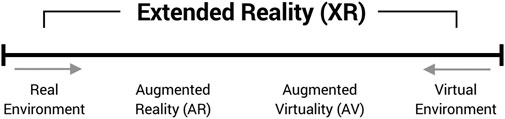
FIGURE 1. Milgram’s Reality-Virtuality continuum (adapted from Milgram and Kashino, 1994).
Enthusiasm for this nascent technology has rapidly increased, along with improved usability and affordability. This year, the global VR market size reached an impressive five billion U.S. dollars and is projected to grow to over 12 billion U.S. dollars by 2024 (Alsop, 2021). Meanwhile, over three billion people–almost one in three–own smartphones already capable of supporting AR experiences (O’Dea, 2021). Previously hindered by expensive equipment requirements or practical barriers such as a complicated setup process, recent technological advances have ushered in a wave of interest in using this immersive technology in both formal and informal learning environments (Bower et al., 2020).
As a result, teaching and learning opportunities are increasingly being embraced by tech savvy educators and students in classrooms or for blended learning at home, museums and other informal settings. For example, teachers use Google Arts and Culture to digitally teleport students on guided virtual 360° field trips to explore artifacts in virtual museums, destinations in nature such as the Great Barrier Reef, or iconic world landmarks using cardboard-based VR headsets (Minocha et al., 2017; Burke et al., 2020). Students can manipulate animated 3D AR models in the Jigspace app to better understand abstract physics, engineering or biology concepts that are normally hard to visualize (JigSpace, 2021). And mixed reality creation tools such as MERGE Cube and CoSpaces Edu enable students to create their own handheld mixed reality scenes and AR holograms for storytelling, foreign language learning or various other subject areas (Al-Gindy et al., 2020) (See Figure 2).
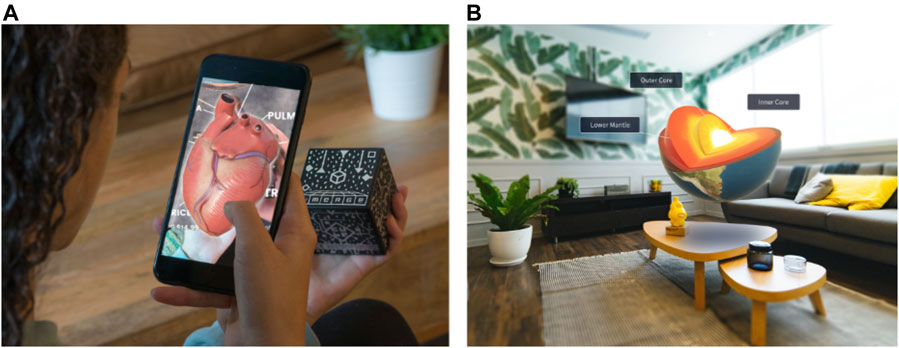
FIGURE 2. MERGE Cube (A) and Jigspace (B).
Indeed, educators and students often describe XR experiences, with their immersion and sense of presence, as a powerful way to deliver engagement, learning and positive social change (e.g., Hu-Au and Lee, 2017; Radianti et al., 2020). As examples, recent projects have targeted various opportunities including: safe spaces for therapy (Rizzotto, 2018); realistic simulations for training; situated learning contexts for language learning (Lau and Lee, 2015; Rubio-Tamayo et al., 2017); stories that invite empathy (Herrera et al., 2018; Rueda and Lara, 2020) or offer a lens into racism (Cogburn et al., 2018; Peña et al., 2021); and personally relevant hands-on experiences with science (Janonis et al., 2020). Many of these kinds of opportunities support student self-identity and attempt to broaden possible selves (Markus and Nurius, 1986) and ultimately provide new pathways to success and opportunity in science, technology, engineering, art and mathematics (STEAM) and other fields.
But the mirror image–the opposite of these kinds of benefits is equally possible; there are negative and potentially dangerous possibilities to this technology. Left unchecked, XR can be designed as a destructive force with consequences such as addiction and loss of agency, exploitation of biometric data, reinforcement of unhealthy habits, perpetuation and exacerbation of inequities in society, distortion in perceptions of reality or various other types of negative impacts. Sometimes these harmful outcomes may be deliberately achieved to serve corporate goals or to benefit only the privileged few, exploiting or deceiving the user without their awareness or consent (e.g. Outlaw and Persky, 2019); other times, they may be unintentional yet still highly problematic.
We need ways to analyze XR in terms of ethical aspects, educational efficacy and whether it supports or hinders human flourishing (eudaimonia). In this paper, we will discuss XR as a double-edged sword that can be leveraged for positive or negative outcomes, whether intentionally or unintentionally; that is, to highlight various opportunities and benefits at hand, but also threats and major risks to individuals and society. We will introduce E3XR, a framework that serves as an analytical lens to determine the ethics, learning theory and human flourishing aspects of an XR design. For each component of this framework, we will review relevant literature and consider the threats and opportunities that can be evaluated. Finally, we will conclude with a discussion of the significance of this work and implications for designers and educators.
E3XR: The Need for a More Holistic Approach
We propose E3XR as a tripartite lens that analyzes the ethical, educational and eudaimonic aspects of a design (see Figure 3 below for a basic overview of the structure). To our knowledge, at present there are no existing frameworks that attempt to unify aspects of ethics, learning theory and human flourishing in a holistic manner. For educational XR experiences, we believe that it is important to consider all three aspects in concert, as it is incomplete to focus only on ethical issues but not consider how to achieve effective learning gains, or to target effective learning alone but not address issues of equity, possible selves and growth to maximize one’s full potential.
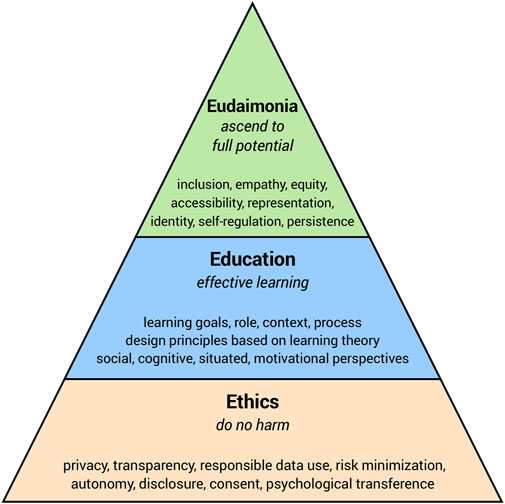
FIGURE 3. Basic overview of the E3XR framework.
In this section, we will discuss relevant literature that informs the development of this framework, especially attempts to consider how XR technology can be responsibly designed and can yield effective and desired results for social good. We will begin with ethics, followed by education, and then eudaimonia.
Ethics
Ethics can be defined as principles that can determine whether something is right or wrong, desirable or undesirable in terms of moral obligation (Singer, 2021). Common theoretical perspectives including utilitarianism (Bentham, 1789), which posits that the central goal is to maximize happiness and minimize suffering for the most people; deontology (Kant et al., 2001), which considers motives and is focused on duty or obligation to one’s family, country, church or other loyalty as the most important value; contract-based ethics, which considers rights and agreements between people rather than a focus of character, motives or consequences; and virtue ethics (Aristotle, 1962), which is focused on character, virtue and practicing good. It is important to note that one ethical perspective is not necessarily “better” than another; the adoption of one lens places a stronger emphasis on certain values and is undergirded by specific philosophical assumptions. Our intent is to make specific design rationale more transparent and explicit, while acknowledging tradeoffs in considering one ethical viewpoint over another.
Relevant Literature on Ethical Perspectives and XR
The philosopher Heidegger (1954) makes three main claims that are relevant to our discussion on ethics in XR design: 1) technology is not merely an instrument, but is a way of understanding the world; 2) it is not a human activity, but develops beyond human control; and 3) it is the “highest” danger, distorting our metaphysics of the natural world (Heidegger, 1954, p. 109; Madary and Metzinger, 2016). In a thematic review of ethics literature pertaining to XR, Carter and Egliston (2020) argue that most perspectives on ethics in technology are largely dystopian, “speculative and anticipatory” views of the future, with an emphasis on negative transference and other undesirable media effects (e.g. Madary and Metzinger, 2016; Spiegel, 2018; Kenwright, 2019) (p. 7). Spiegel (2018) describes four main areas of concern: 1) mental health risks associated with depersonalization and derealization; 2) personal neglect of users’ own actual bodies and safety issues pertaining to real physical environments; 3) the capture of personal data in ways that could threaten personal privacy and lead to the manipulation of users’ beliefs, emotions, and behaviors; and 4) moral and social risks associated with the way VR blurs the distinction between the real and illusory (including desensitization regarding violence and sex).
Recent efforts to codify ethics or create standards in XR (or closely related areas like digital games) include the Ethical Games Initiative, led by Hodent et al. (2020), to address the game industry (Wawro, 2020), Institute for the Future and Omidyar Network, (2018), Schrier’s. (2015) Ethics Practice and Implementation Categorization for video games and Bye’s (2019a) XR Ethics Manifesto, which considers the need to consider ethics in several domains of experience related to XR. IEEE’s Ethically Aligned Design principles (IEEE Global Initiative on Ethics of Autonomous and Intelligent Systems, 2019) also establishes guidance on moral responsibilities of the designer. Eight principles are proposed, with some focused on transparency and disclosure, ensuring the user knows exactly what is happening behind the scenes; others that involve control (e.g. data agency) and accountability (e.g., providing rationale for decisions made and guarding against potential misuses and risks); and still others that respect and protect internationally recognized human rights.
In summary, unethical possibilities can be organized into a few broad categories: negative psychological effects and ways one’s perceptions or behavior can be manipulated or influenced in the real world (Yee and Bailenson, 2007; Madary and Metzinger, 2016); issues of autonomy and who is in control; and privacy, security and possible misuses or abuses of personal biometric data.
Low vs High Ethical Consideration
For the categories described above, there are unethical approaches (with associated risks and threats) and ethical approaches (opportunities) to design. Several ethical issues can be considered in both positive or negative ways and analyzed in terms of low versus high ethical consideration. For instance, consider the following:
• Harassment and assault vs prosocial support and encouragement. XR could be used to inflict psychological harm upon the user in the form of harassment, bullying, torture, hate speech or assault (Shriram and Schwartz, 2017). With its strong aspects of graphic and haptic realism, embodiment and presence, it could induce trauma and exacerbate violations of personal space such as simulated touching or grabbing (Blackwell et al., 2019; Gugenheimer et al., 2020). On the other hand, XR can provide prosocial support in the form of community, mentorship and other forms of encouragement (Gerry, 2017; Blackwell et al., 2019).
• Shifts in self-identity and views of others and the external world. XR’s high fidelity environments and immersive representations of reality can lead to shifts in perceptions of self-identity, others, or of the external world (Frontiers in Virtual Reality Seminar, 2020) along with changes in behavior that come from avatar embodiment (Ratan and Sah, 2015; Bailenson et al., 2008). Negative possibilities could include misconceptions and disinformation, stereotype threat (Spencer et al., 1999) or other self-defeating beliefs. In contrast, these possibilities could also be embraced for positive effects, such as stronger self-efficacy, improved mental health or self-determination (Ryan and Deci, 2000) and a change toward desired behaviors through a phenomenon known as the Proteus effect, in which people act in ways expected of their digital avatar during and even after leaving the virtual experience (Bailenson et al., 2008).
• Addiction and attention economy monetization vs freedom and autonomy. Social media algorithms (increasingly being used in XR designs) have perfected the art of addiction through harvesting and analyzing personal data in order to deliver variable ratio rewards at strategic times, creating dopamine-driven feedback loops (He et al., 2017). Business models that foster dependency and aim to maximize user attention for profit are unethical (Institute for the Future and Omidyar Network, 2018), as numerous studies have shown correlations with decreased quality of life, depression, anxiety and other impacts on mental, physical or social health (Keles et al., 2020). In contrast, XR designs could reject such algorithms and instead consider how to provide greater freedom and autonomy, self-regulation (Bandura, 1991) and connection with others. Ethical XR design should honor a user’s time as a valuable resource; it should be respected the way privacy and other digital rights are protected (Harris, 2016).
• Exploitation and deception vs transparency and consent. XR designers sometimes incorporate strategies that deceive the user, hide the true intent of an interface element or ultimately guide a person to do what they do not necessarily wish to do, or actions that may not be in their best interest (Harris, 2016; Gugenheimer et al., 2020). For instance, “dark UX patterns”–carefully designed techniques such as bait and switch, hidden cost or misdirection–have been criticized as unethical to users (Brignull et al., 2015). Instead, XR designs could provide full transparency about data use, respect user agency and not resort to deceptive or misleading tactics.
• Biometric data misuse vs private and transparent data use. XR apps are increasingly able to collect a treasure trove of personal biometric data, including eye tracking, gait detection, emotional sentiment analysis, galvanic skin response and electroencephalogram (EEG) brain activity (Bye et al., 2019). The technology is rapidly gaining greater contextual awareness as it scans and identifies the user’s immediate surroundings, along with detecting regular patterns and habits of location and action intention (Bye et al., 2019; Gugenheimer et al., 2020). Issues of lack of privacy, monetization of this data and the rise of surveillance capitalism are concerning. For instance, Outlaw and Persky (2019) describe how a short VR experience can record over two million points of data about one’s body movement; it is not hard to anticipate situations in which an insurance company could purchase in-game data about users and then discriminate or bias against groups that are detected as high risk or unhealthy. In contrast, an ethical design could be responsible and transparent, requesting consent or minimizing risk in their data collection practices. For example, Bye (2019b) proposes to discourage the long term storage of biometric data to lessen the potential of misuse in the future and to process it in real-time as much as possible.
• Physical harm vs safety. Unintended consequences may occur from a poor design that does not account for personal safety and minimize risk. These may include physiological effects such as visual fatigue (Iskander et al., 2018) and motion sickness (Chattha et al., 2020), which studies have shown to affect women more than men (e.g., Kim et al., 2018); or the introduction of physical danger that may even turn out to be life threatening. For instance, distraction or impaired attention may create physical danger for an AR game in which players drive automobiles while playing the game (Ayers et al., 2016), walk around one’s city, or are even mistook as threats by uninformed observers. Carter and Egliston (2020), for example, discuss the politics of space and the risk of being seen as trespassing as a person of color while playing Pokemon Go. To prevent or minimize such danger, XR designers must try to anticipate possible situations in which unexpected issues may arise.
A summary of these issues along with concomitant design opportunities and threats are listed in Table 1 below. In our framework, low ethical consideration is when aspects of ethics are ignored or unaddressed entirely, or features unethical characteristics; while high ethical consideration considers ethical aspects as central to its design and represent opportunities for designers to consider as a target.
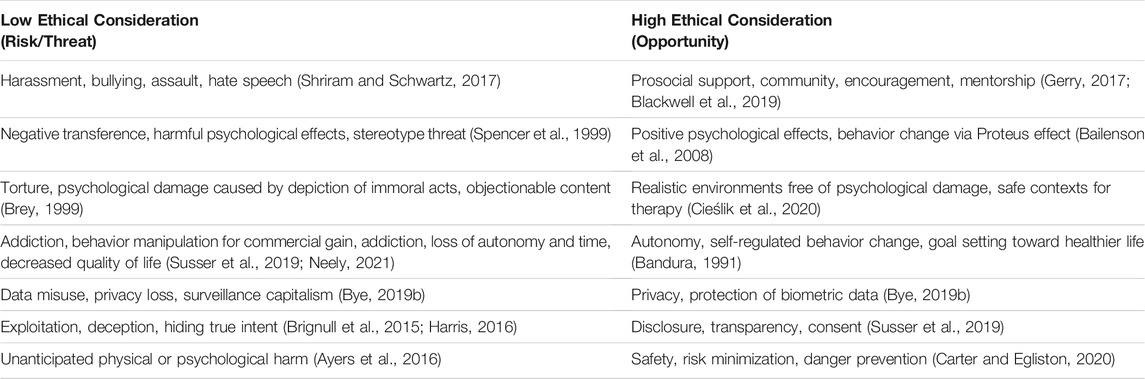
TABLE 1. Low vs high ethical consideration.
We place ethics at the base level of our analytical framework, as to avoid doing basic harm is a fundamental requirement for a designed experience. As designers and educators adopt XR, they need to determine the ethical rationale and how ethical decisions and justification are taken into account.
Educational Efficacy
In addition to ethical perspectives, an analytical framework needs to consider how to support effective or desirable learning outcomes based upon solid empirical research and learning theory. In this section, we discuss modern viewpoints on learning and offer guidelines on how to determine high versus low consideration of educational efficacy.
Learning and XR
Scholars in the field of the learning sciences have described effective learning as a process of active sensemaking and knowledge construction. Learners explore and interact with various formal and informal learning environments and have meaningful experiences:
“Learn” is an active verb; it is something people do, not something that happens to them. People are not passive recipients of learning, even if they are not always aware that the learning process is happening. Instead, through acting in the world, people encounter situations, problems, and ideas. By engaging with these situations, problems, and ideas, they have social, emotional, cognitive, and physical experiences, and they adapt. These experiences and adaptations shape a person’s abilities, skills, and inclinations going forward, thereby influencing and organizing that individual’s thoughts and actions into the future. (National Academies of Sciences, Engineering, and Medicine, 2018, p. 12)
Well-designed XR offers excellent opportunities for this kind of effective learning in authentic, situated and social contexts. VR can immerse students in completely new worlds, while AR content layers can be overlaid and connected to real-world landmarks, locations or points of time, providing educators opportunities to deliver place-based education or teach historical events, or science and mathematical concepts on demand, just-in-time and on location (e.g., Klopfer and Squire, 2008).
Debunking Myths About XR as a Silver Bullet for Learning
Although XR offers unique properties that are well suited for teaching and learning, reviews have determined that their design and development often do not take into account learning theory and research findings in the learning sciences literature (e.g. Hollands and Escueta, 2020; Radianti et al., 2020). Too often, XR is chosen by educators for its novelty or “cool” factor, but many studies have shown that students sometimes actually learn worse in XR. For instance, Makransky et al., 2019 found that VR designs often feature extraneous cognitive load–adding distracting elements or unnecessary complexity and ultimately hindering learning. Similarly, other studies comparing learning gains in biology found that students who used immersive VR or virtual worlds had worse performance compared to traditional methods like slideshows or two-dimensional models (e.g., Richards and Taylor, 2015; Parong and Mayer, 2018). AR learning experiences have faced challenges as well; researchers have observed that AR often requires too many complex tasks and manipulation, which may confuse learners and lead to discouragement (Alzahrani, 2020). These studies highlight the need for a careful, thoughtful approach to XR design for learning, in addition to the practical considerations of implementation. Educators and designers need to avoid a “silver bullet” view of XR as a promise or guarantee of better learning, but rather should adopt a much more nuanced, critical lens on how to achieve specific learning outcomes of interest.
Learning Paradigms, Goals, Learner Roles and Examples
In designing for learning in XR, one’s assumptions about the role of the learner, how the system facilitates learning processes, and the specific pedagogical goals need to be identified. Depending on the desired outcomes and goals for a learning experience, a designer is recommended to apply principles that align with specific paradigms (see Table 2 for a taxonomy adapted from Ashworth et al., 2004). For example, treating the learner as an “empty vessel” and delivering facts in the form of dictation or lecture generally leads to memorization and recall, which is limited and does not target higher order thinking skills (Collins, 2014). A behaviorist approach provides various external stimuli and conditions specific behaviors or punishes undesired behavior, whereas a constructivist approach delivers active learning via hands-on experiences (see Table 2).
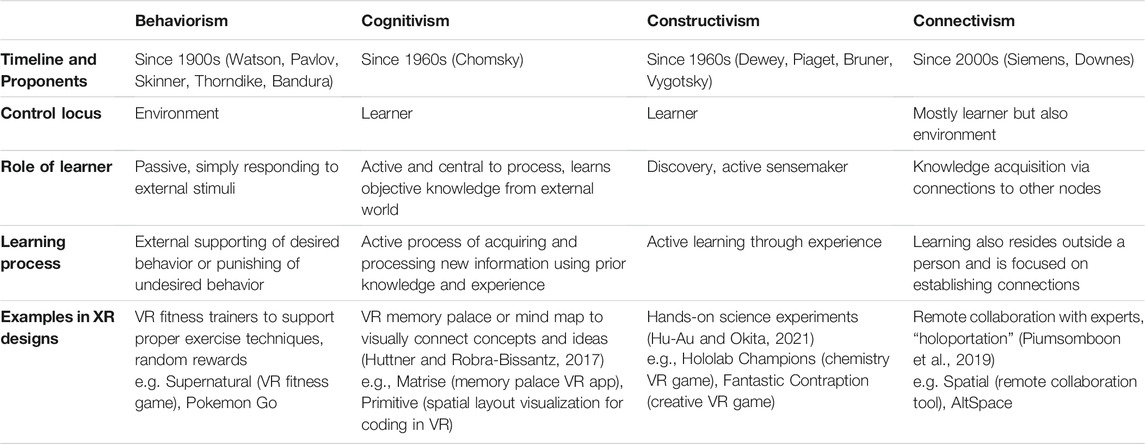
TABLE 2. Learning paradigms and XR examples (adapted from Ashworth et al., 2004).
In a systematic literature review of educational VR research, Radianti et al. (2020) found that most studies on educational XR focused on usability rather than learning outcomes, and that learning theories did not often guide the design. Loke. (2015) identified the most commonly adopted learning theories employed in studies as experiential learning, situated learning, social constructivism, constructivism, presence theory, flow theory (Csikszentmihalyi, 1990) and projective identity (Gee, 2007). In addition to these theories, we suggest multimedia learning theory (Mayer, 2005), cognitive load theory (Sweller, 1994), embodied cognition (Lakoff and Johnson, 1999) and preparation for future learning (Bransford and Schwartz, 1999) also provide important theoretical perspectives that offer strategies and guiding principles to effective instructional design.
Low vs High Consideration of Educational Efficacy
We provide a set of educational issues below and highlight both a poor approach that does not consider research or learning theory and contrast each of them with opportunities for better learning. A summary of these points can also be found in Table 3.
• Extraneous cognitive load and distraction vs germane cognitive load and flow. Too much information and distracting multimedia elements (i.e. extraneous cognitive load) or too great a challenge can overload a student’s working memory, leading to poor knowledge retention and inability to focus (Baddeley, 1983). Effective educational design focuses on minimization of extraneous cognitive load while emphasizing germane cognitive load, the construction and automation of long-lasting schemas in the liminal space between too simple and information overload (Sweller, 1994). An optimal amount of information and challenge presented to a learner can lead to a state of flow (Csikszentmihalyi, 1990) and development in knowledge and skill.
• Transmissionist learning of isolated facts vs constructivist learning experiences. A poor design often resembles the virtual equivalent of a textbook and a collection of facts and other content to be “transmitted.” (Gee, 2007). This tends to be passive and not an effective use of XR. Instead, constructivist learning entails active discovery through experience; the learner is treated as the central agent, giving them control over pace and focus (Oviatt, 2013) and the ability to create their own knowledge (Freire, 2005). Socially constructed knowledge leads to the organization of higher psychological functions (Vygotsky, 1978) and provides opportunities for developing critical thinking and other higher order thinking skills (i.e., application, analysis, synthesis, and evaluation) associated with procedural (“how to”) knowledge (Collins, 2014)–key advantages over declarative (“know that”) or descriptive knowledge (Makransky et al., 2021). For example, studies have found VR simulations effective for training professionals in healthcare (Kyaw et al., 2019), disaster preparedness and emergency response (Feng et al., 2018).
• Isolated experiences vs social learning. Isolated experiences miss out on several benefits and opportunities of social learning. Studies have found that younger students with fewer social learning experiences were correlated with slower social and cognitive development (e.g. Camilli et al., 2010). In contrast, studies have found that even the mere belief in having a social interaction with someone (even if they are actually non-human or an intelligent agent) in VR improves learning, attention and understanding (Okita et al., 2007; Chen, 2009). Social cues can be simulated virtually to enhance learning environments in ways that are impossible in real life; for example, Bailenson et al. (2005) studied “augmented gaze,” which simulated optimal teacher eye contact and gaze with multiple students simultaneously and gave each participant the best seat location in a virtual classroom, leading to improved learning. Various socio-emotional learning opportunities are also possible, such as teaching social perception skills and emotion recognition for students with autism spectrum disorder (e.g., Volioti et al., 2016). Furthermore, social XR platforms can be designed to support connectivist approaches (e.g. the ability to interact and learn alongside experts remotely) and cognitive apprenticeship (Brown et al., 1989) that include expert modeling, coaching, scaffolding, articulation, reflection and exploration.
• Static presentation of content (unimodal) vs dynamic visualization of complex or abstract concepts (multimodal). Abstract concepts often pose difficult obstacles for learners in any subject. The lack of a physical model, prop or concrete object to which one can relate an abstract concept can lead to conceptual misunderstandings for students (Hayes and Kraemer, 2017). Content that is presented in unimodal, static and didactic ways are relatively passive and do not take advantage of the most powerful affordances of XR. For example, molecular chemistry could be taught by describing hydrogen and oxygen atoms in a unimodal fashion. Instead, well-designed learning experiences incorporate different strategies for learners to approach complex or abstract concepts (e.g., models, visual representations, analogies). XR affordances are well-suited for visualizing difficult and abstract concepts (Kaufmann et al., 2000); normally invisible or intangible objects can be reified and made tangible (e.g. the ability to touch, examine and manipulate objects at microscale such as red blood cells, sound waves, electromagnetic fields, etc.). Designers can also situate these objects in authentic contexts, enabling environmental cues for more effective learning (Dalgarno and Lee, 2010).
• Unimaginative and uniform perspectives vs new perspective taking. Traditional perspectives only allow learners to view a topic or issue in standard or commonplace ways that may stifle creativity and understanding. XR allows perspectives that are not physically possible in real life (e.g., viewing a phenomenon from alternate time, place or scale). This opens up possibilities that can invite new ideas, creativity, critical thinking, or to understand a problem space in a fresh or unusual way. For example, a learner can embody an animal or a tree in VR and can view the world through this unique vantage point to understand the consequences of deforestation and biodiversity loss (Zec, 2017), or to see the effects of climate change (e.g. sea level rise) at different points of time with visualizations overlaid upon the same location (Wu and Lee, 2015; Ahn et al., 2016).
• Poor relevance and passive learning vs preparation for future learning and sparking new interest. Many students struggle to see personal relevance in various school subjects, often leading to attrition (Harackiewicz et al., 2016). Learning scientists argue that the virtual worlds of games and XR can be valuable in sparking initial interest and to prepare for future learning (Bransford and Schwartz, 1999) in a discipline by providing meaningful, personally relevant experiences within the perspective of a semiotic domain (Gee, 2007) or epistemic frame (Nash and Shaffer, 2011). The ability to immerse a learner in terms of a professional field’s language, narrative, community, values and practices can be the difference between teaching passive knowledge and memorizing a scientific concept (e.g., Newton’s Laws) versus being truly literate and applying knowledge and scientific practices in a domain like science. Opportunities include citizen science-based AR in the real world or roleplay-based experiences in which learners complete authentic tasks of STEM professionals (Gaydos and Squire, 2012).
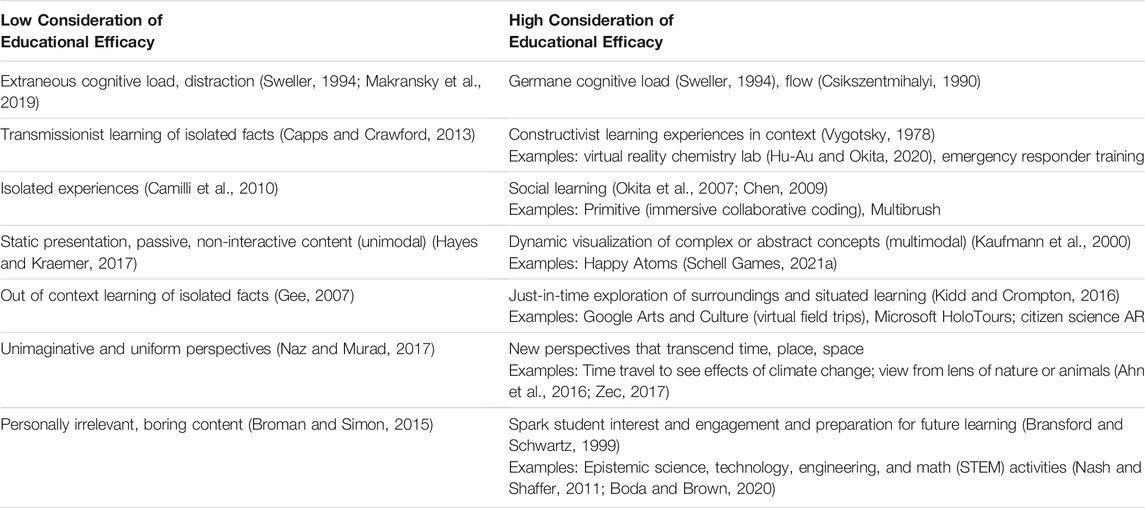
TABLE 3. Low vs High Consideration of Educational Efficacy.
Eudaimonia
The top layer of the 3EXR framework is eudaimonia, built atop the middle layer (education) and the base layer (ethics). As the other two layers form the foundation for eudaimonia, this loosely parallels the concept of self-actualization in Maslow’s (1962) hierarchy of needs. All three layers work together in concert. We briefly summarize relevant literature and highlight examples of high and low consideration of eudaimonia in XR design.
Human Flourishing and XR
The concept of eudaimonia can be defined as human flourishing, prosperity, growth and the realization of one’s full potential (Ryff, 1995). Aristotle (1962) describes this as the “highest human good,” in contrast to hedonia, which is characterized by the kind of short-term pleasure and addictive dopamine hits often found in the design in slot machines in casinos and many video games. Eudaimonia is strongly related to self-determination theory, a macro theory of motivation that describes a person’s innate desire for growth and pursuit of autonomy, relatedness and competence (Ryan and Deci, 2000).
XR can support the pursuit of eudaimonia because it provides opportunities to try on and reflect upon one’s relationship with new identities. As Turkle (1999) predicted, virtual social life allows for unprecedented access to fluid identity exploration and prolonged moratorium, as “time in cyberspace may now exist on an always available window” (p. 645). Relevant theoretical perspectives include possible selves theory (Markus and Nurius, 1986) and projective identity theory (Gee, 2007), both of which consider images of the self that are unknown to others (e.g. ideal selves, hoped for selves, feared selves, etc.). Other perspectives include value sensitive design (VSD) (Friedman et al., 2017) and values at play (Flanagan and Nissenbaum, 2014) models, both of which make specific values explicit and central to the design process. It is important to identify stakeholders (Friedman et al., 2002) and identify who are those who benefit, and who are given the opportunities to use XR (Carter and Egliston, 2020).
Opportunities and Threats
XR technologies are too often designed with detrimental values that reinforce stereotypes and perpetuate inequities, leading to barriers to eudaimonia. In contrast, if carefully and properly designed, XR can play a part in promoting inclusion, equity and other prosocial values (Flanagan and Nissenbaum, 2014), in supporting the alignment of cultural and academic identities that may be in conflict (Nasir, 2002) and ultimately to support higher quality of life and human flourishing (Deci and Ryan, 2008).
One opportunity is via empathy-based experiences. XR (specifically story-driven VR) has been described as the “ultimate empathy machine,” (Milk, 2016) as it provides opportunities to directly involve the audience in interactive scenes or roleplay situations about the self and the other, and to make claims about social justice issues or how the world works. Yet Carter and Egliston (2020) point out that an inherently biased viewpoint and ideological framing occurs when the XR creator sets up the camera; who gets to place the camera–and how they set it up–controls the narrative and decides which perspective is adopted, what is “truth,” and whose story is told. There is danger in the possible creation of virtual “slum tourism” or “poverty porn,” (Griffin and Muldoon, 2020) i.e. to capture a vantage point that has limited or no actual benefit to the documented group and may inadvertently perpetuate or exacerbate inequities or reinforce power structures, impose ethnocentric views or promote a “hero” or savior complex/mentality. Designers risk reinforcing stereotypes and values that prevent eudaimonia for the oppressed or marginalized (Flanagan and Nissenbaum, 2014); it is a better approach to empower voices that are less commonly heard and to invite them directly to spearhead the process of creation and storytelling.
Accessibility and digital divide issues remain a challenge. Though XR devices are becoming more affordable, the technology is still out of reach for many, requiring high speed internet and relatively expensive hardware. Carter and Egliston (2020) argue that current XR hardware incorporates ableist, sexist and exclusionary values in its design, preventing minority groups and those with disabilities from full participation. The field has barely begun to consider how to promote design strategies for accessibility and inclusion, such as haptic and auditory design cues (e.g. Zhao et al., 2018). Much more work is needed to establish additional design principles and recommendations in this area.
Low vs High Eudaimonic Consideration
We provide a set of eudaimonic issues below and highlight both a poor approach (i.e., a risk or threat to human flourishing) and an efficacious approach (an opportunity to support human flourishing). For example:
• Addiction and loss of agency vs positive behavior change and habit formation. An XR design that relies on addiction and attention monetization and uses questionable approaches such as loot boxes (i.e. virtual grab bags with mystery items inside gambling-like properties) lead to a user’s loss of agency, wasted time or money (Neely, 2021). We argue that this type of design has a low regard for user eudaimonia. On the other hand, gamification elements and avatar embodiment can provide motivational tools, structure and feedback to support healthy behaviors (Bailenson et al., 2008). For instance, Run to My Heart is an AR game that uses audio cues and playful game elements (e.g., collaborating with friends to collecting potions from real world locations, fighting hamsters and avoiding turning into a potato) to promote physical fitness and provide support for regular exercise and the advancement of well-being (Fox, 2019).
• Data exploitation vs personal data tracking for self-assessment of growth. Data could be used in exploitative ways that do not support personal growth or flourishing, such as monetization of personal data by corporations in ways that are hidden or not ultimately beneficial (Sujon, 2019). In contrast, an eudaimonic approach would use data to support one’s own growth and development, especially by providing ways to set goals and track progress toward mastery and success. Mindfulness and emotion regulation VR apps such as Healium, for example, provide visualizations of biometric data and feedback to train a player to control stress levels and heart rate. Preliminary evidence is promising regarding the therapeutic potential of VR for anxiety management and stress reduction (Tarrant et al., 2018).
• Absent voices and exclusion vs accessibility and inclusion. XR technology is often designed in ways that exclude many from participation whenever diverse voices are missing from the design process. In these cases, the values embodied in the design may perpetuate cycles of inequity via sexism, racism, ableism or other “-isms” (Carter and Egliston, 2020), ultimately exacerbating the digital divide. On the other hand, XR could be designed in inclusive ways, bringing more diversity as key stakeholders into the design process (Friedman et al., 2002). In addition to challenging and rejecting stereotypical designs, there is a need for accessibility and allowing all to participate in alternative ways. Strategies include spatial sound for object location and interaction for blind users, alternative symbolic representation of information for emotion recognition for the visually impaired and assistive AR and XR technology used in rehabilitation for stroke patients (Charles et al., 2020; O Connor et al., 2020).
• Stereotype threat of mediated images vs genuine representation and supporting positive identities. Relatedly, when diverse voices are absent in the decisionmaking process, there is greater risk of stereotype threat in designs. Video game design, for instance, has long been a male-dominated industry, representing over 88% of designers (Zippia, 2021). In terms of ethnic and racial diversity, over 72% are white, despite ethnic minorities playing games earlier, longer and more frequently than white counterparts (Anderson, 2015). The kinds of designs created (or not created) are the result of absent voices, as representations and ideas in a product always reflect a designer’s biases and values (Flanagan and Nissenbaum, 2014). It is therefore unsurprising to observe frequent misogyny and sexism apparent for in-game portrayals of women such as damsel in distress, a prize or hypersexualized object to be won and other common tropes (Lee et al., 2006; Williams et al., 2009); furthermore, there are few non-stereotypical Native American, Asian, Black and Latino playable characters and roles (Williams et al., 2009). As mediated images can be powerful agents that activate constructs that subsequently influence judgments about race, gender and other social categories (Behm-Morawitz et al., 2016), this can lead to negative effects on self-identity, possible selves and academic performance. For instance, Ratan and Sah (2015) found that research participants who controlled a male avatar performed better at a math task than those who used a female avatar.
To combat stereotype threat, designers can support desired identities and deliver personally relevant experiences in professional contexts (e.g. STEAM fields). For example, learners can roleplay (“embody and perform”) as famous historical figures like Benjamin Franklin and Sonia Sotamayor in HistoryMakerVR and experience scientific discoveries alongside Nobel Prize winning physicist Marie Curie in ScienceVR. These positive experiences can and provide positive role models and imagery support self-identity and broaden possible selves (Markus and Nurius, 1986).
• Distortions of reality vs empathy-based experiences that empower underrepresented voices. An XR experience can reinforce stereotypical images, exacerbate implicit bias or perpetuate inequity (Groom et al., 2009). Examples include overly simplistic “slum tourism” experiences that may actually be harmful in their superficial treatment of a topic and may lead to blaming or misconceptions of reality (Griffin and Muldoon, 2020). On other hand, XR can provide empathy-based experiences that amplify the voices of the oppressed and marginalized. Herrera et al. (2018) found that participants who became homeless in VR had more positive, longer-lasting attitudes toward the homeless and signed a petition supporting the homeless at a significantly higher rate than participants who performed a traditional awareness task. Similarly, Cogburn et al. (2018) created a VR project to deliver an experience of injustice and discrimination, allowing players to better understand systemic racism.
• Stress and trauma vs safe space for therapy, persistence, practice and failure. The depiction or embodiment of many kinds of immoral acts are possible in XR, including graphic acts of violence, torture, rape, robbery, and grand theft (Brey, 1999). These kinds of realistic depictions can lead to trauma, stress or anxiety. On the other hand, XR can provide opportunities for healing from trauma, phobias and disorders; it can also provide safe spaces to understand self and others and to encourage persistence and grit (Duckworth et al., 2007). In a systematic review of research on VR for therapy, Cieślik et al. (2020) reviewed 23 studies that determined VR was effective as a supplementary treatment for anxiety/phobias, including for PTSD, fear of driving and flying, arachnophobia, agoraphobia and claustrophobia; and 18 studies that found that VR was effective as therapy for psychosis, depression, substance disorders, eating disorders, schizophrenia, and dementia. VR can also be a promising space for rehabilitation for stroke recovery, using patient narratives and embedded stories as a strategy (Charles et al., 2020). Sharing of stories can be useful for other kinds of therapeutic aspects as well; in Where Thoughts Go (Rizzotto, 2018), for example, people can anonymously share and listen to fears, painful memories and deeper personal thoughts in an immersive VR experience.
In Table 4 below, we provide a summary and examples of possible threats and risks to eudaimonia and contrast them to opportunities to foster eudaimonia.
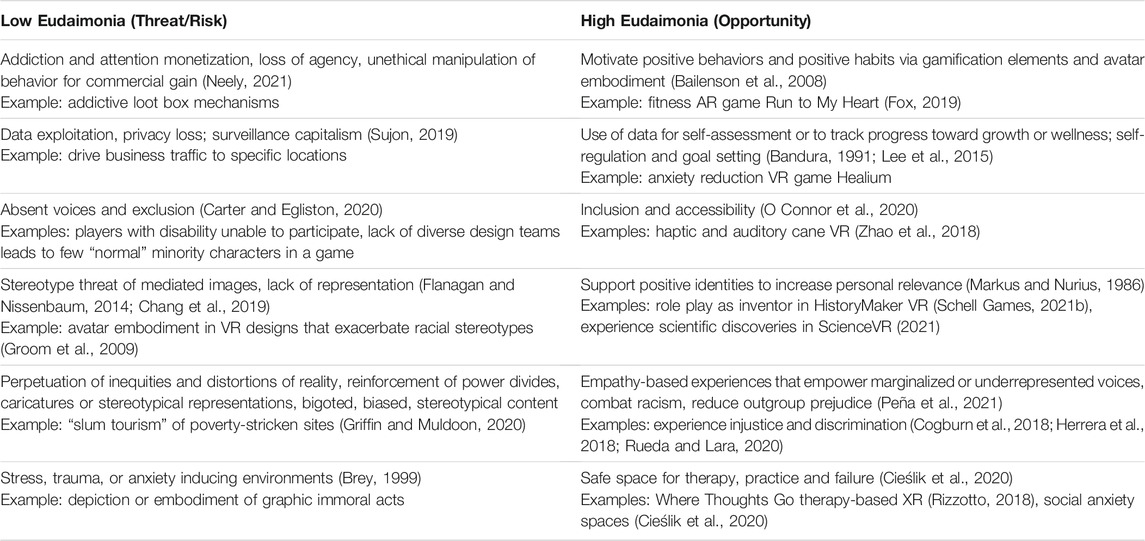
TABLE 4. Examples of Low vs High Eudaimonic Design Opportunities.
E3XR Framework: Summary and Conclusion
The expanded E3XR framework is displayed in Figure 4. This analytical framework captures key issues and tradeoffs along the three dimensions of ethics, education and eudaimonia.
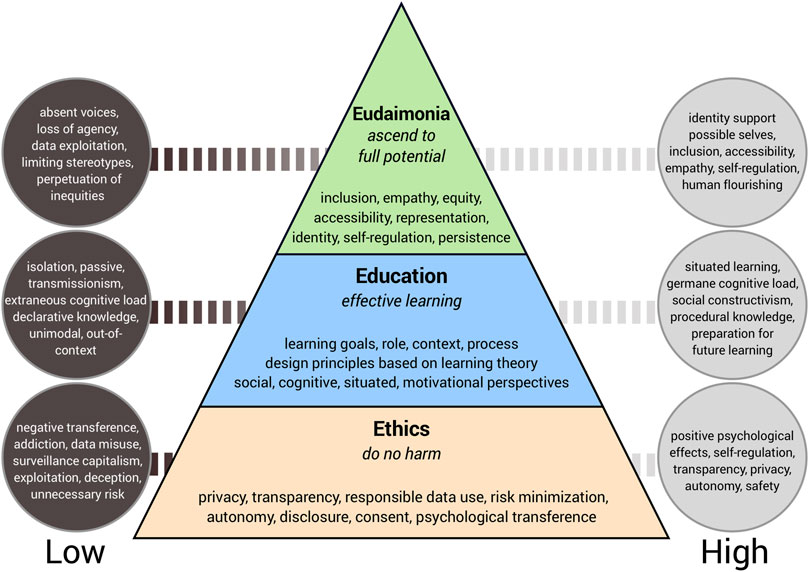
FIGURE 4. Expanded E3XR framework with continuum.
While this is only a starting point, we believe this serves as a useful model to analyze and consider design rationale and justify design decisions. We believe it offers an important tool in the XR designer’s toolkit because it provides a basis for strategically and effectively targeting individual user goals and needs while simultaneously determining the impact of XR experiences in society at large. By designing XR applications through this lens, designers can avoid pitfalls such as unforeseen negative user experiences (Dibbell, 2005), collecting unnecessary user data that could pose a threat in the future, and exposing users to negative transference or psychological trauma (Franks, 2017). It encourages the designer to consider learning theory and effective research-based design, and their project’s effect on individuals holistically (e.g., aspects of cognition, self-determination and growth, motivation and interpersonal effects). The eudaimonic level asks designers to examine the process of creation (e.g., absent voices and values), potential issues that arise before undertaking the XR experience (e.g., inclusion and accessibility) as well as how the user is affected after the XR experience (e.g., development of a positive identity, greater empathy with others). By carefully designing through the lens of the E3XR analytical framework, a designer can assure themselves of creating equitable learning experiences that are more effective and can broaden opportunities for all.
Author Contributions
JJL conceptualized the E3XR framework, wrote the manuscript, created the figures. EH-A assisted with writing and reviewing the manuscript.
Funding
This study received funding from Google for Education in the form of a Virtual Reality Research Award.
Conflict of Interest
The authors declare that the research was conducted in the absence of any commercial or financial relationships that could be construed as a potential conflict of interest.
Publisher’s Note
All claims expressed in this article are solely those of the authors and do not necessarily represent those of their affiliated organizations, or those of the publisher, the editors and the reviewers. Any product that may be evaluated in this article, or claim that may be made by its manufacturer, is not guaranteed or endorsed by the publisher.
References
Ahn, S. J. G., Bostick, J., Ogle, E., Nowak, K. L., McGillicuddy, K. T., and Bailenson, J. N. (2016). Experiencing Nature: Embodying Animals in Immersive Virtual Environments Increases Inclusion of Nature in Self and Involvement with Nature. J. Comput-mediat Comm. 21 (6), 399–419. doi:10.1111/jcc4.12173
Al-Gindy, A., Felix, C., Felix, C., Ahmed, A., Matoug, A., and Alkhidir, M. (2020). Virtual Reality: Development of an Integrated Learning Environment for Education. Int. J. Inf. Educ. Technol. 10 (3), 171–175. doi:10.18178/ijiet.2020.10.3.1358
Alsop, T. (2021). Virtual Reality (VR) Statistics and Facts. Available at: https://www.statista.com/topics/2532/virtual-reality-vr/(Accessed March 22, 2021).
Alzahrani, N. M. (2020). Augmented Reality: A Systematic Review of its Benefits and Challenges in E-Learning Contexts. Appl. Sci. 10 (16), 5660. doi:10.3390/app10165660
Anderson, M. (2015). Views on Gaming Differ by Race, Ethnicity. Pew Research Center. Available at: https://www.pewresearch.org/fact-tank/2015/12/17/views-on-gaming-differ-by-race-ethnicity/.
Aristotle (1962). The Nichomachean Ethics, Translated by Martin Ostwald. New York: The Bobs-Merrill Company.
Ashworth, F., Brennan, G., Egan, K., Hamilton, R., and Sáenz, O. (2004). Learning Theories and Higher Education. Available at: https://arrow.tudublin.ie/cgi/viewcontent.cgi?article=1003&context=engscheleart.
Ayers, J. W., Leas, E. C., Dredze, M., Allem, J.-P., Grabowski, J. G., and Hill, L. (2016). Pokémon GO-A New Distraction for Drivers and Pedestrians. JAMA Intern. Med. 176 (12), 1865–1866. doi:10.1001/jamainternmed.2016.6274
Baddeley, A. (1983). Working Memory. Phil. Trans. R. Soc. Lond. B 302 (1110), 311–324. doi:10.1098/rstb.1983.0057
Bailenson, J. N., Beall, A. C., Loomis, J., Blascovich, J., and Turk, M. (2005). Transformed Social Interaction, Augmented Gaze, and Social Influence in Immersive Virtual Environments. Hum. Comm Res 31 (4), 511–537. doi:10.1111/j.1468-2958.2005.tb00881.x
Bailenson, J. N., Yee, N., Blascovich, J., Beall, A. C., Lundblad, N., and Jin, M. (2008). The Use of Immersive Virtual Reality in the Learning Sciences: Digital Transformations of Teachers, Students, and Social Context. J. Learn. Sci. 17, 102–141. doi:10.1080/10508400701793141
Bandura, A. (1991). Social Cognitive Theory of Self-Regulation. Organizational Behav. Hum. Decis. Process. 50 (2), 248–287. doi:10.1016/0749-5978(91)90022-L
Baniasadi, T., Ayyoubzadeh, S. M., and Mohammadzadeh, N. (2020). Challenges and Practical Considerations in Applying Virtual Reality in Medical Education and Treatment. Oman Med. J. 35 (3), e125. doi:10.5001/omj.2020.43
Behm-Morawitz, E., Pennell, H., and Speno, A. G. (2016). The Effects of Virtual Racial Embodiment in a Gaming App on Reducing Prejudice. Commun. Monogr. 83 (3), 396–418. doi:10.1080/03637751.2015.1128556
Bentham, J. (1789). An Introduction to the Principles of Morals and Legislation. Oxford: Clarendon Press.
Blackwell, L., Ellison, N., Elliott-Deflo, N., and Schwartz, R. (2019). Harassment in Social Virtual Reality. Proc. ACM Hum.-Comput. Interact. 3, 1–25. doi:10.1145/3359202
Boda, P. A., and Brown, B. (2020). Designing for Relationality in Virtual Reality: Context-specific Learning as a Primer for Content Relevancy. J. Sci. Educ. Technol. 29 (5), 691–702. doi:10.1007/s10956-020-09849-1
Bower, M., DeWitt, D., and Lai, J. W. (2020). Reasons Associated with Preservice Teachers’ Intention to Use Immersive Virtual Reality in Education. Br. J. Educ. Technol. 51 (6), 2214–2232. doi:10.1111/bjet.13009
Bransford, J. D., and Schwartz, D. L. (1999). Chapter 3: Rethinking Transfer: A Simple Proposal with Multiple Implications. Rev. Res. Educ. 24 (1), 61–100. doi:10.3102/0091732x024001061
Brey, P. (1999). The Ethics of Representation and Action in Virtual Reality. Ethics Inf. Technol. 1 (1), 5–14. doi:10.1023/a:1010069907461
Brignull, H., Miquel, M., Rosenberg, J., and Offer, J. (2015). Dark Patterns - User Interfaces Designed to Trick People. Available at: http://darkpatterns.org/(Accessed April 06, 2021).
Broman, K., and Simon, S. (2015). Upper Secondary School Students' Choice and Their Ideas on How to Improve Chemistry Education. Int. J. Sci. Math. Educ. 13, 1255–1278. doi:10.1007/s10763-014-9550-0
Brown, J. S., Collins, A., and Duguid, P. (1989). Situated Cognition and the Culture of Learning. Educ. Res. 18 (1), 32–42. doi:10.3102/0013189X018001032
Burke, V., Jørgensen, D., and Jørgensen, F. A. (2020). Museums at Home: Digital Initiatives in Response to Covid-19. Norsk museumstidsskrift 6 (02), 117–123. doi:10.18261/issn.2464-2525-2020-02-05
Bye, K. (2019b). An XR Ethical Framework for Navigating the Moral Dilemmas of Mixed Reality [Talk], in AWE USA 2019, May 29, 2019 (Santa Clara, CA). Available at: https://www.youtube.com/watch?v=BNgXKX8IwcU&t=1688s.
Bye, K., Hosfelt, D., Chase, S., Miesnieks, M., and Beck, T. (2019). “The Ethical and Privacy Implications of Mixed Reality,” in ACM SIGGRAPH 2019 Panels, July 28, 2019 (Los Angeles, CA), 1–2. doi:10.1145/3306212.3328138
Bye, K. (2019a). XR Ethics Manifesto [Presentation], Greenlight XR Strategy Conference, October 18, 2019 (San Francisco, CA). Available at: https://www.slideshare.net/kentbye/xr-ethics-manifesto-updated-nov-2-2019 (Accessed April 10, 2021).
Camilli, G., Vargas, S., Ryan, S., and Barnett, W. S. (2010). Meta-analysis of the Effects of Early Education Interventions on Cognitive and Social Development. Teach. Coll. Rec. 112 (3), 579–620.
Capps, D. K., and Crawford, B. A. (2013). Inquiry-based Instruction and Teaching About Nature of Science: Are They Happening. J. Sci. Teach. Educ. 24 (3), 497–526. doi:10.1007/s10972-012-9314-z
Carter, M., and Egliston, B. (2020). Ethical Implications of Emerging Mixed Reality Technologies. Socio-Tech Futures Lab: University of Sydney. Available at: https://ses.library.usyd.edu.au/handle/2123/22485 (Accessed April 1, 2021).
Chang, F., Luo, M., Walton, G., Aguilar, L., and Bailenson, J. (2019). Stereotype Threat in Virtual Learning Environments: Effects of Avatar Gender and Sexist Behavior on Women's Math Learning Outcomes. Cyberpsychology, Behav. Soc. Networking 22 (10), 634–640. doi:10.1089/cyber.2019.0106
Charles, D., Holmes, D., Charles, T., and McDonough, S. (2020). “Virtual Reality Design for Stroke Rehabilitation,” in Biomedical Visualisation. Advances in Experimental Medicine and Biology. Editor P. Rea (Cham: Springer), Vol. 1235, 53–87. doi:10.1007/978-3-030-37639-0_4
Chattha, U. A., Janjua, U. I., Anwar, F., Madni, T. M., Cheema, M. F., and Janjua, S. I. (2020). Motion Sickness in Virtual Reality: an Empirical Evaluation. IEEE Access 8, 130486–130499. doi:10.1109/access.2020.3007076
Chen, J. (2009). “The Impact of Social Belief on the Neurophysiology of Learning and Memory,” in Annual Meeting of the Society for Neuroscience, October 17, 2009, San Francisco, CA, USA. Available at https://ci.nii.ac.jp/naid/10030056849/.
Cieślik, B., Mazurek, J., Rutkowski, S., Kiper, P., Turolla, A., and Szczepańska-Gieracha, J. (2020). Virtual Reality in Psychiatric Disorders: a Systematic Review of Reviews. Complement. Therapies Med. 52, 102480. doi:10.1016/j.ctim.2020.102480
Cogburn, C. D., Bailenson, J., Ogle, E., Asher, T., and Nichols, T. (2018). “1000 Cut Journey,” in ACM SIGGRAPH 2018 Virtual, Augmented, and Mixed Reality, August 12, 2018 (Vancouver, Canada). doi:10.1145/3226552.3226575
Collins, R. (2014). Skills for the 21st Century: Teaching Higher-Order Thinking. Curriculum Leadersh. J. 12 (14).
Csikszentmihalyi, M. (1990). Flow: The Psychology of Optimal Experience. 1st ed.. Manhattan, NJ: Harper and Row.
Dalgarno, B., and Lee, M. J. W. (2010). What Are the Learning Affordances of 3-D Virtual Environments. Br. J. Educ. Technol. 41 (1), 10–32. doi:10.1111/j.1467-8535.2009.01038.x
Deci, E. L., and Ryan, R. M. (2008). Self-determination Theory: A Macrotheory of Human Motivation, Development, and Health. Can. psychology/Psychologie canadienne 49 (3), 182–185. doi:10.1037/a0012801
Dibbell, J. (2005). A Rape in Cyberspace. Village Voice. Available at: http://www.villagevoice.com/2005/10/18/a-rape-in-cyberspace.
Duckworth, A. L., Peterson, C., Matthews, M. D., and Kelly, D. R. (2007). Grit: Perseverance and Passion for Long-Term Goals. J. Personal. Soc. Psychol. 92 (6), 1087–1101. doi:10.1037/0022-3514.92.6.1087
Feng, Z., González, V. A., Amor, R., Lovreglio, R., and Cabrera-Guerrero, G. (2018). Immersive Virtual Reality Serious Games for Evacuation Training and Research: A Systematic Literature Review. Comput. Educ. 127, 252–266. doi:10.1016/j.compedu.2018.09.002
Fox, J. (2019). A Breath of Fresh Air in Video Games. Available at: https://www.technologyreview.com/2020/08/18/1006235/jenny-c-xu-19/(Accessed April 1, 2021).
Franks, M. A. (2017). The Desert of the Unreal: Inequality in Virtual and Augmented Reality. UC Davis L. Rev. 51 (17–24), 499. Available at: https://heinonline.org/HOL/Page?handle=hein.journals/davlr51&id=513&div=21&collection=journals.
Freire, P. (2005). Pedagogy of the Oppressed. New York: The Continuum International Publishing Group. doi:10.1215/00382876-1472612
Friedman, B., Hendry, D. G., and Borning, A. (2017). A Survey of Value Sensitive Design Methods. FNT in Human-Computer Interaction 11 (2), 63–125. doi:10.1561/1100000015
Friedman, B., Kahn, P., and Borning, A. (2002). Value Sensitive Design: Theory and Methods. Washington: University of Washington technical report, 2–12.
Frontiers in Virtual Reality Seminar (2020). Ethics Issues in Virtual and Augmented Reality. Frontiers in Virtual Reality. Available at: https://www.youtube.com/watch?v=XaqhtgiTIa4.
Gaydos, M. J., and Squire, K. D. (2012). Role Playing Games for Scientific Citizenship. Cult. Stud. Sci. Educ. 7 (4), 821–844. doi:10.1007/s11422-012-9414-2
Gee, J. P. (2007). What Video Games Have to Teach Us About Learning and Literacy. 2nd Ed.. New York, NY: St. Martin’s Griffin.
Gerry, L. J. (2017). Paint with Me: Stimulating Creativity and Empathy While Painting with a Painter in Virtual Reality. IEEE Trans. Vis. Comput. Graphics 23 (4), 1418–1426. doi:10.1109/TVCG.2017.2657239
Griffin, T., and Muldoon, M. (2020). Exploring Virtual Reality Experiences of Slum Tourism. Tourism Geographies, 1–20. doi:10.1080/14616688.2020.1713881
Groom, V., Bailenson, J. N., and Nass, C. (2009). The Influence of Racial Embodiment on Racial Bias in Immersive Virtual Environments. Social Influence 4, 231–248. doi:10.1080/15534510802643750
Gugenheimer, J., McGill, M., Huron, S., Mai, C., Williamson, J., and Nebeling, M. (2020). “Exploring Potentially Abusive Ethical, Social and Political Implications of Mixed Reality Research in HCI,” in Extended Abstracts of the 2020 CHI Conference on Human Factors in Computing Systems, April 25, 2020 (Honolulu, HI), 1–8. doi:10.1145/3334480.3375180
Harackiewicz, J. M., Smith, J. L., and Priniski, S. J. (2016). Interest Matters. Pol. Insights Behav. Brain Sci. 3 (2), 220–227. doi:10.1177/2372732216655542
Harris, T. (2016). How Technology Hijacks People’s Minds—From a Magician and Google’s Design Ethicist. San Francisco: Medium Magazine.
Hayes, J. C., and Kraemer, D. J. M. (2017). Grounded Understanding of Abstract Concepts: The Case of STEM Learning. Cogn. Res. 2 (7), 1–15. doi:10.1186/s41235-016-0046-z
He, Q., Turel, O., and Bechara, A. (2017). Brain Anatomy Alterations Associated with Social Networking Site (SNS) Addiction. Sci. Rep. 7, 45064. doi:10.1038/srep45064
Heidegger, M. (1954). The Question Concerning Technology. Technology values: Essent. readings 99, 113.
Herrera, F., Bailenson, J., Weisz, E., Ogle, E., and Zaki, J. (2018). Building Long-Term Empathy: A Large-Scale Comparison of Traditional and Virtual Reality Perspective-Taking. PLoS ONE 13 (10), e0204494. doi:10.1371/journal.pone.0204494
Hodent, C., Edwards, K., Lo, K., and Figueiredo, C. (2020). Addressing Ethics in the Game Industry. Games for Change Festival. https://g4c2020.sched.com/event/cjAA/addressing-ethics-in-the-game-industry.
Hollands, F., and Escueta, M. (2020). How Research Informs Educational Technology Decision-Making in Higher Education: the Role of External Research versus Internal Research. Education Tech Res. Dev 68, 163–180. doi:10.1007/s11423-019-09678-z
Hosfelt, D. (2019). Making Ethical Decisions for the Immersive Web. Available at: https://arxiv.org/abs/1905.06995v1.
Hu Au, E., and Lee, J. J. (2017). Virtual Reality in Education: a Tool for Learning in the Experience Age. Int. J. Innovation Educ. 4 (4), 215. doi:10.1504/ijiie.2017.10012691
Hu-Au, E., and Okita, S. (2021). Exploring Differences in Student Learning and Behavior between Real-Life and Virtual Reality Chemistry Laboratories. J. Sci. Educ. Technol., 1–15. doi:10.1007/s10956-021-09925-0
Hu-Au, E., and Okita, S. (2020). “Exploring Differences in Student Learning and Behavior between Real-Life and Virtual Reality Chemistry Laboratory Experiments,” in The International Conference of the Learning Sciences, Nashville, TN. Available at: https://icls2020.org/.
Huta, V., and Waterman, A. S. (2014). Eudaimonia and its Distinction from Hedonia: Developing a Classification and Terminology for Understanding Conceptual and Operational Definitions. J. Happiness Stud. 15, 1425–1456. doi:10.1007/s10902-013-9485-0
Huttner, J. P., and Robra-Bissantz, S. (2017). An Immersive Memory Palace: Supporting the Method of Loci with Virtual Reality. Boston: AMCIS.
IEEE (2019). Dark Patterns - User Interfaces Designed to Trick People. Available at: https://standards.ieee.org/content/dam/ieee-standards/standards/web/documents/other/ead1e_general_principles.pdf (Accessed April 06, 2021).
IEEE Global Initiative on Ethics of Autonomous and Intelligent Systems (2019). Ethically Aligned Design: a Vision for Prioritizing Human Well-Being with Autonomous and Intelligent Systems. Available at: https://standards.ieee.org/content/ieee-standards/en/industry-connections/ec/autonomous-systems.html.
Institute for the Future and Omidyar Network (2018). EthicalOS Toolkit. Available at: https://ethicalos.org/wp-content/uploads/2018/08/Ethical-OS-Toolkit.pdf.
Iskander, J., Hossny, M., and Nahavandi, S. (2018). A Review on Ocular Biomechanic Models for Assessing Visual Fatigue in Virtual Reality. IEEE Access 6, 19345–19361. doi:10.1109/access.2018.2815663
Janonis, A., Kiudys, E., Girdžiūna, M., Blažauskas, T., Paulauskas, L., and Andrejevas, A. (2020). “Escape the Lab: Chemical Experiments in Virtual Reality,” in International Conference on Information and Software Technologies (Cham: Springer), 273–282. doi:10.1007/978-3-030-59506-7_22
JigSpace (2021). JigSpace. Available at: https://jig.space/(Accessed April 7, 2021).
Kant, I., Heath, P., and Schneewind, J. B. (1997). Lectures on Ethics. Cambridge, U.K.: Cambridge University Press. doi:10.1017/CBO9781107049512
Kaufmann, H., Schmalstieg, D., and Wagner, M. (2000). Construct3D: A Virtual Reality Application for Mathematics and Geometry Education. Educ. Inf. Tech. 5, 263–276. doi:10.1023/A:1012049406877
Keles, B., McCrae, N., and Grealish, A. (2020). A Systematic Review: the Influence of Social Media on Depression, Anxiety and Psychological Distress in Adolescents. Int. J. Adolescence Youth 25 (1), 79–93. doi:10.1080/02673843.2019.1590851
Kenwright, B. (2019). Jan). Virtual Reality: Ethical Challenges and Dangers. Available at: https://technologyandsociety.org/virtual-reality-ethical-challenges-and-dangers/(Accessed April 7, 2021).
Kidd, S. H., and Crompton, H. (2016). Augmented Learning with Augmented Reality, in Mobile Learning Design: Theories and Application. Editors D. Churchill, J. Lu, B. Fox, and T. K. F. Chiu (New York: Springer), 97–108.
Kim, H. K., Park, J., Choi, Y., and Choe, M. (2018). Virtual Reality Sickness Questionnaire (VRSQ): Motion Sickness Measurement index in a Virtual Reality Environment. Appl. Ergon. 69, 66–73. doi:10.1016/j.apergo.2017.12.016
Klopfer, E., and Squire, K. (2008). Environmental Detectives-The Development of an Augmented Reality Platform for Environmental Simulations. Educ. Tech Res. Dev 56 (2), 203–228. doi:10.1007/s11423-007-9037-6
Kyaw, B. M., Saxena, N., Posadzki, P., Vseteckova, J., Nikolaou, C. K., George, P. P., et al. (2019). Virtual Reality for Health Professions Education: Systematic Review and Meta-Analysis by the Digital Health Education Collaboration. J. Med. Internet Res. 21 (1), e12959. doi:10.2196/12959
Lakoff, G., and Johnson, M. (1999). Philosophy in the Flesh: The Embodied Mind and its challenge to Western Thought. New York: Basic Books.
Lau, K. W., and Lee, P. Y. (2015). The Use of Virtual Reality for Creating Unusual Environmental Stimulation to Motivate Students to Explore Creative Ideas. Interactive Learn. Environments 4820, 1–16. doi:10.1080/10494820.2012.745426
Lee, J. J., Hellar, D. B., and Hoadley, C. M. (2006). “Gender, Gaming, and IT Careers,” in Encyclopedia of Gender and Information Technology (Pennsylvania, United States: IGI Global), 687–692. doi:10.4018/978-1-59140-815-4.ch106
Lee, M., Son, J., Kim, J., and Yoon, B. (2015). Individualized Feedback-Based Virtual Reality Exercise Improves Older Women’s Self-Perceived Health: A Randomized Controlled Trial. Arch. Gerontol. Geriatr. 61, 154–160. doi:10.1016/j.archger.2015.06.010
Loke, S.-K. (2015). How Do Virtual World Experiences Bring about Learning? A Critical Review of Theories. Australas. J. Educ. Technol. 31 (1), 112. doi:10.14742/ajet.2532
Madary, M., and Metzinger, T. K. (2016). Real Virtuality: a Code of Ethical Conduct. Recommendations for Good Scientific Practice and the Consumers of VR-Technology. Front. Robotics AI 3, 3. doi:10.3389/frobt.2016.00003
Makransky, G., Andreasen, N. K., Baceviciute, S., and Mayer, R. E. (2021). Immersive Virtual Reality Increases Liking but Not Learning with a Science Simulation and Generative Learning Strategies Promote Learning in Immersive Virtual Reality. J. Educ. Psychol. 113 (4), 719–735. doi:10.1037/edu0000473
Makransky, G., Terkildsen, T. S., and Mayer, R. E. (2019). Adding Immersive Virtual Reality to a Science Lab Simulation Causes More Presence but Less Learning. Learn. Instruction 60, 225–236. doi:10.1016/j.learninstruc.2017.12.007
Markus, H., and Nurius, P. (1986). Possible Selves. Am. Psychol. 41 (9), 954–969. doi:10.1037/0003-066X.41.9.954
Mayer, R. E. (2005). “Cognitive Theory of Multimedia Learning,” in Cambridge Handbook of Multimedia Learning, 31–48. doi:10.1017/cbo9780511816819.004
Milgram, P., and Kishino, F. (1994). A Taxonomy of Mixed Reality Visual Displays. IEICE Trans. Inform. Syst. 77, 1321–1329.
Milk, C. (2016). How Virtual Reality Can Create the Ultimate Empathy Machine [Video]. Available at: https://www.ted.com/talks/chris_milk_how_virtual_reality_can_create_the_ultimate_empathy_machine.
Minocha, S., Tudor, A. D., and Tilling, S. (2017). “Affordances of mobile Virtual Reality and Their Role in Learning and Teaching,” in HCI '17: Proceedings of the 31st British Computer Society Human Computer Interaction Conference, 1–10. doi:10.14236/ewic/HCI2017.44
Nash, P., and Shaffer, D. W. (2011). Mentor Modeling: The Internalization of Modeled Professional Thinking in an Epistemic Game. J. Comput. Assist. Learn. 27 (2), 173–189. doi:10.1111/j.1365-2729.2010.00385.x
Nasir, N. I. S. (2002). Identity, Goals, and Learning: Mathematics in Cultural Practice. Math. thinking Learn. 4 (2-3), 213–247. doi:10.1207/s15327833mtl04023_6
National Academies of Sciences, Engineering, and Medicine (2018). How People Learn II: Learners, Contexts, and Cultures. Washington, D.C.: National Academies Press.
Naz, F., and Murad, H. S. (2017). Innovative Teaching Has a Positive Impact on the Performance of Diverse Students. SAGE Open 7 (4). doi:10.1177/2158244017734022
Neely, E. L. (2021). Come for the Game, Stay for the Cash Grab: The Ethics of Loot Boxes, Microtransactions, and Freemium Games. Games Cult. 16 (2), 228–247. doi:10.1177/1555412019887658
Niantic (2019). Pokemon Go. Available at: http://www.pokemongo.com (Accessed April 18, 2019).
O Connor, J., Abou-Zahra, S., Covarrubias Rodriguez, M., and Aruanno, B. (2020). “XR Accessibility - Learning from the Past and Addressing Real User Needs for Inclusive Immersive Environments,” in Computers Helping People with Special Needs. ICCHP 2020. Lecture Notes in Computer Science. Editors K. Miesenberger, R. Manduchi, M. Covarrubias Rodriguez, and P. Peňáz (Cham: Springer), Vol. 12376, 117–122. doi:10.1007/978-3-030-58796-3_15
O’Dea, S. (2021). Number of Smartphone Users Worldwide from 2016 to 2023. Available at: https://www.statista.com/statistics/330695/number-of-smartphone-users-worldwide/(Accessed March 31, 2021).
Okita, S. Y., Bailenson, J., and Schwartz, D. L. (2007). The Mere Belief of Social Interaction Improves Learning. Proc. Annu. Meet. Cogn. Sci. Soc. 29 (29), 1355–1360. doi:10.2458/azu_rangelands_v29i4_srm3
Outlaw, J., and Persky, S. (2019). The Hidden Risk of Virtual Reality - and What to Do About it. Available at: https://www.weforum.org/agenda/2019/08/the-hidden-risk-of-virtual-reality-and-what-to-do-about-it/(Accessed April 06, 2021).
Oviatt, S. (2013). “Designing Integrated Interfaces that Stimulate Activity,” in The Design of Future Educational Interfaces (New York: Routledge), 211–234. doi:10.4324/9780203366202-19
Parong, J., and Mayer, R. E. (2018). Learning Science in Immersive Virtual Reality. J. Educ. Psychol. 110 (6), 785–797. doi:10.1037/edu0000241
Peña, J., Wolff, G., and Wojcieszak, M. (2021). Virtual Reality and Political Outgroup Contact: Can Avatar Customization and Common Ingroup Identity Reduce Social Distance. Soc. Media Soc. 7 (1). doi:10.1177/2056305121993765
Piumsomboon, T., Dey, A., Ens, B., Lee, G., and Billinghurst, M. (2019). The Effects of Sharing Awareness Cues in Collaborative Mixed Reality. Front. Robotics AI 6, 5. doi:10.3389/frobt.2019.00005
Radianti, J., Majchrzak, T. A., Fromm, J., and Wohlgenannt, I. (2020). A Systematic Review of Immersive Virtual Reality Applications for Higher Education: Design Elements, Lessons Learned, and Research Agenda. Comput. Educ. 147, 103778. doi:10.1016/j.compedu.2019.103778
Ratan, R., and Sah, Y. J. (2015). Leveling up on Stereotype Threat: The Role of Avatar Customization and Avatar Embodiment. Comput. Hum. Behav. 50, 367–374. doi:10.1016/j.chb.2015.04.010
Richards, D., and Taylor, M. (2015). A Comparison of Learning Gains when Using a 2D Simulation Tool versus a 3D Virtual World: An Experiment to Find the Right Representation Involving the Marginal Value Theorem. Comput. Educ. 86, 157. doi:10.1016/j.compedu.2015.03.009
Rizzotto, L. (2018). Where thoughts go. [Film]. New York: Tribeca Film Festival. Available at https://tribecafilm.com/festival/archive/where-thoughts-go-prologue-2018.
Rubio-Tamayo, J. L., Barrio, M. G., and García, F. G. (2017). Immersive Environments and Virtual Reality: Systematic Review and Advances in Communication, Interaction and Simulation. Multimodal Tech. Interaction 1 (4), 1–20. doi:10.3390/mti1040021
Rueda, J., and Lara, F. (2020). Virtual Reality and Empathy Enhancement: Ethical Aspects. Front. Robotics AI 7, 160. doi:10.3389/frobt.2020.506984
Ryan, R. M., and Deci, E. L. (2000). Self-determination Theory and the Facilitation of Intrinsic Motivation, Social Development, and Well-Being. Am. Psychol. 55 (1), 68–78. doi:10.1037/0003-066x.55.1.68
Ryff, C. D. (1995). Psychological Well-Being in Adult Life. Curr. Dir. Psychol. Sci. 4, 99–104. doi:10.1111/1467-8721.ep10772395
Schell Games (2021a). Happy Atoms. Available at: https://www.schellgames.com/games/happy-atoms (Accessed April 16, 2021).
Schell Games (2021b). HistoryMaker VR. Available at: https://www.schellgames.com/games/history-maker-vr/(Accessed April 16, 2021).
Schrier, K. (2015). EPIC: A Framework for Using Video Games in Ethics Education. J. Moral Educ. 44 (4), 393–424. doi:10.1080/03057240.2015.1095168
ScienceVR (2021). ScienceVR Homepage. ScienceVR. Available at: https://www.sciencevr.com/(Accessed April 16, 2021).
Shriram, K., and Schwartz, R. (2017). “All Are Welcome: Using Vr Ethnography to Explore Harassment Behavior in Immersive Social Virtual Reality,” in 2017 IEEE Virtual Reality (VR) (Los Angeles, CA, USA: IEEE), 225–226. doi:10.1109/vr.2017.7892258
Singer, P. (2021). Ethics. Britannica. Available at: https://www.britannica.com/topic/ethics-philosophy (Accessed April 1, 2021).
Slater, M., Gonzalez-Liencres, C., Haggard, P., Vinkers, C., Gregory-Clarke, R., Jelley, S., et al. (2020). The Ethics of Realism in Virtual and Augmented Reality. Front. Virtual Reality 1 (March), 1–13. doi:10.3389/frvir.2020.00001
Spencer, S. J., Steele, C. M., and Quinn, D. M. (1999). Stereotype Threat and Women's Math Performance. J. Exp. Soc. Psychol. 35 (1), 4–28. doi:10.1006/jesp.1998.1373
Spiegel, J. (2018). The Ethics of Virtual Reality Technology: Social Hazards and Public Policy Recommendations. Sci. Eng. Ethics 24, 1537–1550. doi:10.1007/s11948-017-9979-y
Sujon, Z. (2019). Disruptive Play or Platform Colonialism? the Contradictory Dynamics of Google Expeditions and Educational Virtual Reality. Digital Cult. Educ. 11 (1).
Susser, D., Roessler, B., and Nissenbaum, H. (2019). Online Manipulation: Hidden Influences in a Digital World. Georgetown L. Technol. Rev. 1.
Sweller, J. (1994). Cognitive Load Theory, Learning Difficulty, and Instructional Design. Learn. Instruction 4 (4), 295–312. doi:10.1016/0959-4752(94)90003-5
Tarrant, J., Viczko, J., and Cope, H. (2018). Virtual Reality for Anxiety Reduction Demonstrated by Quantitative EEG: A Pilot Study. Front. Psychol. 9, 1280. doi:10.3389/fpsyg.2018.01280
Volioti, C., Tsiatsos, T., Mavropoulou, S., and Karagiannidis, C. (2016). VLEs, Social Stories and Children with Autism: A Prototype Implementation and Evaluation. Educ. Inf. Tech. 21 (6), 1679–1697. doi:10.1007/s10639-015-9409-1
Vygotsky, L. S. (1978). Mind in Society: The Development of Higher Psychological Processes. Cambridge, MA: Harvard University Press.
Wawro, A. (2020). There’s a New Initiative to Create a Game Industry Code of Ethics. Available at: https://www.gamasutra.com/view/news/366371/Theres_a_new_initiative_to_create_a_game_industry_code_of_ethics.php (Accessed July 14, 2020).
Williams, D., Martins, N., Consalvo, M., and Ivory, J. D. (2009). The Virtual Census: Representations of Gender, Race and Age in Video Games. New Media Soc. 11 (5), 815–834. doi:10.1177/1461444809105354
Wu, J. S., and Lee, J. J. (2015). Climate Change Games as Tools for Education and Engagement. Nat. Clim. Change 5 (5), 413–418. doi:10.1038/nclimate2566
Yee, N., and Bailenson, J. N. (2007). The Proteus Effect: the Effect of Transformed Self-Representation on Behavior. Hum. Commun. Res. 33, 271–290. doi:10.1111/j.1468-2958.2007.00299.x
Zec, M. (2017). Tree. Available at: https://www.treeofficial.com/(Accessed April 1, 2021).
Zhao, Y., Bennett, C., Benko, H., Cutrell, H., Morris, M., and Sinclair, M. (2018). “Enabling People with Visual Impairments to Navigate Virtual Reality with a Haptic and Auditory Cane Simulation,” in CHI ’18: Proceedings of the 2018 CHI Conference on Human Factors in Computing Systems (New York, NY: ACM), 1–14. doi:10.1145/3173574.3173690
Zippia (2021). Game Designer Statistics in the US. Available at: https://www.zippia.com/game-designer-jobs/demographics/(Accessed April 1, 2021).
Keywords: learning, educational design, mixed reality, augmented reality, virtual reality, ethics, extended reality, eudaimonic design
Citation: Lee JJ and Hu-Au E (2021) E3XR: An Analytical Framework for Ethical, Educational and Eudaimonic XR Design. Front. Virtual Real. 2:697667. doi: 10.3389/frvir.2021.697667
Received: 20 April 2021; Accepted: 20 September 2021;
Published: 06 October 2021.
Edited by:
Darryl Charles, Ulster University, United KingdomReviewed by:
Daniel Rene Mestre, Aix-Marseille Université, FranceDebbie Rankin, Ulster University, United Kingdom
Copyright © 2021 Lee and Hu-Au. This is an open-access article distributed under the terms of the Creative Commons Attribution License (CC BY). The use, distribution or reproduction in other forums is permitted, provided the original author(s) and the copyright owner(s) are credited and that the original publication in this journal is cited, in accordance with accepted academic practice. No use, distribution or reproduction is permitted which does not comply with these terms.
*Correspondence: Joey J. Lee, amwzNDcxQHRjLmNvbHVtYmlhLmVkdQ==