 Andreas Dengel
 Muhammad Zahid Iqbal
 Silke Grafe
 Eleni Mangina
- 1Faculty of Computer Science, Goethe-Universität Frankfurt, Frankfurt, Germany
- 2School of Computer Science, College of Science, University College Dublin, Dublin, Ireland
- 3Chair ofSchool Pedagogy, Julius Maximilian University of Würzburg, Würzburg, Germany
Creating pedagogically sound, interactive Augmented Reality (AR) experiences supporting situated and experiential learning remains a challenge to teachers without programming skills. To integrate AR in the everyday classroom, teachers need to be capable of designing their own immersive experiences for their students, which is why an analysis of existing authoring toolkits is necessary to identify suitable tools for educational application development and future research directions in terms of educational AR. We identified “easy access”, “GUI-based design”, and “interactive contents” as needs of teachers for designing AR content for the classroom. Based on these needs, we conducted a literature review of 835 documents. Of 80 relevant articles, we included 43 peer-reviewed articles from ACM Digital Library, DBLP, IEEExplore, Scopus, Web of Science, Google Scholar, and miscellaneous other sources in our analysis. We identified 69 different AR authoring toolkits and classified these with regard to their accessibility, their degree of required programming knowledge, and their interactivity. The results show a divergent research landscape with a lack of empirical evaluation. Of 26 openly accessible toolkits, we identified five toolkits addressing the defined needs of teachers for designing interactive AR experiences for the classroom without requiring extensive programming knowledge. We conclude that there are only few tools for the straightforward design of educational AR experiences addressing the needs of teachers and suggest using research-informed and evidence-based criteria for developing AR authoring toolkits for education.
1 Introduction
Even before the inevitable digital changes in educational teaching and learning arrangements due to the global pandemic, a high interest in immersive technologies such as Virtual Reality (VR) and Augmented Reality (AR) could be observed among users (Cipresso et al., 2018). Regarding the role of immersive media in technology-enhanced learning, the high prevalence of smartphones and tablets in students’ everyday life (Südwest, 2018, 2020) makes the use of low-immersive AR (Iqbal et al., 2021) interesting for teachers. While the affordances and benefits of AR in educational settings are already well-researched (Dunleavy et al., 2009; Chang et al., 2011; Billinghurst and Duenser, 2012), the creation of such tools remains a challenge for the everyday (digital and real-life) classroom. Even though there is a large number of AR authoring toolkits supporting the creation of such applications, the development process can be tedious for teachers without prior programming knowledge as many toolkits still require a considerable amount of scripting. Concurrently, research has shown that interactive AR applications, in particular, can support experiential and active learning (Huang et al., 2016; Moorhouse and Jung, 2017; Jesionkowska et al., 2020), which makes such experiences highly desirable. Although current eXtended Reality (XR) educational systems focus on specific immersive media technologies, the path to optimising the use of XR in education would be easier to navigate through the provision of adequate authoring toolkits, which is the motivation of the research described in this paper. It has been proven that XR has the potential to assist educators (Kosko et al., 2021) in transcending the physical boundaries of lecture theatres, labs and classrooms; there is a need to evaluating the effectiveness of existing authoring toolkits to create and deliver quality content and XR learning experiences. The development of XR authoring toolkits involves an iterative software development process (Dodds, 2021), while current XR educational developments focus on specific test scenarios with high expectations in programming skills (Yang et al., 2020).
Freitas et al. provide a summary of existing AR authoring toolkits. They identify five challenges addressed by various toolkits with a special focus on rapid prototyping (Freitas et al., 2020). Another review was carried out by Nebeling and Speicher (Nebeling and Speicher, 2018) on tools for 3D design and programming of AR and VR experiences, resulting in five categories focusing on required skills/resources and levels of possible fidelity. While these reviews include valuable insights, an educational focus on AR experiences is still lacking. To the authors’ knowledge, there is no literature analysis reviewing the suitability of AR authoring toolkits for developing educational experiences. Therefore, the rationale of this review is, building upon the findings of Freitas et al. as well as Nebeling and Speicher, to not only integrate more recent tools into the analysis, but also to investigate the following research questions:
1. What is the current research landscape on AR authoring toolkits?
2. What are the characteristics of these authoring toolkits regarding their accessibility, required level of programming skills, and developmental capabilities?
3. Which of these authoring toolkits are suitable for teachers to create educational AR experiences for the classroom?
Throughout this paper, we will explore the research questions based on a systematic literature review covering relevant databases with suitable search, inclusion, and exclusion criteria. These research questions are designed to illustrate what lies ahead in terms of the role of authoring toolkits for the design of educational AR experiences and the search process, and results are presented. The findings are discussed and implications for future research and development endeavours are drawn.
Additionally, the perspective of the scientific reception of existing authoring toolkits is presented, which is the current research gap in the area of XR educational authoring toolkits, as our aim is to provide evidence-based perspectives on the available toolkits rather than comparing their technical features (although the technical features define the functionality available to the educators).
2 Design of Augmented Reality in Education
Park states that “[t]he primary purpose of AR toolkits and frameworks is to reduce tedious and time-consuming work common to most AR applications” (Park, 2010, p. 727). The development of an AR experience, as a combination of the real and virtual through interactive objects in a 3D environment (Azuma, 1997), requires tracking sensors, user movement tracking, techniques for modeling 3D objects, and inertia (Van Krevelen and Poelman, 2010). Due to these characteristics, there is a lack of tools to quickly iterate and create new ideas utilizing low fidelity prototype methods, which leads to the first requirement for educational AR authoring toolkits: easy accessibility.
McIntyre et al. identify eight problems in the AR prototyping area: the lack of simple coding environments for AR, lack of resources needed for the creation of 3D content, dealing with multiple unrelated tracking technologies, lack of resources for sensing and reasoning technologies, lack of separation of concerns between system components, difficulties in the relationships between physical and virtual worlds, developing in the physical world, and working in real-time (MacIntyre et al., 2005). Nebeling and Speicher highlight three similar problems: a massive tool landscape, requiring tools from multiple classes, and significant gaps of tools within and between classes of tools (Nebeling and Speicher, 2018). The collaboration between end users, authors and personalization are also important features to be considered in the authoring tools in AR with zero programming for educators (Vert and Andone, 2017).
Due to these problems, Nebeling and Speicher discuss how authoring tools can facilitate the creation of rapid prototypes focused on 3D content, interactions, scenes, and mobile screens (Nebeling and Speicher, 2018). They structured existing authoring tools into five classes according to the skills and resources required as well as their possible level of fidelity. The first class, Basic Mobile Screens & Interactions, comprises tools such as InVision, Sketch, and Adobe XD, which allow the concept of multiple screens and supporting active regions in these screens together with mouse interactions. The second class, Basic AR/VR Scenes & Interactions, creates basic forms of AR/VR content with interactive behavior, for example uploading 360-degree photos and creating immersive, interactive scenes (includes toolkits such as DART, Proto. io, Halo, and HoloBuilder). The third class, AR/VR Focused Interactions, focuses on AR camera-based interactions using markers. Toolkits of this class are for example, ARToolKit, Tiles, Studierstube, and ComposAR. The fourth class is called 3D Content and describes all 3D content creation tools such as Teddy, Lift-Off, Google’s SketchUp, and Autodesk’s 3ds Max and Maya. Tools in this class allow the digital creation of new 3D objects. The fifth class is 3D Games & Applications. This class includes comprehensive game engines such as Unity, Unreal, and AFrame. Visual editors are integrated into most of these toolkits. Nebeling and Speicher point out that most toolkits that enable the design of AR/VR scenes with low programming knowledge do not support 3D modeling or explicit interaction at the same time (Nebeling and Speicher, 2018).
Freitas et al. report five challenges regarding the rapid authoring of AR experiences and toolkits addressing these challenges. The challenge 3D Objects (expensive and time-consuming creation of 3D content) is addressed by tools such as Clay, ProtoAR, Vuforia, Unity, and Cinema 4D. A second challenge, Gesture, focuses on interactions with gesture definitions, e.g. toolkits like GestureWiz, Wizard of Oz, and Sketch. The challenge Validated Interactions is addressed by Wizard of Oz, WozARd, ProtoAR, DART, MockAR, Lake, PowerPoint, Keynote, and Sketch. Camera Simulation challenges can be focused with a 3D printed smartphone frame or video simulations. The Communication of Concepts can be carried out with paper (such as stick notes), the Storyboard tool, 3D-HUDD, videos, and PintAR. Real time environment tools include Wizard of Oz approaches, WozARd, Lake, Unity, and Xcode (Freitas et al., 2020). It must be noted that Freitas et al. analyzed not just AR authoring toolkits but also 3D design software.
There has been an increase of rapid software development tools for AR applications within the past decade in general also for AR authoring toolkits as well. A common problem of some of these toolkits is that the use of existing code libraries results in big, monolithic systems creating complexity in usability. Object-oriented approaches found in newer development tools can provide a more flexible and component-based approach to fast prototyping. But still, these AR authoring toolkits focus on the main AR functionalities for better interaction rather than storytelling and scenario simulation, which would be greatly needed in educational settings for creating more productive results. This leads to difficulties in using the toolkits and frameworks, especially for new developers, novice programmers and people without computer science background (Park, 2010).
As this is the case for most teachers, where very few have any computer science background, this systematic literature review focuses on this target group and investigates AR authoring toolkits for educational purposes. Therefore, the second requirement for educational AR authoring toolkits is a low level of required programming skills.
Situated learning with AR requires interactivity, leading to careful attention to the context (FitzGerald et al., 2012). Interaction is especially important when students work together in the immersive experience: “For an effective interactive and collaborative education, all the students must be able to see the effects of the interaction at the same time” (Li, 2010). Doing so, the third requirement for educational AR authoring toolkits is a high level of possible interaction for end users.
3 Methods
3.1 Search Process
To provide an extensive literature overview, we followed the Preferred Reporting of Items for Systematic Reviews and Meta-analyses (PRISMA) Statement (Moher et al., 2009). Moher et al. suggest four phases for collating relevant articles for systematic reviews: Identification, Screening, Eligibility, and Included. The search process is reported in Figure 1. We gathered documents from five literature databases: ACM, DBLP, IEEExplore, Scopus, and Web of Science. As research objectives 2 and 3 focus on the assessment and selection of suitable AR authoring toolkits in education (not just academic contexts), we extended the literature database search with selected results from a Google search. The search terms were simple and rather broad, in order to cover as many relevant sources as possible: (“Augmented Reality” AND “Authoring Toolkit”). The exact terms were adapted to the respective databases. This review will provide a 20 years overview of AR authoring toolkits and associated research, which is why the years considered were selected as 2000–2021, published in English. In the Identification phase in September 2021, 835 articles were gathered from the databases [ACM Digital Library (evaluated and functional only): 774; DBLP: 2; IEEExplore: 11; Scopus: 20; Web of Science: 12 and rest from Google Scholar].
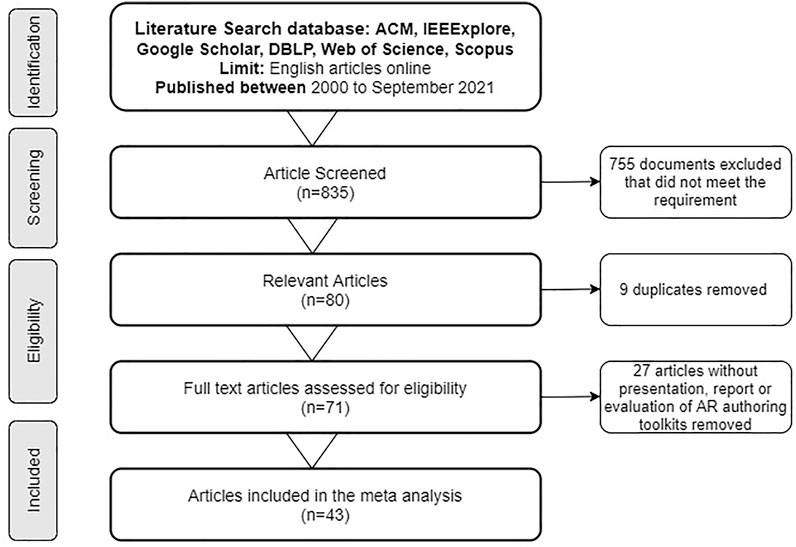
FIGURE 1. Search process.
3.2 Study Selection
During the Screening phase, studies that are not relevant for this review were removed according to general inclusion and exclusion criteria (Moher et al., 2009). Papers not meeting the eligibility criteria were screened out depending on the time, language, type of article, and type of method used (according to the abstracts). The inclusion and exclusion criteria are shown in Table 1. A review of the abstracts revealed various articles that were irrelevant, particularly those that did not present, use or evaluate AR authoring toolkits. 80 articles were assessed in the Screening phase. After removing 9 duplicates, the full texts of 71 articles were reviewed during the Eligibility phase. Here, another 27 articles were excluded as they failed to meet the requirements. 43 articles were included in the meta analysis. The Procedure of search and selection is represented in Figure 1.

TABLE 1. Inclusion and exclusion criteria.
3.3 Limitations of the Search
Regarding the limitations of this analysis, it is important to consider that 1) the search term was limited to (“Augmented Reality” AND “Authoring Toolkit”) in comparison with existing reviews utilising (“Mixed Reality” AND “Authoring Toolkit”) 2) not all authoring toolkits are reported in scientific literature. To address this issue, we also included toolkits without explicit literature in the analysis (e.g. those mentioned in another paper or found in the additional Google search). Also, 3) not all toolkits were accessible, either because the projects were discontinued or because they were not free. While discontinued projects are not interesting for educators anyway, this review neglects fee-based toolkits, as it was not possible to collect all necessary data for the classification of these toolkits. 3) For the published evaluations, two potential publication biases have to be kept in mind: Non-significant results might not get published (or are more likely to get rejected by journals/conferences) and project-intern evaluations might only be published if they report positive results.
4 Results
Our final corpus contains 43 publications (the included and excluded references for this analysis are shown in Supplementary Appendix S1A). In this section, we describe the article characteristics, the reported AR authoring toolkits and existing evaluations on these toolkits. We categorize the toolkits according to their required level of programming skills and provided level of interactivity.
4.1 Article Characteristics
When analyzing the 43 articles regarding their years of publication, it becomes apparent that there is no clear rise or fall regarding the publication count on authoring toolkits for AR. There was an extensive amount of publications in 2003 (due to the IEEE International Augmented Reality Toolkit Workshop in 2003 and the open-source release of ARToolKit in 2001) and a recent increase in 2020 (see Figure 2). Most of the papers (90.9%) focus on AR in particular, 9.1% have a mixed focus including e.g. Virtual Reality.
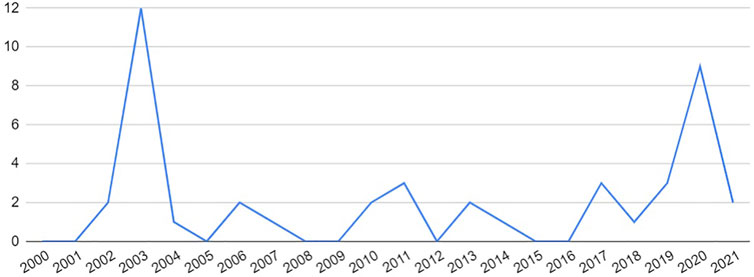
FIGURE 2. Publication years of the selected articles.
Figure 3 shows the distribution of devices focused on in the articles. Most of the articles focus on Head Mounted Displays (HMDs). Many documents do not specify the devices used, often because the toolkit supports different technologies. A small number of papers focus specifically on mobile phones or tablets and only one paper focuses on building a desktop-based application.
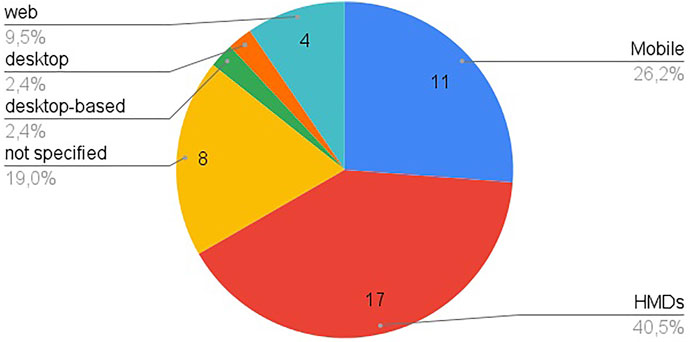
FIGURE 3. Focused devices in the selected articles.
Regarding the toolkits’ evaluation, more than half of the papers (17) do not report any evaluation methods (see Figure 4). Five papers reported software performance analyses (e.g. framerates). Less than a third of the papers conducted user studies. The few papers which conducted user studies reported the use of observations (four papers), interviews (four papers), and questionnaires (three papers).
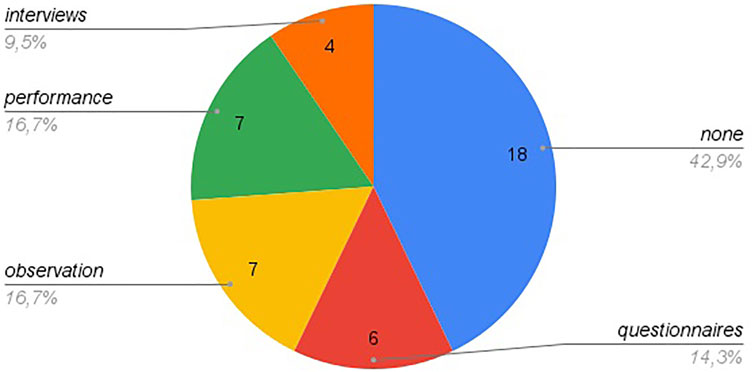
FIGURE 4. Reported evaluation methods for AR authoring toolkits.
4.2 Toolkits Characteristics
21 AR authoring toolkits were directly reported in the papers. Through a backtracking search (using a “snowballing approach” by scanning the references cited in the articles) and an additional Google web search, 48 additional toolkits could be identified. Of this total of 80 AR authoring toolkits (shown in Supplementary Appendix S1B) only a bit over a third (36.8%) were openly accessible. One recently published toolkit (Areeka) was added via Google web search as there were no scientific papers focusing on or mentioning this toolkit.
The resulting 26 toolkits were assessed according to the required level of programming skills and interactivity. The selection of these two key defining features was based on current literature on key features for content authoring toolkits (Roberto et al., 2016; Roldán-Álvarez et al., 2016; Shibolet et al., 2018; Krauß et al., 2021) and usability factors in authoring tools (Murray, 2004; Dağ et al., 2014), that denotes:
1. The required level of programming skills has been defined as follows, based on the existing classification of programming skills required to assess the complexity of authoring tool for Intelligent Tutoring Systems (Murray, 2016);
• High: no application development possible without programming knowledge, either a coding library or a software framework),
• Medium (application development without coding possible via GUI, additional functionality needs programming),
• Low (application development without the need of programming knowledge, completely GUI-based)
2. In terms of the level of interactivity, which is linked with the creation of static and dynamic content: static (experiences without any interaction, e.g. 3D-models or animations on markers) or dynamic (user-interaction possible). level of interactivity: static (experiences without any interaction, e.g. 3D-models or animations on markers) or dynamic (user-interaction possible).
Table 2 and 3 show all 26 toolkits, characterized by their level of required programming skills and their level of interactivity. This assessment was conducted by two independent raters, leading to a perfect agreement for the required programming knowledge (κ = 1) and an almost perfect agreement for the level of interactivity (κ = 0.84).
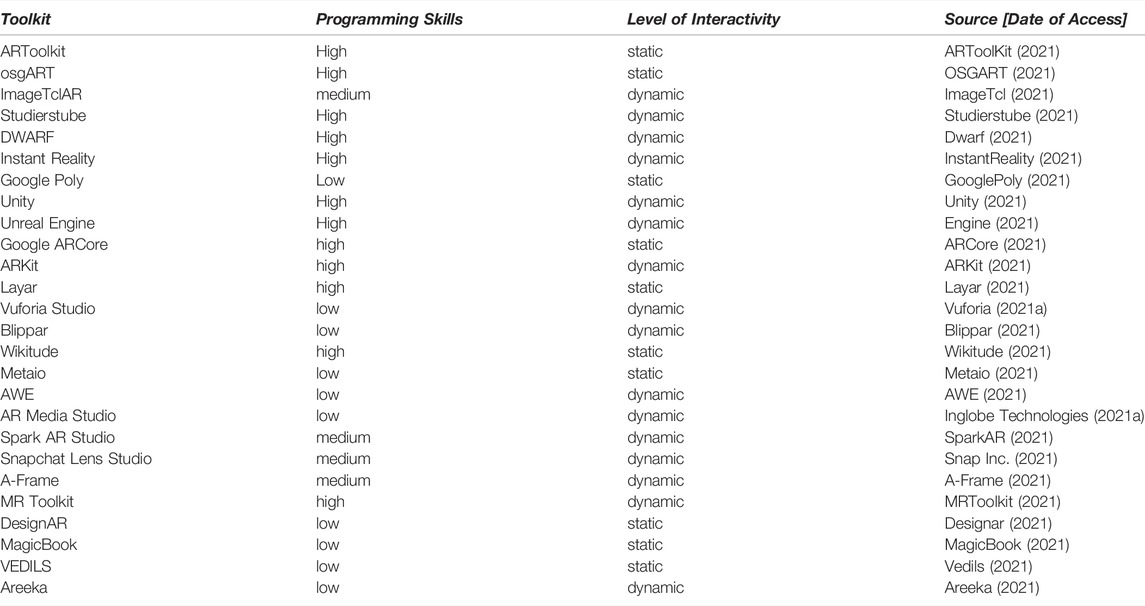
TABLE 2. Accessible AR authoring toolkits and their characteristics.
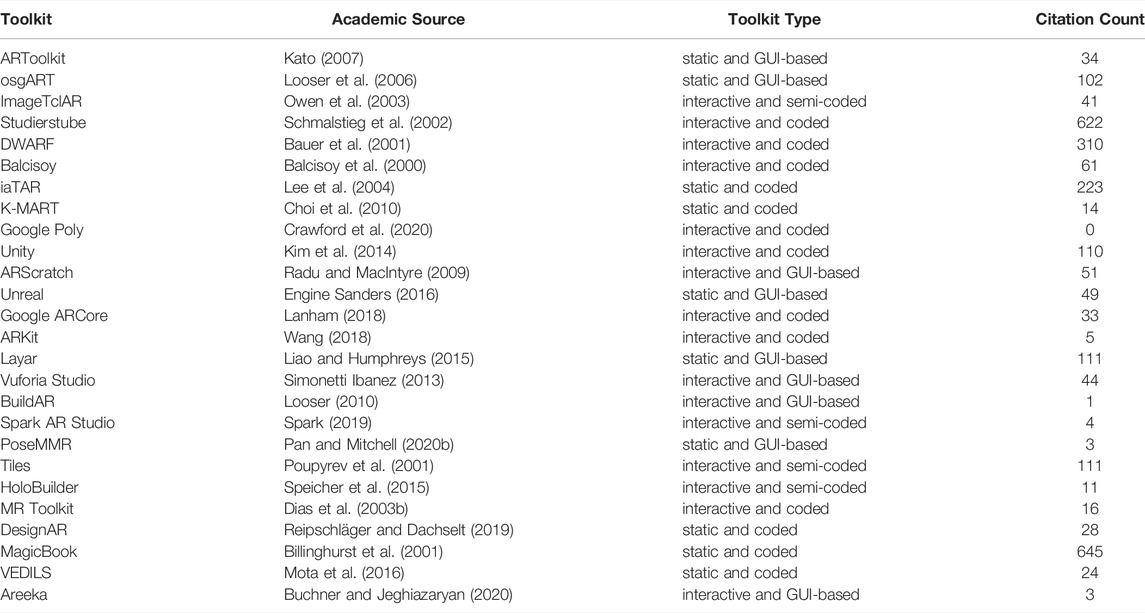
TABLE 3. Academic references to AR Authoring Toolkits, Toolkit Types and citations.
When localizing these openly accessible authoring toolkits in a matrix with the two dimensions level of interactivity and required level of programming skills (see Figure 5), it becomes clear that most of the toolkits (61.5%) need some sort of coding skills. Only ten of the frameworks are completely GUI-based and do not require prior programming knowledge. Of these frameworks, only five toolkits have the capabilities to create interactive experiences. Affordability, compatibility and collaboration capacity of the toolkits is listed in Table 4.
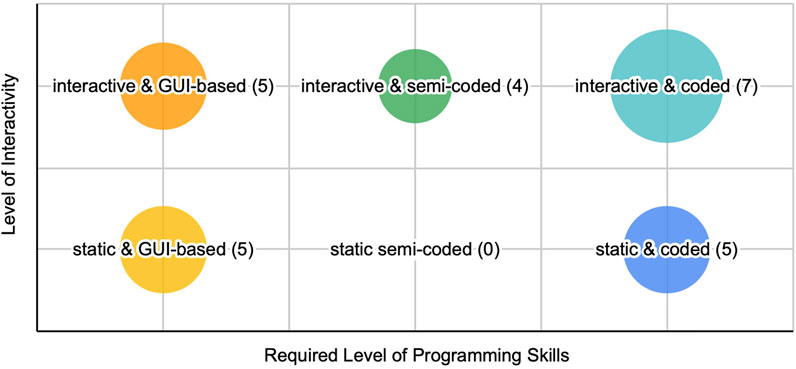
FIGURE 5. Required programming skills and provided interaction possibilities.
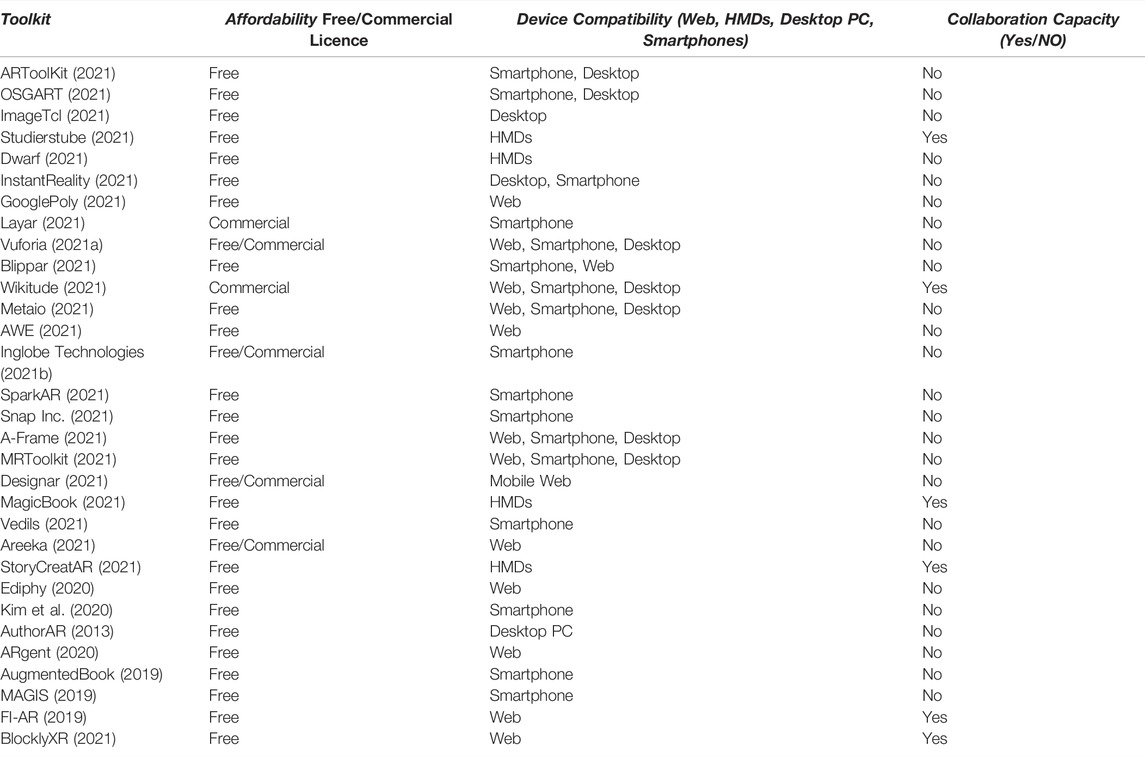
TABLE 4. Analysis of authoring tools according to affordability (cost), device compatibility, collaboration capacity.
4.3 Toolkits Suitable for Teachers
This section focuses on the five toolkits that do not require prior programming knowledge while still providing the capabilities to create interactive AR experiences in depth. These AR toolkits can be used by teachers to create immersive AR applications for the everyday classroom (or its digital equivalent). The five identified AR authoring toolkits are: Vuforia Studio, Blippar, AWE, AR Media Studio, and Areeka.
Vuforia Studio can transform existing CAD and IoT data into detailed AR experiences. It is designed to provide critical information to front-line workers with animated sequences, for example for intuitive assembly, inspection, service, and operating instructions. Vuforia Studio can efficiently integrate sensor and contextualized IoT data from the ThingWorx platform and from enterprise system data in order to create single viewer applications on mobile devices or on professional headsets such as the Realwear or the Hololens series. Some of Vuforia’s strengths comprise fast target identification, precise digital overlays and the placement of 3D virtual products into real-world environments (Vuforia, 2021b).
BlippAR’s toolkit Blippbuilder provides an extensive library of 3D models that can be used for AR experiences, but users can upload 3D models on their own as well. Users can add textures and colors to the models. Blippbuilder supports multiple scenes in an AR experience and provides possibilities to animate the 3D-models through movement, rotation, scaling, and fading. Also, users can add videos (e.g., greenscreen videos or livestreams from YouTube) to the AR experience. “Call to Action” events in the AR experience can lead the user directly to a website, an online shop, or to a calendar invite (Blippbuilder, 2021).
AWE is a web-based platform providing AR experiences through smartphones’, tablets’, computers’, or headsets’ web browsers. Users can add event actions, animations (e.g., for objects and characters), info panels, quizzes, facial and image recognition, location-based content, and time-based content to enable a rich interactivity in their applications. Five standard scene types are Image AR (using natural feature tracking), Spatial AR (with World Tracking), Face AR (face recognition and augmentation), 360-degree Virtual Reality, and GPS AR (location-based experiences). AWE also provides analytical insides into the usage of the developed experiences (AWE, 2021).
AR Media Studio is a web Authoring Tool used to create, manage and distribute Mixed Reality projects. Virtual scenes can be created as planar projects (on top of a blueprint or poster), as spatial projects (anchored to a specific point in the environment), or as a geo-located project (based on longitude and latitude coordinates). AR Media Studio supports static and animated 3D models, 2D and 360-degree images/videos, audio clips, and HTML5 documents (e.g., apps and mini games). Objects can be animated through moving, scaling, rotating, and rigging. The toolkit also allows collaborative projects (Inglobe Technologies, 2021b).
Areeka is a drag and drop builder that can be used as a WebAR online toolkit. The Image Tracking feature involves the automatic recognition of images captured by the camera. Graphical objects such as 3D objects are superimposed upon them. With the Ground Tracking feature, the device’s camera recognizes points that are visible in the real environment and combines them with the AR elements. The forthcoming location tracking feature allows the detection of the user’s precise position using GPS coordinates. As a result, the AR experience can be tailored to a specific area. Another forthcoming feature is the object tracking function involving the real-time tracking of objects as they move across frames within a real environment while the augmented content keeps focused on a specific object (Areeka, 2021).
While these five tools were identified as suitable AR authoring toolkits for creating simple educational Mixed Reality experiences according to their ease of use and their provided interactivity, none of the tools were evaluated or developed using an evidence-based, scientific approach (at least not within the literature gathered by the authors, which should have covered relevant articles based on the related search terms).
5 Discussion
5.1 Research Landscape
Regarding RQ1 (What is the current state of the research on AR authoring toolkits?), This paper explored a rather divergent scientific landscape: There was no constant rise in research interest but rather several peaks led by new innovations in either hardware or software. For example, the peak in 2003 can be explained by the publication of the ARToolkit framework. The peak in 2011 could be driven by the release of the first iPad in 2010 and/or by the general rise of interest in immersive technologies in 2010 through the release of the Oculus Rift consumer version. The latest peak of 2020 could be explained through the release of the Hololens 2 in 2019 and other MR HMDs.
Almost half of the research papers on AR authoring toolkits report the use of HMDs, which contradicts the broad use of smartphones and tablets for AR in Education (FitzGerald et al., 2012). It must be noted that over a third of the papers did not specify the devices for using the toolkits. While this could simply mean that the toolkits are not hardware-specific, research shows that user experience and learning performance differ strongly between technologies, based on their individual characteristics (Author, 20xxa, blinded for review), leading to the need of an evidence-based evaluation of AR authoring toolkits.
This also becomes clear when taking a closer look at the empirical aspect of the assessed articles. Over half of the papers did not conduct any empirical research and not even a third conducted user studies. While performance analyses are an important part of system evaluations, educational tools need to be evaluated by the people who use them: teachers. This might be one of the most important takeaways of this review: There is an urgent lack of research-informed design of AR authoring toolkits for education. Developers and educators need to work closely together in order to meet the requirements of developing AR experiences for the everyday classroom.
5.2 Characteristics of AR Authoring Toolkits
A focus on the toolkits’ accessibility, their required level of programming skills, and their developmental capabilities (RQ2) shows that over half of the tools reported in the scientific papers are not accessible. They were discontinued or not made publicly available. This raises questions about the reliability of such tools for educational development. Having to change to a different Authoring Toolkit after a year or two is tedious and could keep educators putting in the effort of learning how to use such toolkits.
Most of the currently accessible authoring toolkits enable interactive experiences, but, on the other hand, most of the accessible toolkits also require at least some sort of programming knowledge for content creation. There are some GUI-based toolkits that do not require any coding skills; half of them allow the development of interactive experiences. As educational AR experiences require interactivity in order to enable experience-based and experimental learning (FitzGerald et al., 2012; Huang et al., 2016) and as only a few teachers have any computer science background, the characteristics dynamic interactions and GUI-based programming were selected as desirable features of AR authoring toolkits for educators.
5.3 AR Authoring Toolkits for Educators
Five toolkits met the identified features of AR authoring toolkits for educational purposes. While each of the toolkits offer slightly different possibilities and functions, Vuforia Studio, BlippAR, AWE, AR Media Studio, and Areeka can all help facilitate the development process of educational AR experiences. Still, usability studies with educators regarding the development process are still lacking for all of these toolkits.
When improving these existing AR authoring toolkits or creating new toolkits, this research gap needs to be addressed: An evidence-based and research-informed development and iterative improvement process is not only desirable but strongly needed. Doing so, educators can become part of the design process, which can foster the integration of Augmented Reality in education.
Bloom’s Taxonomy provides guidance for creating interactive content generating tools. The objectives of this model are cognitive, psychomotor and affective domains. There are six categories in the cognitive domain as knowledge, comprehension, application, analysis, synthesis and evaluation as explained in Figure 6.
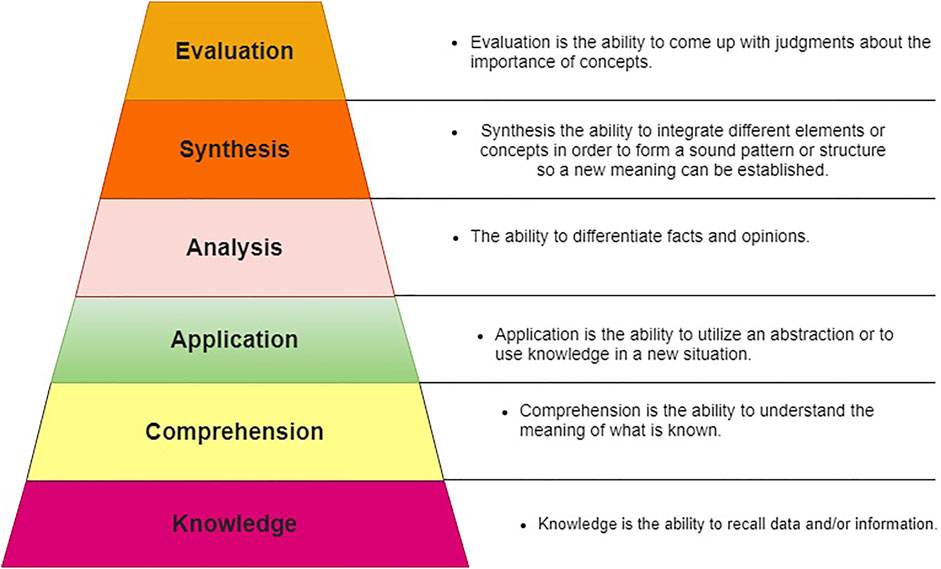
FIGURE 6. Bloom’s Taxonomy with six categories (Anderson and Sosniak, 1994).
6 Limitations
This review had a narrow focus on AR authoring toolkits and their value for educators. Thus, the results of this analysis are of special interest to teachers and their requirements but cannot be generalized to other application areas, as different developers have different needs (even though some might be very similar). While the five identified toolkits are suitable for educators without programming knowledge, many educators are in fact willing to learn or already know basic algorithmic components and structures. Being able to program object behaviors can facilitate the process and provide further opportunities supporting the educational objective.
Also, the categories GUI-based, semi-coded, and coded are rather broad. Especially block-based coding environments, as tested in ARScratch (Radu and MacIntyre, 2009), can be easy to learn and could even be used in Computer Science Education classes to create AR applications together with students. A current approach focusing on virtual environments, but also having an “AR Cube” option, is CoSpaces (CoSpaces, 2021). In some cases, such block-based coding environments might be even easier to learn compared to complex GUI-structures.
It has to be noted that many of the toolkits were not accessible and, thus, only a part of the developed Authoring Tools could be assessed. Also, as not all authoring toolkits, especially newer ones, are represented in scientific literature, it is possible that some existing toolkits were missed by this review. Measures to minimize these limitations were taken (e.g. an additional Google web search and a backtracking/snowballing approach on the toolkits reported in the papers were conducted).
7 Implications for the Design of an Authoring Toolkit With an Educational Purpose
AR authoring tools are getting more importance for creating and delivering contents in the classroom setting or virtual learning to replace the traditional classroom settings. The role of authoring tools in education has increased due to rapid adoption of online education. There is a need to increase the competency of authoring frameworks to provide more adaptive, engaging and collaborative experience with better usability for the teachers with no programming skills. The major implications involve the affordances and pedagogical issues attached with the authoring tools.
7.1 Conclusion
This literature review investigated the research landscape and the characteristics of existing AR authoring toolkits with regards to their accessibility, required level of programming skills, and developmental capabilities. We identified suitable toolkits for educators that allow the development of interactive experiences without requiring programming skills.
The research landscape investigated in RQ1 (What is the current research landscape on AR authoring toolkits?) is divergent and does not show a constant research interest in AR Authoring Toolkits. HMDs are the dominant technology assessed in the articles, followed by mobile phones/tablets. More than half of the articles did not report any empirical evidence supporting their research.
In RQ2 (What are the characteristics of these authoring toolkits regarding their accessibility, required level of programming skills, and developmental capabilities?), the characteristics of these Authoring Toolkits regarding their accessibility, required level of programming skills, and developmental capabilities were investigated: Over half of the AR Authoring Toolkits reported in the literature were not accessible or discontinued. Most of the accessible toolkits can be used for developing interactive AR experiences. Over half of the toolkits required at least some sort of programming knowledge.
The investigation of RQ3 (Which of these authoring toolkits are suitable for teachers to create educational AR experiences for the classroom?) led to five toolkits meeting the needs of teachers in designing educational AR experiences. These openly accessible toolkits (Vuforia Studio, BlippAR, AWE, AR Media Studio, and Areeka) can help educators in creating interactive educational AR applications to support teaching and learning in the everyday classroom without the requirement of previous programming knowledge.
These findings support previous research efforts (e.g., Freitas et al. (2020); Nebeling and Speicher (2018)) that analyzed AR authoring toolkits in general by not only adding more recent tools to the landscape, but especially by taking an educational perspective on existing AR Authoring Toolkits by analyzing these tools with regards to teachers’ needs when developing AR experiences for the everyday classroom.
This review identified three main research gaps that should be addressed in future design and evaluation of AR authoring toolkits:
• AR authoring toolkits need to be evaluated within the context of the hardware that is being used for visualizing the immersive experiences.
• Empirical research projects, especially user studies with teachers, are needed to develop and improve AR authoring toolkits for education.
• Low required programming skills and dynamic, interactive experiences are desirable features for AR authoring toolkits used by educators, but existing options are still scarce.
As stated before, the main takeaway of this paper is the strong need for empirical data regarding the target group of such toolkits when using them for educational purposes: Teachers’ use and development experiences with these tools are crucial for their improvement. As AR has the potential to function as a powerful educational tool in remote education (Li, 2010) and assessment (Wang et al., 2010), further developments and improvements are strongly needed. But, of course, focusing students as the end-users of the immersive experiences is just as important. Thus, interdisciplinary collaborations between software developers, researchers from informatics, human-computer-interaction and educational sciences, educators, and students are necessary for a sound long-term integration of Augmented Reality in the classroom.
7.2 Future Work
Following Figures 6, 7 of expanded Bloom’s Taxonomy, the ARETE H2020 project (Arete, 2021b) aims to change the landscape of AR content creation, via AR authoring toolkits, demonstrated in applications for education and training through the pilot studies. Augmented Reality content authoring uses end-user friendly in-situ authoring (Arete, 2021a) based on the authoring and re-enactment toolkit WEKIT HoloLens smart glasses application (WEKIT, 2021) (now: MirageXR Community Edition, Open Source). MirageXR (Mirage XR, 2021) has been utilized, where authors place world anchors into the environment and attach one or more augmentations to it setting triggers for workflow-like learning activity execution. Besides standard augmentations such as text, video, image or audio, this includes additional instructional design elements with sensor input and 3D models. For example, it is possible to capture movement, gaze focus, teacher voice, to create an automated recording of a teacher/instructional designer demonstrating how to do something, or to explain with a think-aloud protocol what learners have to pay attention to. Content authors sequence a learning activity (Augmented Scene) into a series of action steps to provide the learning material required for developing competence in a specific learning activity. The main objective of the ARETE authoring toolkit is to address the current research gaps in the 3D authoring tools for educators and contribute to existing standards. While seeking to educate consumers, governments and industry about AR’s potential, the ARETE consortium aims to further advance and evaluate the deployment of AR technology, through a number of pilot interventions in Europe during the academic year 2021/2022.
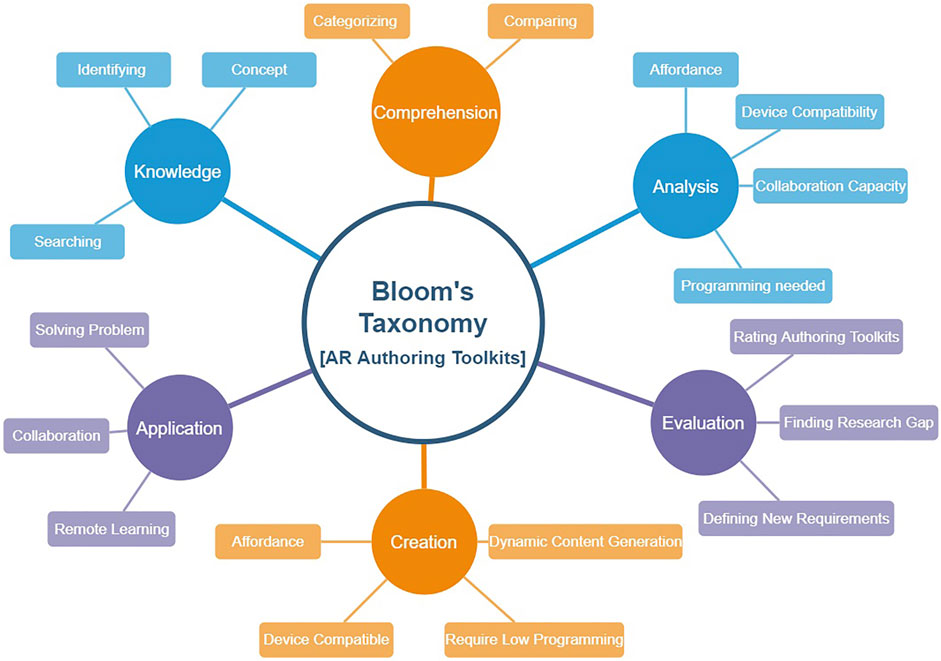
FIGURE 7. Bloom’s Taxonomy; From existing work to future goal of the project.
Although the reported evaluation methods within this work include only interviews, performance measures, observations and questionnaires, future work will include research on the different metrics of XR authoring toolkits usability (UX design, user capacity, educational cognitive tasks’ pathway, flexibility, accessibility, effectiveness, efficiency, satisfaction, impact on learnability, data analytics provision). This will involve experts, users and automated usability testing.
Data Availability Statement
The raw data supporting the conclusions of this article will be made available by the authors, without undue reservation.
Author Contributions
All authors listed have made a substantial, direct, and intellectual contribution to the work and approved it for publication.
Funding
The publication has been supported by European Union’s Horizon 2020 research and innovation program under grant agreement No 856533, project ARETE.
Conflict of Interest
The authors declare that the research was conducted in the absence of any commercial or financial relationships that could be construed as a potential conflict of interest.
Publisher’s Note
All claims expressed in this article are solely those of the authors and do not necessarily represent those of their affiliated organizations, or those of the publisher, the editors and the reviewers. Any product that may be evaluated in this article, or claim that may be made by its manufacturer, is not guaranteed or endorsed by the publisher.
Supplementary Material
The Supplementary Material for this article can be found online at: https://www.frontiersin.org/articles/10.3389/frvir.2022.798032/full#supplementary-material
References
A-Frame (2021). Installation – A-Frame. Available at: https://aframe.io/docs/1.2.0/introduction/installation.html [Dataset] (Accessed on 04 19, 2021).
Adcock, M., Hutchins, M., and Gunn, C. (2003). “Augmented Reality Haptics: Using Artoolkit for Display of Haptic Applications,” in 2003 IEEE International Augmented Reality Toolkit Workshop, 1–2. doi:10.1109/ART.2003.1320415
Alzahrani, N. M., and Lajmi, S. (2019). “Augmentedbook: A Collaborative E-Learning Augmented Reality Platform,” in International Conference on Human Interaction and Emerging Technologies (Springer), 282–288. doi:10.1007/978-3-030-25629-6_44
ARCore (2021). ARCore. [Dataset] Available at: https://developers.google.com/ar/develop (Accessed 04 19, 2021).
Areeka (2021). Webar Areeka Studio. [Dataset] Available at: https://studio.areeka.net/#/(Accessed 04 19, 2021).
Arete (2021b). Arete - home. [Dataset] Available at: https://www.areteproject.eu/(Accessed 05 05, 2021).
Arete (2021a). Arete. [Dataset] Available at: https://arete.ucd.ie/(Accessed 05 05, 2021).
ARgent (2020). Argent: A Web Based Augmented Reality Framework for Dynamic Content Generation. Avrupa Bilim ve Teknoloji Dergisi, 244–257.
ARKit (2021). Arkit Overview. [Dataset] Available at: https://developer.apple.com/augmented-reality/arkit/(Accessed 04 19, 2021).
ARToolKit (2021). Artoolkit Download. [Dataset] Available at: http://www.hitl.washington.edu/artoolkit/download/(Accessed 04 19, 2021).
Ashtari, N., Bunt, A., McGrenere, J., Nebeling, M., and Chilana, P. K. (2020). “Creating Augmented and Virtual Reality Applications: Current Practices, Challenges, and Opportunities,” in Proceedings of the 2020 CHI Conference on Human Factors in Computing Systems, New York, NY, USA (Association for Computing Machinery), 1–13. CHI ’20. doi:10.1145/3313831.3376722
AugmentedBook (2019). Augmentedbook: A Collaborative E-Learning Augmented Reality Platform. [Dataset].
AuthorAR (2013). Authorar: Authoring Tool for Building Educational Activities Based on Augmented Reality. [Dataset].
AWE (2021). Create Webar with Awe (Augmented Web Experiences). [Dataset] Available at: https://awe.media/#main (Accessed on 04 19, 2021).
Azuma, R. T. (1997). A Survey of Augmented Reality. Presence: Teleoperators & Virtual Environments 6, 355–385. doi:10.1162/pres.1997.6.4.355
Balcisoy, S., Kallmann, M., Fua, P., and Thalmann, D. (2000). “A Framework for Rapid Evaluation of Prototypes with Augmented Reality,” in Proceedings of the ACM symposium on Virtual reality software and technology, 61–66. doi:10.1145/502390.502403
Barbadillo, J., and Sánchez, J. R. (2013). “A Web3d Authoring Tool for Augmented Reality mobile Applications,” in Proceedings of the 18th International Conference on 3D Web Technology, New York, NY, USA 13 (Association for Computing Machinery, Web3D), 206. doi:10.1145/2466533.2466564
Bauer, M., Bruegge, B., Klinker, G., MacWilliams, A., Reicher, T., Riss, S., et al. (2001). “Design of a Component-Based Augmented Reality Framework,” in Proceedings IEEE and ACM International Symposium on Augmented Reality (IEEE), 45–54.
Bégout, P., Duval, T., Kubicki, S., Charbonnier, B., and Bricard, E. (2020). WAAT: A Workstation AR Authoring Tool for Industry 4.0, 304–320. doi:10.1007/978-3-030-58468-9_22
Benbelkacem, S., Zenati-Henda, N., Aouam, D., Izountar, Y., and Otmane, S. (2020). Mvc-3dc: Software Architecture Model for Designing Collaborative Augmented Reality and Virtual Reality Systems. J. King Saud Univ. - Comp. Inf. Sci. 32, 433–446. doi:10.1016/j.jksuci.2019.11.010
Billinghurst, M., and Duenser, A. (2012). Augmented Reality in the Classroom. Computer 45, 56–63. doi:10.1109/mc.2012.111
Billinghurst, M., Kato, H., and Poupyrev, I. (2001). The Magicbook: a Transitional Ar Interface. Comput. Graphics 25, 745–753. doi:10.1016/s0097-8493(01)00117-0
Blippar (2021). Augmented Reality (Ar) & Computer Vision Company — Blippar. [Dataset] Available at: https://www.blippar.com/(Accessed 0419, 2021).
Blippbuilder (2021). Augmented Reality Creation Technology — Blippbuilder. Available at: https://www.blippar.com/build-arDataset] (Accessed on 0420, 2021).
BlocklyXR (2021). Blocklyxr: An Interactive Extended Reality Toolkit for Digital Storytelling. [Dataset].
Boyko, A., and Funkhouser, T. (2014). “Cheaper by the Dozen,” in Proceedings of the 27th Annual ACM Symposium on User Interface Software and Technology, New York, NY, USA (Association for Computing Machinery), 33–42. UIST ’14. doi:10.1145/2642918.2647418
Buchner, J., and Jeghiazaryan, A. (2020). “Work-in-progress–the Ari 2 Ve Model for Augmented Reality Books,” in 2020 6th International Conference of the Immersive Learning Research Network (iLRN) (IEEE), 287–290.
Chang, Y.-J., Chen, C.-H., Huang, W.-T., and Huang, W.-S. (2011). “Investigating Students’ Perceived Satisfaction, Behavioral Intention, and Effectiveness of English Learning Using Augmented Reality,” in 2011 IEEE International Conference on Multimedia and Expo (IEEE), 1–6. doi:10.1109/icme.2011.6012177
Chaudhary, V. (2006). “Surgery Needs Hpc, Really!,” in 2006 International Conference on Parallel Processing Workshops (ICPPW’06), 1 418. doi:10.1109/ICPPW.2006.71
Choi, J., Kim, Y., Lee, M., Kim, G. J., Nam, Y., and Kwon, Y. (2010). “k-mart: Authoring Tool for Mixed Reality Contents,” in 2010 IEEE International Symposium on Mixed and Augmented Reality (IEEE), 219–220. doi:10.1109/ismar.2010.5643576
Cipresso, P., Giglioli, I. A. C., Raya, M. A., and Riva, G. (2018). The Past, Present, and Future of Virtual and Augmented Reality Research: A Network and Cluster Analysis of the Literature. Front. Psychol. 9, 2086. doi:10.3389/fpsyg.2018.02086
Coma-Tatay, I., Casas-Yrurzum, S., Casanova-Salas, P., and Fernández-Marín, M. (2019). Fi-ar Learning: a Web-Based Platform for Augmented Reality Educational Content. Multimed Tools Appl. 78, 6093–6118. doi:10.1007/s11042-018-6395-5
CoSpaces, (2021). Cospaces Edu for Kid-Friendly 3d Creation and Coding. [Dataset] Available at: https://cospaces.io/edu/(Accessed 06 14, 2021).
Crawford, S., Monks, S., Luevano, E., and Urbina, J. (2020). Virtual Reality Scenario Design for Distance Learning with Google Poly. Available at SSRN 3802155.
Dağ, F., Durdu, L., and Gerdan, S. (2014). Evaluation of Educational Authoring Tools for Teachers Stressing of Perceived Usability Features. Procedia-Social Behav. Sci. 116, 888–901.
de Dinechin, G. D., and Paljic, A. (2020a). “Illustrating Colibri Vr, an Open-Source Toolkit to Render Real-World Scenes in Virtual Reality,” in 2020 IEEE Conference on Virtual Reality and 3D User Interfaces Abstracts and Workshops (VRW), 856. 856. doi:10.1109/VRW50115.2020.00280
de Dinechin, G. D., and Paljic, A. (2020b). “Presenting Colibri Vr, an Open-Source Toolkit to Render Real-World Scenes in Virtual Reality,” in 2020 IEEE Conference on Virtual Reality and 3D User Interfaces Abstracts and Workshops (VRW), 800–801. doi:10.1109/VRW50115.2020.00251
de Paiva Guimarães, M., Alves, B., Martins, V. F., dos Santos Baglie, L. S., Brega, J. R., and Dias, D. C. (2017). “Embedding Augmented Reality Applications into Learning Management Systems,” in Computational Science and its Applications – ICCSA 2017. Editors O. Gervasi, B. Murgante, S. Misra, G. Borruso, C. M. Torre, A. M. A. Rochaet al. (Cham: Springer International Publishing), 585–594. doi:10.1007/978-3-319-62392-4_42
Designar, (2021). Designar - Build Ar Experiences for Your Online Store. [Dataset] Available at: https://www.designar.io/(Accessed on 0419, 2021).
Dias, J. M. S., Monteiro, L., Santos, P., Silvestre, R., and Bastos, R. (2003a). “Developing and Authoring Mixed Reality with Mx Toolkit,” in 2003 IEEE International Augmented Reality Toolkit Workshop, 18–26. doi:10.1109/ART.2003.1320420
Dias, J. M. S., Monteiro, L., Santos, P., Silvestre, R., and Bastos, R. (2003b). “Developing and Authoring Mixed Reality with Mx Toolkit,” in 2003 IEEE International Augmented Reality Toolkit Workshop (IEEE), 18–26.
Dias, M., Jorge, J., Carvalho, J., Santos, P., and Luzio, J. (2003c). “Usability Evaluation of Tangible User Interfaces for Augmented Reality,” in 2003 IEEE International Augmented Reality Toolkit Workshop, 54–61. doi:10.1109/ART.2003.1320428
Dinechin, G. D. d., and Paljic, A. (2020a). “Demonstrating Colibri Vr, an Open-Source Toolkit to Render Real-World Scenes in Virtual Reality,” in 2020 IEEE Conference on Virtual Reality and 3D User Interfaces Abstracts and Workshops (VRW), 844–845. doi:10.1109/VRW50115.2020.00273
Dinechin, G. D. d., and Paljic, A. (2020b). “From Real to Virtual: An Image-Based Rendering Toolkit to Help Bring the World Around Us into Virtual Reality,” in 2020 IEEE Conference on Virtual Reality and 3D User Interfaces Abstracts and Workshops (VRW), 348–353. doi:10.1109/VRW50115.2020.00076
DiVerdi, S., Nurmi, D., and Hollerer, T. (2003). “A Framework for Generic Inter-application Interaction for 3d Ar Environments,” in 2003 IEEE International Augmented Reality Toolkit Workshop, 86–93. doi:10.1109/ART.2003.1320436
Dodds, H. E. (2021). Immersive Learning Environments: Designing Xr into Higher Education. A Practitioner’s Guide Instructional Des. Higher Edu.
Dunleavy, M., Dede, C., and Mitchell, R. (2009). Affordances and Limitations of Immersive Participatory Augmented Reality Simulations for Teaching and Learning. J. Sci. Educ. Technol. 18, 7–22. doi:10.1007/s10956-008-9119-1
Dwarf (2021). Dwarf Install Tutorial. [Dataset] Available at: http://campar.in.tum.de/Chair/DwarfInstallTutorial (Accessed 04 19, 2021).
Ediphy (2020). Ediphy: A Modular and Extensible Open-Source Web Authoring Tool for the Creation of Interactive Learning Resources. [Dataset].
Engine, U. (2021). Unreal Engine. [Dataset] Available at: https://www.unrealengine.com/en-US/download (Accessed on 04 19, 2021).
FI-AR (2019). Fi-ar Learning: A Web-Based Platform for Augmented Reality Educational Content [Dataset].
FitzGerald, E., Adams, A., Ferguson, R., Gaved, M., Mor, Y., and Thomas, R. (2012). “Augmented Reality and mobile Learning: the State of the Art,” in 11th World Conference on Mobile and Contextual Learning (mLearn 2012) (CEUR Workshop Proceedings), 6262–6969. Published inThis volume is published and copyrighted by its editors. Copying permitted only for private and academic purposes.955955.
Freitas, G., Pinho, M. S., Silveira, M. S., and Maurer, F. (2020). “A Systematic Review of Rapid Prototyping Tools for Augmented Reality,” in 2020 22nd Symposium on Virtual and Augmented Reality (SVR) (IEEE), 199–209. doi:10.1109/svr51698.2020.00041
Gandy, M., and MacIntyre, B. (2014). “Designer's Augmented Reality Toolkit, Ten Years Later,” in Proceedings of the 27th Annual ACM Symposium on User Interface Software and Technology, New York, NY, USA (Association for Computing Machinery), UIST ’14), 627–636. doi:10.1145/2642918.2647369
Gandy, M., Macintyre, B., Dow, S., and Bolter, J. (2006). Supporting Early Design Activities for AR Experiences. doi:10.4018/9781599040660.ch008
Gökhan, K., and Gökhan, İ. (2020). Argent: A Web Based Augmented Reality Framework for Dynamic Content Generation. Avrupa Bilim ve Teknoloji Dergisi, 244–257.
GooglePoly (2021). Poly. [Dataset] Available at: https://poly.google.com/(Accessed on 04 19, 2021).
Grimm, P., Haller, M., Paelke, V., Reinhold, S., Reimann, C., and Zauner, R. (2002). “Amire - Authoring Mixed Reality,” in The First IEEE International Workshop Agumented Reality Toolkit, 2. doi:10.1109/ART.2002.1107008
Haller, M., Hartmann, W., Luckeneder, T., and Zauner, J. (2002). “Combining Artoolkit with Scene Graph Libraries,” in The First IEEE International Workshop Agumented Reality Toolkit, 2. doi:10.1109/ART.2002.1106978
Henrysson, A., and Ollila, M. (2003). Augmented Reality on Smartphones. IEEE Int. Augmented Reality Toolkit Workshop, 27–28. doi:10.1109/ART.2003.1320421
Huang, T.-C., Chen, C.-C., and Chou, Y.-W. (2016). Animating Eco-Education: To See, Feel, and Discover in an Augmented Reality-Based Experiential Learning Environment. Comput. Edu. 96, 72–82. doi:10.1016/j.compedu.2016.02.008
ImageTcl (2021). Imagetcl Multimedia Development System. [Dataset] Available at: https://web.archive.org/web/20100410200411/http://metlab.cse.msu.edu/imagetclar/(Accessed 04 19, 2021).
Inglobe Technologies (2021a). Ar-media Downloads. [Dataset] Available at: https://www.inglobetechnologies.com/ar-media/downloads/(Accessed 0419, 2021).
Inglobe Technologies (2021b). Ar-media Features. Available at: https://www.inglobetechnologies.com/ar-media/features. Accessed 04/20/2021 [Dataset].
InstantReality (2021). instantreality.org. [Dataset] Available at: https://www.instantreality.org/downloads/(Accessed on 04 19, 2021).
Iqbal, M. Z., Mangina, E., and Campbell, A. G. (2021). “Exploring the Real-Time Touchless Hand Interaction and Intelligent Agents in Augmented Reality Learning Applications,” in 2021 7th International Conference of the Immersive Learning Research Network (iLRN) (IEEE), 1–8. doi:10.23919/ilrn52045.2021.9459415
Jee, H.-K., Lim, S., Youn, J., and Lee, J. (2011). “An Immersive Authoring Tool for Augmented Reality-Based E-Learning Applications,” in 2011 International Conference on Information Science and Applications (IEEE), 1–5. doi:10.1109/icisa.2011.5772399
Jesionkowska, J., Wild, F., and Deval, Y. (2020). Active Learning Augmented Reality for STEAM Education-A Case Study. Edu. Sci. 10, 198. doi:10.3390/educsci10080198
Jo, D., Kim, Y., Jeon, W., Kim, Y., Kim, H., and Kim, K.-H. (2018). “Vr Planning Toolkit to Simulate Physical and Virtual Configurations: A Case Study of an Indoor Vr Roller Coaster Augmenting Experience,” in Proceedings of the 9th Augmented Human International Conference, New York, NY, USA (Association for Computing Machinery). AH ’18. doi:10.1145/3174910.3174912
Jung, K., Nguyen, V. T., and Lee, J. (2021). Blocklyxr: An Interactive Extended Reality Toolkit for Digital Storytelling. Appl. Sci. 11, 1073. doi:10.3390/app11031073
Kampa, A. (2017). “Authoring Concepts and Tools for Interactive Digital Storytelling in the Field of mobile Augmented Reality,” in Interactive Storytelling. Editors N. Nunes, I. Oakley, and V. Nisi (Cham: Springer International Publishing), 372–375. doi:10.1007/978-3-319-71027-3_46
Kato, H. (2007). “Inside Artoolkit,” in 1st IEEE International Workshop on Augmented Reality Toolkit.
Kato, H., Tachibana, K., Billinghurst, M., and Grafe, M. (2003a). “A Registration Method Based on Texture Tracking Using Artoolkit,” in 2003 IEEE International Augmented Reality Toolkit Workshop, 77–85. doi:10.1109/ART.2003.1320435
Kato, H., Tachibana, K., Tanabe, M., Nakajima, T., and Fukuda, Y. (2003b). “Magiccup: a Tangible Interface for Virtual Objects Manipulation in Table-Top Augmented Reality,” in 2003 IEEE International Augmented Reality Toolkit Workshop, 75–76. doi:10.1109/ART.2003.1320434
Kim, J., Lee, B.-g., and Jung, S.-U. (2020). “An Ar Contents Authoring Tool with Remote Monitoring by Contextual Information,” in 2020 IEEE International Conference on Consumer Electronics-Asia (ICCE-Asia) (IEEE), 1–3. doi:10.1109/icce-asia49877.2020.9276896
Kim, S. L., Suk, H. J., Kang, J. H., Jung, J. M., Laine, T. H., and Westlin, J. (2014). “Using unity 3d to Facilitate mobile Augmented Reality Game Development,” in 2014 IEEE World Forum on Internet of Things (WF-IoT) (IEEE), 21–26. doi:10.1109/wf-iot.2014.6803110
Kljun, M., Geroimenko, V., and Pucihar, K. (2020). Augmented Reality in Education: Current Status and Advancement of the Field, 3–21. doi:10.1007/978-3-030-42156-4_1
Kosko, K. W., Ferdig, R. E., and Roche, L. (2021). Conceptualizing a Shared Definition and Future Directions for Extended Reality (Xr) in Teacher Education. J. Tech. Teach. Edu. 29, 257–277.
Krauß, V., Boden, A., Oppermann, L., and Reiners, R. (2021). “Current Practices, Challenges, and Design Implications for Collaborative Ar/vr Application Development,” in Proceedings of the 2021 CHI Conference on Human Factors in Computing Systems, 1–15. doi:10.1145/3411764.3445335
Lanham, M. (2018). Learn ARCore-Fundamentals of Google ARCore: Learn to Build Augmented Reality Apps for Android, Unity, and the Web with Google ARCore 1.0. Packt Publishing Ltd.
Latoschik, M. E., and Stuerzlinger, W. (2014). “On the Art of the Evaluation and Presentation of Ris-Engineering,” in 2014 IEEE 7th Workshop on Software Engineering and Architectures for Realtime Interactive Systems (SEARIS), 9–17. doi:10.1109/SEARIS.2014.7152796
Layar (2021). Solutions — Layar. [Dataset] Available at: https://www.layar.com/solutions/(Accessed 04 19, 2021).
Lee, G. A., Nelles, C., Billinghurst, M., and Kim, G. J. (2004). “Immersive Authoring of Tangible Augmented Reality Applications,” in Third IEEE and ACM International Symposium on Mixed and Augmented Reality (IEEE), 172–181.
Li, W., Nee, A. Y. C., and Ong, S. K. (2017). A State-Of-The-Art Review of Augmented Reality in Engineering Analysis and Simulation. Multimodal Tech. Interaction 1. doi:10.3390/mti1030017
Li, Y. (2010). Augmented Reality for Remote Education. In 2010 3rd International Conference on Advanced Computer Theory and Engineering(ICACTE). 3, V3–187–V3–191. doi:10.1109/ICACTE.2010.5579661
Liao, T., and Humphreys, L. (2015). Layar-ed Places: Using mobile Augmented Reality to Tactically Reengage, Reproduce, and Reappropriate Public Space, 17. New Media & Society, 1418–1435. doi:10.1177/1461444814527734
Looser, J., Grasset, R., Seichter, H., and Billinghurst, M. (2006). Osgart-a Pragmatic Approach to Mr.
Looser, J. (2010). Making Augmented Reality Accessible for Everyone. New Zeland: Human Interface Technology Laboratory New Zealand.
López-Pernas, S., Jiménez, A., Gordillo, A., Barra, E., Marco, L., and Quemada, J. (2020). “Ediphy: A Modular and Extensible Open-Source Web Authoring Tool for the Creation of Interactive Learning Resources,” in 2020 16th International Conference on Intelligent Environments (IE) (IEEE), 115–121. doi:10.1109/ie49459.2020.9154949
Lucrecia, M., Cecilia, S., Patricia, P., and Sandra, B. (2013). “Authorar: Authoring Tool for Building Educational Activities Based on Augmented Reality,” in 2013 international conference on collaboration technologies and systems (cts) (IEEE), 503–507. doi:10.1109/cts.2013.6567277
MacIntyre, B., Gandy, M., Bolter, J., Dow, S., and Hannigan, B. (2003). “Dart: the Designer’s Augmented Reality Toolkit,” in The Second IEEE and ACM International Symposium on Mixed and Augmented Reality, 2003. Proceedings, 329–330. doi:10.1109/ISMAR.2003.1240744
MacIntyre, B., Gandy, M., Dow, S., and Bolter, J. D. (2005). Dart: A Toolkit for Rapid Design Exploration of Augmented Reality Experiences. ACM Trans. Graph. 24, 932. doi:10.1145/1073204.1073288
MagicBook (2021). Magicbook 4d - ar learning – apps bei google play. [Dataset] Available at: https://play.google.com/store/apps/details?id=com.firecoals.magicbook.magicalanimal (Accessed 04 19, 2021).
Metaio (2021). Metaio Creator - Free Download and Software Reviews - Cnet Download. [Dataset] Available at: https://download.cnet.com/Metaio-Creator/3000-6675_4-75861515.html (Accessed 04 19, 2021).
Mirage XR (2021). Mirage Xr – Xr4all. [Dataset] Available at: https://dev.xr4all.eu/product/mirage%C2%B7xr/(Accessed 05 05, 2021).
Moher, D., Liberati, A., and Tetzlaff, J. (2009). Preferred Reporting Items for Systematic Reviews and Meta-Analyses: The PRISMA Statement. PLoS Med. 6, e1000097. doi:10.1371/journal.pmed.1000097
Moorhouse, N., Jung, T., et al. (2017). Augmented Reality to Enhance the Learning Experience in Cultural Heritage Tourism: An Experiential Learning Cycle Perspective. eReview Tourism Res. 8.
Mota, J. M., Ruiz-Rube, I., Dodero, J. M., and Figueiredo, M. (2016). Visual Environment for Designing Interactive Learning Scenarios with Augmented Reality. International Association for Development of the Information Society.
Mota, R. C., Roberto, R. A., and Teichrieb, V. (2015). “[poster] Authoring Tools in Augmented Reality: An Analysis and Classification of Content Design Tools,” in 2015 IEEE International Symposium on Mixed and Augmented Reality, 164–167. doi:10.1109/ISMAR.2015.47
MRToolkit (2021). Github - microsoft/mixedrealitytoolkit-unity: Mixed Reality Toolkit (Mrtk) Provides a Set of Components and Features to Accelerate Cross-Platform Mr App Development in unity. Available at: https://github.com/microsoft/MixedRealityToolkit-Unity. Accessed 04/19/2021 [Dataset].
Murray, T. (2016). Coordinating the Complexity of Tools, Tasks, and Users: On Theory-Based Approaches to Authoring Tool Usability. Int. J. Artif. Intelligence Edu. 26, 37–71. doi:10.1007/s40593-015-0076-6
Murray, T. (2004). Design Tradeoffs in Usability and Power for Advanced Educational Software Authoring Tools. Educ. Tech. 44, 10–16.
Nebeling, M., and Speicher, M. (2018). “The Trouble with Augmented Reality/virtual Reality Authoring Tools,” in 2018 IEEE International Symposium on Mixed and Augmented Reality Adjunct (ISMAR-Adjunct), 333–337. doi:10.1109/ISMAR-Adjunct.2018.00098
Nincarean, D., Alia, M. B., Halim, N. D. A., and Rahman, M. H. A. (2013). “Mobile Augmented Reality: The Potential for Education,” in Procedia - Social and Behavioral SciencesInternational Educational Technology Conference, 103 657–664. doi:10.1016/j.sbspro.2013.10.385.13th
OSGART (2021). Osgart: Artoolkit for Openscenegraph. [Dataset] Available at: https://artoolworks.com/community/osgart/download.html (Accessed on 0419, 2021).
Owen, C., Tang, A., and Xiao, F. (2003). “Imagetclar: A Blended Script and Compiled Code Development System for Augmented Reality,” in Proceedings of the International Workshop on Software Technology for Augmented Reality Systems (Citeseer), 537–544.
Packer, H. S., Hargood, C., Howard, Y., Papadopoulos, P., and Millard, D. E. (2017). “Developing a Writer’s Toolkit for Interactive Locative Storytelling,” in Interactive Storytelling. Editors N. Nunes, I. Oakley, and V. Nisi (Cham: Springer International Publishing), 63–74. doi:10.1007/978-3-319-71027-3_6
Pan, Y., and Mitchell, K. (2020a). “Group-based Expert Walkthroughs: How Immersive Technologies Can Facilitate the Collaborative Authoring of Character Animation,” in 2020 IEEE Conference on Virtual Reality and 3D User Interfaces Abstracts and Workshops (VRW), 188–195. doi:10.1109/VRW50115.2020.00041
Pan, Y., and Mitchell, K. (2020b). “Posemmr: a Collaborative Mixed Reality Authoring Tool for Character Animation,” in 2020 IEEE Conference on Virtual Reality and 3D User Interfaces Abstracts and Workshops (VRW) (IEEE), 758–759. doi:10.1109/vrw50115.2020.00230
Park, J.-S. (2010). AR-room: a Rapid Prototyping Framework for Augmented Reality Applications. Multimedia Tools Appl. 55, 725–746. doi:10.1007/s11042-010-0592-1
Park, J.-S. (2011). Ar-room: A Rapid Prototyping Framework for Augmented Reality Applications. Multimedia Tools Appl. 55, 725–746. doi:10.1007/s11042-010-0592-1
Pessoa, S. A., Moura, D. S., Lima, D. M., Teichrieb, V., and Kelner, J. (2012). Rpr-sors: Real-Time Photorealistic Rendering of Synthetic Objects into Real Scenes. Comput. GraphicsVirtual Reality Brazil 2011 36, 50–69. doi:10.1016/j.cag.2011.12.003
Pintaric, T. (2003). “An Adaptive Thresholding Algorithm for the Augmented Reality Toolkit,” in 2003 IEEE International Augmented Reality Toolkit Workshop. 71. doi:10.1109/ART.2003.1320431
Poupyrev, I., Tan, D., Billinghurst, M., Kato, H., Regenbrecht, H., and Tetsutani, N. (2001). “Tiles: A Mixed Reality Authoring Interface,” in (2001) INTERACT 2001 Conference on Human Computer Interaction.
Radu, I., and MacIntyre, B. (2009). “Augmented-reality Scratch: a Children’s Authoring Environment for Augmented-Reality Experiences,” in Proceedings of the 8th International Conference on Interaction Design and Children, 210–213.
Read, J. C. (2008). “Jabberwocky: Children’s Digital Ink story Writing from Nonsense to Sense,” in Proceedings of the 3rd International Conference on Digital Interactive Media in Entertainment and Arts, New York, NY, USA (Association for Computing Machinery), 85–90. DIMEA ’08. doi:10.1145/1413634.1413654
Reimann, C., Engel, S., and Paelke, V. (2003). “Object-oriented Toolkit for Augmented Reality,” in 2003 IEEE International Augmented Reality Toolkit Workshop, 32–34. doi:10.1109/ART.2003.1320423
Reipschläger, P., and Dachselt, R. (2019). “Designar: Immersive 3d-Modeling Combining Augmented Reality with Interactive Displays,” in Proceedings of the 2019 ACM International Conference on Interactive Surfaces and Spaces, 29–41. doi:10.1145/3343055.3359718
Roberto, R. A., Lima, J. P., Mota, R. C., and Teichrieb, V. (2016). “Authoring Tools for Augmented Reality: An Analysis and Classification of Content Design Tools,” in International Conference of Design, User Experience, and Usability (Springer), 237–248. doi:10.1007/978-3-319-40406-6_22
Roldán-Álvarez, D., Martín, E., García-Herranz, M., and Haya, P. A. (2016). Mind the gap: Impact on Learnability of User Interface Design of Authoring Tools for Teachers. Int. J. Human-Computer Stud. 94, 18–34. doi:10.1016/j.ijhcs.2016.04.011
Santos, P., Stork, A., Linaza, M. T., Machui, O., McIntyre, D., and Jorge, E. (2007). “Cinespace: Interactive Access to Cultural Heritage while On-The-Move,” in Online Communities and Social Computing. Editor D. Schuler (Berlin, Heidelberg: Springer Berlin Heidelberg), 435–444. doi:10.1007/978-3-540-73257-0_48
Schmalstieg, D., Fuhrmann, A., Hesina, G., Szalavári, Z., Encarnaçao, L. M., Gervautz, M., et al. (2002). The Studierstube Augmented Reality Project. Presence: Teleoperators & Virtual Environments 11, 33–54. doi:10.1162/105474602317343640
Seichter, H. (2003). “Collaborative Augmented Sketching,” in 2003 IEEE International Augmented Reality Toolkit Workshop, 42–43. doi:10.1109/ART.2003.1320425
Shibolet, Y., Knoller, N., and Koenitz, H. (2018). “A Framework for Classifying and Describing Authoring Tools for Interactive Digital Narrative,” in International Conference on Interactive Digital Storytelling (Springer), 523–533. doi:10.1007/978-3-030-04028-4_61
Shim, J., Seo, J., and Han, T.-d. (2011). “Msl_ar Toolkit: Ar Authoring Tool with Interactive Features,” in Virtual and Mixed Reality - New Trends. Editor R. Shumaker (Berlin, Heidelberg: Springer Berlin Heidelberg), 105–112. doi:10.1007/978-3-642-22021-0_13
Silva, V. C. d., Goes, E. S. d., França, M. d. H., and Ambrósio, P. E. (2011). “Words Game in an Educational Context: Augmented Reality Aplication,” in Proceedings of the 2011 XIII Symposium on Virtual Reality, USA (IEEE Computer Society), 128–133. SVR ’11. doi:10.1109/SVR.2011.38
Simonetti Ibanez, A. E. A. (2013). Vuforia V1. 5 SDK: Analysis and Evaluation of Capabilities. Master’s thesis, Universitat Politècnica de Catalunya.
Singh, A., Kaur, R., Haltner, P., Peachey, M., Gonzalez-Franco, M., Malloch, J., et al. (2021). “Story Creatar: a Toolkit for Spatially-Adaptive Augmented Reality Storytelling,” in 2021 IEEE Virtual Reality and 3D User Interfaces (VR) (IEEE), 713–722. doi:10.1109/vr50410.2021.00098
Snap Inc (2021). Download - Lens Studio by Snap Inc. [Dataset] Available at: https://lensstudio.snapchat.com/download/(Accessed 04 19, 2021).
SparkAR (2021). Spark Ar Studio. [Dataset] Available at: https://sparkar.facebook.com/ar-studio/download/(Accessed 04 19, 2021).
Speicher, M., Tenhaft, K., Heinen, S., and Handorf, H. (2015). Enabling Industry 4.0 with Holobuilder. INFORMATIK 2015.
StoryCreatAR (2021). Story Creatar: A Toolkit for Spatially-Adaptive Augmented Reality Storytelling [Dataset].
Studierstube (2021). Studierstube Download. [Dataset] Available at: https://www.heise.de/download/product/studierstube-68048 (Accessed 04 19, 2021).
Südwest, M. F. (2020). Jim-studie 2020. Jugend, Information, Medien: Available at: https://www.mpfs.de/fileadmin/files/Studien/JIM/2020/JIM-Studie-2020_Web_final.pdf.
Südwest, M. F. (2018). Kim-studie 2020. Kindheit, Internet, Medien: Available at: https://www.mpfs.de/fileadmin/files/Studien/KIM/2018/KIM-Studie_2018_web.pdf.
Takala, T. M., Hirao, Y., Morikawa, H., and Kawai, T. (2020). “Martial Arts Training in Virtual Reality with Full-Body Tracking and Physically Simulated Opponents,” in 2020 IEEE Conference on Virtual Reality and 3D User Interfaces Abstracts and Workshops (VRW), 858. 858. doi:10.1109/VRW50115.2020.00282
Unity (2021). Unity Store. [Dataset] Available at: https://store.unity.com/download (Accessed 04 19, 2021).
Van Krevelen, D., and Poelman, R. (2010). A Survey of Augmented Reality Technologies, Applications and Limitations. Int. J. virtual reality 9, 1–20. doi:10.20870/ijvr.2010.9.2.2767
Vedils (2021). Vedils - Visual Environment for Designing Interactive Learning Scenarios. [Dataset] Available at: http://vedils.uca.es/web/techDrawing.html (Accessed on 04 19, 2021).
Vert, S., and Andone, D. (2017). “Zero-programming Augmented Reality Authoring Tools for Educators: Status and Recommendations,” in 2017 IEEE 17th international conference on advanced learning technologies (ICALT) (IEEE), 496–498. doi:10.1109/icalt.2017.129
Vidal, E. C. E., Ty, J. F., Caluya, N. R., and Rodrigo, M. M. T. (2019). Magis: mobile Augmented-Reality Games for Instructional Support. Interactive Learn. Environments 27, 895–907. doi:10.1080/10494820.2018.1504305
Villanueva, A., Zhu, Z., Liu, Z., Peppler, K., Redick, T., and Ramani, K. (2020). “Meta-ar-app: An Authoring Platform for Collaborative Augmented Reality in Stem Classrooms,” in Proceedings of the 2020 CHI Conference on Human Factors in Computing Systems, New York, NY, USA (Association for Computing Machinery), 1–14. CHI ’20. doi:10.1145/3313831.3376146
Vuforia (2021a). Vuforia Developer portal. [Dataset] Available at: https://developer.vuforia.com/downloads/sdk (Accessed 04 19, 2021).
Vuforia (2021b). Vuforia Studio Augmented Reality for Industrial enterprise — Ptc. [Dataset] Available at: https://www.ptc.com/en/products/vuforia/vuforia-studio (Accessed 04 20, 2021).
Wagner, M., and Loew, F. (2003). “Configuration Strategies of an Ar Toolkit-Based Wide Area Tracker,” in 2003 IEEE International Augmented Reality Toolkit Workshop, 62–68. doi:10.1109/ART.2003.1320429
Wagner, M., and Regenbrecht, H. (2002). “Shared Reality Meeting - a Collaborative Augmented Reality Environment,” in The First IEEE International Workshop Agumented Reality Toolkit, 2. doi:10.1109/ART.2002.1106970
Wang, M.-J., Tseng, C.-H., and Shen, C.-Y. (2010). “An Easy to Use Augmented Reality Authoring Tool for Use in Examination Purpose,” in Human-Computer Interaction. Editors P. Forbrig, F. Paternó, and A. Mark Pejtersen (Berlin, Heidelberg: Springer Berlin Heidelberg), 285–288. doi:10.1007/978-3-642-15231-3_31
Wang, W. (2018). Beginning ARKit for IPhone and IPad: Augmented Reality App Development for IOS (Apress).
WEKIT (2021). D2.5 wekit.One Final Prototype -. [Dataset] Available at: http://wekit.eu/d2-5-wekit-one-final-prototype/(Accessed on 05 05, 2021).
Wheeler, G., Deng, S., Toussaint, N., Pushparajah, K., Schnabel, J., Simpson, J., et al. (2018). Virtual Interaction and Visualisation of 3d Medical Imaging Data with Vtk and unity. Healthc. Tech. Lett. 5. doi:10.1049/htl.2018.5064
Whitlock, M., Mitchell, J., Pfeufer, N., Arnot, B., Craig, R., Wilson, B., et al. (2020). “Mrcat: In Situ Prototyping of Interactive Ar Environments,” in Virtual, Augmented and Mixed Reality. Design and Interaction. Editors J. Y. C. Chen., and G. Fragomeni (Cham: Springer International Publishing), 235–255. doi:10.1007/978-3-030-49695-1_16
Wikitude (2021). World Leading Augmented Reality Engine - Download Overview. [Dataset] Available at: https://www.wikitude.com/download/(Accessed 04 19, 2021).
Wongwatkit, C., Lertkulvanich, S., Sirimayurachat, K., Sawasdee, T., and Sae-Er, W. (2011). A Development of Augmented Reality Application: Ar Band. doi:10.1115/1.859926.paper24
Woolard, A., Lalioti, V., Hedley, N., Julien, J., Hammond, M., and Carrigan, N. (2003). “Using Artoolkit to Prototype Future Entertainment Scenarios,” in 2003 IEEE International Augmented Reality Toolkit Workshop, 69–70. doi:10.1109/ART.2003.1320430
Yang, K., Zhou, X., and Radu, I. (2020). Xr-ed Framework: Designing Instruction-Driven Andlearner-Centered Extended Reality Systems for Education. arXiv preprint arXiv:2010.13779.
Yusoff, R. C. M., Osman, A., Shariff, S. A., Hassan, N. H., Sjarif, N. N. A., Ibrahim, R., et al. (2019). “A Systematic Literature Review of Augmented Reality Applications in Libraries,” in Recent Trends in Data Science and Soft Computing. Editors F. Saeed, N. Gazem, F. Mohammed, and A. Busalim (Cham: Springer International Publishing), 1037–1046. doi:10.1007/978-3-319-99007-1_96
Keywords: Augmented reality, immersive learning, authoring toolkit, technology-enhanced learning, augmented reality learning
Citation: Dengel A, Iqbal MZ, Grafe S and Mangina E (2022) A Review on Augmented Reality Authoring Toolkits for Education. Front. Virtual Real. 3:798032. doi: 10.3389/frvir.2022.798032
Received: 19 October 2021; Accepted: 28 March 2022;
Published: 27 April 2022.
Edited by:
Dirk Reiners, University of Central Florida, United StatesReviewed by:
Arindam Dey, The University of Queensland, AustraliaScott Bateman, University of New Brunswick Fredericton, Canada
Copyright © 2022 Dengel, Iqbal, Grafe and Mangina. This is an open-access article distributed under the terms of the Creative Commons Attribution License (CC BY). The use, distribution or reproduction in other forums is permitted, provided the original author(s) and the copyright owner(s) are credited and that the original publication in this journal is cited, in accordance with accepted academic practice. No use, distribution or reproduction is permitted which does not comply with these terms.
*Correspondence: Muhammad Zahid Iqbal, TXVoYW1tYWQtemFoaWQuaXFiYWxAdWNkY29ubmVjdC5pZQ==