TK
tomoyoshi komiyama
School of Medicine, Tokai University
Isehara, Japan
4,092
Total downloads
16k
Total views and downloads
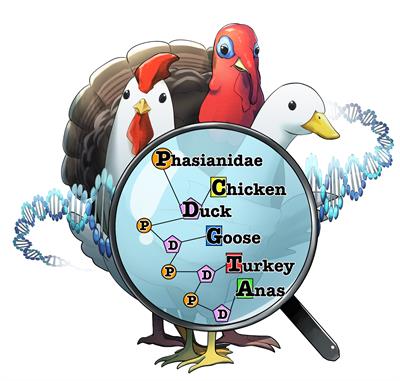
The objective of this Research Topic is to target the effects of genetic mutations in poultry. Cutting-edge technologies, which are being increasingly incorporated in the field of life sciences, have led to the development of novel research approaches that have allowed us to address research questions in evolutionary biology in a way never envisaged before while drawing upon diverse perspectives. In this collection, we aim to highlight these cutting-edge approaches in studies on gene mutations, the phenotypes they produce, and the resulting effects and consequences of these phenotypes. We will draw on the characteristics of living organisms and any novel/unique experimental data from genetics to enhance the analysis of relationships between gene mutations and phenotypes based on cutting-edge sequencing technologies and bioinformatics. Accurately grasping the effects of gene mutations in a wide variety of poultry species can also help predict the effects of unknown mutations and their resulting phenotypes.
In organisms, there are usually differences in the ecological, morphological, behavioral, and physiological characteristics within the same species. Such trait differences also exist between individuals within populations and between geographically distinct populations. For example, in dogs, cats, and chickens, there are various trait differences between populations living in different environments. These differences have arisen either as a result of their adaptation to the habitat or due to stochastic processes (e.g. genetic drift). Such differences may also arise due to congenital factors from different genetic backgrounds. Similarly, the effects of genetic mutations can vary widely among organisms. In some cases, a protein affected by a genetic mutation may still be able to perform its function but with reduced efficiency. Alternatively, a protein may completely lose its functionality. The consequences of gene mutations are related not only to how a gene mutation alters a protein itself but also to how important that specific protein is for life processes. Based on the many results, our Research Topic would like to clarify the significance of specific genetic mutations.
Subtopics of interest include, but are not limited to, the following:
• A search for useful genetic markers of disease and their applications
• Genetic variation, including differences in gene frequency and expression, among populations and its role in domestication
• The correlation between phenotype and mutation sites
• The effects of mutations on population(s) of the species
• The effects of site mutations on gene function
• The influence of SNPs, Copy number variants (CNV), InDels, microsatellites, etc. in the species
• What are the origins of mutations?
• Genetic variation related to domestication of poultry
• Polyploidy and genome evolution in poultry
Keywords: gene mutation, protein, gene expression, phenotype
Important note: All contributions to this Research Topic must be within the scope of the section and journal to which they are submitted, as defined in their mission statements. Frontiers reserves the right to guide an out-of-scope manuscript to a more suitable section or journal at any stage of peer review.
