SK
svetlana kalinina
Institute of Food Chemistry, Faculty of Chemistry and Pharmacy, University of Münster
Münster, Germany
4,104
Total downloads
18k
Total views and downloads
The impact of natural products on human life is exceptional. Thus, natural products in the form of crude extracts and oils have been used for centuries to treat a wide variety of illnesses. Nowadays, however, the emphasis is placed on the important role of individual compounds of natural origin. New discoveries have allowed the isolation, structural elucidation, and formulation of the main active ingredients from natural sources such as plants, animals, fungi, and bacteria. Secondary metabolites from microorganisms enlarged the collection of bioactive natural products. For instance, bioactive compounds of microbial origin mitomycin C and daunorubicin find their application in the treatment of broad spectra of cancers. Among others, filamentous fungi have a special role in the field of therapeutics development. The great discovery of penicillin G led to the finding of tetracyclines and other antibiotics. Another fungal secondary metabolite lovastatin was proven to inhibit cholesterol biosynthesis and found its application in the treatment of cardiovascular diseases.
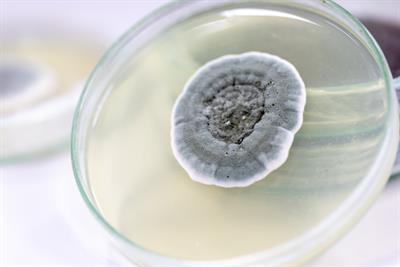
Along with their beneficial role in human life as a source of valuable secondary metabolites, fungi represent major plant and insect pathogens and also important agents of disease in vertebrates. Contamination of human and animal hosts with fungi is a reason for diseases generally called mycoses, whereas dietary, respiratory, dermal, and other exposures to fungal toxins result in diseases called mycotoxicosis. Commonly occurring fungi growing on food and feed may form toxins, known as mycotoxins, which are small molecules produced as secondary metabolites predominantly by saprophytic moulds.
In recent decades, several approaches were used for the detection and biosynthesis of novel fungal secondary metabolites. It is well known that a microorganism’s genome contains various cryptic genes, which are responsible for the production of novel secondary metabolites. However, these genes remain silent under laboratory conditions. Several genetic engineering approaches for gene activation were established. After the successful gene overexpression, the produced secondary metabolites could be detected by utilizing omics-based techniques. The development of metabolomics, proteomics, and transcriptomics methods, in the previous years, enlarged the number and chemical classes of newly identified fungal secondary metabolites.
Today, a combination of metabolomics-based technologies with genetic engineering approaches is a powerful tool for the investigation of fungal secondary metabolites. This research collection represents combinatorial studies along with novel omics approaches to access fungal secondary metabolites.
This research collection is focused on detection approaches and discovery of the fungal secondary metabolites, and will explore:
• Biosynthesis, gene clusters;
• Identification and characterization of secondary metabolites, detection of secondary metabolites;
• Activation approaches for the silent gene clusters;
• Omics-based techniques such as genomics, metabolomics, proteomics, and transcriptomics techniques for the detection of secondary metabolites
• Novel mycotoxins
Keywords: secondary metabolites, omics-based techniques, genetic engineering approaches
Important note: All contributions to this Research Topic must be within the scope of the section and journal to which they are submitted, as defined in their mission statements. Frontiers reserves the right to guide an out-of-scope manuscript to a more suitable section or journal at any stage of peer review.
