AB
alvise barbieri
Interdisciplinary Center for Archaeology and Evolution of Human Behaviour, Faculty of Humanities and Social Sciences, University of Algarve
Faro, Portugal
5,144
Total downloads
14k
Total views and downloads
Submit your idea
Select the journal/section where you want your idea to be submitted:
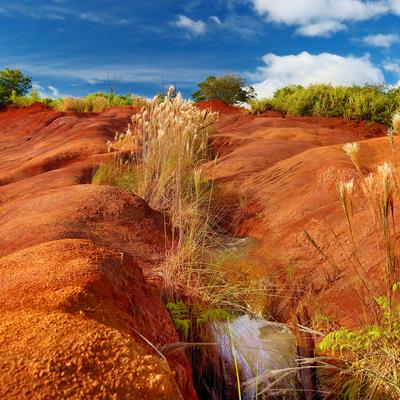
The study of prehistoric humans and their interaction with eroding landscapes is an emerging field within archaeology, driven by the urgency of understanding past human adaptations in the context of current global warming challenges. While much attention has been given to how ancient populations adapted to extreme climates, the intricate relationship between prehistoric humans, their environments, and the archaeological record remains underexplored. A critical yet often overlooked aspect is the impact of erosional processes on human evolution and the formation of archaeological sites. Recent studies have highlighted that examining the causes, timing, and effects of these processes can provide deeper insights beyond site preservation. Such investigations can elucidate gaps in regional archaeological records, identify research biases, reveal shifts in raw material usage, and uncover early human impacts on vegetation. Despite these advancements, there remains a significant need for comprehensive research to fully understand these dynamics and their implications for interpreting the archaeological record.
This research topic aims to advance our understanding of the complex interactions between prehistoric humans and eroding landscapes. By focusing on the role of erosional processes, the research seeks to answer key questions about how these processes influenced human adaptation, site formation, and environmental manipulation. The goal is to test hypotheses related to the impact of erosion on archaeological records, human subsistence strategies, and landscape management practices. Through interdisciplinary approaches, the research aims to bridge existing knowledge gaps and provide a more nuanced understanding of human-environment interactions in prehistoric times.
To gather further insights into the interplay between prehistoric humans and eroding landscapes, we welcome articles addressing, but not limited to, the following themes:
- Taphonomy: Contributions focusing on the impact of erosional processes on archaeological record formation and methodological advances in studying archaeological palimpsests.
- Human Adaptation: Studies presenting evidence of erosion-induced changes in raw material exploitation, subsistence, and settlement strategies.
- Human Impact: Case studies providing new evidence of early human-induced landscape erosion and articles on landscape manipulation by prehistoric humans to manage hydrogeological instability.
This Research Topic accepts the following article types, unless otherwise specified in the Research Topic description:
Articles that are accepted for publication by our external editors following rigorous peer review incur a publishing fee charged to Authors, institutions, or funders.
Keywords: Eroding Landscapes, Erosional Processes, Human-Environment Interactions, Unstable Environments
Important note: All contributions to this Research Topic must be within the scope of the section and journal to which they are submitted, as defined in their mission statements. Frontiers reserves the right to guide an out-of-scope manuscript to a more suitable section or journal at any stage of peer review.
Manuscripts can be submitted to this Research Topic via the main journal or any other participating journal.
Submit your idea
Select the journal/section where you want your idea to be submitted:
