JZ
jian zhao
Zhejiang University
Hangzhou, China
4,021
Total downloads
16k
Total views and downloads
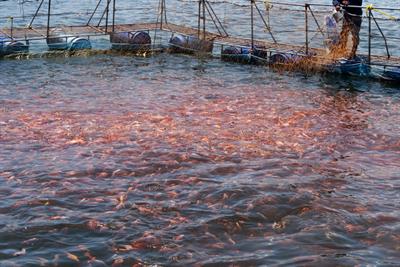
Aquatic products provide a significant proportion of animal protein to the global population, and this proportion is expected to increase by 57% between 2005 and 2050 due to population growth. Aquaculture production has grown rapidly in the past few decades, and currently more than half of the consumption of aquatic products worldwide is provided by aquaculture. The feeding process is of great importance in managing aquaculture tasks, with the cost of feed accounting for about 30%-70% of the total production costs. Underfeeding impedes fish growth, so the strategy of overfeeding is commonly adopted in practical production to satisfy the nutritional needs of fish. However, overfeeding leads to leftover feed, which not only contributes to extra costs, but also to poor water quality. Moreover, previous research has shown that feed has the greatest impact on the carbon footprint of aquaculture. Therefore, optimization of feeding control processes is a prime consideration for achieving efficient production and promoting fish welfare in aquaculture.
Until now, considerable work has been undertaken in optimizing the feeding process in aquaculture. Although the feeding technique has been improved to some extent, relevant studies have been subjective and have ignored many aspects of aquaculture. For example, counting, size grading, biomass estimation, and disease detection in aquaculture are indispensable in intelligent feeding systems, but usually the cumulative integration of all these processes has been neglected. What’s more, current research focuses increasingly on the technology itself, and not enough on the farmed objects it serves. It is more meaningful to develop feeding techniques and generate feeding strategies based on the biological and behavioural characteristics of the farmed objects in practical production. Nevertheless, relevant systematic studies are rarely reported.
We invite researchers to submit papers in the field of “personalized and intelligent feeding in aquaculture”, and call for original and novel papers (and especially welcome reviews) including but not limited to the following topics:
• The roles of feed composition and nutrition in efficient feeding in different aquaculture modes.
• Promoting feeding welfare from the perspectives of ethology and sociology of organisms.
• Interaction between behavioural as well as physiological expression (feeding related) and environment, and its mechanism.
• New intelligent feeding methods and related techniques such as counting, size grading and biomass estimation.
• Specific feeding method-based personalized feeding strategies, facilities and equipment.
Keywords: aquaculture, feeding, personalization, intelligentization
Important note: All contributions to this Research Topic must be within the scope of the section and journal to which they are submitted, as defined in their mission statements. Frontiers reserves the right to guide an out-of-scope manuscript to a more suitable section or journal at any stage of peer review.
