SN
swamikannu nedumaran
International Crops Research Institute for the Semi-Arid Tropics (ICRISAT)
Patancheru, India
4,633
Total downloads
22k
Total views and downloads
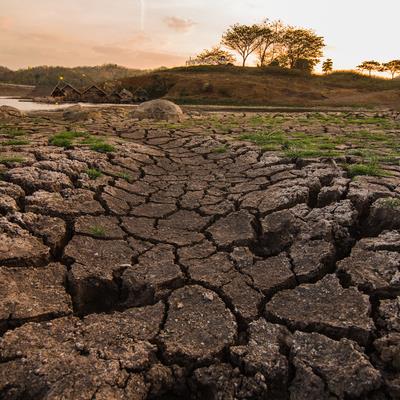
Global Drylands cover about 41% of the earth’s surface and are inhabited by more than 2 billion people who rank among the poorest of the poor globally. Poverty, food insecurity, malnutrition, frequent drought, and environmental degradation are widespread features of the drylands and adversely impact those who live there. About 60% of the total arable land in South Asia is classified as dryland, while the corresponding figure for sub-Saharan Africa is around 70%.
There is increasing evidence that changes in socioeconomic conditions (population and income growth, urbanization, liberalization of trade and markets, etc.) and the biophysical environment (e.g., climate change and variability, land degradation, water scarcity, etc.) are influencing production, consumption and investment decisions of dryland farm households. These changes significantly influence the structure and compositions of production, and consumption in rural and urban areas and the opportunities available to the dryland farmers to improve their livelihoods, diversify into new products, adopt new technologies, intensify agriculture, and invest in improved management of land and water resources. This global situation calls for sustainable efforts to transform dryland agriculture and the livelihoods of millions through new frameworks of cooperation, partnerships, and innovations.
As part of the golden jubilee celebration, ICRISAT – the global leader in agricultural research for drylands – is organizing an International Conference on Innovations to Transform Drylands. The conference covers about eight themes and most of them cover topics related to climate change impacts on dryland crops, production, and food systems, climate-smart technologies and digital innovation to build smallholder resilience, climate, and nutrition-sensitive value chains, enabling policies, markets, and climate actions and gender and social inclusion in the changing climate. Detailed information is available at https://www.icrisat.org/event/international-conference-on-innovations-to-transform-drylands/. At the conference, globally renowned researchers presented their research on the above topics. With this article collection, we propose to collate and encourage some of the interdisciplinary papers and case studies with innovative methodologies, technologies, and policies to transform drylands under the changing climate.
This Research Topic will encourage submissions on the following broader areas, but not limited to:
• Climate change impact projection and risk assessment including cost-benefit and trade-off analysis in the dryland agriculture
• Adaptation, Resilience, and Coping strategies of the smallholder farmers under the changing future climate in the drylands of Asia and Africa
• Role of water and natural resource management to build resilience for climate change in the dryland farming
• Climate-smart and nutrition-sensitive technologies and value chains innovations for the dryland crops
• Inclusive and gender-responsive climate policies and actions to mitigate climate change impacts
• Genetic innovations for breeding climate-smart and future-ready crop varieties
Keywords: ICRISAT, Dryland agriculture, Dryland farming, Coping Strategies of smallholder farmers, Climate Change, Smallholder resilience, International Conference on Innovations to Transform Drylands
Important note: All contributions to this Research Topic must be within the scope of the section and journal to which they are submitted, as defined in their mission statements. Frontiers reserves the right to guide an out-of-scope manuscript to a more suitable section or journal at any stage of peer review.
International Crops Research Institute for the Semi-Arid Tropics (ICRISAT)
Patancheru, India
Oregon State University
Corvallis, United States
International Crops Research Institute for the Semi-Arid Tropics (ICRISAT)
Patancheru, India
Alliance Bioversity International and CIAT (Kenya)
Nairobi, Kenya
International Crops Research Institute for the Semi-Arid Tropics (ICRISAT)
Patancheru, India
