CM
catherine margaret miller
James Cook
Cairns, Australia
1,544
Total downloads
9,012
Total views and downloads
Submit your idea
Select the journal/section where you want your idea to be submitted:
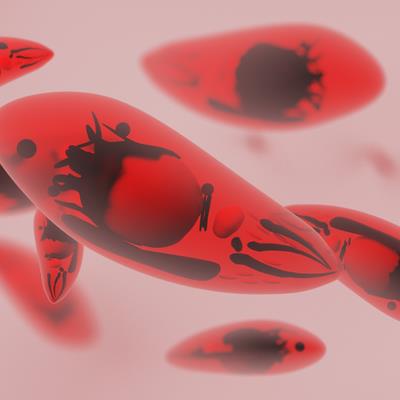
Toxoplasma gondii is an obligate intracellular protozoan affecting between 30 and 50% of the global population. Although the definitive host has to be a member of the Felidae family, the parasite is able to infect any warm-blooded animal as an intermediate host. In the initial stage of infection, the parasite embarks on a period of asexual reproduction to increase parasite numbers whilst also stimulating a strong inflammatory response. This inflammatory response drives stage conversion of the parasite into the dormant cyst stage where it will remain until consumed by the definitive host. In humans, infection occurs through the consumption of undercooked contaminated meat, unwashed contaminated fruits and vegetables or contaminated water. Many people remain unaware that they are infected until an underlying pathology emerges.
Although a strong inflammatory response is necessary to resolve this acute stage of infection, this response often has pathological consequences. For example: acute infection can result in miscarriage or congenital defects in the developing baby; reactivation of infection can cause encephalitis in immunosuppressed people. Even if the infection becomes chronic, the host must maintain continuing immune surveillance of the parasite. Chronic infection has been linked to multiple neuropsychiatric disorders such as schizophrenia, bipolar disorder, autism, and Alzheimer's disease. Interferon-ɣ (IFN-ɣ), mainly produced by CD4+ cells, has a dominant role in the control of T. gondii infection but is also a cytokine that influences the transcription of numerous genes, including ones with the potential to cause tissue damage. In this Special Issue we would like to explore the relationship between the inflammatory response and the pathology of the infection.
For this topic, we welcome human and animal studies that focus on pathology caused by infection with Toxoplasma gondii. We seek original research articles, reviews, case reports and brief research reports that cover, but are not limited to, the following topics:
1. The role of inflammation in the immunological control of T. gondii.
2. The role of inflammation in the pathology caused by toxoplasmosis in humans.
3. The role of inflammation in the pathology caused by toxoplasmosis in animal models.
4. 4. The role of inflammation in the anti-T. gondii vaccine response
This Research Topic accepts the following article types, unless otherwise specified in the Research Topic description:
Articles that are accepted for publication by our external editors following rigorous peer review incur a publishing fee charged to Authors, institutions, or funders.
Keywords: toxoplasmosis, toxoplasma gondii, inflammation, pathology, immune response
Important note: All contributions to this Research Topic must be within the scope of the section and journal to which they are submitted, as defined in their mission statements. Frontiers reserves the right to guide an out-of-scope manuscript to a more suitable section or journal at any stage of peer review.

Manuscripts can be submitted to this Research Topic via the main journal or any other participating journal.
Submit your idea
Select the journal/section where you want your idea to be submitted: