RR
rodolfo reda
Sapienza University of Rome
Rome, Italy
1,162
Total views and downloads
Submit your idea
You will be redirected to our submission process.
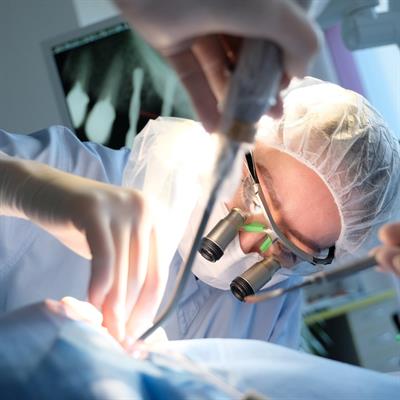
The field of hard and soft tissue regeneration in dentistry has seen significant advancements driven by the increasing aesthetic demands of patients and the desire for fixed implant-supported rehabilitation. Despite the success of techniques such as Guided Bone Regeneration (GBR) and bone augmentation using native bone plates, these methods often involve invasive procedures and lengthy treatment durations. Current research highlights the need for less invasive and more rapid alternatives. Recent studies have shown promising results with the integration of digital dentistry technologies, which optimize treatment planning, minimize surgical errors, and enhance operational flow. However, there remains a gap in fully understanding the potential of these technologies and newly introduced biomaterials in improving patient outcomes and satisfaction.
This research topic aims to explore innovative approaches to hard and soft tissue regeneration in dentistry, focusing on less invasive and more efficient procedures. The main objectives include investigating the use of digital dentistry tools to enhance treatment planning and execution, evaluating the effectiveness of new biomaterials in tissue regeneration, and examining the potential of native bone rehabilitation as an alternative to traditional methods. Specific questions to be addressed include: How can digital technologies improve the predictability and speed of tissue regeneration procedures? What are the cellular responses to newly introduced biomaterials? Can native bone rehabilitation offer a viable alternative to current practices?
To gather further insights in the realm of hard and soft tissue regeneration in dentistry, we welcome articles addressing, but not limited to, the following themes:
- The role of digital dentistry in optimizing treatment planning and execution
- Comparative studies on the effectiveness of autologous tissues, synthetic derivatives, and heterologous tissues in tissue regeneration
- Cellular analysis of newly introduced biomaterials and their impact on regenerative procedures
- Innovative surgical techniques aimed at reducing the need for tissue grafting
- Clinical and in vitro research on bone and soft tissue augmentation
- Patient outcomes and satisfaction with less invasive tissue regeneration methods
- The potential of native bone rehabilitation as an alternative to traditional augmentation techniques
By exploring these themes, we aim to redefine the future of implant rehabilitation and regenerative techniques, ultimately benefiting both practitioners and patients.
This Research Topic accepts the following article types, unless otherwise specified in the Research Topic description:
Articles that are accepted for publication by our external editors following rigorous peer review incur a publishing fee charged to Authors, institutions, or funders.
Keywords: Hard tissues, Bone, Autologous, Heterologous, Augmentation, Implant, Connective Tissue, Dermal Matrix, Graft
Important note: All contributions to this Research Topic must be within the scope of the section and journal to which they are submitted, as defined in their mission statements. Frontiers reserves the right to guide an out-of-scope manuscript to a more suitable section or journal at any stage of peer review.
Manuscripts can be submitted to this Research Topic via the main journal or any other participating journal.
Submit your idea
You will be redirected to our submission process.
