MB
mojca bizjak-suran
University Clinic of Pulmonary and Allergic Diseases Golnik
Golnik, Slovenia
36
Total downloads
2,615
Total views and downloads
Submit your idea
You will be redirected to our submission process.
Manuscript Submission Deadline 30 April 2026
This Research Topic is currently accepting articles.
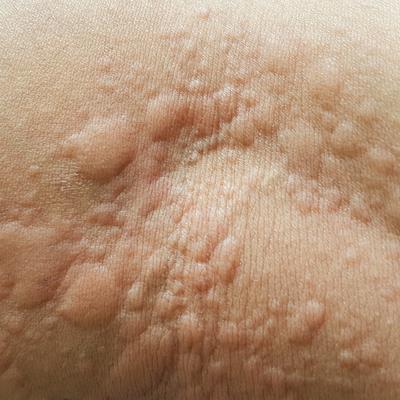
Chronic inducible urticaria (CIndU) is a group of persistent, often difficult-to-treat diseases characterized by recurrent wheals and/or angioedema for more than 6 weeks, triggered by specific factors. These triggers include shearing forces on the skin (symptomatic dermographism), cold (cold urticaria), body warming (cholinergic urticaria), ultraviolet and visible light (solar urticaria), sustained pressure (delayed pressure urticaria), vibration (vibratory angioedema), contact with certain substances (both immunologic and non-immunologic contact urticaria), heat (heat urticaria) and water (aquagenic urticaria). In some cases, cold urticaria and immunologic contact urticaria can lead to cold-induced and contact-induced anaphylaxis. Despite its significant impact on patients’ daily lives, CIndU remains under-researched compared to chronic spontaneous urticaria (CSU). The limited understanding of the condition, coupled with a lack of effective treatment options, results in a substantial burden on affected individuals, who often face challenges in managing symptoms and improving their quality of life.
While there have been advances in understanding the pathogenesis and clinical features of chronic inducible urticaria (CIndU) in recent decades, the condition remains significantly under-researched. This research topic aims to address several critical knowledge gaps in CIndU that, if filled, would improve patient care:
1. Pathophysiology: CIndU subtypes likely involve diverse pathophysiological mechanisms. More in-depth research is needed to identify the triggers of mast cell degranulation and other cellular and molecular immune mechanisms, both upstream and downstream.
2. Biomarkers: CIndU patients exhibit variations in disease activity, severity, duration and treatment response. The identification of biomarkers that can predict or assess these aspects will contribute to better patient care.
3. Provocation testing protocols: Current provocation tests often yield negative results despite a suggestive patient history. Improvements to these diagnostic protocols are needed to more accurately identify CIndU subtypes.
4. Patient-reported outcome measures (PROMs): The full extent of the disease burden is not well understood. There is an unmet need for PROMs that assess disease activity, severity and quality of life (QoL) impairment, as such tools are not yet available for all CIndU subtypes.
5. Laboratory testing recommendations: The latest EAACI/GA2LEN/EuroGuiDerm/APAAACI urticaria guideline does not recommend routine laboratory tests for CIndU, leaving clinicians uncertain about which tests to order. Additionally, there are no specific recommendations for testing in cold-induced and contact-induced anaphylaxis.
6. Treatment options: The lack of effective treatments remains a significant challenge, as second-generation H1-antihistamines are often inadequate for disease control. Further research into novel therapies is needed.
This research topic seeks to explore the diverse clinical, immunological and therapeutic aspects of chronic inducible urticaria (CIndU). We invite contributors to address a range of specific themes, including but not limited to:
1. The pathophysiology of CIndU subtypes, focusing on triggers of mast cell degranulation and other cellular and molecular upstream or downstream immune mechanisms.
2. Identification of biomarkers for disease activity, severity, duration and treatment response.
3. Optimization of provocation testing protocols.
4. Development of patient-reported outcome measures (PROMs) that assess disease activity, severity and quality of life (QoL) impairment.
5. Laboratory testing recommendations for CIndU subtypes, including cold-induced anaphylaxis and contact-induced anaphylaxis.
6. Novel therapeutic approaches and proof-of-concepts studies that shed light on therapies beyond second-generation H1-antihistamines.
We are particularly interested in receiving original research articles. However, systematic reviews addressing pertinent topics will also be considered.
Themes: symptomatic dermographism, cold urticaria and cold-induced anaphylaxis, cholinergic urticaria, solar urticaria, delayed pressure urticaria, vibratory angioedema, contact urticaria and contact-induced anaphylaxis, heat urticaria, aquagenic urticaria
Dr. Mojca Bizjak has been a speaker and advisor for Novartis.
Prof. Margarida Goncalo, has received research funding from Abbvie, Almirall, Amgen, AstraZeneca, Janssen, Leo Pharma, Lilly, Novartis, Pfizer, Sanofi and Takeda.
Melba Muñoz has been a speaker, advisor and/or received research funding from Jasper Therapeutics, Astra Zeneca, Celldex Therapeutics, Takeda, GA²LEN, UNEV and Roche.
The rest of the editorial team declares no conflict of interest.
This Research Topic accepts the following article types, unless otherwise specified in the Research Topic description:
Articles that are accepted for publication by our external editors following rigorous peer review incur a publishing fee charged to Authors, institutions, or funders.
Keywords: Chronic inducible urticaria; cold urticaria, cholinergic urticaria, contact urticaria, delayed pressure urticaria, immunoglobulin E, mast cells, patient-reported outcomes, provocation testing, solar urticaria, symptomatic dermographism, vibratory angioedema
Important note: All contributions to this Research Topic must be within the scope of the section and journal to which they are submitted, as defined in their mission statements. Frontiers reserves the right to guide an out-of-scope manuscript to a more suitable section or journal at any stage of peer review.
University Clinic of Pulmonary and Allergic Diseases Golnik
Golnik, Slovenia
University Clinic of Pulmonary and Allergic Diseases Golnik
Golnik, Slovenia
Fraunhofer ITMP Immunology and Allergology
Berlin, Germany
Serviço Dermatologia, Centro Hospitalar e Universitário de Coimbra
Coimbra / Portugal, Portugal
Manuscripts can be submitted to this Research Topic via the main journal or any other participating journal.
Submit your idea
You will be redirected to our submission process.