KG
kais gadhoumi
Duke University
Durham, United States
2,514
Total downloads
22k
Total views and downloads
Submit your idea
Select the journal/section where you want your idea to be submitted:
Poststroke epilepsy (PSE) is one of the most common complications of stroke, affecting approximately 10% of patients. Stroke is also the most common cause of epilepsy in older people. PSE must be carefully differentiated from early epileptic seizures, which occur in the first seven days after stroke onset. PSE can develop in patients due to the structural brain damage caused by the stroke, leading to abnormal electrical activity that results in seizures. It has been linked to poor functional outcomes, neurocognitive deficits, and higher mortality. Additionally, people with PSE can experience an overall decline in quality of life owing to factors such as reduced employability and driving restrictions. Therefore, identifying factors that might increase an individual’s likelihood of developing PSE, coupled with timely and appropriate therapeutic interventions, is essential to optimizing management of those with this disorder.
Known risk factors for developing PSE include the severity and location of the stroke, with, for example, cortical strokes posing a higher risk. The use of electroencephalography (EEG) has shown potential in assessing the risk of subsequent seizures and predicting the development of poststroke epileptogenesis. Additionally, recent studies have identified cortical superficial siderosis as a marker for PSE. Treatment usually involves anti-seizure medication to control seizures as well as careful management of comorbidities and the underlying stroke-related conditions. Early intervention and tailored treatment plans are likely necessary to improve outcomes in those with PSE.
The primary goal of this Research Topic is to advance our understanding of PSE, its risks, optimal diagnostic techniques, prognostic models, and treatment options. By compiling and analyzing recent research, we aim to highlight reliable biomarkers, as well as exploring the factors contributing to PSE. Primary preventative treatments will be emphasized. Additionally, we seek to explore the broader impact of PSE on patient recovery and quality of life. Our aim is to produce a foundational work that will provide the platform to ensure better outcomes for patients by reducing seizures as well as functional and cognitive decline in stroke survivors.
To further our understanding of poststroke epilepsy, we welcome all article types accepted by the journal addressing, but not limited to, the following themes:
- Mechanisms of neuronal injury leading to epilepsy.
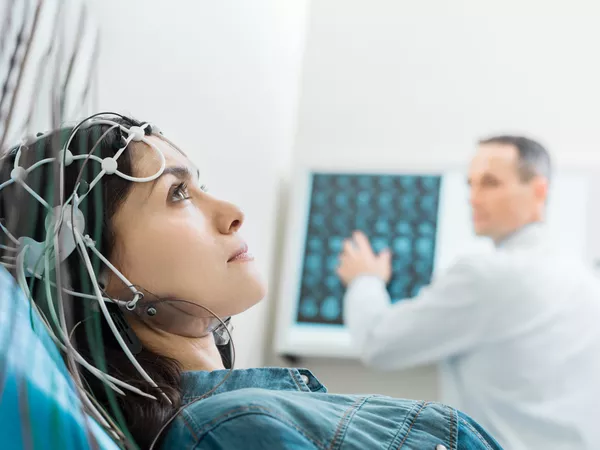
- The role of EEG in the diagnosis of PSE and its potential in stratifying the risk of subsequent seizures.
- The identification and validation of reliable biomarkers for PSE.
- Strategies for the primary and secondary prevention of seizures in stroke survivors.
- Efficacy of anti-seizure medications (ASMs) in stroke patients.
- Drug-to-drug interaction between direct oral anticoagulants and antiseizure medications
- Non-pharmacological treatments and interventions in PSE.
- Long-term cognitive consequences of PSE and how to reduce their impact.
- Impact of PSE on patient recovery, including effect on rehabilitation outcomes, and strategies to improve quality of life for people with PSE
Topic Editor Dr. Sharon Chiang is an owner of Epilepsy AI, LLC, as well as a consultant for Neurelis and LivaNova. Additionally, Dr. Arjune Sen noted that Oxford Epilepsy Research Group has received research monies/speaker.
This Research Topic accepts the following article types, unless otherwise specified in the Research Topic description:
Articles that are accepted for publication by our external editors following rigorous peer review incur a publishing fee charged to Authors, institutions, or funders.
Keywords: post-stroke epilepsy, stroke complications, epilepsy, seizure prevention
Important note: All contributions to this Research Topic must be within the scope of the section and journal to which they are submitted, as defined in their mission statements. Frontiers reserves the right to guide an out-of-scope manuscript to a more suitable section or journal at any stage of peer review.
Duke University
Durham, United States
University of California, San Francisco
San Francisco, United States
Maurizio Bufalini Hospital
Cesena, Italy
University of Oxford
Oxford, United Kingdom
C. S of Neurology and Stroke Unit, SS Annunziata Hospital, Taranto, Italy
Taranto, Italy
Manuscripts can be submitted to this Research Topic via the main journal or any other participating journal.
Submit your idea
Select the journal/section where you want your idea to be submitted: