BD
boris decourt
Texas Tech University Health Sciences Center
Lubbock, United States
397
Total downloads
15k
Total views and downloads
Submit your idea
Select the journal/section where you want your idea to be submitted:
Manuscript Submission Deadline 12 January 2026
This Research Topic is currently accepting articles.
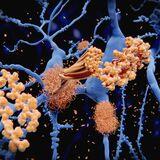
The past decade has seen a dramatic increase in the technology that allows the detection of minute amounts of disease-related analytes in biofluids. This is particularly true in the field of neurodegenerative disorders (NDD). For example, it is now possible to reliably detect amyloid beta peptides, phosphorylated tau, alpha-synuclein, and neurofilament light proteins in the blood. These improvements are paving the way for a brighter future for the accurate diagnosis of NDD. However, several challenges remain. One key challenge, illustrated by the heart medication entresto, which inhibits the degradation of amyloid beta peptides, is the need to better understand how biofluid biomarkers change over time and in presence of drugs used for the treatment of co-morbidities. Similarly, it is unclear today whether disease-related markers are good surrogates for treatment efficacy. Until now, these issues have dissuaded regulatory agencies from approving biofluid biomarkers in the management of NDD.
It is necessary to consolidate the current state of knowledge about NDD biofluid biomarkers and identify possible challenges to move forward with the validation of these emerging tools in daily clinical practice. The goal of the proposed Research Topic is to summarize the current knowledge about the numerous NDD biofluid markers that have been investigated in recent years, as well as provide an overview of the missing steps to reach regulatory approval. Given the development of multiple platforms to analyze biofluid markers, we also aim to assist the readers with understanding the promises and limitations of each platform to address their needs when conducting research projects.
NDD biofluid markers are a large Research Topic to cover. Prospective authors are welcome to consider either the different biofluids that can be analyzed in NDD (e.g., cerebrospinal fluid, whole blood, blood tissues, urine, saliva), or an article focused on the biofluid markers in one specific fluid in a given NDD (e.g., Alzheimer’s, Huntington’s, Parkinson’s, Lewy body dementia, vascular dementia, amyotrophic lateral sclerosis), or an article comparing biomarkers across NDDs, or articles comparing platform performance for different biomarkers or in different NDD, or articles about emerging biomarkers, such as disease-specific inflammatory markers. Related topics can also focus on the current limitations to obtaining regulatory approval for diagnostic tests, including the difficulty of recruiting diverse participants in diagnostic studies for NDD. To guide prospective authors, the editors have pre-selected the following topics of special interest:
- saliva biomarkers for AD
- non-Abeta and non-tau CSF biomarkers for AD
- blood-based biomarkers for AD
- CSF and blood biomarkers for FTD and Vascular dementia
- CSF and blood biomarkers for LBD and PD
Dr. Paul Slowey is the CEO of Oasis Diagnostics® Corporation, and Chief Science Officer at RapidDx, Inc. Dr. Marwan Sabbagh has the following ownership interests: Optimal Cognitive Health Company, uMethod Health, Versanum, Athira, TransDermix, Seq BioMarque, NeuroReserve, Lighthouse Pharmaceuticals, Alzheon, Reservoir Neuroscience. All other Topic Editors declare no competing interests with regards to the Research Topic subject.
This Research Topic accepts the following article types, unless otherwise specified in the Research Topic description:
Articles that are accepted for publication by our external editors following rigorous peer review incur a publishing fee charged to Authors, institutions, or funders.
Keywords: Neurodegenerative Disorders, Biofluid Biomarkers, Amyloid Beta Peptides, Regulatory Approval, Diagnostic Tests
Important note: All contributions to this Research Topic must be within the scope of the section and journal to which they are submitted, as defined in their mission statements. Frontiers reserves the right to guide an out-of-scope manuscript to a more suitable section or journal at any stage of peer review.
Texas Tech University Health Sciences Center
Lubbock, United States
School of Medicine, Wake Forest University
Winston-Salem, United States
Oasis Diagnostics (United States)
Vancouver, United States
Barrow Neurological Institute (BNI)
Phoenix, United States
Manuscripts can be submitted to this Research Topic via the main journal or any other participating journal.
Submit your idea
Select the journal/section where you want your idea to be submitted: