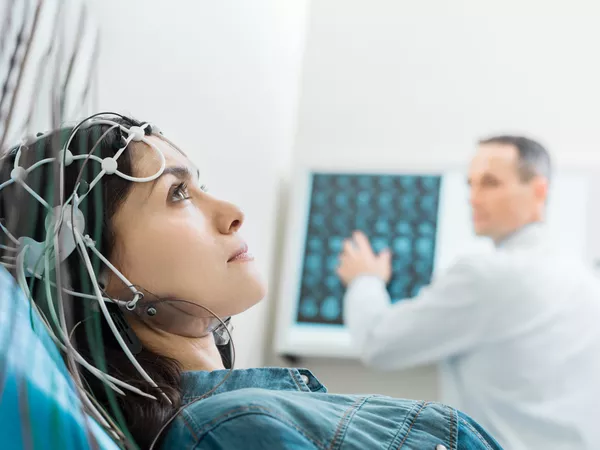
Neurological disorders, including Alzheimer’s, Parkinson’s, ALS, and multiple sclerosis, pose significant challenges due to their complex pathophysiology and the slow pace of drug discovery. Traditional methods for identifying therapeutic candidates are often costly and time-consuming, with high failure rates in clinical trials. Computational approaches, leveraging artificial intelligence (AI), bioinformatics, and systems pharmacology, offer transformative potential in accelerating drug discovery for these disorders.
This Research Topic aims to showcase cutting-edge advancements in computational drug discovery for neurology, focusing on AI-driven molecular screening, drug repurposing, and bioinformatics pipeline development. By integrating machine learning, molecular docking, network pharmacology, and large-scale multi-omics analysis, researchers can identify novel therapeutic targets, optimize lead compounds, and enhance precision medicine in neurology. We seek contributions that bridge computational innovations with real-world applications to drive the future of neurotherapeutics.
Recent advancements in AI and computational modeling have revolutionized drug discovery, enabling high-throughput screening, de novo molecule generation, and predictive modeling of drug-target interactions. Large-scale multi-omics data, neuroinformatics, and deep learning are now being leveraged to accelerate the identification of promising drug candidates for neurological diseases. Moreover, the integration of natural language processing (NLP) and large language models (LLMs) allows for automated knowledge extraction from biomedical literature and clinical databases, further enhancing hypothesis generation.
Despite these advancements, challenges remain in translating computational predictions into clinically viable drugs. This Research Topic aims to address these challenges by bringing together experts in computational biology, AI, bioinformatics, and neurology to explore innovative methodologies that bridge the gap between in silico predictions and experimental validation.
This Research Topic welcomes original research, reviews, and perspective articles focusing on computational drug discovery for neurological disorders. Key themes include:
• AI and Machine Learning in Drug Discovery: Deep learning for molecular docking, ligand-protein interaction prediction, and drug-target modeling.
• Generative AI for De Novo Drug Design: Applications of GANs, VAEs, and diffusion models in neuropharmacology.
• Bioinformatics Pipelines for Drug Screening: Automated computational workflows integrating molecular simulations, pharmacogenomics, and systems biology.
• LLM-Powered Literature Mining for Drug Repurposing: NLP applications in extracting knowledge from biomedical literature and clinical trial data.
• Network Pharmacology and Systems Approaches: Drug-target discovery using network-based models and multi-omics integration.
• Case Studies and Applications: Examples of successful computational approaches leading to promising neurotherapeutic candidates.
By assembling interdisciplinary research, this collection will foster collaborations between computational scientists, neuroscientists, and pharmacologists to advance the field of neuro-drug discovery.
Article types and fees
This Research Topic accepts the following article types, unless otherwise specified in the Research Topic description:
Brief Research Report
Clinical Trial
Editorial
FAIR² Data
FAIR² DATA Direct Submission
General Commentary
Hypothesis and Theory
Methods
Mini Review
Articles that are accepted for publication by our external editors following rigorous peer review incur a publishing fee charged to Authors, institutions, or funders.
Article types
This Research Topic accepts the following article types, unless otherwise specified in the Research Topic description:
Brief Research Report
Clinical Trial
Editorial
FAIR² Data
FAIR² DATA Direct Submission
General Commentary
Hypothesis and Theory
Methods
Mini Review
Opinion
Original Research
Perspective
Policy and Practice Reviews
Review
Study Protocol
Systematic Review
Keywords: Computational drug discovery, AI-driven drug repurposing, neurodegenerative diseases, bioinformatics pipelines, machine learning, molecular docking, systems pharmacology
Important note: All contributions to this Research Topic must be within the scope of the section and journal to which they are submitted, as defined in their mission statements. Frontiers reserves the right to guide an out-of-scope manuscript to a more suitable section or journal at any stage of peer review.