RP
rocco pace
Eurac Research
Bolzano, Italy
1,939
Total views and downloads
Submit your idea
Select the journal/section where you want your idea to be submitted:
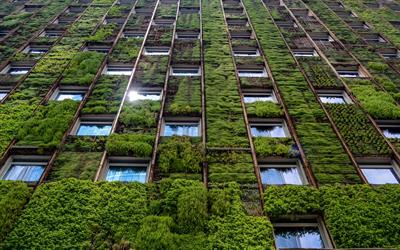
Amid rapid urbanization and growing climate pressures, cities are increasingly called to adopt regenerative and resource-efficient models. One of the most promising approaches in this direction is the deployment of Nature-Based Solutions (NbS)—a broad set of interventions that use natural processes and sustainably managed, protected and restored ecosystems to address societal and environmental urban challenges simultaneously. These include, but are not limited to, vegetated systems such as green spaces, green roofs and walls, and urban forests, the use of bio-based materials (e.g., timber for construction, natural insulation products), and restorative land-use practices.
NbS provide essential ecosystem services (ES)—such as air purification, urban cooling, stormwater regulation, and cultural value—benefiting both people and nature. As such they can help facilitating solutions that allow society and the economy navigating within safe earth system boundaries, not only to support the biosphere’s integrity but also to combat climate change, safeguard freshwater use or addressing land system change. However, the governance of NbS, as well as the distribution and accessibility of their benefits often reinforces existing inequalities or creates new ones. This raises important questions of justice-particularly regarding the equitable distribution of benefits, inclusive accessibility to goods, services, and decision-making, transparency in decision-making processes, recognition of diverse needs and values, and the need for restoration and repair of past and ongoing socio-ecological harms. Addressing these challenges across all phases of urban NbS governance—from planning and implementation to long-term maintenance—is crucial to ensure that NbS contribute to fairer and more inclusive cities and support a just socio-ecological transition.
NbS can also be closely linked to circular economy (CE) in urban sustainability effort, to create resilient, resource-efficient, just and inclusive cities. While CE focuses on minimizing waste and maintaining material use and value over time, NbS protect, regenerate, and enhance ES in ways that are both sustainable and socially equitable. When combined, these approaches can support each other. For example, community-led urban gardening projects can promote local food production while improving access to green spaces for individuals and communities with limited resources. Similarly, composted organic waste can be used to enrich soil in urban green spaces, or demolition materials can be repurposed to build green infrastructure such as rain gardens. Exploring the combination of these approaches offers new perspectives on innovative pathways to support the socio-ecological transition in cities.
This Research Topic aims to investigate how NbS can be strategically designed, governed, implemented and maintained to foster urban circularity and ecosystem regeneration while advancing environmental justice and operating not only within safe but also just earth system boundaries. While the value of NbS is widely acknowledged, there is still a need to better understand how it can be combined with the CE approach to actively support the protection and enhancement of urban ES. In particular, further research is needed to examine how NbS can be leveraged to deliver equitable and inclusive outcomes that promote both the wellbeing of urban societies and the integrity of the biosphere through a CE approach. This includes a deeper exploration of the social implications of NbS across diverse socio-economic and demographic groups within cities. Ensuring that NbS generate positive social impacts—especially for those on the economic and social margins—is essential, as is the identification and mitigation of potential adverse effects that may exacerbate existing urban inequalities.
We are interested in how NbS can serve as multifunctional platforms—providing bio-based resources, supporting circular material flows, ensuring equitable access to ecological amenities, and enabling local green employment opportunities. Equally important is exploring how to ensure transparent, inclusive, and participatory decision-making processes that actively engage a broad range of stakeholders, particularly those lacking a voice in urban decision-making. Embedding these strategies into urban governance presents both challenges and opportunities for realizing just socio-ecological transitions in cities. Of particular interest are emerging models that integrate NbS with CE principles, offering promising pathways to enhance urban sustainability.
This Topic aims to build an interdisciplinary dialogue to reframe NbS not only as sustainability assets, but also as catalysts for systemic, just, and circular urban socio-ecological transformations.
We welcome contributions that critically engage with Nature-Based Solutions and their role in advancing circular urban economies and equitable socio-ecological transitions. Submissions may explore the intersections of ES, circular economy, environmental and social justice, and urban governance.
Relevant themes include (but are not limited to):
• Integration of NbS with circular economy principles
• Nature-based Solutions for equitable and inclusive urban transitions within safe and just earth system boundaries
• Mapping, modeling, and assessing ES in urban contexts
• Metrics, indicators, and evaluation frameworks for ES and NbS
• Governance innovations and multi-level planning approaches
• Urban resource flows, waste valorization, and bio-based systems
• Community-led or co-designed NbS initiatives
• Spatial dynamics of ES distribution and access
• Participatory planning and co-governance models for NbS
• Procedural justice and stakeholder inclusion in circular transitions
• Stories of social (in)equality and NbS
• Multicriteria evaluation of NbS in circular transitions
We encourage original research, conceptual papers, policy analyses, reviews, and methodological contributions, with openness to interdisciplinary and practice-oriented perspectives. Submissions should offer actionable insights that help reimagine NbS as key instruments for circular, just, and sustainable resource management.
This Research Topic accepts the following article types, unless otherwise specified in the Research Topic description:
Articles that are accepted for publication by our external editors following rigorous peer review incur a publishing fee charged to Authors, institutions, or funders.
Keywords: Urban governance, ecosystem services, ES, nature-based solutions, NbS, environmental and social justice, circular economy, socio-ecological transition
Important note: All contributions to this Research Topic must be within the scope of the section and journal to which they are submitted, as defined in their mission statements. Frontiers reserves the right to guide an out-of-scope manuscript to a more suitable section or journal at any stage of peer review.
Eurac Research
Bolzano, Italy
Eurac Research Institute for Renewable Energy
Bolzano, Italy
Institute of Biomass Research, Weihenstephan-Triesdorf University of Applied Sciences
Markgrafenstraße 16,, Germany
Eurac Research
Bolzano, Italy
University of Basilicata
Potenza, Italy
Eurac Research
Bolzano, Italy

Manuscripts can be submitted to this Research Topic via the main journal or any other participating journal.
Submit your idea
Select the journal/section where you want your idea to be submitted: