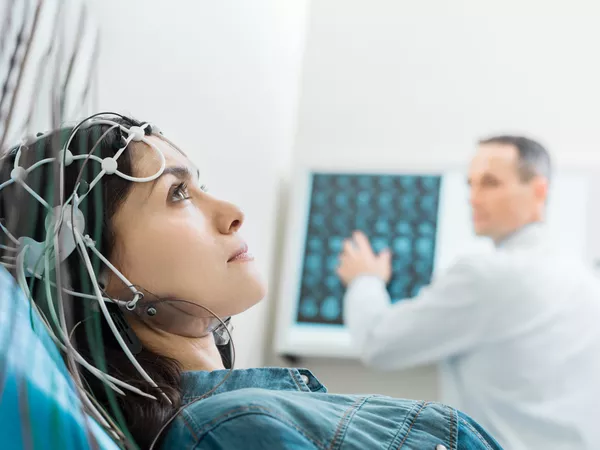
Neuromodulation has revolutionized the treatment of movement disorders such as Parkinson’s disease, dystonia, and essential tremor. With advancements in adaptive deep brain stimulation (DBS), spinal cord stimulation (SCS), and non-invasive neuromodulation techniques, treatment outcomes have significantly improved. Alongside these developments, artificial intelligence (AI) and machine learning are expanding possibilities by enabling personalized treatment strategies and optimizing stimulation parameters. Despite these advancements, integrating AI algorithms into real-time neuromodulation systems, developing reliable biomarkers, and validating these approaches in large-scale clinical studies remain challenging. There exists enormous potential in the synergy between AI and neuromodulation to enhance therapeutic efficacy and improve patient outcomes.
This Research Topic aims to unite pioneering research at the intersection of neuromodulation and AI for movement disorders. The primary goal is to highlight the role of AI technologies in enhancing the precision, adaptability, and efficiency of neuromodulation therapies. We encourage submissions that delve into AI-driven patient selection, biomarker identification, closed-loop systems, and predictive modeling. By fostering interdisciplinary collaboration, this Research Topic seeks to accelerate the clinical translation of intelligent neuromodulation systems, ultimately improving personalized care for individuals with movement disorders.
To gather further insights in the domain of AI and neuromodulation integration for movement disorder therapies, we welcome articles addressing, but not limited to, the following themes:
• Development of AI-assisted closed-loop neuromodulation systems • Machine learning algorithms for stimulation parameter optimization • Neuroimaging and electrophysiological biomarkers integrated with AI for personalized therapy • AI-based predictive models for treatment outcomes and patient selection • Real-time data processing and decision-making systems for adaptive neuromodulation • Applications of deep learning in movement disorder diagnosis and therapy customization • Long-term clinical outcomes of AI-assisted neuromodulation • Ethical considerations and regulatory challenges of AI in neuromodulation
This Research Topic provides a collaborative platform for clinicians, engineers, and data scientists to share novel findings and advance the integration of AI with neuromodulation in movement disorder therapies.
Article types and fees
This Research Topic accepts the following article types, unless otherwise specified in the Research Topic description:
Brief Research Report
Clinical Trial
Editorial
FAIR² Data
FAIR² DATA Direct Submission
General Commentary
Hypothesis and Theory
Methods
Mini Review
Articles that are accepted for publication by our external editors following rigorous peer review incur a publishing fee charged to Authors, institutions, or funders.
Article types
This Research Topic accepts the following article types, unless otherwise specified in the Research Topic description:
Brief Research Report
Clinical Trial
Editorial
FAIR² Data
FAIR² DATA Direct Submission
General Commentary
Hypothesis and Theory
Methods
Mini Review
Opinion
Original Research
Perspective
Policy and Practice Reviews
Review
Study Protocol
Systematic Review
Keywords: neuromodulation, artificial intelligence (AI), deep brain stimulation (DBS), machine learning, movement disorders, adaptive neuromodulation, biomarkers, predictive modeling, closed-loop systems
Important note: All contributions to this Research Topic must be within the scope of the section and journal to which they are submitted, as defined in their mission statements. Frontiers reserves the right to guide an out-of-scope manuscript to a more suitable section or journal at any stage of peer review.