IS
ioannis stavropoulos
King's College Hospital NHS Foundation Trust
London, United Kingdom
719
Total views and downloads
Submit your idea
You will be redirected to our submission process.
Manuscript Summary Submission Deadline 15 March 2026 | Manuscript Submission Deadline 15 September 2026
This Research Topic is currently accepting articles.
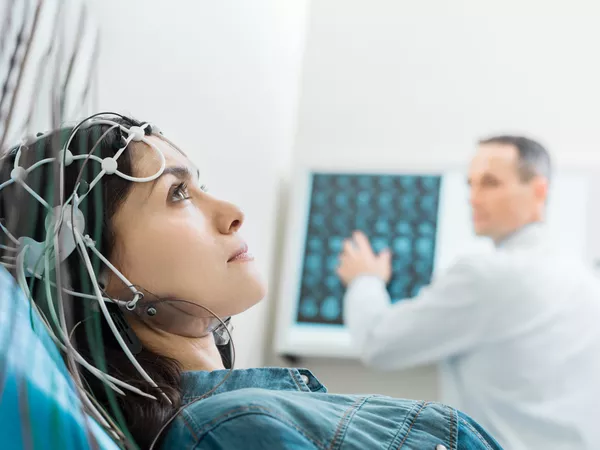
Epilepsy affects over 50 million individuals globally and remains one of the most challenging neurological disorders to manage. Approximately one-third of people with epilepsy experience drug-resistant epilepsy (DRE), for whom surgical interventions offer a vital alternative. When non-invasive presurgical evaluation fails to define the seizure onset zone, invasive testing is performed. While tools such as intracranial EEG recordings with stereo-electroencephalography (Stereo-EEG) and subdural electrodes are part of the presurgical evaluation for decades, recent advances are redefining how these modalities are applied, interpreted, and integrated into the presurgical evaluation and surgical planning.
This Research Topic focuses on the recent developments in invasive diagnostic and surgical strategies, expanding the clinical and scientific toolkit for epilepsy. Stereo-EEG implantation strategies are evolving to optimize spatial sampling across epileptogenic and functionally critical regions. Emerging stimulation protocols are used for seizure induction and functional mapping, while cortico-cortical evoked potentials and single-pulse electrical stimulation enhance our ability to interrogate functional and pathological connectivity. Subacute cortical stimulation is used to define epileptogenic zones with greater resolution, and single-cell recordings are revealing novel features of local circuit physiology and potential biomarkers. Novel wireless recording systems are under assessment to enable long-term, high-fidelity monitoring from cortical and subcortical sites with improved tolerability. Subdermal and hybrid electrode arrays provide minimally invasive access in patients not suited for traditional monitoring. Neuromodulation platforms such as deep brain stimulation and responsive neurostimulation, though developed as treatment devices, are now used in closed-loop recording frameworks. These systems provide access to thalamic and other deep network structures, enabling mapping of seizure dynamics and circuit-level biomarkers. Their role in passive monitoring and stimulation-based probing is increasingly valuable for diagnosis and longitudinal tracking. Lesioning techniques such as radio-frequency thermocoagulation (RFTC), laser interstitial thermal therapy (LIIT), and MR-guided focused ultrasound (MRgFUS) offer precise, minimally invasive options and are under investigation as alternatives to open resection. These approaches reflect a broader shift toward precision-based, risk-adapted epilepsy surgery.
This Research Topic invites contributions that address current limitations, showcase recent technical and conceptual advances, and propose strategies for integrating invasive diagnostics and surgical approaches. By collecting original research, methods papers, and expert perspectives, this collection aims to accelerate clinical translation and foster multidisciplinary collaboration. Submissions may include, but are not limited to:
• Technical and clinical advancements in stereo-electroencephalography, subdural electrodes, subdermal systems, and wireless intracranial EEG recording
• Strategies for electrode implantation and diagnostic yield optimization
• Use of closed-loop neuromodulation platforms (deep brain stimulation, responsive neurostimulation) for chronic recording and thalamic network analysis
• Stimulation-based mapping protocols, including cortico-cortical evoked potentials, single-pulse electrical stimulation, and subacute cortical stimulation
• Stimulation strategies for seizure induction
• Human single-neuron and microelectrode recordings in invasive epilepsy monitoring
• Development and clinical use of stereotactic thermocoagulation, laser interstitial thermal therapy, and MR-guided focused ultrasound
• Special considerations in pediatric and adult surgical diagnostics
• Management of post-implantation complications and long-term follow-up strategies
• Ethical, economic, and structural barriers to access in invasive epilepsy evaluation
This collection seeks to highlight best practices, disseminate new methodologies, and define next steps in advancing invasive diagnostics and surgical care in epilepsy.
Topic Editor Ioannis Stavropoulos has received research funding from UCB. The other Topic Editors report no competing interests related to this Research Topic.
This Research Topic accepts the following article types, unless otherwise specified in the Research Topic description:
Articles that are accepted for publication by our external editors following rigorous peer review incur a publishing fee charged to Authors, institutions, or funders.
Keywords: epilepsy surgery, surgical interventions, epilepsy treatment, Invasive Diagnostics
Important note: All contributions to this Research Topic must be within the scope of the section and journal to which they are submitted, as defined in their mission statements. Frontiers reserves the right to guide an out-of-scope manuscript to a more suitable section or journal at any stage of peer review.
King's College Hospital NHS Foundation Trust
London, United Kingdom
King's College London
London, United Kingdom
Institute of Psychiatry, King's College London
Manuel Velasco Suárez National Institute of Neurology and Neurosurgery
Mexico City, Mexico
Manuscripts can be submitted to this Research Topic via the main journal or any other participating journal.
Submit your idea
You will be redirected to our submission process.