GY
guang yang
Northeast Normal University
Changchun, China
994
Total views and downloads
Submit your idea
Select the journal/section where you want your idea to be submitted:
Manuscript Submission Deadline 14 April 2026
This Research Topic is currently accepting articles.
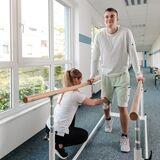
Musculoskeletal disorders (MSDs), such as osteoarthritis, low back pain, and tendon injuries, present significant global health challenges due to their impact on physical function and quality of life. Rehabilitation is essential in the non-surgical treatment landscape; however, personalizing and optimizing recovery pathways pose clinical and technological challenges, particularly due to individual variability, intricate biomechanical interactions, and fragmented monitoring systems involved.
Recent advancements in data science, computational biomechanics, and deep learning offer promising new methods for modeling musculoskeletal functions and rehabilitation dynamics. Statistical modeling allows deep insights into clinical outcomes, treatment efficacy, and patient heterogeneity. Biomechanical simulations enable virtual reconstructions, aiding in the development and evaluation of interventions. Deep learning methods, particularly those using sensor or image data, can automate movement analysis, detect motor impairments, and offer responsive feedback in rehabilitation systems. The integration of these approaches holds the potential to transform traditional rehabilitation practices into data-driven, scalable, and personalized solutions.
This Research Topic aims to explore the interdisciplinary use of statistical, simulation-based, and deep learning models in advancing rehabilitation strategies for musculoskeletal disorders. Our goal is to bridge the gap between theoretical modeling and practical, real-time clinical applications. By consolidating expertise from fields such as engineering, artificial intelligence, biomechanics, and medicine, we seek to develop intelligent rehabilitation systems that are both innovative and clinically applicable.
To gather further insights into the intersection of theory and real-world application, we welcome articles addressing, but not limited to, the following themes:
o Statistical analysis of rehabilitation outcomes and risk prediction
o Simulation-based modeling of musculoskeletal function and therapeutic interventions
o Deep learning for movement classification, posture correction, or pain prediction
o Integration of wearable sensor data, imaging, and electronic health records
o Development of virtual or augmented reality systems powered by AI for therapy
o Personalized rehabilitation planning using predictive or generative models
o Clinical decision support systems built upon interpretable machine learning
This Research Topic accepts the following article types, unless otherwise specified in the Research Topic description:
Articles that are accepted for publication by our external editors following rigorous peer review incur a publishing fee charged to Authors, institutions, or funders.
Keywords: Musculoskeletal Rehabilitation; Computational Modeling; Biomechanical Simulation; Deep learning; Clinical decision support
Important note: All contributions to this Research Topic must be within the scope of the section and journal to which they are submitted, as defined in their mission statements. Frontiers reserves the right to guide an out-of-scope manuscript to a more suitable section or journal at any stage of peer review.

Manuscripts can be submitted to this Research Topic via the main journal or any other participating journal.
Submit your idea
Select the journal/section where you want your idea to be submitted: