JK
jaspreet kaur
University of Copenhagen
Copenhagen, Denmark
230
Total downloads
4,279
Total views and downloads
Submit your idea
You will be redirected to our submission process.
Manuscript Submission Deadline 7 April 2026
This Research Topic is currently accepting articles.
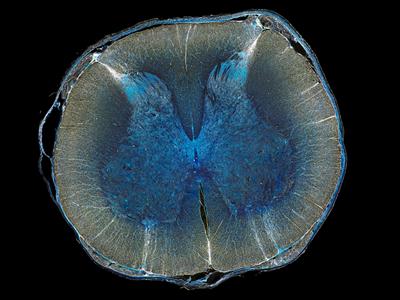
The spinal cord is a vital conduit in the central nervous system, responsible for transmitting signals between the brain and the rest of the body. It plays a critical role in motor control and sensory processing, and its disruption can lead to profound functional deficits. As such, understanding the spinal cord's complex circuitry is fundamental to developing therapeutic strategies for spinal cord injuries and related neurological conditions. Recent innovations in neurophysiological techniques are transforming our ability to visualize and manipulate these circuits, revealing new insights into molecular and cellular mechanisms that govern motor control. Concurrently, the interaction between the neurons and immune cells - neuroimmune interactions - plays a critical role in the body's response to spinal cord injury and the subsequent healing processes. Moreover, glial networks play a vital role in spinal cord injury and recovery. A deeper understanding of these processes is essential for developing interventions that promote neural plasticity, repair and regeneration.
The Research Topic seeks to address the need for comprehensive approaches to spinal cord repair and recovery. By fostering interdisciplinary collaboration on neurophysiological mapping, molecular and cellular dynamics, and neuroimmune responses, this initiative aspires to lay the groundwork for innovative therapeutic interventions. The ultimate aim is to explore breakthroughs in enhancing neural plasticity and facilitating regeneration in spinal cord injuries, leveraging recent advances to transform clinical outcomes.
We wish to encourage submissions that drive forward our understanding of spinal cord science, promoting research that can lead to effective treatments for spinal cord injuries. We welcome any article type accepted by the journal, pertaining but not limited to the following themes:
• Development and application of innovative neurophysiological techniques for spinal cord circuit mapping
• Molecular and cellular mechanisms underlying motor control in the spinal cord
• Investigation of neuroimmune interactions in spinal cord injury and recovery
• Analysis of neural plasticity and regenerative processes post-injury
• Exploration of novel therapeutic interventions targeting spinal cord repair
• Integration of advanced technologies in spinal cord research for therapeutic outcomes
• Role of neuroglial networks in spinal cord injury
• Successful applications of regenerative techniques in spinal cord therapy
• Reviews of current advancements and future directions in spinal cord circuit modulation and repair
This Research Topic accepts the following article types, unless otherwise specified in the Research Topic description:
Articles that are accepted for publication by our external editors following rigorous peer review incur a publishing fee charged to Authors, institutions, or funders.
Keywords: spinal cord injury, Neural Circuit Mapping, Neurophysiology, Motor Control, Neuroimmune Interactions, Glial Networks, Neural Plasticity, Regeneration
Important note: All contributions to this Research Topic must be within the scope of the section and journal to which they are submitted, as defined in their mission statements. Frontiers reserves the right to guide an out-of-scope manuscript to a more suitable section or journal at any stage of peer review.
Manuscripts can be submitted to this Research Topic via the main journal or any other participating journal.
Submit your idea
You will be redirected to our submission process.