JY
jenny y. wang
The University of Sydney
Darlington, Australia
1,753
Total views and downloads
Submit your idea
Select the journal/section where you want your idea to be submitted:
Manuscript Submission Deadline 30 March 2026
This Research Topic is currently accepting articles.
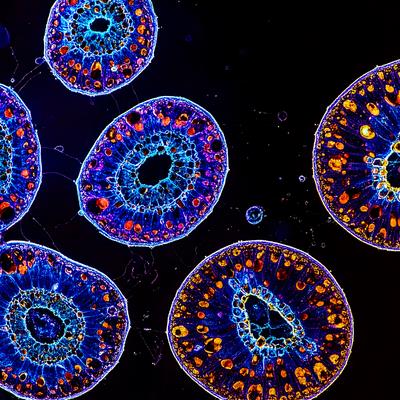
Organoids have emerged as a groundbreaking technology in cell biology, offering a three-dimensional culture system that closely replicates the structural and functional complexity of human organs. Derived from stem cells, these self-organized mini-tissues provide an unprecedented opportunity to study organ development, disease modeling, and drug screening. The versatility and potential of organoids continue to captivate researchers, driving advancements in both basic and applied sciences.
This Research Topic brings together cutting-edge contributions exploring the latest breakthroughs in organoid technology. By highlighting novel methodologies, emerging applications, and insights into various organoid systems, this collection aims to deepen understanding of how organoids are reshaping the landscape of cell biology. Researchers will gain insights into the practical and theoretical implications of organoids in areas such as disease modeling, regenerative medicine, and personalized therapeutics.
Key themes include, but are not limited to:
• Advances in organoid culture and development: Innovations in stem cell technologies, bioengineering, and 3D culture systems that enhance organoid formation and fidelity.
• Organoids in disease modeling: Applications in replicating disease states, elucidating pathophysiological mechanisms, and informing therapeutic strategies.
• Drug discovery and toxicology: Utilization of organoids for high-throughput screening, toxicity assessment, and optimization of drug development pipelines.
• Organoids technology and regenerative medicine
• Diversity of organoid systems: Exploration of organ-specific organoids, such as cerebral, intestinal, hepatic, and cardiac models, highlighting their specific research and clinical applications.
• Challenges and future directions: Critical perspectives on current limitations, ethical considerations, scalability, and the translational potential of organoid research.
We invite researchers from across disciplines to contribute original research, reviews, and perspectives that advance the field of organoid biology and its integration into modern biomedical science.
This Research Topic accepts the following article types, unless otherwise specified in the Research Topic description:
Articles that are accepted for publication by our external editors following rigorous peer review incur a publishing fee charged to Authors, institutions, or funders.
Keywords: organoid, stem cell, research, organoid technology, 3d cell culture, disease modeling with organoids, stem cell-derived organoids, organoids in drug discovery, organoid bioengineering, future of organoid research, organ-specific organoids, organoid-based toxicology
Important note: All contributions to this Research Topic must be within the scope of the section and journal to which they are submitted, as defined in their mission statements. Frontiers reserves the right to guide an out-of-scope manuscript to a more suitable section or journal at any stage of peer review.

Manuscripts can be submitted to this Research Topic via the main journal or any other participating journal.
Submit your idea
Select the journal/section where you want your idea to be submitted: