JY
jesse yoe yoe rumbo morales
Universidad de Guadalajara Centro Universitario de los Valles
Ameca, Mexico
691
Total views and downloads
Submit your idea
Select the journal/section where you want your idea to be submitted:
Manuscript Summary Submission Deadline 31 March 2026 | Manuscript Submission Deadline 30 September 2026
This Research Topic is currently accepting articles.
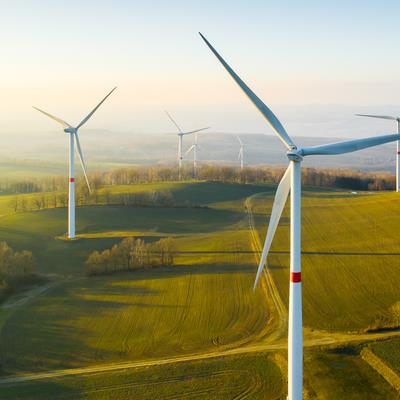
Growing concerns about climate change and the scarcity of non-renewable resources have driven the development of sustainable energy technologies based on renewable sources such as solar, wind, hydropower, and biomass. However, the variability and intermittency of these sources represent a significant challenge for their efficient integration into current energy systems. In this context, mathematical modeling allows us to understand the dynamic behavior of these systems, while automatic control optimizes their operation in real time. Recently, artificial neural networks have gained prominence due to their ability to learn complex patterns and make accurate predictions, even in nonlinear systems. The combination of these three tools offers advanced solutions to improve the efficiency, reliability, and sustainability of energy processes. This area of research is key to moving toward a smarter, more flexible, and environmentally friendly energy model.
One of the main challenges in the transition to sustainable energy systems is the efficient and stable operation of processes based on renewable sources, such as solar and wind energy, whose generation is variable, intermittent, and difficult to predict. This variability complicates their integration into conventional electricity grids and can affect the reliability of energy supply. Furthermore, many systems lack advanced control strategies that optimize performance and minimize losses. The central problem lies in the lack of accurate models and intelligent control systems capable of adapting to changing environmental conditions and efficiently managing available energy resources. Faced with this, it is necessary to develop approaches that integrate mathematical modeling, automatic control, and artificial neural networks to improve the prediction, regulation, and optimization of sustainable energy processes. To achieve this, we propose researching and applying artificial intelligence techniques combined with automated control strategies to enable real-time decision-making, improve system efficiency, and facilitate the integration of renewable energy. This will significantly contribute to the development of a more sustainable, intelligent, and resilient energy model.
Types of manuscripts we're interested in:
1) Dynamic modeling of solar, wind, and hybrid energy systems.
2) Design and implementation of automated controllers for renewable sources.
3) Application of neural networks to predict energy generation and demand.
4) Optimization of energy storage systems using artificial intelligence.
5) Integration of renewable energies into smart grids.
6) Assessment of the environmental impact and energy efficiency of automated systems.
This Research Topic accepts the following article types, unless otherwise specified in the Research Topic description:
Articles that are accepted for publication by our external editors following rigorous peer review incur a publishing fee charged to Authors, institutions, or funders.
Keywords: MPC Control, Fault-Tolerant Control, PID Control, Mathematical Modeling, Artificial Neural Networks
Important note: All contributions to this Research Topic must be within the scope of the section and journal to which they are submitted, as defined in their mission statements. Frontiers reserves the right to guide an out-of-scope manuscript to a more suitable section or journal at any stage of peer review.
Universidad de Guadalajara Centro Universitario de los Valles
Ameca, Mexico
Centro Universitario del Sur, Universidad de Guadalajara
Zapotlán, Mexico
Universidad de Guadalajara Centro Universitario de los Valles
Ameca, Mexico
Universidad de Guadalajara Centro Universitario de los Valles
Ameca, Mexico
Monterrey Institute of Technology and Higher Education (ITESM)
Monterrey, Mexico

Manuscripts can be submitted to this Research Topic via the main journal or any other participating journal.
Submit your idea
Select the journal/section where you want your idea to be submitted: