ML
mariela luján tomazic
Instituto de Patobiología Veterinaria. UDD, INTA-CONICET
Hurlingham, Argentina
405
Total views and downloads
Submit your idea
You will be redirected to our submission process.
Manuscript Summary Submission Deadline 31 May 2026 | Manuscript Submission Deadline 30 June 2026
This Research Topic is currently accepting articles.
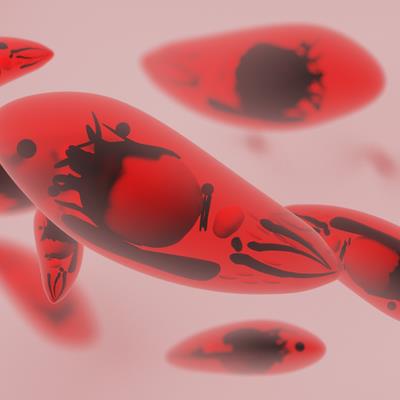
Apicomplexan parasites represent a diverse group of intracellular protozoans that affect both humans and animals, threatening public and animal health and welfare, causing a significant economic impact on the farming industry, and food security consequences. Representative species are Toxoplasma gondii, Neospora caninum, Eimeria spp., and Plasmodium spp. They exhibit a complex life cycle that encompasses several stages, either monoxenic or involving more than one host, such as merogony, gametogony, and sporogony.
Significant advances in next-generation technologies improved our understanding of parasite biology, host-parasite interaction, virulence, and immunology, enabling progress in diagnosis, control, and treatment. However, critical gaps remain that hinder the discovery of novel therapeutic targets and limit the availability of effective vaccines. Current control measures are constrained, and the emergence of drug-resistant parasites drives the global search for novel, cost-effective, and secure tools that are needed globally to control apicomplexan parasites that impair the health and welfare of livestock and poultry.
This Research Topic aims to collect new data addressing the development of novel control strategies for apicomplexan parasites of veterinary and economic significance. These contributions will provide a comprehensive overview of the role of these parasites that continue to pose significant challenges due to their complex life cycles, ability to establish chronic infections, and capacity to evade host immune responses. By addressing key gaps in our understanding of their biology, epidemiology, and host–parasite interactions, it will highlight novel approaches for prevention, diagnosis, new vaccines, antiparasitic drugs, and integrated control strategies. By bringing together multidisciplinary perspectives, this initiative aims to stimulate collaboration and knowledge exchange, contributing to the design of more effective tools to reduce the burden of apicomplexan parasites on human and animal populations.
This Research Topic welcomes original research, review, and minireview articles addressing parasite biology, epidemiology, molecular and immunological aspects of host–parasite interactions, and the development of innovative diagnostic, therapeutic, and preventive strategies. Specific themes include mechanisms of pathogenicity, drug resistance, novel chemotherapeutic agents, vaccine candidates, and integrated control approaches in animal production and public health contexts. Studies applying cutting-edge technologies such as genomics, transcriptomics, proteomics, or advanced imaging to explore apicomplexan biology are also encouraged.
Contributions that provide multidisciplinary insights, comparative studies across species, or translational perspectives linking veterinary and human health are particularly welcome. Together, these works will contribute to updating the state of the art and fostering collaboration in the field of apicomplexan parasitology. Importantly, advances in these areas could also have implications beyond animal health and welfare, paving the way for medical advances.
This Research Topic accepts the following article types, unless otherwise specified in the Research Topic description:
Articles that are accepted for publication by our external editors following rigorous peer review incur a publishing fee charged to Authors, institutions, or funders.
Keywords: Apicomplexa, parasites, diagnosis, vaccines, treatments, host-parasite interaction, drug-resistance, One Health
Important note: All contributions to this Research Topic must be within the scope of the section and journal to which they are submitted, as defined in their mission statements. Frontiers reserves the right to guide an out-of-scope manuscript to a more suitable section or journal at any stage of peer review.
Instituto de Patobiología Veterinaria. UDD, INTA-CONICET
Hurlingham, Argentina
Institut für Immunologie (IfI), Bundesforschungsinstitut für Tiergesundheit, Friedrich-Loeffler-Institut
Greifswald, Germany
University of Chile
Santiago, Chile
Manuscripts can be submitted to this Research Topic via the main journal or any other participating journal.
Submit your idea
You will be redirected to our submission process.
