RB
rondineli barbero
Federal Rural University of Rio de Janeiro
Seropédica, Brazil
718
Total views and downloads
Submit your idea
You will be redirected to our submission process.
Manuscript Summary Submission Deadline 22 February 2026 | Manuscript Submission Deadline 12 June 2026
This Research Topic is currently accepting articles.
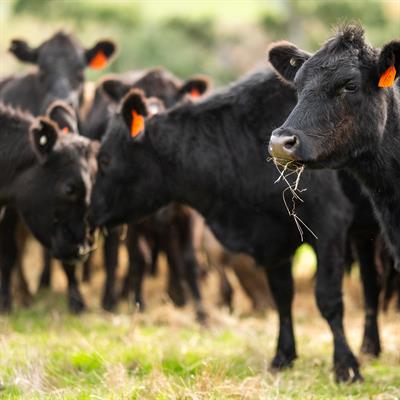
The global demand for beef continues to rise, while pressure grows to optimize resource use, reduce environmental impacts, and improve economic sustainability. Enhancing the efficiency of beef production is a key strategy to meet these challenges, as it directly affects productivity, profitability, and sustainability indicators. This Research Topic aims to gather high-quality contributions addressing biological, technological, and management factors that influence production efficiency in beef cattle systems. We seek to highlight innovative approaches to improve feed conversion, use of non-edible foods, optimize growth and carcass traits, integrate genetic and genomic tools, and apply precision livestock farming technologies. Furthermore, this collection intends to promote interdisciplinary discussion on sustainable intensification, considering animal welfare, climate-smart practices, and socio-economic aspects. By integrating evidence from diverse production systems worldwide, this Research Topic will provide a comprehensive and balanced perspective on how to increase beef production efficiency while ensuring long-term resilience of the sector.
Beef production systems vary widely across regions, ranging from extensive grazing-based systems to intensive feedlot operations. Despite this diversity, efficiency remains a central determinant of competitiveness and environmental performance. Traditional breeding and nutrition strategies have contributed substantially to productivity gains, but further improvements are required to address current global concerns, such as greenhouse gas emissions, land use efficiency, and consumer expectations for sustainable products. Advances in genetics, nutrition, and digital technologies open new opportunities to improve efficiency at both the animal and system levels. A focused collection on this theme will provide an essential platform for sharing recent research and fostering collaboration across disciplines and production contexts.
This Research Topic welcomes original research, reviews, and perspectives on efficiency in beef production across different contexts. Submissions may address, but are not limited to:
- Nutritional strategies to improve feed efficiency and resource utilization;
- Genetic and genomic tools for enhancing growth, reproduction, and carcass traits;
- Precision livestock farming and data-driven decision support systems;
- Sustainable intensification practices, including forage-based systems and integrated crop–livestock systems;
- Environmental and socio-economic assessments of production efficiency;
- Links between efficiency, animal health, and welfare.
By covering a broad range of disciplines, this Research Topic aims to provide an integrative view of efficiency in beef production systems worldwide. Authors are encouraged to present both experimental and modeling approaches, as well as case studies that reflect regional diversity and innovative practices
This Research Topic accepts the following article types, unless otherwise specified in the Research Topic description:
Articles that are accepted for publication by our external editors following rigorous peer review incur a publishing fee charged to Authors, institutions, or funders.
Keywords: beef cattle, production efficiency, feed utilization, genetics, sustainability
Important note: All contributions to this Research Topic must be within the scope of the section and journal to which they are submitted, as defined in their mission statements. Frontiers reserves the right to guide an out-of-scope manuscript to a more suitable section or journal at any stage of peer review.
Manuscripts can be submitted to this Research Topic via the main journal or any other participating journal.
Submit your idea
You will be redirected to our submission process.
