MA
maria alejandra ortega machuca
Institute for Bioengineering of Catalonia (IBEC)
Barcelona, Spain
91
Total views and downloads
Submit your idea
You will be redirected to our submission process.
Manuscript Summary Submission Deadline 31 July 2026 | Manuscript Submission Deadline 30 September 2026
This Research Topic is currently accepting articles.
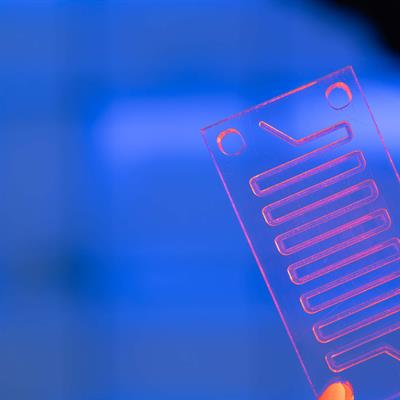
The integration of advanced biosensors with organs-on-chip (OoC) systems is dramatically transforming disease modeling, diagnostics, and therapeutic discovery. This multidisciplinary Research Topic invites cutting-edge contributions that span the entire spectrum—from fundamental innovations in microfluidics and sensor miniaturization to the convergence with machine intelligence—highlighting how these advances are revolutionizing the biomedical landscape. However, key challenges remain in sensor integration, real-time data utilization, and system scalability, which continue to limit broader adoption and translation of these technologies.
Recent studies have shown impressive advancements, with next-generation biosensor technologies increasingly embedded within dynamic, microengineered OoC platforms to enable real-time monitoring of disease biomarkers. By overcoming limitations of traditional static models, these hybrid systems are providing new insight into complex disease mechanisms—including, for example, the use of OoC techniques to understand the tumour microenvironment and mechanisms associated with cell metastasis. In parallel, real-time, multi-modal sensing approaches are expanding on-chip readout capabilities, with fluorescence, spectroscopies (such as Raman), and bioluminescence imaging, alongside novel electrochemical and optical biosensors, being optimized for enhanced sensitivity within on-chip environments.
This Research Topic aims to bring together pioneering contributions that advance biosensor-integrated OoC platforms and their use in disease modeling, early disease detection, biomarker discovery, and therapeutic evaluation. Emphasis will be placed on advances in real-time and multi-modal sensing, as well as the fusion of machine learning and adaptive data analytics with OoC workflows. Integrating robust data analysis tools with biosensor-equipped platforms unlocks the ability to detect pathophysiological shifts and predict therapeutic responses, paving the way toward highly personalized and effective clinical interventions. Additionally, synergy with digital healthcare frameworks, such as Analytics 4.0, and seamless integration into point-of-care settings broadens the impact of these technologies for public health. By addressing current challenges in sensor integration, real-time data utilization, and system scalability, we seek to catalyze translational breakthroughs that support Sustainable Development Goals in health and innovation, drive reduction in animal testing, and expand the scope of personalized medicine.
To gather further insights across fundamental innovation and translational implementation, we welcome articles addressing, but not limited to, the following themes:
o Sensor innovations for real-time monitoring in OoC models, including methods that refine early mechanistic understanding, early diagnosis, and therapeutic evaluation
o Advances in real-time, multi-modal sensing approaches integrated into OoC, enabling comprehensive, simultaneous readouts from diverse biological processes
o Imaging and spectroscopic methods, including, for example, time-resolved techniques or Raman
o Advancements in data-driven and machine intelligence–enhanced OoC workflows, including adaptive learning models, high-resolution imaging modalities, and dynamic experimental control
o Multidisciplinary strategies merging bioengineering, microfluidics, sensing and imaging, as well as analytics to create robust, scalable, and clinically translatable organ-on-chip systems.
Other topics of interest include:
o Innovations in biosensor and imaging integration for OoC
o Real-time, multi-modal sensing in organ-on-chip platforms
o Machine learning for biosensor data analysis in organ-on-chip
o Early disease detection and biomarker discovery using OoC
o Personalized therapeutic evaluation with sensor-enhanced platforms
o Techniques that address the 3Rs (Replacement, Reduction, and Refinement of animal use)
Contributors are welcome to submit original research articles, reviews, perspectives, and method papers.
This Research Topic accepts the following article types, unless otherwise specified in the Research Topic description:
Articles that are accepted for publication by our external editors following rigorous peer review incur a publishing fee charged to Authors, institutions, or funders.
Keywords: Organ-on-chip, Integrated biosensors, Real-time monitoring, Multimodal sensing, Microfluidics, Machine learning
Important note: All contributions to this Research Topic must be within the scope of the section and journal to which they are submitted, as defined in their mission statements. Frontiers reserves the right to guide an out-of-scope manuscript to a more suitable section or journal at any stage of peer review.
Manuscripts can be submitted to this Research Topic via the main journal or any other participating journal.
Submit your idea
You will be redirected to our submission process.
