FG
fabio guarracino
Department of Anaesthesia and Intensive Care Medicine, Azienda Ospedaliero Universitaria Pisana
Pisa, Italy
160
Total views and downloads
Submit your idea
You will be redirected to our submission process.
Manuscript Summary Submission Deadline 29 April 2026 | Manuscript Submission Deadline 17 August 2026
This Research Topic is currently accepting articles.
Echocardiography is central to cardiovascular intensive care, enabling rapid bedside assessment of hemodynamics, ventricular function, valvular pathology, pericardial disease, and cardiopulmonary interactions in critically ill patients. Yet its impact often depends less on image acquisition than on how clinicians interpret key findings, integrate them with physiology and monitoring data, and identify the underlying clinical cause to guide time-sensitive decisions.
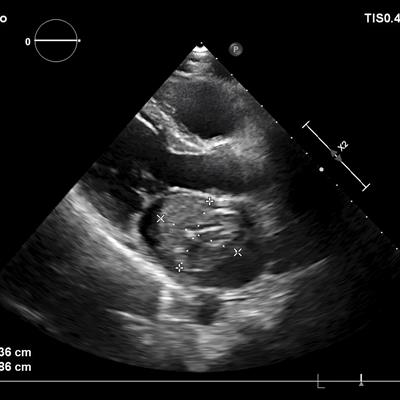
EchoDidactics in Cardiovascular Intensive Care will bring together research and methodological advances that strengthen echo-based clinical reasoning, education, and implementation in high-acuity settings. This Research Topic emphasizes concise, high-yield echo image/clip presentations that demonstrate “clips-to-cause” reasoning - how ICU clinicians work from echocardiographic signs to a differential diagnosis and actionable management plan.
We particularly welcome Original Research, Methods, and Brief Research Reports evaluating didactic formats, structured interpretation approaches, and scalable training or quality systems, but all accepted article types will be considered. Please note that Case Reports are not an accepted article type for this collection.
Submissions may include, but are not limited to:
• Educational interventions and curricula for critical care echocardiography (TTE/TEE), including competency-based training and assessment
• Methods to standardize acquisition, interpretation, and reporting (protocols, checklists, image archiving, feedback loops, and quality assurance)
• Studies linking echo didactics to measurable outcomes (diagnostic accuracy, inter-operator reliability, time-to-decision, escalation/de-escalation choices, or workflow impact)
• Echo-driven reasoning in common cardiovascular ICU syndromes (e.g., undifferentiated shock, acute right ventricular failure, tamponade physiology, acute valvular dysfunction, cardiogenic shock phenotyping)
• Integration of echocardiography with ICU monitoring and physiology (e.g., invasive hemodynamics, arterial waveform data, lactate trends, ventilator–heart interactions)
• Pitfalls, mimics, uncertainty management, and strategies to reduce variability across teams and centers
• Digital, remote, and AI-enabled support for education and bedside practice (acquisition guidance, automated measurements), including attention to safety and bias
By focusing on practical EchoDidactics and the evidence behind them, this Research Topic aims to share reproducible approaches that strengthen bedside interpretation, support interdisciplinary teamwork, and improve echo-informed decision-making in cardiovascular intensive care.
This Research Topic accepts the following article types, unless otherwise specified in the Research Topic description:
Articles that are accepted for publication by our external editors following rigorous peer review incur a publishing fee charged to Authors, institutions, or funders.
Keywords: Critical care echocardiography, Point-of-care ultrasound (POCUS), Hemodynamics, Cardiogenic shock, Transesophageal echocardiography (TEE), Competency-based education, Clinical decision-making
Important note: All contributions to this Research Topic must be within the scope of the section and journal to which they are submitted, as defined in their mission statements. Frontiers reserves the right to guide an out-of-scope manuscript to a more suitable section or journal at any stage of peer review.
Manuscripts can be submitted to this Research Topic via the main journal or any other participating journal.
Submit your idea
You will be redirected to our submission process.
