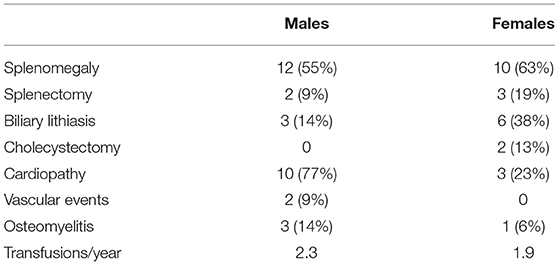
Inherited hemoglobin disorders are estimated to be the most common monogenic diseases worldwide. Deletions or point mutations in α-or β-globin genes cause abnormalities in the synthesis or in the structure of haemoglobin, leading to α and β thalassaemia syndromes or structural hemoglobin variants, respectively. The highest prevalence of both diseases has been recorded in the Mediterranean area, Middle East, Indian subcontinent, Southeast Asia and north coast of Africa, moreover, as a result of migration of ethnic minority groups with high frequency of these mutations, the hemoglobin disorders are also present in northern European and American countries.Sickle cell anemia (SCA) is by far the most common hemoglobin disorder (Ware et al., 2017), followed by the serious forms of thalassemia syndromes including also the co-inheritance of β thalassaemia with hemoglobin E and hemoglobin S (β-thalassemia major, HbE/β-thalassemia, HbS/thalassemia, Hb Bart hydrops, HbH disease) (Weatherall, 2010). Considerable research has been carried out in the last decades to broaden our knowledge both on clinical and therapeutic aspects of haemoglobinopathies, to improve the laboratory diagnosis and to introduce diagnostic tools useful for screening programs in areas with a high incidence of these diseases. The aim of this Research Topic is to provide an update on hemoglobinopathies and this ebook collects important and significant reports covering several areas. Advances in laboratory diagnosis are proposed by new diagnostic methods and screening tools for prevention programs and differential diagnosis of anemia. Advances in clinical management and treatment of thalassemia major, thalassemia intermedia and sickle cell anemia are also reported. Diagnosis of hemoglobinopathies requires several laboratory tests (Green et al., 2015) and in this book is reported a review (Munkongdee et al., 2020) that highlights the primary biochemical and molecular techniques commonly used in the clinical lab today, including red blood cell indices (Risoluti et al., 2018), hemoglobin analysis by HPLC and capillary electrophoresis and several molecular technologies for analysis of α and β globin gene mutations. (Nadkarni et al 2018). The progress in molecular diagnostics has also provided new methods to define the globin gene mutations and correlate genotype to phenotype. A recently applied molecular analysis for the screening of thalassemias is the Next Generation Sequencing (NGS) that has provided interesting preliminary data of an increase in accurate diagnoses and new understanding of these diseases. The main limitation of using NGS techniques use is the very high cost for screening purposes. The development of effective and inexpensive techniques for thalassemia and hemoglobin variant screening is extremely important, especially in countries that have populations with a high percentage of these disorders (Risoluti et al., 2016, Colah et al 2018. The application of thermogravimetry (De Angelis Curtis et al., 2008;Materazzi et al., 2014;Risoluti et al., 2017) coupled to chemometrics (Massart et al., 1998;Materazzi et al., 2017) as a new screening method to perform an early diagnosis of thalassemia and sickle cell disease has been proposed . , providing an innovative multilevel test for Hemoglobinopathies that simultaneously identifies and classifies Sickle Cell Disease from Thalassemia. The novel test is able to simultaneously perform a simple and fast diagnosis of sickle cell anemia or thalassemia, in a single analysis of few microliters of non-pretreated whole blood at low cost, and with high accuracy. This innovative multilevel test has been applied for diagnosis of a case of congenital hemolytic anemia for which the common first level diagnostic tests were not able to find the erythrocyte congenital defect. The test evidenced the presence of a hemoglobinopathy and the molecular analysis confirmed the presence of a rare hemoglobin variant . National haemoglobinopaties screening programmes are performed in the areas with high frequencies of these diseases and a "one-stop" screening protocol for hemoglobinopathy traits and iron deficiency has been proposed for the detection of carriers of HbE-β-thalassemia and iron deficiency in Sri Lanka (Allen et al., 2019). Infections are major complications and a common cause of mortality and morbidity in thalassemia, being severe anemia, splenectomy, iron overload, and immune abnormalities (Di Marco et al., 2008) predisposing factors to infections. Moreover, transfusion associated viral infections, especially hepatitis C increase the risk of liver disease leading to liver fibrosis, cirrhosis, and hepatocellular carcinoma. The development of the new effective Direct-acting Antiviral Agents (DAAS) towards the HCV infection is discussed and the HCV eradication followed to DAAS treatment seems to improve the iron overload demonstrating a synergic action between DAAS therapy and iron chelation. Other complications of iron overload are the endocrine comorbidities including hypogonadism, hypothyroidism, diabetes mellitus, and bone diseases. Studies regarding adrenal impairment are heterogeneous in terms of methods used, incidence and populations studied. Hematological and hormonal data of a large group of thalassemia patients associated with their clinical history have been evaluated and showed a prevalence of adrenal insufficiency in thalassemia patients, particularly in male subjects (Poggi et al., 2020). The authors pointed out the limit of the methods usually used to investigate adrenal insufficiency in adult thalassemia patients and highlighted the importance of specific, accurate and validated methods to achieve a real diagnosis. The increase in life expectancy of thalassemia patients has also changed their perspective including their desire to have children. A retrospective study describes the experience of pregnancies in women affected by thalassemia major, thalassemia intermedia and sickle cell anemia by applying well-defined protocols that cover all the critical aspects of pregnancy in these diseases. The pregnancies have been followed by a multidisciplinary team from the preconception phase until the post-partum period, with a close monitoring of the maternal and fetal conditions in order to reduce complications and improve their outcomes. A particular focus was placed on SCA and related vascular complications. The hemorheological profile of SCA subjects have been studied and high blood viscosity, increased RBC aggregation, and decreased RBC deformability have been demonstrated. These impaired flow properties were associated with RBC membrane protein oxidation, with degradation of spectrin and increased membrane-bound globin. The comparison between SCA patients with and without transfusion dependence showed metabolic and structural RBC oxidative damage which was significantly different. The hypothesis that gender could play a role in determining the clinical course of SCA was investigated (Ceglie et al., 2019) by analyzing the clinical records of 39 pediatric patients with a diagnosis of SCD (hemoglobin SS genotype) and focusing on gender differences in various aspects of the disease comprising both acute symptoms and late complications. Gender-related differences were found in pain crisis frequency and severe infectious and cardiovascular complications which were significantly increased in the male population. The development and treatment of pain, in particular, neuropathic pain in sickle cell disease patients is poorly understood and impedes our progress toward the development of novel therapies to treat pain associated with sickle cell disease. The orexin/hypocretin system offers a novel approach to treat chronic pain and hyperalgesia (Richardson et al., 2020). Neuronal activation differences in the orexin system as a result of neuropathic pain testing have been studied in a mouse model of sickle cell disease. Identifying specific orexin neuronal populations that are integral in neuropathic pain processing will allow us to elucidate mechanisms that provide a more selective, targeted approach in treating of neuropathic pain in sickle cell disease. Microfluidic technology in sickle cell research has been reviewed by Aich et al. (Aich et al., 2020) as a valuable tool for a biophysical characterization of sickle red cells, to measure their deformability under defined oxygen gradient and shear, and to test in vitro models of intercellular interaction on endothelialized or adhesion molecule-functionalized channels. These studies will allow to understand adhesion in sickle microenvironment, to characterize biomechanics and microrheology, and to develop diagnostic technologies. In conclusion the papers in this e-book collect contributions of different expertises in the field of hematology and analytical methods and will address different specific problems such as novel diagnostic methods, prevention programmes, screening tools and prediction of biomolecules for diagnosis, adding new insights and perspectives in the Hemoglobinopathies.
5 Authors
- TM
Thongperm Munkongdee
Thalassemia Research Center, Institute of Molecular Biosciences, Mahidol University, Thailand
- PC
Ping Chen
Guangxi Key Laboratory of Thalassemia Research, Guangxi Medical University, China
- PW
Pranee Winichagoon
Thalassemia Research Center, Institute of Molecular Biosciences, Mahidol University, Thailand
- SF
Suthat Fucharoen
Thalassemia Research Center, Institute of Molecular Biosciences, Mahidol University, Thailand
- KP
Kittiphong Paiboonsukwong
Thalassemia Research Center, Institute of Molecular Biosciences, Mahidol University, Thailand
85,939 views
149 citations
6 Authors
- AA
Anupam Aich
Intel Corporation, United States
- YL
Yann Lamarre
Center for Cell-based Therapy, Regional Blood Center of Ribeirão Preto, Ribeirão Preto Medical School, University of São Paulo, Brazil
- DP
Daniel Pereira Sacomani
Department of Material and Bioprocess Engineering, School of Chemical Engineering, University of Campinas (UNICAMP), Brazil
- SK
Simone Kashima
Center for Cell-based Therapy, Regional Blood Center of Ribeirão Preto, Ribeirão Preto Medical School, University of São Paulo, Brazil
- DT
Dimas Tadeu Covas
Center for Cell-based Therapy, Regional Blood Center of Ribeirão Preto, Ribeirão Preto Medical School, University of São Paulo, Brazil
- LG
Lucimara Gaziola de la Torre
Department of Material and Bioprocess Engineering, School of Chemical Engineering, University of Campinas (UNICAMP), Brazil
11,472 views
24 citations
7 Authors
- FS
Francesco Sorrentino
Thalassemia Unit, S. Eugenio Hospital, Italy
- LM
Laura Maffei
Thalassemia Unit, S. Eugenio Hospital, Italy
- PC
Patrizia Caprari
National Centre for the Control and Evaluation of Medicines, Istituto Superiore di Sanità, Italy
- RC
Rita Cassetta
Gynecology Unit, S. Eugenio Hospital, Italy
- DD
Donatella Dell'Anna
Immunohematology and Transfusion Medicine, S. Eugenio Hospital, Italy
- SM
Stefano Materazzi
Department of Chemistry, Sapienza University of Rome, Italy
- RR
Roberta Risoluti
Department of Chemistry, Sapienza University of Rome, Italy
10,809 views
20 citations
7 Authors
- LM
Laura Maffei
Thalassemia Unit, S. Eugenio Hospital, Italy
- FS
Francesco Sorrentino
Thalassemia Unit, S. Eugenio Hospital, Italy
- PC
Patrizia Caprari
National Centre for the Control and Evaluation of Medicines, Istituto Superiore di Sanità, Italy
- GT
Gloria Taliani
Chronic Infectious Diseases Unit, Policlinico Umberto I, Sapienza University of Rome, Italy
- SM
Sara Massimi
National Centre for the Control and Evaluation of Medicines, Istituto Superiore di Sanità, Italy
- RR
Roberta Risoluti
Department of Chemistry, Sapienza University of Rome, Italy
- SM
Stefano Materazzi
Department of Chemistry, Sapienza University of Rome, Italy
5,884 views
22 citations
8 Authors
- RR
Roberta Risoluti
Department of Chemistry, Sapienza - University of Rome, Italy
- PC
Patrizia Caprari
National Centre for the Control and Evaluation of Medicines, Istituto Superiore di Sanità, Italy
- GG
Giuseppina Gullifa
Department of Chemistry, Sapienza - University of Rome, Italy
- SM
Sara Massimi
National Centre for the Control and Evaluation of Medicines, Istituto Superiore di Sanità, Italy
- LM
Laura Maffei
Thalassemia Unit, S. Eugenio Hospital, Italy
- FS
Francesco Sorrentino
Thalassemia Unit, S. Eugenio Hospital, Italy
- EC
Elena Carcassi
Department of Chemistry, Sapienza - University of Rome, Italy
- SM
Stefano Materazzi
Department of Chemistry, Sapienza - University of Rome, Italy
3,886 views
5 citations
7 Authors
- KR
Kimberlei Richardson
Department of Pharmacology, Howard University College of Medicine, United States
- NS
Nia Sweatt
Department of Pharmacology, Howard University College of Medicine, United States
- HT
Huy Tran
Division of Hematology, Oncology and Transplantation, Department of Medicine, University of Minnesota Medical School, United States
- VA
Victor Apprey
Department of Family Medicine, Howard University College of Medicine, United States
- SU
Subramaniam Uthayathas
Department of Pharmacology, Howard University College of Medicine, United States
- RT
Robert Taylor
Department of Pharmacology, Howard University College of Medicine, United States
- KG
Kalpna Gupta
Division of Hematology, Oncology and Transplantation, Department of Medicine, University of Minnesota Medical School, United States
4,305 views
3 citations
8 Authors
- GC
Giulia Ceglie
Department of Onco-Hematology and Cell and Gene Therapy, Scientific Institute for Research and Healthcare (IRCCS), Childrens' Hospital Bambino Gesù, Italy
- MD
Margherita Di Mauro
Department of Onco-Hematology and Cell and Gene Therapy, Scientific Institute for Research and Healthcare (IRCCS), Childrens' Hospital Bambino Gesù, Italy
- IT
Isabella Tarissi De Jacobis
Pediatric and Infectious Disease Unit, Bambino Gesù Children's Hospital, Scientific Institute for Research and Healthcare (IRCCS), Childrens' Hospital Bambino Gesù, Italy
- FD
Francesca de Gennaro
University Department of Pediatrics, Bambino Gesù Children's Hospital, University of Rome Tor Vergata, Italy
- MQ
Martina Quaranta
Department of Onco-Hematology and Cell and Gene Therapy, Scientific Institute for Research and Healthcare (IRCCS), Childrens' Hospital Bambino Gesù, Italy
- CB
Carlo Baronci
Department of Onco-Hematology and Cell and Gene Therapy, Scientific Institute for Research and Healthcare (IRCCS), Childrens' Hospital Bambino Gesù, Italy
- AV
Alberto Villani
Pediatric and Infectious Disease Unit, Bambino Gesù Children's Hospital, Scientific Institute for Research and Healthcare (IRCCS), Childrens' Hospital Bambino Gesù, Italy
- GP
Giuseppe Palumbo
Department of Onco-Hematology and Cell and Gene Therapy, Scientific Institute for Research and Healthcare (IRCCS), Childrens' Hospital Bambino Gesù, Italy
8 Authors
- MP
Maurizio Poggi
Department of Clinical and Molecular Medicine, “La Sapienza” University, Italy
- IS
Irene Samperi
Department of Clinical and Molecular Medicine, “La Sapienza” University, Italy
- LM
Lorenza Mattia
Department of Clinical and Molecular Medicine, “La Sapienza” University, Italy
- AD
Arianna Di Rocco
Department of Public Health and Infectious Disease, “Sapienza” University of Rome, Italy
- CI
Cristina Iorio
Department of Clinical and Molecular Medicine, “La Sapienza” University, Italy
- SM
Salvatore Monti
Department of Clinical and Molecular Medicine, “La Sapienza” University, Italy
- GP
Giuseppe Pugliese
Department of Clinical and Molecular Medicine, “La Sapienza” University, Italy
- VT
Vincenzo Toscano
Department of Clinical and Molecular Medicine, “La Sapienza” University, Italy
3,835 views
3 citations
7 Authors
- PC
Patrizia Caprari
National Centre for the Control and Evaluation of Medicine, IstitutoSuperiore di Sanità, Italy
- SM
Sara Massimi
National Centre for the Control and Evaluation of Medicine, IstitutoSuperiore di Sanità, Italy
- LD
Loretta Diana
National Centre for the Control and Evaluation of Medicine, IstitutoSuperiore di Sanità, Italy
- FS
Francesco Sorrentino
Thalassemia Unit, S. Eugenio Hospital, Italy
- LM
Laura Maffei
Thalassemia Unit, S. Eugenio Hospital, Italy
- SM
Stefano Materazzi
Department of Chemistry, Sapienza University of Rome, Italy
- RR
Roberta Risoluti
Department of Chemistry, Sapienza University of Rome, Italy
4,805 views
20 citations
7 Authors
- RR
Roberta Risoluti
Department of Chemistry, Sapienza University of Rome, Italy
- PC
Patrizia Caprari
National Centre for the Control and Evaluation of Medicine, Istituto Superiore di Sanità, Italy
- GG
Giuseppina Gullifa
Department of Chemistry, Sapienza University of Rome, Italy
- LD
Loretta Diana
National Centre for the Control and Evaluation of Medicine, Istituto Superiore di Sanità, Italy
- ML
Matteo Luciani
UO Ematologia, Ospedale Pediatrico Bambino Gesù, Italy
- AA
Antonio Amato
ANMI Onlus, Centro Studi Microcitemie, Italy
- SM
Stefano Materazzi
Department of Chemistry, Sapienza University of Rome, Italy
4,236 views
2 citations
13 Authors
- AA
Angela Allen
MRC Weatherall Institute of Molecular Medicine, John Radcliffe Hospital, University of Oxford, United Kingdom
- SP
Shiromi Perera
Faculty of Medicine, University of Kelaniya, Sri Lanka
- LP
Luxman Perera
Faculty of Medicine, University of Kelaniya, Sri Lanka
- RR
Rexan Rodrigo
Thalassemia Care Unit, North Colombo Teaching Hospital, Sri Lanka
- SM
Sachith Mettananda
Faculty of Medicine, University of Kelaniya, Sri Lanka
- AM
Agnes Matope
Tropical Clinical Trials Unit, Liverpool School of Tropical Medicine, United Kingdom
- IS
Ishari Silva
Thalassemia Care Unit, North Colombo Teaching Hospital, Sri Lanka
- NH
Nizri Hameed
Thalassemia Care Unit, North Colombo Teaching Hospital, Sri Lanka
- CA
Christopher A. Fisher
MRC Weatherall Institute of Molecular Medicine, John Radcliffe Hospital, University of Oxford, United Kingdom
- NO
Nancy Olivieri
Pediatrics, Medicine, and Public Health Sciences, University of Toronto, Canada
- DJ
David J. Weatherall
MRC Weatherall Institute of Molecular Medicine, John Radcliffe Hospital, University of Oxford, United Kingdom
- SA
Stephen Allen
Department of Clinical Sciences, Liverpool School of Tropical Medicine, United Kingdom
- AP
Anuja Premawardhena
Faculty of Medicine, University of Kelaniya, Sri Lanka
5,747 views
5 citations