 Mori W. Gouroubera
 Alcade C. Segnon
 Franck B. N. Tonle
 Robert B. Zougmoré
- 1International Center for Tropical Agriculture (CIAT), Dakar, Senegal
- 2Faculty of Agronomic Sciences, University of Abomey-Calavi, Cotonou, Benin
Access to Weather and Climate Information Services (WCIS) is critical for strengthening farmers’ resilience to climate risks. Yet, understanding farmers’ willingness to pay (WTP) for WCIS and its determinants for designing sustainable delivery and financing mechanisms in sub-Saharan Africa (SSA) remains limited. This study synthesizes existing evidence on farmers’ WTP for WCIS in SSA through a systematic review with meta-analysis of 14 relevant publications involving 20 empirical studies covering 5,709 farmers across 11 countries. The pooled estimate indicates that approximately 75% (95% CI: 65–83%) of farmers are WTP for WCIS, with a higher preference for bundled services (86% [95% CI: 79–91%]) compared to standalone WCIS products (48% [95% CI: 35–62%]). On average, farmers are willing to pay 8.11 USD/year (95% CI: 3.20–13.02) for WCIS, with a higher amount (13.7 USD/year, 95% CI: 8.37–19.06) for bundled services compared to standalone WCIS (1.38 USD/year, 95% CI: 0.16–2.59). Key drivers of WTP include economic and financial factors (access to credit and farm size), ownership of Information and Communications Technology (ICT) devices (mobile phone and television), access to extension services and market information, perceived forecast accuracy, and awareness and exposure to climatic risks. In contrast, traditional socio-demographic variables such as age, gender, and education showed limited explanatory power. These findings underscore that while farmers value WCIS, the amount they are willing to pay to access WCIS remains very low, limiting the viability and sustainability of business models with revenue generation relying solely on farmers. The paucity of studies and the heterogeneity in the findings call for further research on farmers’ WTP for WCIS across geographical and socioeconomic contexts of the continent, with a focus on developing sustainable business models that engage the private sector to support effective climate information dissemination and build climate-resilient farming systems.
1 Introduction
In sub-Saharan Africa (SSA), agriculture is predominantly rainfed and severely impacted by climate change (Bezner Kerr et al., 2022a; Trisos et al., 2022; Kone et al., 2024). Farmers face increasing challenges due to unpredictable weather and climate variability, increasing drought spells, and extreme climate events that disrupt smallholder farmers’ agriculture and food systems (Bezner Kerr et al., 2022a; Trisos et al., 2022; Tefera et al., 2025). For instance, key staple crops have been particularly vulnerable to climate change and are projected to be negatively impacted in the future (Carr et al., 2022; Alimagham et al., 2024). While adaptation responses are fragmented and largely incremental (Berrang-Ford et al., 2021), there is evidence that cascading or compound climate impacts interact with structural vulnerabilities to adversely affect adaptation responses to climatic and non-climatic stressors (Segnon et al., 2021; Bezner Kerr et al., 2022b; Simpson et al., 2023). The adverse climate change impacts on farmers are exacerbated by limited access to inputs, credit, and extension services (Kone et al., 2024). Seasonal droughts also reduce household food consumption and increase household vulnerability (Kabir, 2023). Addressing these challenges requires improved access to weather and climate information services (WCIS) and adaptive farming strategies (Hansen et al., 2019; Hansen J. et al., 2022; Born et al., 2021; Clarkson et al., 2022; Nyoni et al., 2024; Mahama et al., 2025). WCIS can reduce climate vulnerability by enhancing information access for anticipatory and effective adaptation decision-making by farmers, thus contributing to climate-resilient food systems (Born et al., 2021; Clarkson et al., 2022; Hansen J. et al., 2022; Madhuri, 2023; Nyoni et al., 2024).
There is a growing literature highlighting the importance of WCIS in supporting adaptation and decision-making in agriculture (Born et al., 2021; Agyekum et al., 2022; Madhuri, 2023; Nyoni et al., 2024; Khatibu and Ngowi, 2025). Evidence suggests that WCIS improves resilience by enhancing productivity, planning, and early responses (Born et al., 2021; Agyekum et al., 2022; Clarkson et al., 2022; Hansen J. et al., 2022; Madhuri, 2023). Participatory approaches are shown to improve farmers’ engagement, trust, and facilitate the adoption and use of WCIS in farming decision-making (Clarkson et al., 2022; Warner et al., 2022; Nyoni et al., 2024; Khatibu and Ngowi, 2025). Recent literature also calls for bundling WCIS with other services through bundled business models to scale WCIS uptake and use, and ensure sustainability (Kagabo et al., 2025). Despite the growing WCIS research in SSA, understanding farmers’ willingness to pay (WTP) for WCIS remained scattered and fragmented (Sultan et al., 2020), to provide a clear and comprehensive orientation. Indeed, the inconsistencies in scope, methodology, and contextual factors limit our understanding of when, how much, and why farmers are willing to pay for WCIS across socioeconomic and institutional contexts.
This gap presents a dual challenge: a practical one in designing equitable, financially viable, and sustainable models for scaling WCIS, and a theoretical one, reflecting the lack of consensus on how WTP aligns with established theories of technology adoption and risk behavior (Martey et al., 2022). Previous systematic reviews have highlighted the usefulness and effectiveness of WCIS in supporting adaptation and decision-making in agriculture (Born et al., 2021; Agyekum et al., 2022; Madhuri, 2023; Nyoni et al., 2024; Khatibu and Ngowi, 2025), yet none have provided a quantitative synthesis of farmers’ economic valuation across diverse contexts. To address these gaps, we conducted a systematic review with a meta-analysis of the existing peer-reviewed literature on farmers’ WTP for WCIS in SSA. We explored two research questions: (i) To what extent are farmers willing to pay for WCIS in sub-Saharan Africa? and (ii) What are the socio-economic, demographic, or institutional drivers of farmers’ willingness to pay for WCIS? Through a systematic review with a meta-analysis, the study consolidated and standardized WTP estimates across studies and identified consistent patterns and drivers of WTP for WCIS across studies. First, the study provides an overarching synthesis on how farmers across SSA economically value WCIS, offering insights into the perceived utility and credibility of WCIS. Second, it aims to explain the structural and behavioral dynamics that drive demand for WCIS, thereby informing broader debates about inclusive WCIS. Third, it establishes an empirical foundation for policy and private-sector actors to develop cost-effective, context-sensitive, and sustainable WCIS delivery models.
The article is structured as follows: Section 2 describes the methodological approach used, including search strategy, inclusion criteria, and data synthesis procedures. Section 3 presents the main findings. Finally, Section 4 discusses the implications of the results and outlines some recommendations for policy, research, and practice.
2 Methods
The review adopted a meta-analytic approach, consisting of a systematic literature search followed by a meta-analysis to synthesize current knowledge on farmers’ WTP for WCIS in SSA. The data selection and screening process was conducted following the PRISMA 2020 guidelines for systematic reviews and meta-analyses (Page et al., 2021).
2.1 Data collection and study selection
We conducted a systematic literature search using Scopus and Web of Science (WoS) databases, two academic databases commonly used for systematic reviews because of their ability to provide easy access to complex search terms and their extensive coverage both in terms of discipline and quality of publications (Totin et al., 2018; Segnon et al., 2024; Gouroubera et al., 2025). To identify relevant empirical studies, we developed a structured search string by combining search terms and keywords related to WCIS and WTP, as follows: (“climate information” OR “climate information service*” OR “climate service*” OR “weather and climate information” OR “weather information service*” OR “weather service*” OR “climate forecast*” OR “weather forecast*” OR “drought forecast*” OR “flood forecast*” OR “precipitation forecast*” OR “temperature forecast*” OR “soil moisture forecast*” OR “wind forecast*” OR “seasonal forecast*” OR “daily forecast*” OR “decadal forecast*”) AND (“willingness to pay” OR “contingent valuation” OR “stated preference” OR “revealed preference” OR “constructed preference” OR “economic valuation” OR “price acceptability” OR “auction*” OR “choice experiment”) (Supplementary material 1). The search string was searched in title, abstract, and keywords. The search covered publications available in the databases at the time of the search, with no time restrictions.
The systematic search yielded 203 publications, which were exported into the CADIMA platform for screening (Kohl et al., 2018). After removing 51 duplicates, a total of 152 unique records remained and were subjected to a two-stage screening process. In the first stage, titles and abstracts were assessed against predefined inclusion criteria (Table 1), resulting in the exclusion of 112 publications. The full-text review conducted on the remaining 40 publications led to the inclusion of 14 articles that met the inclusion criteria (Figure 1). The 14 relevant publications covered 20 separate studies, since some papers presented multiple analyses using distinct datasets or regional samples (Diallo and Dossou-Yovo, 2024; Tesfaye et al., 2023). The screening was conducted independently by two co-authors, achieving Cohen’s kappa coefficient of 0.91, indicating a high level of inter-rater reliability. To identify additional relevant studies, we also performed a backward citation tracking of all included studies and relevant review articles not included. A backward reference search did not yield any additional relevant studies.
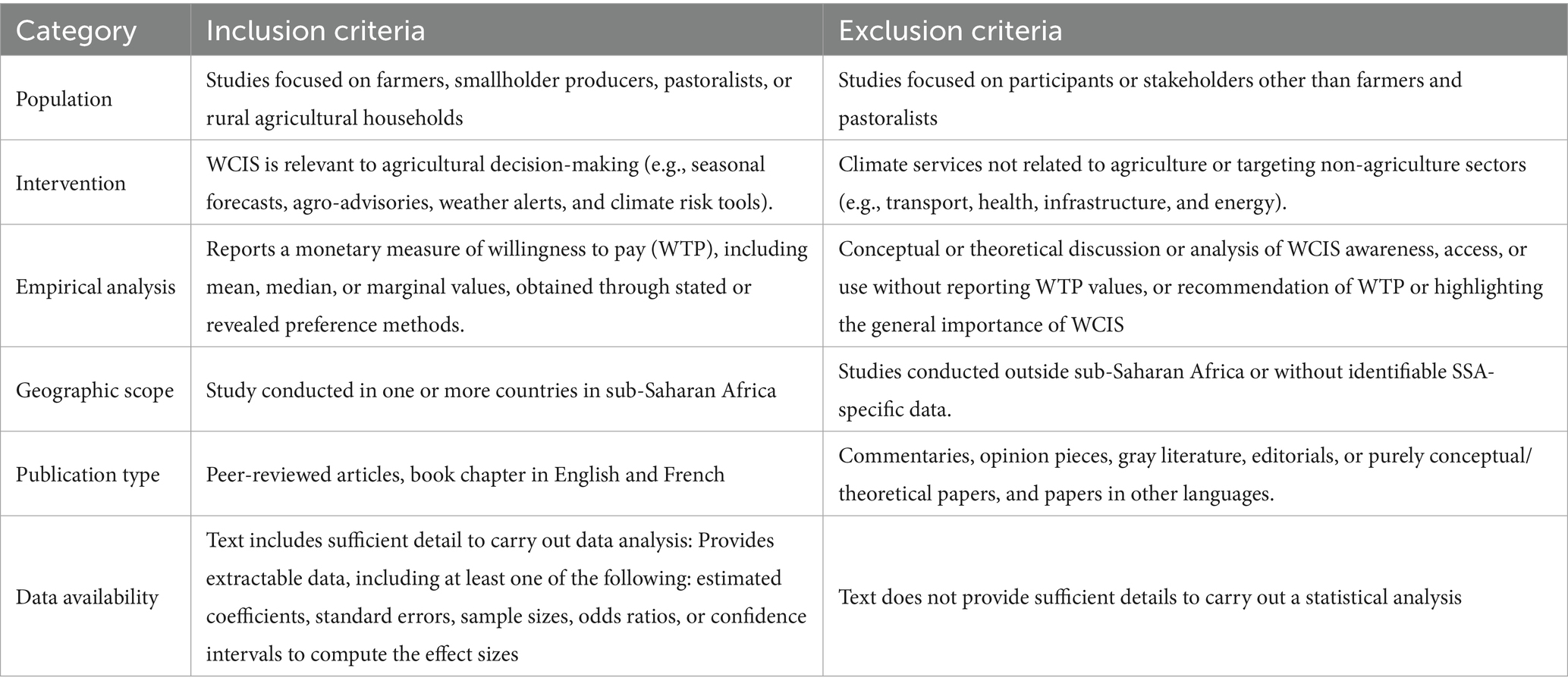
Table 1. Inclusion and exclusion criteria.

Figure 1. PRISMA diagram illustrating the screening process.
2.2 Data extraction
Data extraction was guided by the study’s main objectives. A structured data extraction protocol was designed to ensure the systematic and consistent collection of relevant information across studies. The extracted data included bibliographic details (author, year, journal, and country), study design (approach, sampling strategy, and sample size), characteristics of the target population (including age, gender, education level, and farming system type), elicitation method (e.g., contingent valuation and choice experiment), bidding format, currency and year, and reported WTP values. For WTP determinant data, we recorded all potential variables, including economic and financial characteristics, socio-demographic variables, and institutional and informational variables, along with their effect size, standard deviation, sample size, and probability values when reported. Variables expressed in other statistical forms were converted into comparable metrics for inclusion in the meta-analysis. In addition, contextual information about the type of WCIS (e.g., daily or seasonal forecasts), service bundling (e.g., integration with advisory or insurance products), and delivery channels (e.g., radio, SMS, and extension agents) was extracted. Three reviewers independently participated in the data extraction process, ensuring accuracy and consistency. The first reviewer conducted the initial extraction, while the other two verified all entries.
2.3 Quality assessment of included studies
To ensure the reliability and validity of the studies synthesized in this meta-analysis, a systematic quality assessment of the included studies was conducted. Each study was evaluated based on a set of predefined criteria (Stanley et al., 2013; Gouroubera et al., 2025). These criteria included the following: (1) clarity in the study objective and research questions, (2) appropriateness of study design, (3) clarity of the description of the data collection methods, (4) adequacy of sample size and sampling technique, (5) use of validated tools or elicitation methods for measuring willingness to pay (WTP), (6) robustness of statistical analysis, and (7) disclosure of limitations and potential biases. Each study was independently assessed by two reviewers and scored using a 3-point scale (0 = does not meet the criterion, 1 = partially meets the criterion, 2 = fully meets the criterion). A cumulative score was then calculated for each study, with a maximum possible score of 14 points. Studies scoring below 6 were considered low quality, 6–10 as moderate quality, and above 10 as high quality. Out of the 20 studies included in the meta-analysis, 17 were rated as high quality and 3 as moderate quality (Supplementary material 2).
2.4 Data synthesis and analysis
The estimation of the pooled effect size and the analysis of factors influencing farmers’ WTP for CIS were carried out in several steps. First, all seasonal or monthly WTP values were converted to annual values to ensure comparability. The monetary values of WTP reported in local currencies were converted to U.S. dollars using the exchange rate for the year of the study, as reported in the original studies. This approach is consistent with previous meta-analyses of WTP estimates (Streimikiene et al., 2019; Tesfaye et al., 2023; Cerdá et al., 2024). To account for the variability in study characteristics, we used random-effects models (Brockwell and Gordon, 2001) to calculate the pooled mean of WTP. The same modeling approach was applied to pool effect sizes of WTP determinants reported across studies. Subgroup analyses were conducted where appropriate to examine differences in WTP based on contextual variables. Egger’s test was performed to assess the presence of publication bias, with p < 0.05 indicating the presence of publication bias. We also assessed between-study heterogeneity using the Cochrane Q-test, I2 statistic, and tau-squared (τ2). A p-value less than 0.05 in the Q-test will indicate significant heterogeneity. τ2 represents the estimated variance of true effect sizes across studies, indicating the degree of real heterogeneity beyond chance; a higher τ2 suggests greater variability in effects due to differences in study populations, settings, or methods. The I2 statistic quantifies the proportion of total variation due to true heterogeneity rather than chance. Following Higgins and Thompson (2002), we interpret I2 values as follows: low heterogeneity: I2 < 25%; moderate heterogeneity: 25% ≤ I2 < 50%; high heterogeneity: 50% ≤ I2 < 75%, and very high heterogeneity: I2 ≥ 75%. An I2 value close to zero indicates minimal heterogeneity among effect sizes.
3 Results
3.1 Overview of the included studies
This meta-analysis includes a total of 20 studies drawn from 14 publications conducted across 11 countries in SSA, involving a combined sample of 5,709 smallholder farmers (Table 2). Figure 2 shows the geographical distribution of the studies, with studies from five countries in West Africa (Benin, Burkina Faso, Ghana, Mali, and Nigeria), four countries in East Africa (Ethiopia, Rwanda, South Sudan, and Uganda), and two countries in Southern Africa (Namibia and Zimbabwe). Most of the studies applied quantitative approaches using econometric models such as logit regression, probit models, Tobit models, and generalized multinomial or mixed logit models to identify factors affecting farmers’ WTP for WCIS. The majority (over 85%) employed random sampling techniques, which enhances the generalizability of the findings. A single study used a qualitative approach with purposive sampling, contributing valuable contextual insights (Sansa-Otim et al., 2022). Various stated preference methods to assess farmers’ WTP for WCIS were used in the studies. The most used approach was the Contingent Valuation Method (CVM) (Fonta et al., 2018; Ouédraogo et al., 2018; Awolala et al., 2023; Manzvera et al., 2025). Other studies used choice experiments to capture WTP through hypothetical trade-offs between different WCIS attributes (Tesfaye et al., 2019, 2023; Hounnou et al., 2023; Manzvera et al., 2025). In one case, the Becker-DeGroot-Marschak (BDM) mechanism was applied to derive incentive-compatible valuations (Visser et al., 2025).
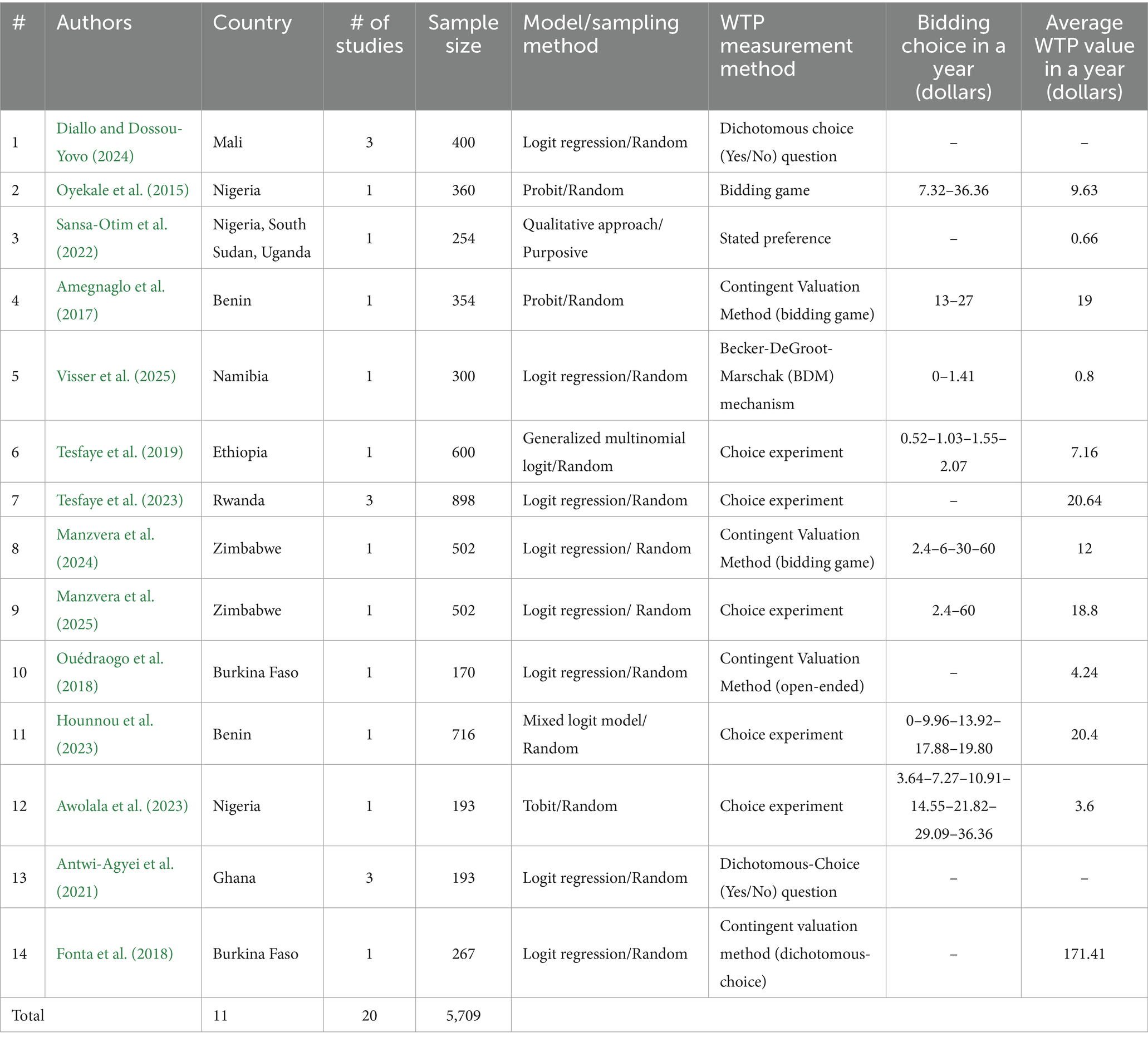
Table 2. Summary of the studies included in the analysis.
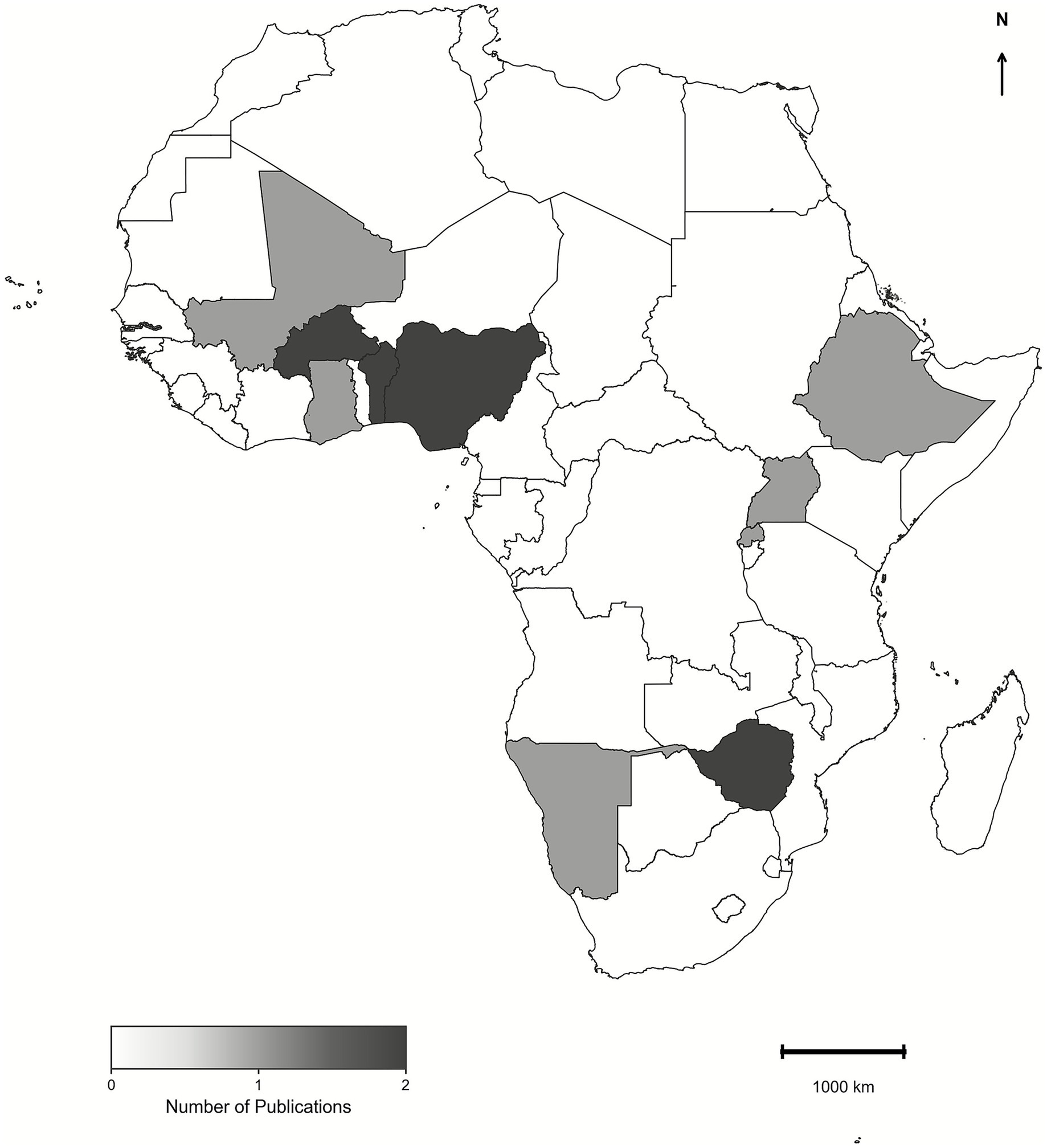
Figure 2. Geographical distribution of the publications.
3.2 Weather and climate information and farmers’ decision-making
Several WCIS were provided to farmers for payment, with a prominence of forecasts relevant to agricultural planning. Seasonal forecasts were the most prominent (n = 13), followed by monthly (n = 11) and daily forecasts (n = 9), indicating the need for WCIS for both strategic and operational farming decisions (Figure 3). The type of climate information provided include forecasts of onset and cessation of rains (n = 10), agro-advisory services (n = 9), and heavy rainfall alerts (n = 8), which were the most prominent (Figure 4), followed by forecasts of drought spells (n = 6), windstorms (n = 6), and lightning (n = 4). Farmers also expressed interest in more specific forecasts, such as soil moisture (n = 2) and early warnings for pests and diseases (n = 1). WCISs are used primarily to support crop production decisions (Table 3), including planting time decisions (n = 12), crop variety selection (n = 11), land preparation (n = 8), fertilizer application (n = 7), and acreage adjustment (n = 9). Additionally, farmers used WCIS for climate risk management, such as drought preparedness (n = 6), irrigation investment (n = 3), and pest control (n = 2). Although less frequent, WCIS also informs livestock and market decisions, such as migrating animals, storing grain, or increasing herd size based on rainfall forecasts (Tesfaye et al., 2023; Diallo and Dossou-Yovo, 2024; Visser et al., 2025).
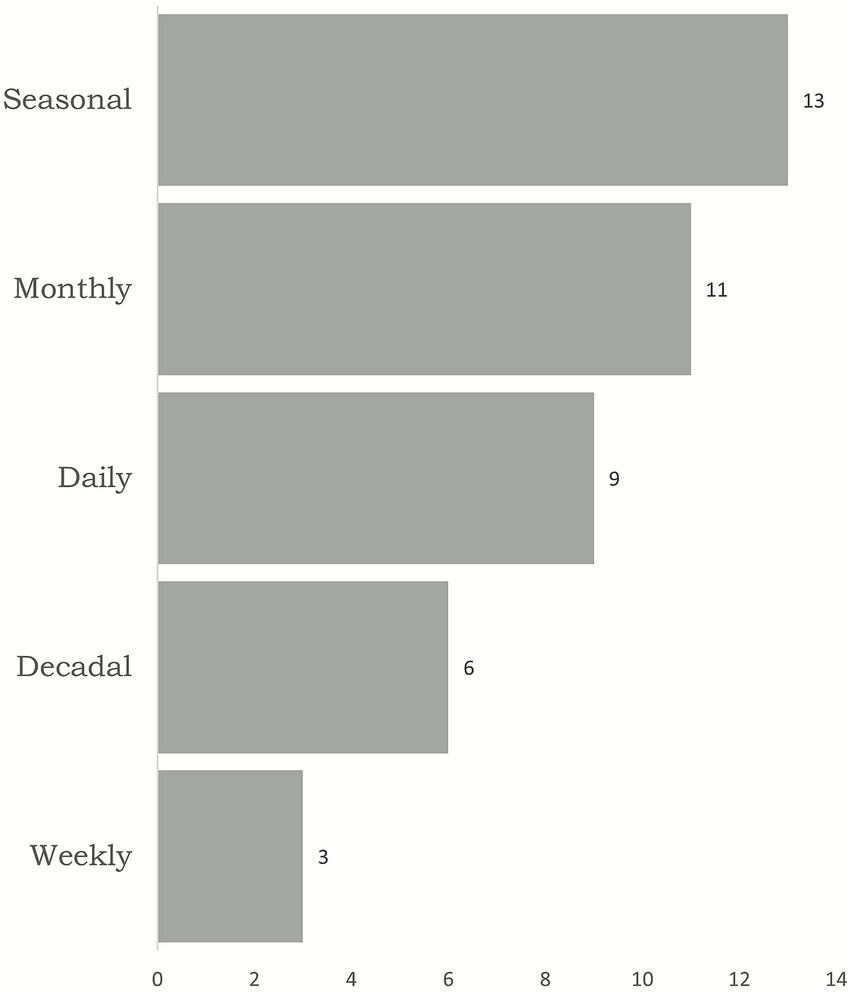
Figure 3. Timescale of WCIS products.
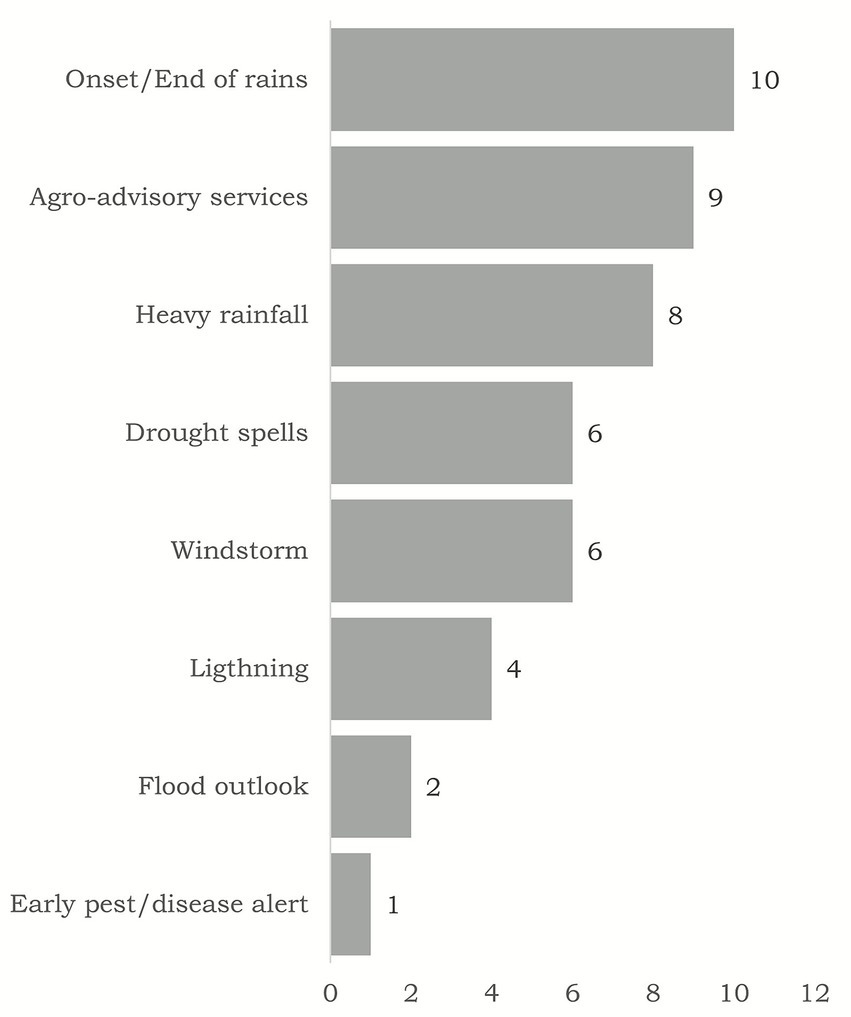
Figure 4. Types of WCIS products.

Table 3. Types of decisions and actions taken with WCIS.
There is a diversity of delivery mechanisms through which farmers access WCIS (Figure 5). The most frequently reported channels are radio (n = 12) and mobile phones (n = 11), confirming their widespread accessibility and central role in rural communication (Gouroubera et al., 2024, 2025). Beyond ICT-based channels, community-based and interpersonal mechanisms also play important roles. These include agricultural extension services (n = 8) and agricultural cooperatives and farmers’ groups (n = 6). Other localized channels include local farmer meetings (n = 4), friends or peers (n = 4), and local elders (n = 2), highlighting the importance of social networks in information dissemination. Less commonly mentioned are institutional and event-based channels such as research institutions (n = 2), microfinance organizations (n = 2), and workshops (n = 1), which may offer more detailed or technical climate services.
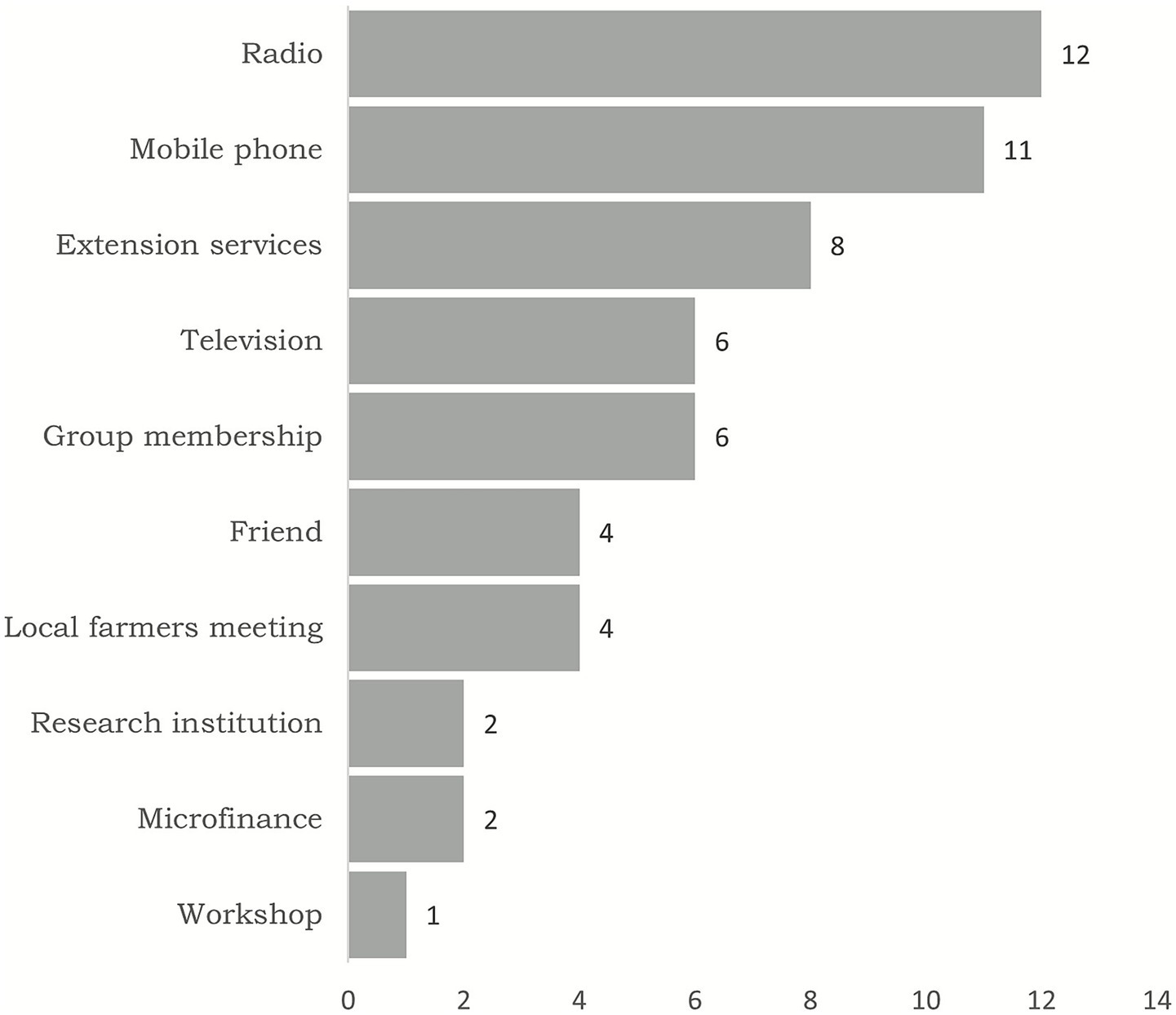
Figure 5. WCIS delivery channels.
3.3 Farmers’ willingness to pay for weather and climate information
A proportional meta-analysis conducted to estimate the pooled proportion of farmers’ WTP for WCIS indicated that approximately 75% (95% CI: 65–83%) of farmers across the study area were WTP for WCIS (Figure 6a). The proportional pooled analysis was based on 13 out of 20 studies, representing a total of 4,558 farmers. Despite this high proportion of farmers, the results showed substantial heterogeneity (I2 = 97.5%, p = 0.00), indicating that WTP levels vary widely due to contextual factors. To address this heterogeneity, a subgroup analysis was conducted comparing studies offering bundled WCIS and other services with those offering standalone WCIS. The analysis showed that bundled services were more appreciated by farmers: approximately 86% (95% CI: 79–91%) (Figure 6b) of farmers were willing to pay for bundled WCIS, compared to 48% (95% CI: 35–62%) for standalone WCIS (Figure 6c). However, both subgroups also showed high heterogeneity (I2 = 96.1% and I2 = 94.7%, respectively), implying that there are potential contextual factors that influence WTP.
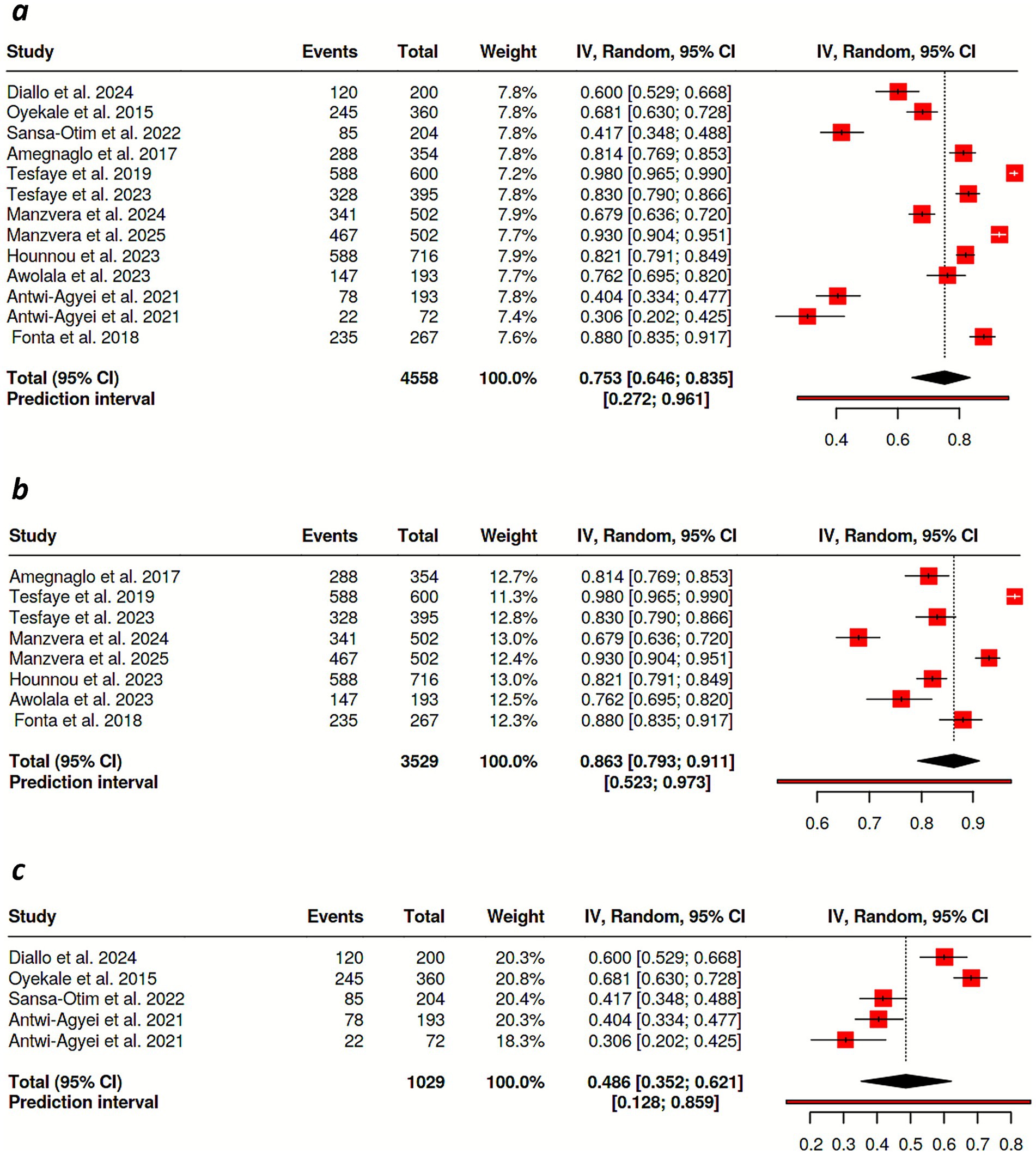
Figure 6. Pooled proportion of farmers’ WTP for (a) WCIS, (b) bundled WCIS, and (c) standalone WCIS.
WTP values reported varied across studies, ranging from 0.66 dollars/year (Sansa-Otim et al., 2022) to 171.41 dollars/year (Fonta et al., 2018). The meta-analysis, including the 11 studies that reported WTP in monetary terms (Table 4), indicated that farmers are willing to pay an average of 8.11 USD/year (95% CI: 3.20–13.02) for WCIS. For standalone WCIS, the willingness to pay is 1.38 USD/year (95% CI: 0.16–2.59), while for bundled services, farmers are willing to pay 13.7 USD/year (95% CI: 8.37–19.06).

Table 4. Pooled WTP estimates.
3.4 Drivers of farmers’ willingness to pay for weather and climate information
Table 5 presents the results of the pooled effect sizes for the various drivers of farmers’ WTP for WCIS. A total of 42 relevant variables were identified and grouped according to the Sustainable Livelihood framework (Natarajan et al., 2022). Demographic variables such as age (β = 0.006, p = 0.516), education (β = 0.006, p = 0.686), and gender (β = 0.049, p = 0.762) showed no significant effects, implying that such characteristics are weak predictors of WTP for WCIS. However, marital status had a significant positive effect (β = 0.427, p = 0.057), reflecting perhaps greater responsibility or planning behavior among married farmers. Training strongly predicted higher WTP (β = 1.33, p < 0.001), showing the importance of capacity building to farmers, enabling the use of WCIS. Access to extension agents (β = 0.718, p < 0.001) and access to market information (β = 0.770, p < 0.05) emerged as significant drivers. Perceived accuracy of information (β = 0.281, p < 0.05) also positively influences WTP, while timescale of forecast (β = −0.273, p < 0.01) negatively affects WTP, suggesting that farmers prefer short-term, practical forecasts rather than long-term projections. Group membership, on the other hand, was not statistically significant (β = 0.543, p = 0.220).

Table 5. Drivers and barriers of farmers’ WTP for WCIS.
Farmers’ experience with drought significantly increased WTP (β = 0.339, p = 0.039), highlighting how direct exposure to climate shocks enhances demand for WCIS. However, household food insecurity (β = −0.221, p = 0.716) and access to irrigation (β = 0.006, p = 0.990) showed no effect, possibly due to their role as a substitute adaptation strategy. Ownership of mobile phone (β = 0.922, p = 0.007) and television device (β = 0.539, p = 0.030) significantly influenced WTP, reinforcing the role of digital access and exposure to information media in facilitating engagement with WCIS (Gouroubera et al., 2024, 2025). Although radio is one of the most widely used channels for disseminating WCIS, as noted in the studies, ownership of radio device access (β = 0.305, p = 0.221) did not influence WTP. Similarly, internet (β = 0.129, p = 0.614) and monthly telephone costs (β = 0.081, p = 0.876) were not significant predictors of WTP for WCIS. Access to credit (β = 0.276, p < 0.001), access to market (β = 0.315, p < 0.05), and remittances (β = 0.759, p < 0.001) significantly increased WTP. Farm size had a marginal effect (β = 0.380, p = 0.095), while subsidies (β = −0.195, p = 0.594) were not significant.
4 Discussion
4.1 Economic value and bundled services as a strategy to enhance farmers’ access and use of WCIS
Using a systematic review methodology with a meta-analysis, the study synthesizes current knowledge on farmers’ WTP for WCIS in SSA. The findings showed that there is a high demand for WCIS across SSA, with on average 75% of farmers willing to pay for WCIS, highlighting that farmers recognize the value of timely and practical WCIS for tactical and practical agricultural decision-making (Findlater et al., 2021; Hansen J. W. et al., 2022; Warner et al., 2022; Madhuri, 2023; Muller et al., 2024; Nyoni et al., 2024; Khatibu and Ngowi, 2025). Indeed, the analysis indicated that farmers with previous exposure to climate shocks, particularly drought, were more likely to pay for WCIS. Similarly, perception of climate change had a significant positive effect on farmers’ WTP. Farmers in vulnerable regions are willing to invest in WCIS when they perceive clear and practical adaptation and risk management benefits (Segnon, 2019; Altobelli et al., 2021; Zougmoré et al., 2023; Alhassan and Haruna, 2024).
While farmers are willing to pay for WCIS, the actual amounts they are willing to contribute remain relatively modest, with an average of 8.11 dollars/year. Using transactional data across sectors, Georgeson et al. (2017) estimated that SSA is the region that spends the least on WCIS. Across sectors, significantly less than $1 per capita is spent on average on WCIS in developing countries (Georgeson et al., 2017). This raises significant questions regarding the viability of business-to-consumer (B2C) models for sustaining WCIS provision, as the financial contributions from individual farmers may not be sufficient to cover the costs associated with generating, tailoring, and disseminating localized forecasts. These observations are consistent with concerns articulated by Findlater et al. (2021), Kasilingam and Krishna (2022), and Rosenstock et al. (2020), suggesting that the characteristics of WCIS align more closely with public or quasi-public goods due to their broad-based benefits, even as individual payments often fall short of covering inherent costs. Consequently, this evidence advocates for the exploration of alternative financing mechanisms, such as public–private partnerships, donor co-financing, or business-to-business (B2B) models that distribute costs across agribusiness actors. Indeed, lack of business models and poor policy context or inadequate governance systems are key barriers to scaling WCIS (Guentchev et al., 2023). Public policy frameworks must be adeptly tailored to facilitate such hybrid models, particularly in regions where farmers’ purchasing power is limited. This strategic model would not only enrich the funding landscape for WCIS but also enhance their alignment with local agricultural practices and the specific challenges faced by vulnerable farmers, as a balance between generic solutions and fit-for-purpose products is essential for scaling of WCIS (Guentchev et al., 2023).
This study also revealed a higher preference for bundled services where WCIS are integrated with knowledge or financial services. Meta-analysis results show that farmers’ WTP for bundled WCIS (86%) was nearly double that for standalone WCIS (48%), underlining the perceived value of enhanced service packages. In addition, access to market and price information, as well as access to credit, enhances farmers’ WTP for WCIS, suggesting that bundling these market information and financial services with WCIS could meet farmers’ preferences. This finding aligns with recent empirical studies (Kagabo et al., 2025; Ouedraogo et al., 2025) and suggests that bundling could enhance the perceived utility, relevance, and convenience of services and uptake while also reducing the perceived risk associated with paying for forecast-based products (Nyoni et al., 2024; Mahama et al., 2025). The higher WTP for bundled WCIS highlights that bundling is not merely an operational delivery choice but a fundamental strategy that could motivate farmers to pay for WCIS, ensuring the long-term viability of WCIS delivery in SSA (Kagabo et al., 2025). This suggests that reframing WCIS as an integral component of broader agricultural support ecosystems rather than as isolated informational products could be a compelling strategy to enhance their uptake and effectiveness. In many regions of Africa, farmers commonly perceive advisory services, including WCIS, as public goods, which contributes to their reluctance to pay for them or cannot afford them (Rosenstock et al., 2020; Findlater et al., 2021; Kagabo et al., 2025). By embedding WCIS within bundled services, farmers are better able to contextualize and act on forecasts in ways that align with their production decisions, market behavior, and risk management strategies. This integrative approach not only boosts adoption but also improves the financial sustainability of WCIS through increased user contributions, laying the foundation for stronger private sector engagement (Long et al., 2017; Vedeld et al., 2019; Rosenstock et al., 2020; Kagabo et al., 2025; Mahama et al., 2025). From a policy and investment perspective, bundling WCIS with complementary services provides a more viable pathway to scale by demonstrating clearer value propositions to farmers and investors. This is in line with emerging development paradigms that promote the integration of WCIS into broader extension systems, insurance schemes, and digital value chain platforms. Such holistic models help build more resilient, inclusive, and responsive service ecosystems (Long et al., 2017; Kagabo et al., 2025).
Another important consideration in developing sustainable business models for WCIS is understanding the profile of farmers who are willing to pay. The findings of this review challenge traditional assumptions that socio-demographic variables such as age, education, and gender are strong predictors of farmers’ WTP (Ouédraogo et al., 2018; Hounnou et al., 2023; Diallo and Dossou-Yovo, 2024). Instead, the findings suggest a paradigm shift: these demographic factors show limited explanatory power in the context of WTP for WCIS, calling into question their applicability in WCIS adoption models. This may reflect contextual factors in service delivery that reduce traditional barriers. Previous studies indicate that gendered and educational disparities often arise from structural constraints, such as literacy requirements or unequal access to information channels, rather than intrinsic preferences (Tall et al., 2018; Hansen et al., 2019; Tesfaye et al., 2023). Moreover, prior research suggests that in resource-limited settings, economic capacity and perceived utility often outweigh demographic characteristics in shaping WTP (Tesfaye et al., 2023). Importantly, non-significance does not imply absence of structural inequalities; program design should still integrate gender-sensitive and inclusive strategies to ensure equitable access (Tall et al., 2018). In contrast, non-demographic factors, particularly those related to institutional support and access to information, emerged as key determinants (Warner et al., 2022). Engagement in training programs, regular contact with extension agents, and mobile phone ownership are all significantly associated with higher WTP. These results demonstrate that targeting strategies should focus not only on user engagement but also on the institutional and enabling environment for upscaling (Totin et al., 2018; Guentchev et al., 2023). This aligns with growing evidence that institutional engagement and financial liquidity are more influential drivers of WCIS demand than individual characteristics (Connolly-Boutin and Smit, 2016; Henriksson et al., 2021).
4.2 Enabling effective WCIS delivery
The analysis highlighted that radio, mobile phones, and traditional extension systems are the main channels through which farmers receive WCIS. Except for extension systems, the findings align with previous results highlighting mobile phones and radio as key delivery channels for reaching smallholder farmers in developing countries (Yegbemey and Egah, 2021). While radio serves as the predominant medium for receiving WCIS information, owning a radio device was not found to be a significant driver of farmers’ WTP for WCIS, contrasting with mobile phones, which are not only a key delivery channel but also their ownership significantly increases farmers’ WTP for WCIS. Indeed, mobile phones were excessively used to disseminate WCIS to smallholder farmers in developing countries and offered many advantages over alternative channels such as radio and human-based extension systems (Yegbemey and Egah, 2021). According to the International Telecommunication Union (ITU), approximately 75% of people aged 10 years and older owned a mobile phone (ITU, 2020). The finding calls for rethinking dissemination strategies, moving toward more interactive, digital-based systems that allow feedback and tailored forecasts (Yegbemey and Egah, 2021; Gouroubera et al., 2024, 2025; Gouthon et al., 2024; Nyoni et al., 2024).
The findings also highlighted that perceived climate forecast accuracy significantly increased WTP to pay for WCIS. User-perceived accuracy has been shown to enhance WCIS adoption and use by smallholder farmers (Clarkson et al., 2022; Khatibu and Ngowi, 2025). These findings underscore the necessity for enhanced user engagement during the generation and delivery of WCIS products. Using a co-production approach, engaging the beneficiaries and use contexts through a user-centric design and participatory approach in the generation and delivery of WCIS enhances trust and adoption and impropriate use of WCIS (Hirons et al., 2021; Clarkson et al., 2022; Khatibu and Ngowi, 2025). WCIS delivery mechanisms should evolve toward a more interactive and user-centered model. For instance, mobile phone-based deliveries combined with integrated interactive radio programs and call center mechanisms would not only enhance WCIS access and usability but also promote user engagement in the climate information value chain.
4.3 Knowledge gaps and future research avenues
While this systematic review with meta-analysis synthesizes current knowledge on farmers’ WTP for WCIS in SSA, the paucity of studies and the heterogeneity in the findings highlight key knowledge gaps that require further investigation. Moreover, the limited geographical coverage (11 countries, see Figure 2) and the number of relevant studies call for caution in the generalization of the findings. Key agricultural regions that are highly vulnerable to climate change, such as semi-arid regions in Southern Africa and the Sahel, often considered as climate change “hotspots” (Segnon et al., 2021; Zougmoré et al., 2023), remain underrepresented. This underrepresentation limits our ability to capture the full range of socio-ecological and institutional conditions that could influence farmers’ WTP for WCIS across Africa. Indeed, the heterogeneity observed across studies suggests the existence of contextual variables, such as agro-ecological conditions, policy environments, and cultural perceptions, that are likely to influence WTP for WCIS. Gender-disaggregated evidence is also limited, despite existing research showing substantial differences in WCIS access and use between men and women (Diallo and Dossou-Yovo, 2024). In addition to expanding geographical scope or coverage of WTP for WCIS studies, areas of future research could include exploring how public–private partnerships (PPP) could create opportunities for business models that ensure sustainability of WCIS production, delivery, and appropriate use across contexts. The development of these business models needs to adopt a user-centric and participatory approach to ensure inclusive and fit-for-purpose solutions. How enabling institutions and policy environments could facilitate PPP and the development of sustainable business models remains a central question requiring further investigation.
5 Conclusion
Using a systematic review with meta-analysis, this study synthesizes current knowledge on farmers’ WTP for WCIS in SSA. It found that while a significant proportion of farmers value and are willing to pay for WCIS; especially when these services are bundled with other agricultural, market, or financial services, the amounts they are able and willing to pay remain low. This underscores a critical challenge for business models that rely solely on farmers for revenue generation. Sustainable business models for scaling WCIS should have diverse revenue sources targeting multiple user types (Kagabo et al., 2025). Bundling WCIS with other agricultural and financial services emerges as a promising approach to enhance perceived value and uptake. WCIS should be positioned as part of broader agricultural support ecosystems rather than standalone products. The study highlights that socio-demographic factors such as age, gender, and education have a limited effect, whereas institutional and enabling factors, such as access to extension services, training, mobile phone ownership, and perceived forecast accuracy, are strong predictors of WTP. These insights suggest that strategies to scale WCIS should prioritize improving service relevance, accuracy, and accessibility, while leveraging digital technologies and integrated delivery models. Harnessing digital technologies and tools will need to play critical roles in sustaining effective WCIS delivery. We highlighted key knowledge gaps and discussed avenues for future research, including expanding the geographical scope of WTP for WCIS studies, exploring sustainable business models for scaling WCIS, especially involving a PPP approach. These insights are crucial for designing inclusive, financially viable, and scalable WCIS that support smallholder adaptation in sub-Saharan Africa.
Data availability statement
The original contributions presented in the study are included in the article/Supplementary material, further inquiries can be directed to the corresponding author.
Author contributions
MG: Data curation, Formal analysis, Conceptualization, Methodology, Visualization, Writing – review & editing, Writing – original draft, Investigation. AS: Visualization, Conceptualization, Resources, Validation, Project administration, Writing – original draft, Methodology, Supervision, Writing – review & editing, Data curation. FT: Software, Visualization, Writing – review & editing, Data curation. RZ: Resources, Conceptualization, Funding acquisition, Writing – review & editing, Supervision.
Funding
The author(s) declared that financial support was received for this work and/or its publication. The article was developed as part of the “Building Agricultural Systems Resilience through an Effective Early Warning System in Nigeria” (EWS) project, financially supported by the Gates Foundation. The article was also supported by the “Accelerating Impacts of CGIAR Climate Research for Africa” (AICCRA) project, funded by the International Development Association (IDA) of the World Bank.
Conflict of interest
The author(s) declared that this work was conducted in the absence of any commercial or financial relationships that could be construed as a potential conflict of interest.
Generative AI statement
The author(s) declared that Generative AI was not used in the creation of this manuscript.
Any alternative text (alt text) provided alongside figures in this article has been generated by Frontiers with the support of artificial intelligence and reasonable efforts have been made to ensure accuracy, including review by the authors wherever possible. If you identify any issues, please contact us.
Publisher’s note
All claims expressed in this article are solely those of the authors and do not necessarily represent those of their affiliated organizations, or those of the publisher, the editors and the reviewers. Any product that may be evaluated in this article, or claim that may be made by its manufacturer, is not guaranteed or endorsed by the publisher.
Supplementary material
The Supplementary material for this article can be found online at: https://www.frontiersin.org/articles/10.3389/fclim.2025.1692594/full#supplementary-material
References
Agyekum, T. P., Antwi-Agyei, P., and Dougill, A. J. (2022). The contribution of weather forecast information to agriculture, water, and energy sectors in east and West Africa: a systematic review. Front. Environ. Sci. 10:935696. doi: 10.3389/fenvs.2022.935696
Alhassan, U., and Haruna, E. U. (2024). Rural farmers’ perceptions of and adaptations to climate change in sub-Saharan Africa: does climate-smart agriculture (CSA) matter in Nigeria and Ethiopia? Environ. Econ. Policy Stud. 26, 613–652. doi: 10.1007/s10018-023-00388-8
Alimagham, S., van Loon, M. P., Ramirez-Villegas, J., Adjei-Nsiah, S., Baijukya, F., Bala, A., et al. (2024). Climate change impact and adaptation of rainfed cereal crops in sub-Saharan Africa. Eur. J. Agron. 155:127137. doi: 10.1016/j.eja.2024.127137
Altobelli, F., Marta, A. D., Heinen, M., Jacobs, C., Giampietri, E., Mancini, M., et al. (2021). Irrigation advisory services: farmers preferences and willingness to pay for innovation. Outl. Agric. 50, 277–285. doi: 10.1177/00307270211002848
Amegnaglo, C. J., Anaman, K. A., Mensah-Bonsu, A., Onumah, E. E., and Amoussouga Gero, F. (2017). Contingent valuation study of the benefits of seasonal climate forecasts for maize farmers in the Republic of Benin, West Africa. Clim. Serv. 6, 1–11. doi: 10.1016/j.cliser.2017.06.007
Antwi-Agyei, P., Amanor, K., Hogarh, J. N., and Dougill, A. J. (2021). Predictors of access to and willingness to pay for climate information services in North-Eastern Ghana: a gendered perspective. Environ. Dev. 37:100580. doi: 10.1016/j.envdev.2020.100580
Awolala, D., Mutemi, J., Adefisan, E., Antwi-Agyei, P., Taylor, A., Muita, R., et al. (2023). Economic value and latent demand for agricultural drought forecast: emerging market for weather and climate information in central-southern Nigeria. Clim. Risk Manag. 39:100478. doi: 10.1016/j.crm.2023.100478
Berrang-Ford, L., Siders, A. R., Lesnikowski, A., Fischer, A. P., Callaghan, M. W., Haddaway, N. R., et al. (2021). A systematic global stocktake of evidence on human adaptation to climate change. Nat. Clim. Chang. 11, 989–1000. doi: 10.1038/s41558-021-01170-y
Bezner Kerr, R., Hasegawa, T., Lasco, R., Bhatt, I., Deryng, D., Farrell, A., et al. (2022a). “Food, fibre, and other ecosystem products” in Climate change 2022: Impacts, adaptation, and vulnerability. Contribution of working group II to the sixth assessment report of the intergovernmental panel on climate change. eds. H.-O. Pörtner, D. C. Roberts, M. Tignor, E. S. Poloczanska, K. Mintenbeck, and A. Alegría (Cambridge, United Kingdom and New York, NY, USA: Cambridge University Press), 713–906.
Bezner Kerr, R., Naess, L. O., Allen-O’Neil, B., Totin, E., Nyantakyi-Frimpong, H., Risvoll, C., et al. (2022b). Interplays between changing biophysical and social dynamics under climate change: implications for limits to sustainable adaptation in food systems. Glob. Chang. Biol. 28, 3580–3604. doi: 10.1111/gcb.16124,
Born, L., Prager, S., Ramirez-Villegas, J., and Imbach, P. (2021). A global meta-analysis of climate services and decision-making in agriculture. Clim. Serv. 22:100231. doi: 10.1016/j.cliser.2021.100231
Brockwell, S. E., and Gordon, I. R. (2001). A comparison of statistical methods for meta-analysis. Stat. Med. 20, 825–840. doi: 10.1002/sim.650,
Carr, T. W., Mkuhlani, S., Segnon, A. C., Ali, Z., Zougmoré, R., Dangour, A. D., et al. (2022). Climate change impacts and adaptation strategies for crops in West Africa: a systematic review. Environ. Res. Lett. 17:053001. doi: 10.1088/1748-9326/ac61c8
Cerdá, E., López-Otero, X., Quiroga, S., and Soliño, M. (2024). Willingness to pay for renewables: insights from a meta-analysis of choice experiments. Energy Econ. 130:107301. doi: 10.1016/j.eneco.2024.107301
Clarkson, G., Dorward, P., Poskitt, S., Stern, R. D., Nyirongo, D., Fara, K., et al. (2022). Stimulating small-scale farmer innovation and adaptation with participatory integrated climate services for agriculture (PICSA): lessons from successful implementation in Africa, Latin America, the Caribbean and South Asia. Clim. Serv. 26:100298. doi: 10.1016/j.cliser.2022.100298
Connolly-Boutin, L., and Smit, B. (2016). Climate change, food security, and livelihoods in sub-Saharan Africa. Reg. Environ. Chang. 16, 385–399. doi: 10.1007/s10113-015-0761-x
Diallo, A., and Dossou-Yovo, E. R. (2024). A gendered analysis of farmers’ access to and willingness to pay for climate information services: evidence from rice farmers in Mali. Clim. Serv. 35:100507. doi: 10.1016/j.cliser.2024.100507
Findlater, K., Webber, S., Kandlikar, M., and Donner, S. (2021). Climate services promise better decisions but mainly focus on better data. Nat. Clim. Chang. 11, 731–737. doi: 10.1038/s41558-021-01125-3
Fonta, W. M., Sanfo, S., Kedir, A. M., and Thiam, D. R. (2018). Estimating farmers’ willingness to pay for weather index-based crop insurance uptake in West Africa: insight from a pilot initiative in southwestern Burkina Faso. Agric. Food Econ. 6:11. doi: 10.1186/s40100-018-0104-6
Georgeson, L., Maslin, M., and Poessinouw, M. (2017). Global disparity in the supply of commercial weather and climate information services. Sci. Adv. 3:e1602632. doi: 10.1126/sciadv.1602632,
Gouroubera, M. W., Adechian, S. A., Segnon, A. C., Moumouni-Moussa, I., and Zougmoré, R. B. (2025). Drivers and impacts of mobile phone-mediated scaling of agricultural technologies: a meta-analysis. Front. Sustain. Food Syst. 8:1514546. doi: 10.3389/fsufs.2024.1514546
Gouroubera, M. W., Kora Sabi, A., Bio Comada, T. K., Dosso, F., Fatondji, S. A., Gouthon, M. B., et al. (2024). Designing effective digital-based delivery of climate information for smallholder farmers: a mini meta-analysis on drivers and barriers. Clim. Pol. 24, 1443–1456. doi: 10.1080/14693062.2023.2266475
Gouthon, M., Gouroubera, M. W., Tama-Imorou, C., and Moumouni-Moussa, I. (2024). Digital inequalities among smallholder farmers in Benin: determinants of attitude, material access, skills and usage. Inf. Dev., 1–14. doi: 10.1177/02666669241280411
Guentchev, G., Palin, E. J., Lowe, J. A., and Harrison, M. (2023). Upscaling of climate services – what is it? A literature review. Clim. Serv. 30:100352. doi: 10.1016/j.cliser.2023.100352
Hansen, J. W., Born, L., Dossou-Yovo, E. R., Mwongera, C., Dalaa, M. A., Tahidu, O., et al. (2022). Country-specific challenges to improving effectiveness, scalability and sustainability of agricultural climate services in Africa. Front. Clim. 4:928512. doi: 10.3389/fclim.2022.928512
Hansen, J., List, G., Downs, S., Carr, E. R., Diro, R., Baethgen, W., et al. (2022). Impact pathways from climate services to SDG2 (“zero hunger”): a synthesis of evidence. Clim. Risk Manag. 35:100399. doi: 10.1016/j.crm.2022.100399
Hansen, J. W., Vaughan, C., Kagabo, D. M., Dinku, T., Carr, E. R., Körner, J., et al. (2019). Climate services can support African farmers’ context-specific adaptation needs at scale. Front. Sustain. Food Syst. 3:21. doi: 10.3389/fsufs.2019.00021
Henriksson, R., Vincent, K., Archer, E., and Jewitt, G. (2021). Understanding gender differences in availability, accessibility and use of climate information among smallholder farmers in Malawi. Clim. Dev. 13, 503–514. doi: 10.1080/17565529.2020.1806777
Higgins, J. P. T., and Thompson, S. G. (2002). Quantifying heterogeneity in a meta-analysis. Stat. Med. 21, 1539–1558. doi: 10.1002/sim.1186,
Hirons, L., Thompson, E., Dione, C., Indasi, V. S., Kilavi, M., Nkiaka, E., et al. (2021). Using co-production to improve the appropriate use of sub-seasonal forecasts in Africa. Clim. Serv. 23:100246. doi: 10.1016/j.cliser.2021.100246
Hounnou, F. E., Houessou, A. M., and Dedehouanou, H. (2023). Farmers’ preference and willingness to pay for weather forecast services in Benin (West Africa). Reg. Environ. Chang. 23:77. doi: 10.1007/s10113-023-02058-7
ITU (2020). Facts and figures 2022: Mobile phone ownership. Geneva: International Telecommunication Union (ITU).
Kabir, K. (2023). What do we know about drought, household consumption and seasonality: evidence review from sub-Saharan Africa. Econ. Disasters Clim. Change 7, 303–317. doi: 10.1007/s41885-023-00137-x
Kagabo, D. M., Byandaga, L., Gatsinzi, P., Mvuyibwami, P., Munyangeri, Y. U., Ntwari, N., et al. (2025). Scaling climate information services and climate smart agriculture through bundled business models. Clim. Serv. 37:100526. doi: 10.1016/j.cliser.2024.100526
Kasilingam, D., and Krishna, R. (2022). Understanding the adoption and willingness to pay for internet of things services. Int. J. Consum. Stud. 46, 102–131. doi: 10.1111/ijcs.12648
Khatibu, S., and Ngowi, E. (2025). Effectiveness of climate information services in sub-Saharan Africa’s agricultural sector: a systematic review of what works, what doesn’t work, and why. Front. Clim. 7:1616691. doi: 10.3389/fclim.2025.1616691
Kohl, C., McIntosh, E. J., Unger, S., Haddaway, N. R., Kecke, S., Schiemann, J., et al. (2018). Online tools supporting the conduct and reporting of systematic reviews and systematic maps: a case study on CADIMA and review of existing tools. Environ. Evid. 7:8. doi: 10.1186/s13750-018-0115-5
Kone, S., Balde, A., Zahonogo, P., and Sanfo, S. (2024). A systematic review of recent estimations of climate change impact on agriculture and adaptation strategies perspectives in Africa. Mitig. Adapt. Strateg. Glob. Change 29:18. doi: 10.1007/s11027-024-10115-7
Long, T. B., Blok, V., and Poldner, K. (2017). Business models for maximising the diffusion of technological innovations for climate-smart agriculture. Int. Food Agribus. Manag. Rev. 20, 5–24. doi: 10.22434/IFAMR2016.0081
Madhuri, (2023). How do climate information services (CIS) affect farmers’ adaptation strategies? A systematic review. Clim. Serv. 32:100416. doi: 10.1016/j.cliser.2023.100416
Mahama, O. K., Abukari, A.-B. T., Damba, O. T., Mponela, P., Alasan Dalaa, M. A., Yeboah, S., et al. (2025). Drivers of use and adoption of bundled climate-smart agriculture and climate information services in northern Ghana. Int. J. Clim. Change Strat. Manage. 17, 871–893. doi: 10.1108/IJCCSM-12-2023-0156,
Manzvera, J., Anaman, K. A., Mensah-Bonsu, A., and Barimah, A. (2024). The economic value of seasonal weather and climate services for maize farmers in Manicaland Province of Zimbabwe. Heliyon 10:e40781. doi: 10.1016/j.heliyon.2024.e40781,
Manzvera, J., Anaman, K. A., Mensah-Bonsu, A., and Barimah, A. (2025). Preferences for enhanced seasonal weather and climate services among maize farmers in Zimbabwe: a choice experiment analysis. Meteorol. Appl. 32:e70040. doi: 10.1002/met.70040
Martey, E., Etwire, P. M., Adogoba, D. S., and Tengey, T. K. (2022). Farmers’ preferences for climate-smart cowpea varieties: implications for crop breeding programmes. Clim. Dev. 14, 105–120. doi: 10.1080/17565529.2021.1889949
Muller, L. C. F. E., Schaafsma, M., Mazzoleni, M., and Van Loon, A. F. (2024). Responding to climate services in the context of drought: a systematic review. Clim. Serv. 35:100493. doi: 10.1016/j.cliser.2024.100493
Natarajan, N., Newsham, A., Rigg, J., and Suhardiman, D. (2022). A sustainable livelihoods framework for the 21st century. World Dev. 155:105898. doi: 10.1016/j.worlddev.2022.105898
Nyoni, R. S., Bruelle, G., Chikowo, R., and Andrieu, N. (2024). Targeting smallholder farmers for climate information services adoption in Africa: a systematic literature review. Clim. Serv. 34:100450. doi: 10.1016/j.cliser.2024.100450
Ouédraogo, M., Barry, S., Zougmoré, B. R., Partey, T. S., Somé, L., and Baki, G. (2018). Farmers’ willingness to pay for climate information services: evidence from cowpea and sesame producers in northern Burkina Faso. Sustainability 10:611. doi: 10.3390/su10030611
Ouedraogo, A., Ouedraogo, M., Egyir, I. S., Läderach, P., Mensah-Bonsu, A., and Jatoe, J. B. D. (2025). Climate services bundles preferences of smallholder farmers in West Africa: a stated choice modelling. Front. Clim. 7:1581001. doi: 10.3389/fclim.2025.1581001
Oyekale, T. O., Oyekale, A. S., and Adebayo, O. J. (2015). Farm households’ perceptions on climate change and willingness to subscribe for advisory weather forecasts in south West Nigeria. Disaster Adv. 8, 8–19.
Page, M. J., McKenzie, J. E., Bossuyt, P. M., Boutron, I., Hoffmann, T. C., Mulrow, C. D., et al. (2021). The PRISMA 2020 statement: an updated guideline for reporting systematic reviews. BMJ 372:71. doi: 10.1136/bmj.n71,
Rosenstock, T. S., Lubberink, R., Gondwe, S., Manyise, T., and Dentoni, D. (2020). Inclusive and adaptive business models for climate-smart value creation. Curr. Opin. Environ. Sustain. 42, 76–81. doi: 10.1016/j.cosust.2019.12.005
Sansa-Otim, J., Nsabagwa, M., Mwesigwa, A., Faith, B., Owoseni, M., Osuolale, O., et al. (2022). An assessment of the effectiveness of weather information dissemination among farmers and policy makers. Sustainability 14:3870. doi: 10.3390/su14073870
Segnon, A. C. (2019). Exploring agrobiodiversity-based climate change adaptation in semi-arid areas of West Africa: A case study in Mali. Accra: University of Ghana.
Segnon, A. C., Magassa, M., Obossou, E. A., Partey, S. T., Houessionon, P., and Zougmoré, R. B. (2024). Gender vulnerability assessment to inform gender-sensitive adaptation action: a case study in semi-arid areas of Mali. Front. Clim. 6:1418015. doi: 10.3389/fclim.2024.1418015
Segnon, A. C., Totin, E., Zougmoré, R. B., Lokossou, J. C., Thompson-Hall, M., Ofori, B. O., et al. (2021). Differential household vulnerability to climatic and non-climatic stressors in semi-arid areas of Mali, West Africa. Clim. Dev. 13, 697–712. doi: 10.1080/17565529.2020.1855097
Simpson, N. P., Williams, P. A., Mach, K. J., Berrang-Ford, L., Biesbroek, R., Haasnoot, M., et al. (2023). Adaptation to compound climate risks: a systematic global stocktake. iScience 26:105926. doi: 10.1016/j.isci.2023.105926,
Stanley, T. D., Doucouliagos, H., Giles, M., Heckemeyer, J. H., Johnston, R. J., Laroche, P., et al. (2013). Meta-analysis of economics research reporting guidelines. J. Econ. Surv. 27, 390–394. doi: 10.1111/joes.12008
Streimikiene, D., Balezentis, T., Alisauskaite-Seskiene, I., Stankuniene, G., and Simanaviciene, Z. (2019). A review of willingness to pay studies for climate change mitigation in the energy sector. Energies 12:1481. doi: 10.3390/en12081481
Sultan, B., Lejeune, Q., Menke, I., Maskell, G., Lee, K., Noblet, M., et al. (2020). Current needs for climate services in West Africa: results from two stakeholder surveys. Clim. Serv. 18:100166. doi: 10.1016/j.cliser.2020.100166
Tall, A., Coulibaly, J. Y., and Diop, M. (2018). Do climate services make a difference? A review of evaluation methodologies and practices to assess the value of climate information services for farmers: implications for Africa. Clim. Serv. 11, 1–12. doi: 10.1016/j.cliser.2018.06.001
Tefera, M. L., Seddaiu, G., Carletti, A., and Awada, H. (2025). Rainfall variability and drought in West Africa: challenges and implications for rainfed agriculture. Theor. Appl. Climatol. 156:41. doi: 10.1007/s00704-024-05251-8
Tesfaye, A., Hansen, J., Kagabo, D., Birachi, E., Radeny, M., and Solomon, D. (2023). Modeling farmers’ preference and willingness to pay for improved climate services in Rwanda. Environ. Dev. Econ. 28, 368–386. doi: 10.1017/S1355770X22000286
Tesfaye, A., Hansen, J., Kassie, G. T., Radeny, M., and Solomon, D. (2019). Estimating the economic value of climate services for strengthening resilience of smallholder farmers to climate risks in Ethiopia: a choice experiment approach. Ecol. Econ. 162, 157–168. doi: 10.1016/j.ecolecon.2019.04.019
Totin, E., Segnon, A. C., Schut, M., Affognon, H., Zougmoré, R. B., Rosenstock, T., et al. (2018). Institutional perspectives of climate-smart agriculture: a systematic literature review. Sustainability 10:1990. doi: 10.3390/su10061990
Trisos, C. H., Adelekan, I., Totin, E., Ayanlade, A., Efitre, J., Gemeda, A., et al. (2022). “Africa” in Climate change 2022: Impacts, adaptation, and vulnerability. Contribution of working group II to the sixth assessment report of the intergovernmental panel on climate change. eds. H.-O. Pörtner, D. C. Roberts, M. Tignor, E. S. Poloczanska, K. Mintenbeck, and A. Alegría (Cambridge, United Kingdom and New York, NY, USA: Cambridge University Press).
Vedeld, T., Mathur, M., and Bharti, N. (2019). How can co-creation improve the engagement of farmers in weather and climate services (WCS) in India. Clim. Serv. 15:100103. doi: 10.1016/j.cliser.2019.100103
Visser, M., Mulwa, C. K., Gitonga, Z., and Baard, M. (2025). Weather uncertainty and demand for information in technology adoption: case of Namibia. J. Behav. Exp. Econ. 116:102346. doi: 10.1016/j.socec.2025.102346
Warner, D., Moonsammy, S., and Joseph, J. (2022). Factors that influence the use of climate information services for agriculture: a systematic review. Clim. Serv. 28:100336. doi: 10.1016/j.cliser.2022.100336
Yegbemey, R. N., and Egah, J. (2021). Reaching out to smallholder farmers in developing countries with climate services: a literature review of current information delivery channels. Clim. Serv. 23:100253. doi: 10.1016/j.cliser.2021.100253
Keywords: willingness to pay (WTP), weather and climate information services (WCIS), mobile phone, business models, meta-analysis, systematic review, bundled services, scaling
Citation: Gouroubera MW, Segnon AC, Tonle FBN and Zougmoré RB (2025) Farmers’ willingness to pay for weather and climate information services in sub-Saharan Africa: a systematic review with meta-analysis. Front. Clim. 7:1692594. doi: 10.3389/fclim.2025.1692594
Edited by:
Robert Ugochukwu Onyeneke, Alex Ekwueme Federal University Ndufu-Alike, NigeriaReviewed by:
Ezra Misaki, College of Business Education, TanzaniaXihui Chen, Keele University Keele Business School, United Kingdom
Copyright © 2025 Gouroubera, Segnon, Tonle and Zougmoré. This is an open-access article distributed under the terms of the Creative Commons Attribution License (CC BY). The use, distribution or reproduction in other forums is permitted, provided the original author(s) and the copyright owner(s) are credited and that the original publication in this journal is cited, in accordance with accepted academic practice. No use, distribution or reproduction is permitted which does not comply with these terms.
*Correspondence: Alcade C. Segnon, YWxjYWRlc2VAZ21haWwuY29t