Due to a production error, there was a mistake in Figure 2 and Figure 3 as published. The correct Figure 2 was inadvertently published as Figure 3, and the correct Figure 3 file was omitted from the published article. The corrected Figure 2 and Figure 3 appear below.
Figure 2
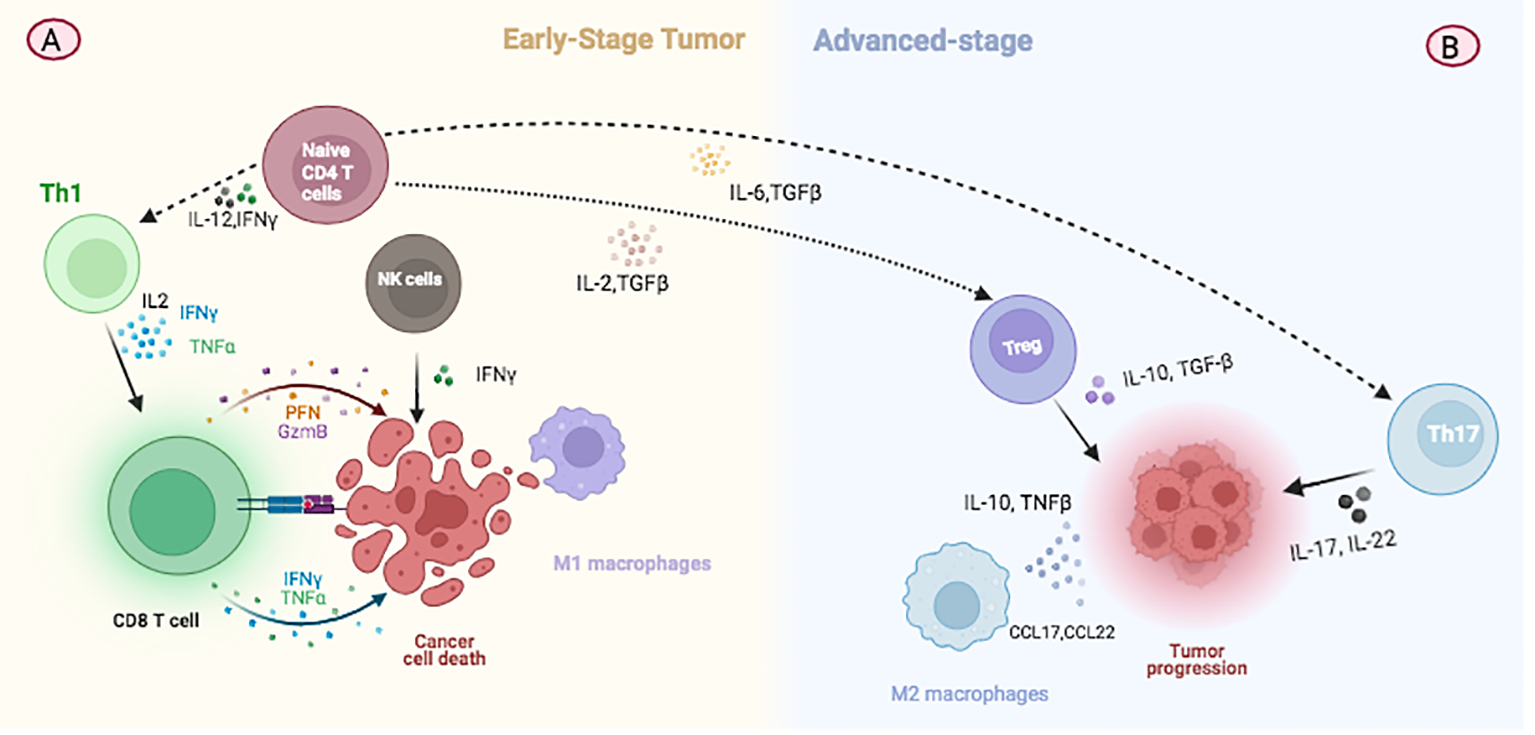
Illustration depicting changes in immune cell populations during breast cancer progression. (A) At the initial stage of tumor development, TILs predominantly consist of Th1 and CD8+ T cells which are involved in immunosurveillance and combating malignant cell growth. (B) In advanced stages of cancer, there is a notable increase in CD4+ TILs, with a shift towards the predominance of Treg and Th17 cells. These changes contribute to tumor growth by modulating the immune environment within the tumor.
Figure 3
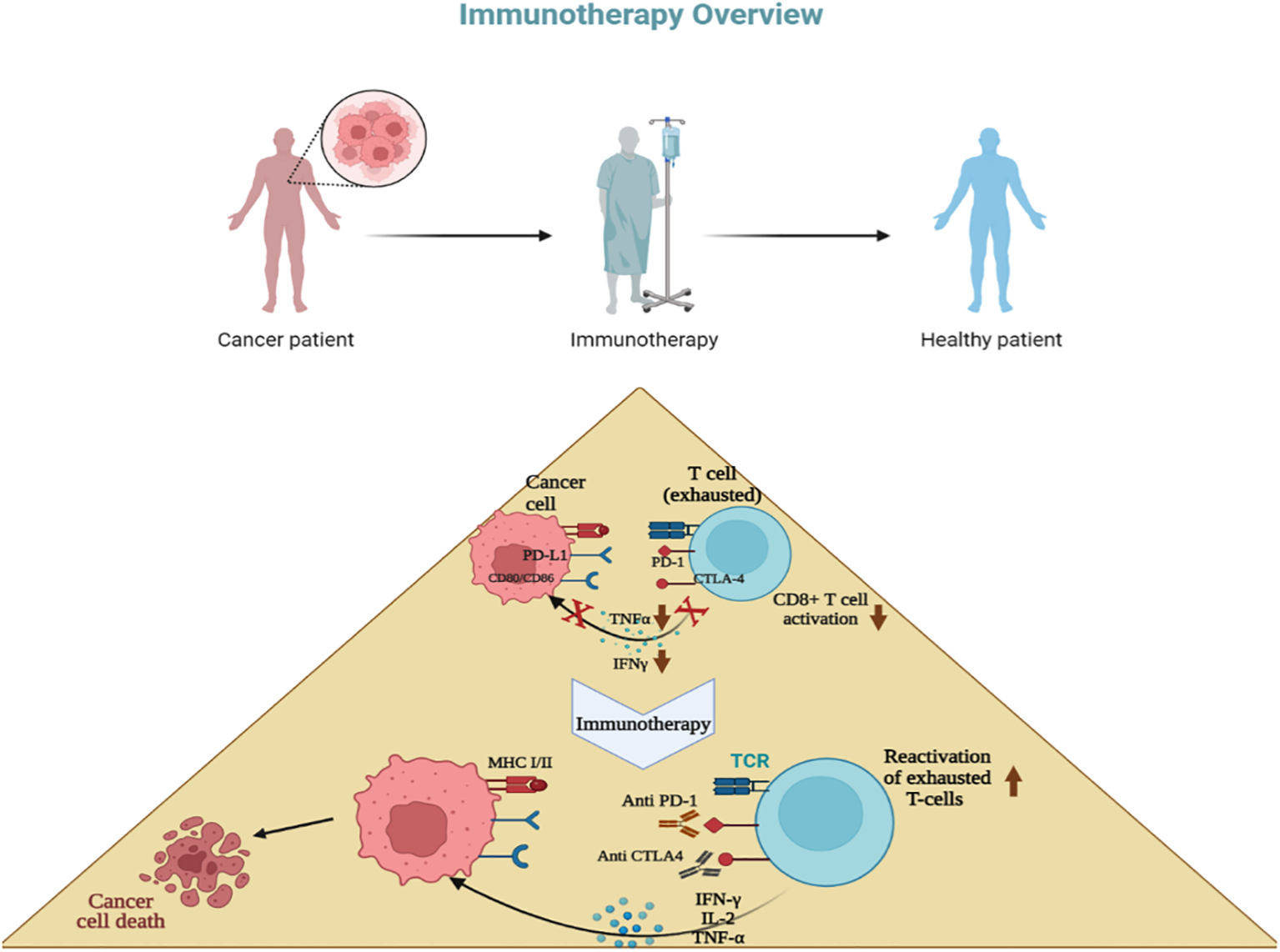
Concept of immunotherapy. T cells become exhausted after prolonged antigen stimulation and interaction with inhibitory ligands (PD-L1,L2; CD80,CD86) related to immune-checkpoint pathways. Immunotherapy involves inhibiting these immune checkpoint pathways using antibodies, with the goal of restoring T-cell functions. Most breast cancer immunotherapies focus mainly on anti-PD-1 drugs, which stop the interaction between PD-1, PD-L1, and PD-L2, such as pembrolizumab, avelumab, and atezolizumab.
The publisher apologizes for this mistake.
The original version of this article has been updated.
Summary
Keywords
breast cancer, immune microenviroment, immune response, therapy resistance, immunotherapy
Citation
Frontiers Production Office (2024) Erratum: Investigating tumor immunogenicity in breast cancer: deciphering the tumor immune response to enhance therapeutic approaches. Front. Immunol. 15:1532921. doi: 10.3389/fimmu.2024.1532921
Received
22 November 2024
Accepted
22 November 2024
Published
11 December 2024
Approved by
Frontiers Editorial Office, Frontiers Media SA, Switzerland
Volume
15 - 2024
Updates
Copyright
© 2024 Frontiers Production Office.
This is an open-access article distributed under the terms of the Creative Commons Attribution License (CC BY). The use, distribution or reproduction in other forums is permitted, provided the original author(s) and the copyright owner(s) are credited and that the original publication in this journal is cited, in accordance with accepted academic practice. No use, distribution or reproduction is permitted which does not comply with these terms.
*Correspondence: Frontiers Production Office, production.office@frontiersin.org
Disclaimer
All claims expressed in this article are solely those of the authors and do not necessarily represent those of their affiliated organizations, or those of the publisher, the editors and the reviewers. Any product that may be evaluated in this article or claim that may be made by its manufacturer is not guaranteed or endorsed by the publisher.